Thought Exercise: Design a Smart Parking Agent System
Explore the process of transforming a traditional modular smart parking system into a proactive multi-agent system. Learn to design agent internal logic, choose orchestration patterns, and implement safety guardrails to ensure scalability, reliability, and ethical behavior.
Let's assume we are starting with a good foundation: a modern, modular “smart parking” service built on a microservices architecture.

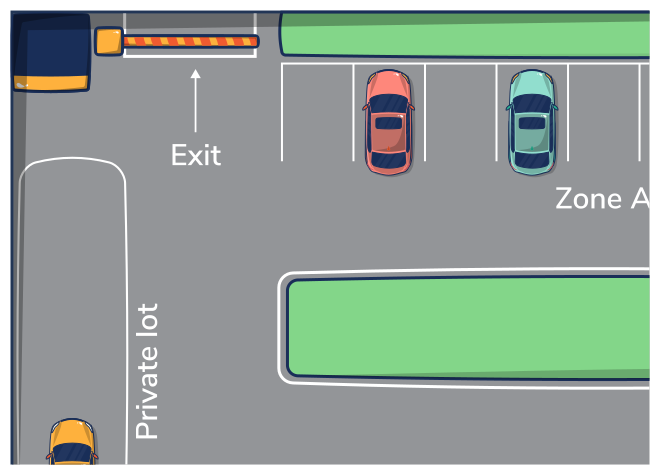
This system is already scalable and resilient. It has separate, well-defined services that handle specific jobs:
A
SensorServicethat provides real-time data on which spots are occupied.A
BookingServicethat handles reservations for specific spots.A
UserServicethat manages user profiles and payment information.A
NotificationServicethat sends alerts to users.
Each service waits to be called by a central application logic and perform its defined task. This system is efficient and reliable for handling simple, direct requests. However, it's not truly intelligent. It's reactive, not proactive.
The need for agency
This reactive design struggles with complex, dynamic, and user-centric problems. This is where we, as agentic system designers, can add immense value. Let's look at a few key needs that a traditional modular architecture struggles to meet without becoming overly complex or rigid:
Need for proactive assistance: The system can't anticipate user needs. It can't, for example, proactively reroute a user to a different parking zone when it detects a sudden traffic jam near their original destination.
Need for complex reasoning: It cannot make nuanced, multi-factor decisions. It can't dynamically adjust ...