Tap here to switch tabs
Problem
Submissions

Problem: Linked List Cycle IV

med
30 min
Explore how to detect and remove cycles in a singly linked list using the fast and slow pointer technique. This lesson helps you understand the problem constraints, implement an in-place cycle removal function, and ensure the linked list remains acyclic without altering node order. Gain hands-on experience to apply this pattern effectively in coding interviews.

Statement

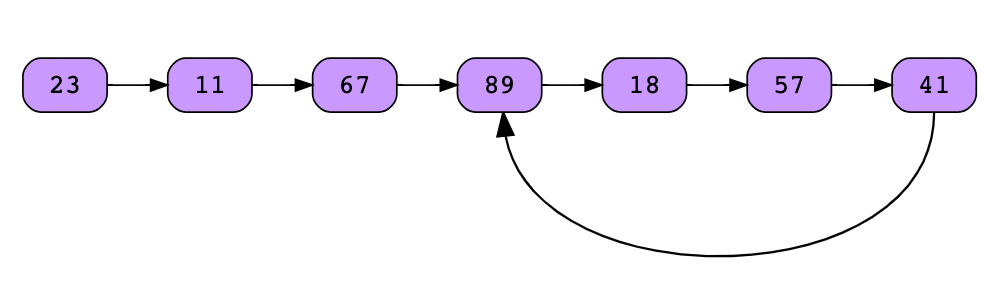
Given the head of a singly linked list, implement a function to detect and remove any cycle present in the list. A cycle occurs when a node's next pointer links back to a previous node, forming a loop within the list.

The function must modify the linked list in place, ensuring it remains acyclic while preserving the original node order. If no cycle is found, return the linked list as is.

Constraints:

  • The number of nodes in the list is in the range [0,104][0, 10^4].

  • 105-10^5 \leq Node.value 105\leq10^5

Unlock AI-Powered LearningUpgrade to smarter learning with instant explanations of Ask Agent, Personalized Interview Prep, Real-World Projects, 3 AI Mock Interviews per month, and Personalized Paths
Tap here to switch tabs
Problem
Submissions

Problem: Linked List Cycle IV

med
30 min
Explore how to detect and remove cycles in a singly linked list using the fast and slow pointer technique. This lesson helps you understand the problem constraints, implement an in-place cycle removal function, and ensure the linked list remains acyclic without altering node order. Gain hands-on experience to apply this pattern effectively in coding interviews.

Statement

Given the head of a singly linked list, implement a function to detect and remove any cycle present in the list. A cycle occurs when a node's next pointer links back to a previous node, forming a loop within the list.

The function must modify the linked list in place, ensuring it remains acyclic while preserving the original node order. If no cycle is found, return the linked list as is.

Constraints:

  • The number of nodes in the list is in the range [0,104][0, 10^4].

  • 105-10^5 \leq Node.value 105\leq10^5

Unlock AI-Powered LearningUpgrade to smarter learning with instant explanations of Ask Agent, Personalized Interview Prep, Real-World Projects, 3 AI Mock Interviews per month, and Personalized Paths