How to create collections from scratch in Scala
Collections in Scala
There are several types of collections in Scala.
-
Iterable()creates an empty collection. -
List()creates an empty list. -
Vector(20,130), creates a vector with two elements20and130in it. -
List(20,130), creates a list with two elements20and130in it. -
Iterator(1, 2, 3), an iterator containing three numbers. -
Set(Apples, oranges)creates a set of two fruits. -
Hashset(Apples, oranges)creates a hashset of two fruits. -
Map('apple' -> 23 , 'banana' -> 45)creates a map of key-value pairs to map from characters to integers.
In Scala, a programmer can easily create a collection by defining a collection name and initializing the values of a collection in parentheses. For examples,
Map('apple' -> 23 , 'banana' -> 45)creates a map with some key value pairs.
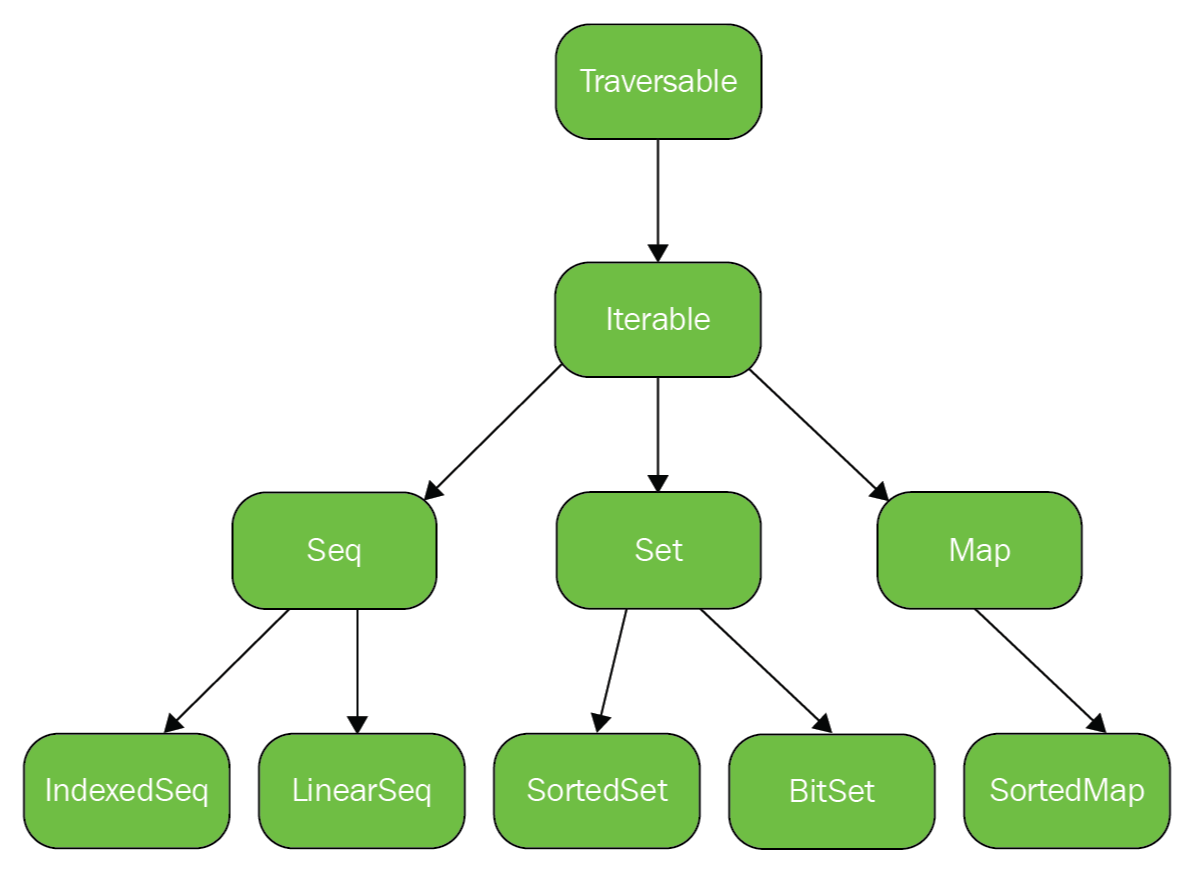
Collection creation
Now let’s see how does it work. When you write List(23,45), a function, List.apply(23, 45) is called. This apply() method is a companion object of the Class List. The function apply takes some arguments and creates a list of the passed argument. The companion object is then applied to all the collections: lists, lazylists, Vectors, Seq, Set, Map, Iterables, etc.
Apart from
.apply(), all collections also have another companion object,.empty, to create an empty collection.
The companion objects provide several methods in a collection such as concat (to join two collections together, fill (for generating collections of a given dimension: single dimension, multi-dimension, etc.), range (create a range of numbers).
Free Resources