What is the California Consumer Privacy Act?
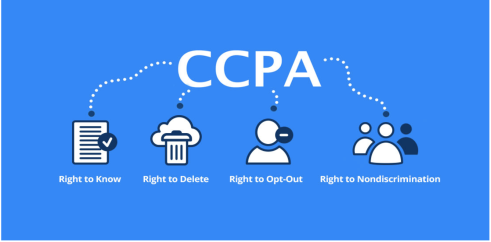
The California Consumer Privacy Act was introduced in late June 2018. It allows a California consumer to demand that companies show all the information a company has saved on them – it also gives consumers the power to sue the company if their data is used without their consent.
The Privacy Act applies to all countries that serve California residents and has a revenue of or higher. It also applies to companies that have data of at least people or that make half of their revenue by selling user data. It even applies to those countries that are not US-based or physically present within California but operate within California.
The CCPA classifies the following as personal data that needs to be protected:
- Personal identifiers such as name, age, ethnicity, etc.
- Characteristics of protected classifications under California or federal law
- Biometric Information
- Geolocation
- Commercial information including records of purchases
- Internet network activity information
- Audio, electronic, thermal, or similar info
- Professional/employment information
- Education information as defined in the Family Education Rights and Privacy Act
- Any of the information that can be used to create a profile about the user


The law also specifies that companies must have a footer that is clearly visible and gives consumers the option to opt-out of data sharing.
Failure to comply with the CCPA may result in fines of up to per record. The law also allows individuals to sue the company, which increases the chance of class action lawsuits. Individuals can sue 30-days after they have formally notified the company of noncompliance to privacy laws if the company still hasn’t done anything.
Free Resources