Spring Architecture
Explore the modular design of the Spring Framework, covering its core container, data access, web MVC, AOP, and testing modules. Understand how these components enable flexible integration, simplify database interactions, support web applications, and enhance testing capabilities. This lesson also introduces key Spring projects like Spring Boot and Spring Security, helping you grasp the full ecosystem and its functionality.
We'll cover the following...
Spring is not one big framework. It is broken down into modules. This can be seen in the Maven Dependencies folder, where there are a lot of JAR files instead of just one big JAR.

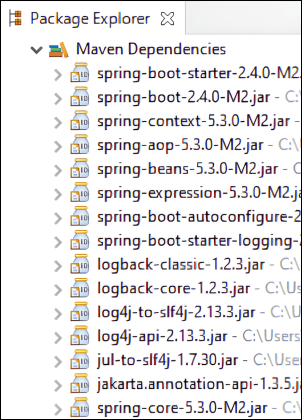
Spring is built in a modular way and this enables some modules to be used without using the whole framework. It also makes integration with other frameworks easy. The developer can choose which module to use and discard ones that are not required.
Spring modules
The modules of Spring architecture, grouped together in layers, are shown below:


The Core Container contains the following modules: Beans, Core, Context, and Spring Expression Language (SpEL). These modules provide fundamental functionality of the Spring framework, like Inversion of Control (IoC), dependency injection, internationalization as well as support for querying the object at run time.
Data access/ integration
Spring has very good integration with data and integration layers, and provides support to interact with ...