Tokenizing Text
Explore how tokenization converts text into machine-readable data essential for chatbot development. Understand basic and advanced tokenization methods using NLTK and transformer models, and learn techniques like stemming, lemmatization, and stopword removal to improve chatbot efficiency.
To start using transformers for chatbot development, it is essential to understand how machines interpret text. Since machines primarily operate with numbers, we begin by converting text into a form that machines can understand through a process called tokenization. Tokenization is the bridge between raw text and machine-readable data, breaking down text into smaller units or tokens. This step is essential for chatbot development, allowing us to preprocess user inputs.
Tokenization: Breaking down text
We start by tokenizing the text or input.


Let’s look at a simple example of how text is tokenized.

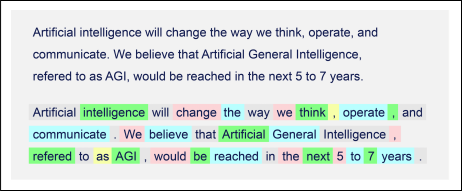
At a basic level, the text is broken down into words. This includes commas, colons, separators, and so on. Tokenization can be taken a step further by applying rigorous methods.
The first step is to convert all the words into lowercase letters. This process helps standardize inputs across different contexts and is essential for improving the model’s performance, as it reduces the vocabulary size the model needs to handle. A smaller vocabulary means less computational complexity and better generalization capabilities, making the chatbot more efficient ...