Problem: Maximum Frequency Stack
Statement
Design a stack-like data structure. You should be able to push elements to this data structure and pop elements with maximum frequency.
You’ll need to implement the FreqStack class that should consist of the following:
-
Init(): This is a constructor used to declare a frequency stack.
-
Push(value): This is used to push an integer data onto the top of the stack.
-
Pop(): This is used to remove and return the most frequent element in the stack.
Note: If there is a tie for the most frequent element, then the most recently pushed element is removed and returned.
Constraints:
-
value -
At most, calls will be made to Push() and Pop().
-
It is guaranteed that there will be at least one element in the stack before calling Pop().
Examples


Understand the problem
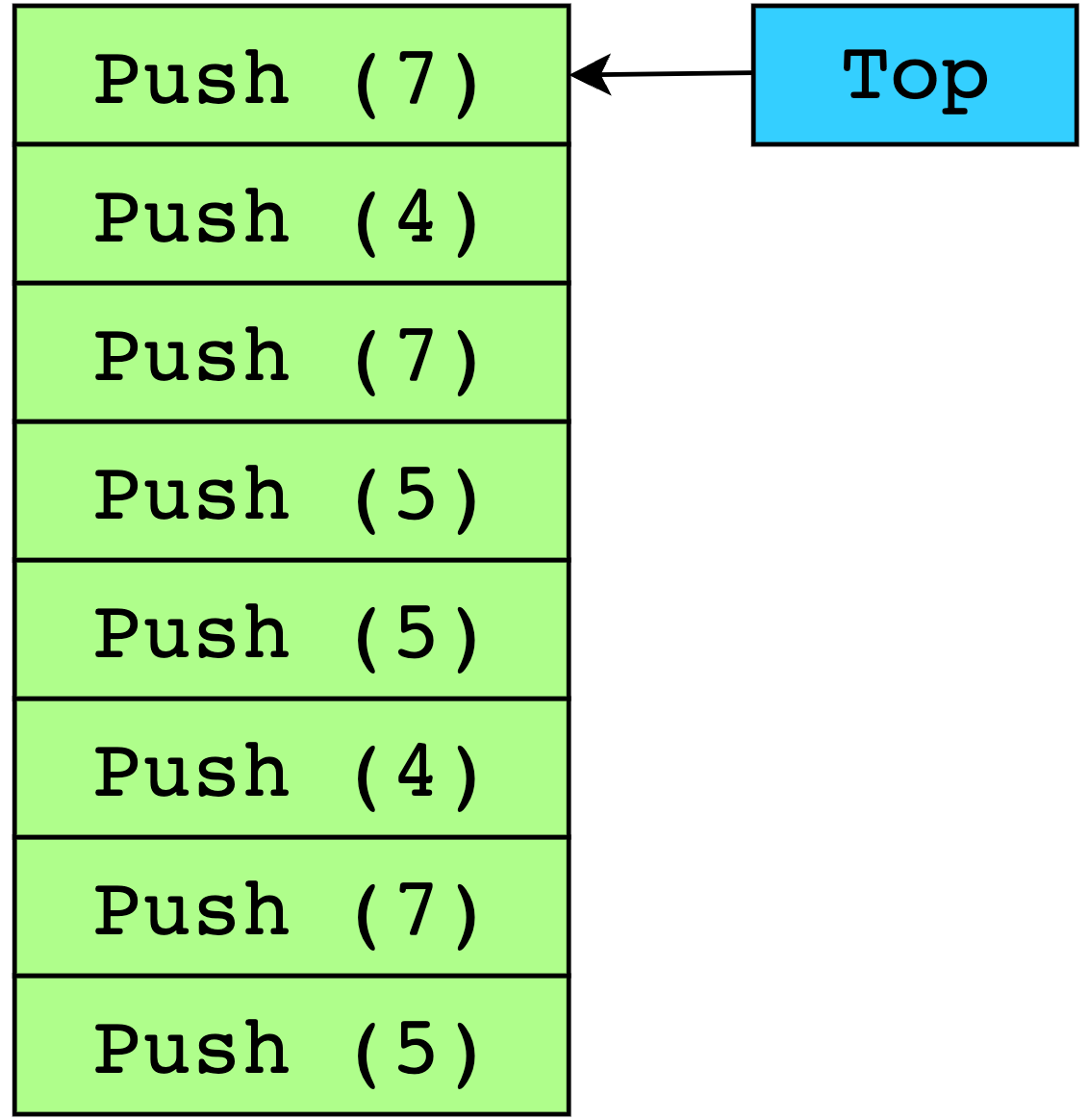
Figure it out!
Try it yourself
Problem: Maximum Frequency Stack
Statement
Design a stack-like data structure. You should be able to push elements to this data structure and pop elements with maximum frequency.
You’ll need to implement the FreqStack class that should consist of the following:
-
Init(): This is a constructor used to declare a frequency stack.
-
Push(value): This is used to push an integer data onto the top of the stack.
-
Pop(): This is used to remove and return the most frequent element in the stack.
Note: If there is a tie for the most frequent element, then the most recently pushed element is removed and returned.
Constraints:
-
value -
At most, calls will be made to Push() and Pop().
-
It is guaranteed that there will be at least one element in the stack before calling Pop().