Tokenization Methods
Explore tokenization methods like word, character, and subword tokenization, with an in-depth focus on byte-pair encoding (BPE). Understand how BPE breaks text into subword tokens, manages vocabulary size, and handles new words, preparing you to explain these concepts confidently in AI interviews.
Interviewers love to ask about byte-pair encoding (BPE) tokenization because it’s fundamental to how modern language models process text. You’ll often be asked this question at companies like OpenAI, Google, and other AI-driven firms, since BPE is the core of popular models (OpenAI’s GPT series, for example). They want to see that you understand how text is broken down for a model, not just that you can call a library function. In other words, explaining BPE well shows you grasp the foundations of tokenization, how models handle vocabulary, and how to deal with new or rare words. It’s a chance for you to demonstrate practical knowledge of tokenization beyond buzzwords.

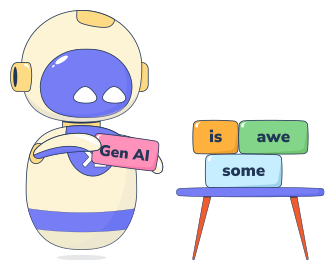
In this lesson, we’ll discuss different tokenization approaches, highlight why tokenization (especially subword methods like BPE) is beneficial, and dig into byte-pair encoding. We’ll even implement a simple BPE tokenizer in Python, step by step, to solidify your understanding.
What is tokenization?
In simple terms, tokenization means chopping a stream of text into pieces that are easier for a machine to handle. Each piece is a token—it could be a whole word, a part of a word, a single character, or even a punctuation mark. For example, tokenizing the sentence “GenAI is awesome!” might yield the tokens ["GenAI", "is", "awesome", and "!"]. These tokens are then mapped to numerical IDs to feed the text into a neural network.
Why do we tokenize, though? Because these AI models operate on numbers. Tokenization bridges the gap between human language and machine-readable input by translating text into a sequence of token IDs. Instead of trying to assign a unique number to every possible string (an impossible task), we break text into consistent chunks from a fixed vocabulary. This ...