Getting Referrals
Explore effective methods to get data science job referrals by building genuine relationships, attending relevant meetups, and using cold emailing techniques. Understand how to identify the right contacts on LinkedIn, approach them with informational interviews, and network strategically to increase your hiring chances.
The easiest way to get a data science job is by getting referrals, but asking strangers to refer you doesn't work most of the time. Then what should you do? In this lesson, you'll get some ideas on how to get referrals in data science.
Author's note: The chances of getting a data science job through a referral have a low failure rate as compared to getting it without a referral.
Searching for data scientists on LinkedIn
Search for data scientists on LinkedIn who work in the industry you want to work in. To do this, follow the below steps:
Search "data scientist" in the LinkedIn search box.
Click "People."
Click "All filters" and scroll down to the industry.
Select "Industry" or "Add an industry."
Click "Show results."
You will see an interface similar to the one below:

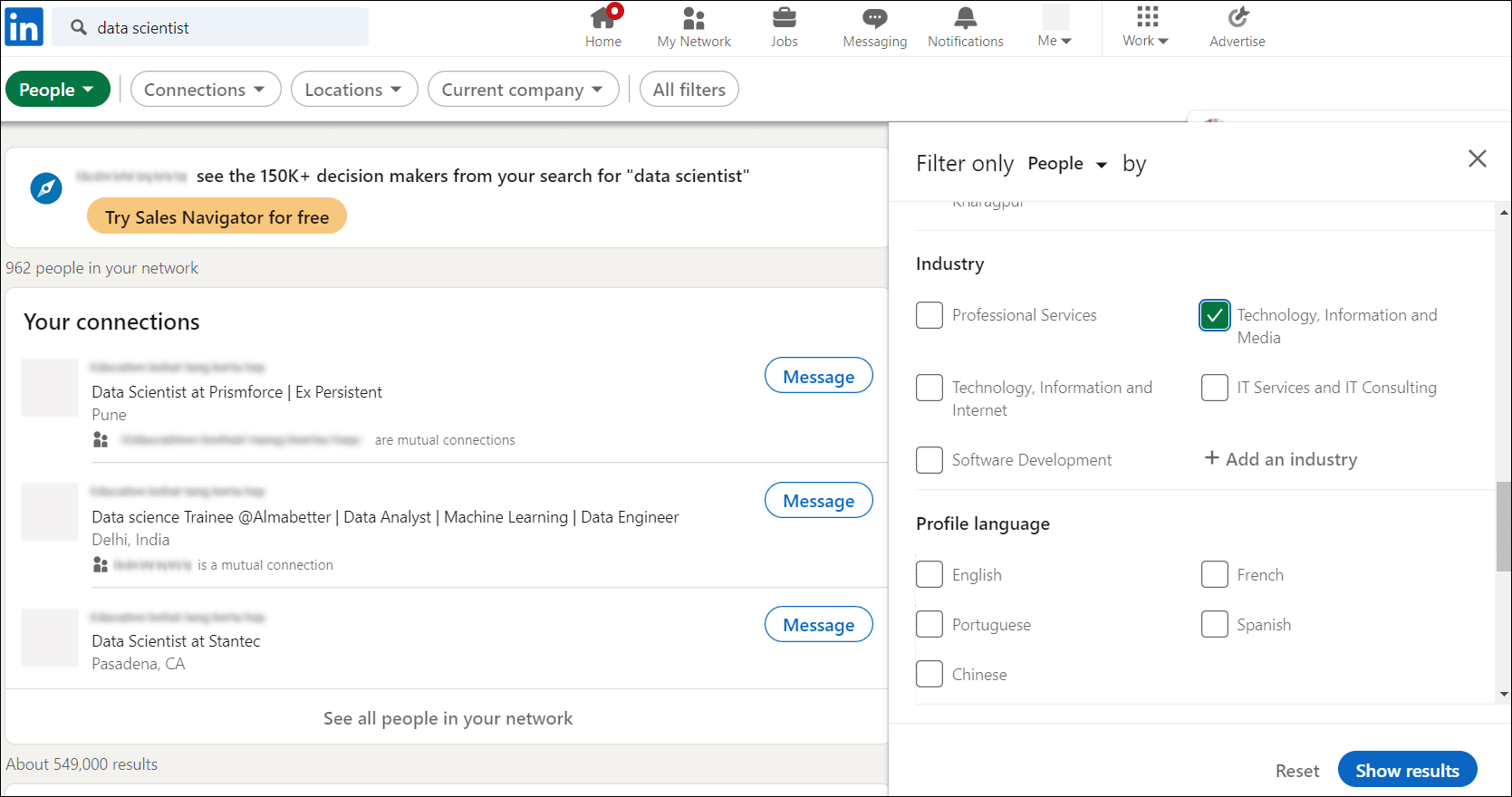
Author's note: Since you are trying to move into data science, you're likely already connected with some data scientists, but you may not know them personally. So, remember that if you do not know someone personally, then you have a very low chance of getting a referral. The first step is to build relationships and then ask for referrals.
The right person to connect with
The best person to connect with for a data science job referral is someone who works in a startup or a medium-sized company because big companies have a specific team to handle the ins and outs of the hiring process. Startups and medium-sized companies are looking to hire urgently as they need to move their business to the next stage.

The people in small to mid-sized companies who can refer you are team leaders, junior data scientists, data scientists, data analysts, recruiters, hiring managers, and executives like CEOs and CTOs. Since this is a technical position, only a technical person will make the final decision depending on the company. Still, they all can refer you for the position you are interested in.
Building relationships
There are multiple ways to build a relationship, but one of the stronger ways to do so is written by blogger Haseeb Qureshi. He says that people want to help and teach others, but don’t want to be pestered by strangers for favors. He talks about informational interviewing to know more about strangers and the power of informational interviewing is that instead of making it about you, you make it about them. People like to talk about themselves.

People will notice your curiosity and sincerity if you continue doing informational interviews. They'll be persuaded by your story and want to recommend you. You'll get more recommendations if you don't force others to give them, or, at the very least, you'll turn them into your friends. The first message you should send people should make them feel that the interview would not be in a professional setting. It will be an informal interview; you want to learn from their experience, and you will also share it with others on your blog or YouTube channel.
Author's note: Recently, I was interviewed by someone and I am sharing the message he sent me on LinkedIn"
"Hey Nizamuddin, I recently noticed your post on LinkedIn and I have to say I loved it. I just wanted to ask you whether you will be interested in having a talk with me on random freelancing topics, life, and the future of freelancing on my Podcast. Don't worry it will be an informal talk. We are all just trying to achieve something and hence just sharing our experience with the people who are starting out. I am inserting my website and YouTube link so you can have a look."
Many data scientists would like to share their experiences informally, and you need to approach them. You will also share your experience with them; if they see potential in you, they will likely refer you. Even if they see potential in you, they might not refer you immediately because relationship-building takes time. So, be patient and continue your relationship in the usual way.


Meetups, conferences, and events
Conferences are more official and professional, and events or meetups are more informal to meet people. Building a solid network is easy if you attend conferences, events, and meetups. However, it would be best if you were selective when picking them. Here are some crucial things you should have in your mind while choosing the conferences, events, or meetups:
Pay attention to those organized by relevant businesses or industries.
Pay attention to those that are technical and related to data science.
Look for those that are neither too huge nor too little.
Look for those that happen frequently.
Once you find a good match, focus on building your network by following the tips below:
Participate in the activities and ensure that others know your attendance by conversing before, during, and after the sessions.
Request the organizers to talk on a technical topic relevant to data science. You'll gain more technical expertise while expanding your network and enhancing your profile among the organizers, sponsors, and attendees.
Add people you talk with to your LinkedIn network or get their email addresses. As a result, further communication will be possible, and remain active on LinkedIn so they can notice your eagerness about data science. You can ask them to meet up for coffee so you can learn more about their expertise, and it may increase your chances of getting a referral in the future.
Author's note: Try to get the email address of the person by giving something valuable in return. For example, if you meet me and tell me that you write articles related to data science, created a cheatsheet, or something that may help me and ask me to share my email address so that you can email everything that you covered then I am more likely to share it with you.
The objective is to help the other person in a way that they can recognize your effort, and if this person likes the effort you put into your work, you have a higher chance of getting something better. These people can introduce you to their network, and you might get some opportunities. This networking is beneficial because when someone is looking to hire, they try to save the cost of hiring and focus on the projects, so they first try to communicate in their network and ask for referrals.
Cold emailing tips
If you get the email address of the right person, then you have to be careful while writing to them because these are busy people. Here are six tips for you that you can use to write an effective email:
Emails should be short: Hubspot analyzed 40 million emails and concluded that the email content should be 50–125 words, increasing the likelihood of getting a response.
Display your achievements: Bring attention to a relevant accomplishment and include a link to a project or previous work experience that demonstrates why you are worthy of a response and the opportunity.
Create a sense of urgency and set a deadline: For example, mention that you will await the response by a specific date as you have other opportunities on the door.
Create an attention-grabbing subject line: Everyone reads the subject and opens the email if that line is worth the time. A good subject line increases the chance of it being opened.
Author's note: A few months ago, I got an email from an instructor with the subject line "Sorry :(" and I opened it because I thought, "Why is someone saying sorry?" The message said: "Sorry if you're not interested in this but I have an offer for you." Then, I read the complete message. This is one trick that will improve your email open rates.
Make it a little personal: Try to mention something familiar if possible. For example, a city, a familiar friend, a collaborative group, common education, a common college, a common interest, or anything else that will connect the other person to you. This also increases the likelihood of getting a response.
Follow up: Make sure you follow up if you don't get a response, but don't hurry. Wait for at least two days as that person might be busy. Do not follow up thrice.
Author's note: I would suggest always sending emails before lunchtime or after lunchtime as this is when some people refresh their inboxes and pass their time as they count down the time to start lunch or to finish the work day.
Referral services
You can also use referral services to get a referral, but these services are paid. You can search for referral services on Google, but the two most common ones are:
ReferMarket
MassApply
These services can help you find the job you are looking for and get a job at top tech companies like Apple, Uber, Amazon, Microsoft, Google, etc., as these services connect with employees from top companies to get more attention and opportunities.