How to Start a Data Science Career
Explore a comprehensive roadmap to begin your data science career by reinforcing core skills, applying knowledge to real projects, and preparing for job applications. Understand data scientist roles, essential tools, and how to build a strong portfolio to stand out in 2026.
We'll cover the following...
- Why choose data science in 2026
- Responsibilities of a data scientist
- Data science career paths
- Building a strong data science foundation
- Gradually learn advanced topics
- Data science tools and libraries
- Gain practical, real-world experience
- Business insight and career networking
- Data science news
- Data science career outlook
- Data science companies and employers
- Your next 90-day data science career coach
By completing this course, you’ve taken your first real and meaningful step into data science. You now understand not only what data science is, but why it matters and how it’s applied in the real world. You’ve worked with real data, learned how to clean and explore it, and used practical tools such as Python, SQL, and data visualization libraries to extract insights. You’ve also been introduced to basic machine learning models, giving you a glimpse of how data can be used to make predictions and inform decisions.
More importantly, you’ve learned how data scientists think, how they break down problems, ask the right questions, and communicate findings clearly. This mindset is just as valuable as the technical skills you’ve gained.

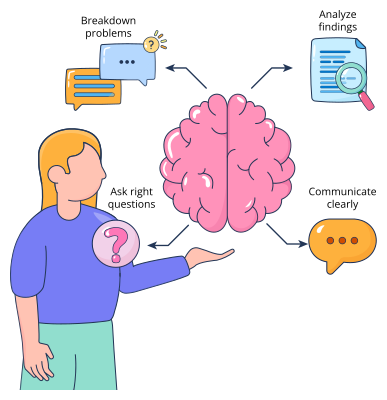
At this stage, a natural question arises: How do I turn this knowledge into a real data science career in 2026? This lesson serves as a data science career guide, offering a practical roadmap to help you transition from learning to applying, and from student to job-ready professional.
Why choose data science in 2026
Data science continues to grow as organizations across all industries become increasingly data-driven. Decisions that were once based on intuition are now supported by data, analysis, and predictive models. From improving patient outcomes in healthcare to optimizing supply chains, detecting fraud, and personalizing user experiences, data science career opportunities are abundant.
In 2026, data science career growth is driven by:
Rapid advances in AI and machine learning, which rely heavily on high-quality data and skilled practitioners.
Increased automation and data availability, creating both new opportunities and new challenges.
Strong demand for professionals who can analyze data, interpret results, and clearly explain insights to decision-makers.
While tools and technologies will continue to evolve, the core skills you’ve started building, such as analytical thinking, problem-solving, and data-driven reasoning, remain highly valuable and transferable.
In 2026, data science career opportunities are especially strong due to the rapid expansion of data-driven technologies. The global big data market is forecasted to reach 103 billion U.S. dollars by 2027, more than double its size in 2018 (
Responsibilities of a data scientist
A data scientist’s job is much more than just writing code or training models. At its core, it’s about transforming raw data into actionable insights that inform real-world decisions. The role combines technical skills, analytical thinking, and effective communication.
Responsibility | Description |
Exploring and cleaning messy data | Preparing raw datasets to ensure accuracy, consistency, and readiness for analysis. |
Analyzing patterns and trends | Identifying correlations, anomalies, and insights that can guide decisions. |
Building predictive models | Using machine learning to forecast outcomes, classify information, or detect patterns. |
Visualizing insights clearly | Creating charts, graphs, and dashboards to make complex data understandable. |
Explaining results to non-technical stakeholders | Translating technical findings into clear, actionable recommendations for decision-makers. |
These responsibilities show that data scientists do more than just code. They are problem solvers who turn data into insights. While technical proficiency is important, the ability to communicate findings effectively and apply analysis to real-world problems is what makes a data scientist valuable to any organization.
Data science career paths
As careers in data science progress, professionals have opportunities to specialize in different roles depending on their interests, strengths, and career goals. Each role focuses on specific aspects of working with data, from analyzing trends to building predictive models, deploying AI systems, and communicating insights to stakeholders. Choosing the right path helps shape a meaningful and impactful data science career. These roles include:


Data analyst
A data analyst focuses on understanding and interpreting data to support business decisions. They work with structured datasets, perform
Learn how to clean, analyze, and visualize data to make informed business decisions. Gain hands-on experience with SQL, Excel, Python, and Google Sheets through these practical courses:
Learn Data Analysis: Master Python and SQL for real-world datasets
Data Analysis in Google Sheets: Analyze, visualize, and share insights using spreadsheets
Data scientist
A data scientist goes beyond descriptive analytics to uncover patterns, build predictive models, and provide strategic recommendations. They work with complex datasets, apply machine learning algorithms, and use statistical methods to generate insights. Data scientists bridge the gap between raw data and decision-making, often communicating findings to both technical teams and business stakeholders. Proficiency in Python, R, and machine learning frameworks is critical for this role.
Learn how to explore, clean, and analyze data to answer real-world questions. Gain hands-on experience with Python, SQL, and pandas through this practical course:
Learn Data Science: Start from foundational concepts, work with real datasets, create visualizations, and build your first machine learning models to make data-driven decisions.
Machine learning engineer
Machine learning engineers focus on designing, building, and deploying machine learning systems at scale. They optimize models for performance and efficiency, integrate them into production environments, and ensure they operate reliably. This role requires strong software engineering skills, a solid understanding of algorithms, and experience with cloud platforms and ML frameworks such as TensorFlow or PyTorch.
Learn how to build intelligent systems and apply machine learning in real-world software projects. Gain hands-on experience with supervised learning, neural networks, and deep learning through this practical course:
Fundamentals of Machine Learning for Software Engineers: Understand the difference between traditional programming and machine learning, develop supervised learning models, create neural networks, and design deep learning systems while working with complex, real-world datasets.
Business intelligence analyst
Business intelligence (BI) analysts transform business requirements into meaningful data insights. They create dashboards, KPIs, and reports that help organizations monitor performance and make informed decisions. BI analysts often work closely with stakeholders to translate business questions into analytical solutions, requiring a combination of technical skills and business acumen. Tools like Power BI, Tableau, Excel, and SQL are commonly used in this role.
The foundational skills of data cleaning, analysis, visualization, and basic machine learning support all these paths. By continuing to practice, build projects, and gain real-world experience, individuals can explore these roles and shape a data science career path aligned with their interests, strengths, and long-term goals.
Building a strong data science foundation
After completing this course, the next step is to solidify your foundational knowledge. Rushing into advanced topics without mastering the basics can make learning more complex concepts frustrating and less effective.
The following are core areas to focus on:
These fundamentals are far more valuable than learning dozens of tools superficially. By practicing and reinforcing these skills through projects and exercises, you will build the confidence and competence required to tackle more advanced topics and real-world challenges.
Gradually learn advanced topics
Once you’re comfortable with the basics, it’s time to expand into more advanced areas. These skills allow you to tackle complex problems and open doors to specialized roles in data science and machine learning. The following are key advanced areas to explore:
Machine learning algorithms: Learn decision trees, ensemble methods, and neural networks. Understand how and when to apply each.
Deep learning frameworks: Explore TensorFlow or PyTorch for neural network projects, including image recognition and predictive modeling.
Natural language processing (NLP): Work with text data for sentiment analysis, chatbots, or document classification.
Big data tools: Learn platforms like Spark, Hadoop, or Databricks to handle very large datasets efficiently.
Cloud platforms: Familiarize yourself with AWS, Google Cloud, or Azure to deploy models and manage data at scale.
Pro tip: You don’t need to master everything at once. Focus on areas that align with your data science career goals and gradually build depth.
Data science tools and libraries
To succeed in data science in 2026, familiarity with the right tools, frameworks, and platforms is crucial. These technologies help you clean, analyze, visualize, model, and deploy data solutions efficiently. Mastering these tools also makes it easier to collaborate with teams and apply your skills to real-world projects.
Gain practical, real-world experience
While certificates and courses are useful, employers and hiring managers care more about what you can actually do with data. Building hands-on experience demonstrates your ability to solve real problems and is often the fastest way to become job-ready.
We can take the following next steps:
Work on real-world datasets: Use public datasets such as
Kaggle https://www.kaggle.com/datasets UCI Machine Learning Repository https://archive.ics.uci.edu/ data.gov https://catalog.data.gov/dataset/ Solve end-to-end problems: Go beyond analysis. Take a dataset, clean it, explore it, build models, and extract actionable insights. Practice the full workflow.
Participate in competitions: Platforms like Kaggle or
DrivenData https://www.drivendata.org/ Rebuild projects from scratch: Re-doing projects without referencing solutions strengthens your problem-solving skills and deepens understanding.
Create a Portfolio on GitHub: In the 2026 market, a GitHub portfolio is the primary way hiring managers verify your skills in an era of AI-generated code. Aim for 3–5 high-quality projects that move beyond junior mistakes (like overused Titanic datasets) and instead focus on:
Proof of messy problem solving: Use real-world, niche datasets you’ve scraped yourself from APIs or the web. This demonstrates your ability to handle the grunt work of data science, including managing null values and merging disparate datasets.
Coding maturity: Organize your work into clean, modular
.pyfiles rather than one giant, messy notebook. Use version control (Git) and include aRequirements.txtor Dockerfile to show your work is reproducible in a professional engineering environment.End-to-end thinking: Show you can build a solution, not just run a model. Deploy your projects as a simple API (using FastAPI) or an interactive dashboard (using Streamlit).
2026 competitive edge: Include at least one project involving Generative AI or LLM implementation (like RAG or fine-tuning a small model) to show you are current with modern industry demands.
By building a portfolio of practical projects, you prove your capability to employers and create a foundation for advanced learning.
Business insight and career networking
Data science is not just about technical expertise. The ability to translate data into actionable decisions, communicate findings effectively, and build professional connections often defines success. Strong communication and networking skills distinguish junior practitioners from experienced data scientists who influence strategic decisions and drive real-world impact.
The following are key skills to focus on:
Translate insights into actionable business decisions: Understand the underlying problem behind the data and provide recommendations that stakeholders can take action on.
Explain results clearly to non-technical audiences: Avoid using jargon and present the analysis in an easy-to-understand manner.
Tell stories using data and visuals: Use charts, dashboards, and narratives to make insights compelling and memorable.
Build connections and learn from others: Join data science communities (such as LinkedIn, Discord, and Reddit), attend webinars and conferences, follow experienced data scientists, and seek mentorship to accelerate your learning and career growth.
Share your knowledge: Write articles, tutorials, or project walkthroughs on platforms like LinkedIn or Medium to showcase your expertise and reinforce your learning.
Contribute to open-source projects: Participate in data science or machine learning open-source projects on GitHub to gain practical experience, collaborate with others, and demonstrate your skills to potential employers.
Mastering these skills ensures your work has a real-world impact, opens doors to collaboration and career opportunities, and helps you stand out in the competitive field of data science.
Data science news
The field changes weekly. To remain a job-ready professional, you must follow the industry’s pulse. We recommend subscribing to these highly-regarded sources:
KDnuggets: https://www.kdnuggets.com/ Data science weekly: https://www.datascienceweekly.org/ The batch (DeepLearning.AI): https://www.deeplearning.ai/the-batch/ Data Elixir: https://dataelixir.com/
Data science career outlook
The career outlook for data science remains exceptionally strong, with the
Data science companies and employers
Many well‑known global companies actively hire data science professionals or specialize in analytics and AI‑driven solutions. These companies offer roles ranging from data analysis to advanced machine learning, making them valuable targets for learners preparing for careers in data science.
Examples of some companies that hire data science talent:
Databricks: Employs data scientists and machine learning engineers to build and optimize large-scale analytics, data engineering, and ML platforms used by enterprises worldwide.
Google: Employs data scientists and machine learning engineers across search, ads, cloud, and AI research to build large-scale, data-driven products.
Amazon: Hires data scientists and applied scientists to optimize logistics, recommendations, forecasting, and customer experiences across its global platforms.
Meta (Facebook): Uses data science extensively in product analytics, experimentation, personalization, and AI research across Facebook, Instagram, and WhatsApp.
IBM: A global technology firm with data science and AI projects across cloud computing, enterprise analytics, and cognitive solutions.
Working at such companies allows data professionals to apply analytical skills to real business problems, build impactful models, and work with big data frameworks and machine learning pipelines.
The next section provides a concrete roadmap to consolidate your learning, build real projects, and start applying for roles in 2026.
Your next 90-day data science career coach
The next 90 days turn knowledge into confidence and action. This data science career roadmap emphasizes hands-on practice, real-world projects, and gradual skill development using various resources offered by Educative.
Days 1–30: Strengthen core foundations (Python, SQL, EDA, visualization, statistics)
Days 31–60: Apply skills to projects and machine learning basics
Days 61–90: Build portfolio, prepare for interviews, and explore specialization
By following this roadmap, you’ll move beyond theory, demonstrate real-world problem-solving, and position yourself for success in a data science career in 2026.
Days 1–30
The first 30 days are about reinforcing what you’ve already learned and becoming comfortable working with data on your own. Instead of jumping into advanced topics, the focus here is on confidence, repetition, and independence. By the end of this phase, handling a new dataset should feel familiar rather than intimidating.
Area | What to Focus on |
Goal | Build confidence in the fundamentals and become independent in handling data |
Python for data analysis | Use pandas and NumPy to load, clean, transform, and analyze datasets |
SQL | Query and manipulate real datasets using |
Exploratory data analysis | Identify patterns, trends, outliers, and relationships in data |
Data visualization | Create clear charts using Matplotlib, Seaborn, or Plotly to communicate insights |
Statistics fundamentals | Understand distributions, correlation, and basic hypothesis testing |
Practice approach | Rebuild examples without looking at solutions |
Hands-on work | Clean a new dataset, explore it, and visualize key insights |
Communication practice | Write short explanations of findings for a non-technical audience |
After these first 30 days, the goal is not mastery, but comfort. You should be able to open a dataset, understand its structure, clean it, explore patterns, and explain what you found without relying on step-by-step guidance. This foundation makes the next phase (projects and machine learning) much more effective and less overwhelming.
Days 31–60
In the next 30 days, the focus shifts from foundations to application. This phase involves using real datasets to solve complete problems and gaining your first hands-on experience with machine learning. Instead of treating models as black boxes, the goal is to understand why they work and how to evaluate them properly.
Area | What to Focus on |
Goal | Apply foundational skills to real-world problems and begin learning machine learning |
Supervised learning | Learn regression and classification models for predicting outcomes |
Model evaluation | Understand accuracy, precision, recall, and when to use each metric |
Feature importance | Interpret which features influence model predictions and why |
End-to-end workflow | Practice the full process from data cleaning to modeling and insights |
Project ideas | Predict outcomes from tabular data such as sales, health, or public datasets |
Trend analysis | Analyze patterns and trends in business or publicly available datasets |
Project documentation | Clearly define the problem, outline your approach, and explain results |
Reflection | Note limitations, assumptions, and possible improvements |
By the end of this phase, you should be comfortable building simple machine learning models and explaining both their results and limitations. More importantly, you’ll understand how models fit into a larger problem-solving workflow, preparing you for portfolio building and career-focused preparation in the final 30 days.
Days 61–90
The final 30 days focus on turning your learning and projects into a job-ready profile. This phase involves refining your work, preparing for interviews, and selecting a clear direction within the data science career path. By the end of this stage, you should feel confident presenting your skills and applying for real opportunities.
Area | What to Focus on |
Goal | Transition from learner to job-ready professional with a polished portfolio and clear career direction. |
Project refinement | Improve and clearly document 2–3 strong projects. |
Technical readiness | Prepare for common interview questions and technical assessments. |
Specialization options | Explore paths such as data analyst, data scientist, or machine Learning engineer. |
Portfolio and gitHub | Polish project README files and ensure your work is easy to find and understand. |
Interview preparation | Practice Python, SQL, statistics, and machine learning questions. |
Career direction | Identify the role you want to focus on next and align your learning accordingly. |
By the end of these 90 days, you will no longer be just learning data science. You are demonstrating real skills through projects, communicating your work clearly, and actively preparing to enter the job market through internships, junior roles, or freelance opportunities.