The Search for Intelligent Machines
Discover the history and motivation behind creating intelligent machines. Learn about the evolution of AI, human intelligence replication attempts, and cultural impacts. This lesson sets the foundation for building your own neural network in Python by understanding the significance of intelligent machines.
We'll cover the following...
Introduction
For thousands of years, we humans have tried to understand how our intelligence works, and we’ve tried to replicate it with machines—thinking machines.
We have not been satisfied by creating mechanical or electronic machines to help us with simple tasks, like using flint to spark fires, lifting heavy rocks with pulleys, or using calculators for arithmetic.
Instead, we want to automate more challenging and complex tasks like grouping similar photos, distinguishing diseased cells from healthy ones, or even playing a decent game of chess. These tasks seem to require human intelligence, or at least a deeper capability of the human mind, which is not found in simple machines like calculators.
Machines with human-like intelligence is such a powerful idea that our culture is full of fantasies and fears about—the immensely capable but ultimately menacing HAL 9000 in Stanley Kubrick’s 2001: A Space Odyssey, the robots in Terminator, and the talking KITT car with a cool personality from the classic Knight Rider TV series.
When Gary Kasparov, the world chess champion (1985–2000) and grandmaster, was beaten by the IBM Deep Blue computer in 1997, we feared the potential of machine intelligence just as much as we celebrated that historic achievement.
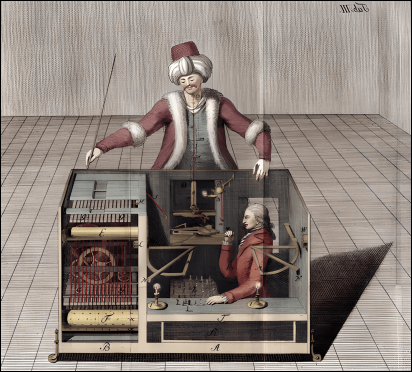
Our desire for intelligent machines is so strong that some have fallen for the temptation to cheat. The infamous mechanical Turk chess machine was merely a hidden person inside a cabinet!