Unisex Bathroom Problem
Explore how to implement the Unisex Bathroom Problem using Python concurrency techniques. Understand controlling access with condition variables and semaphores to avoid conflicts and deadlocks, while synchronizing multiple threads using shared resources in a multithreaded environment.
We'll cover the following...
Unisex Bathroom Problem
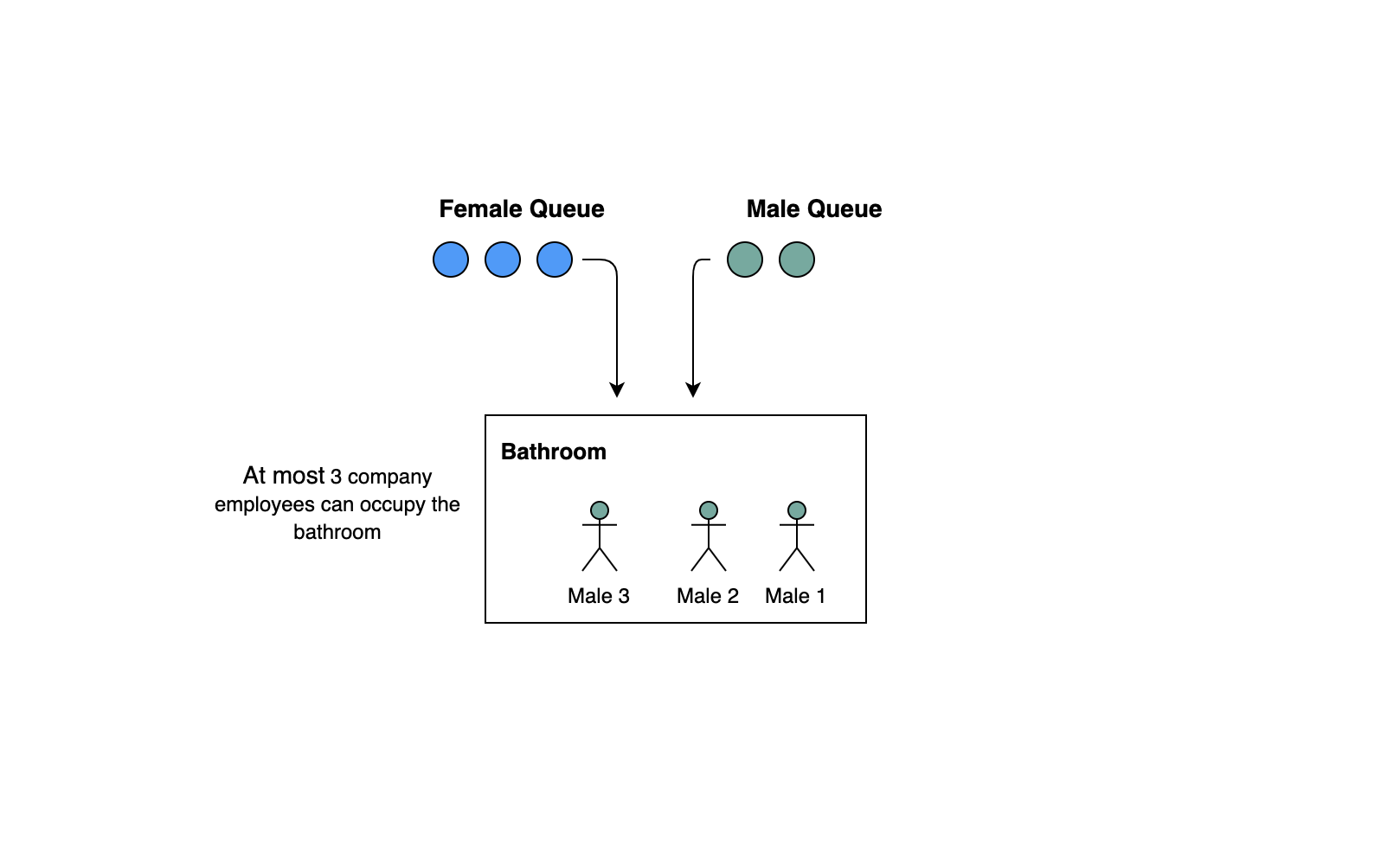
A bathroom is being designed for the use of both males and females in an office but requires the following constraints to be maintained:
- There cannot be men and women in the bathroom at the same time.
- There should never be more than three employees in the bathroom simultaneously.
The solution should avoid deadlocks. For now, though, don’t worry about starvation.
Solution
First let us come up with the skeleton of our Unisex Bathroom class. We want to model the problem programmatically first. We'll need two APIs, one that is called by a male to use the bathroom and another that is called by a female to use the ...