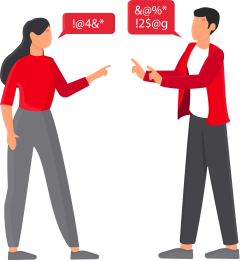
Build a Logical Argument
Explore how to build logical arguments by connecting propositions using if-then implications and logical operators. Understand the difference between everyday arguments and logical arguments, and learn to identify valid conclusions based on premises. This lesson helps you develop skills to create well-structured arguments that lead to necessary conclusions.
What is a logical argument?
This lesson introduces the last important tool in a logician’s toolkit—an argument. So far, we’ve learned the
Everyday use of the term argument
In everyday language, an argument typically refers to a disagreement, dispute, or ...