Validity through Predicate Logic
Explore how predicate logic extends propositional logic by introducing quantifiers and new inference rules. Learn to validate arguments using rules like modus ponens, modus tollens, and universal instantiation. Apply these techniques to analyze real-life situations and ensure logical consistency in arguments.
Beyond translating logical arguments to predicate logic syntax, the major objective of logic is to validate those arguments. This lesson covers the last step of employing predicate logic.
Building predicate logic on propositional logic
We know by now how predicate logic evolved out of categorical syllogism and propositional logic by taking into its folds the best of the previous two theories of logic. This evolution is represented in the illustration below.

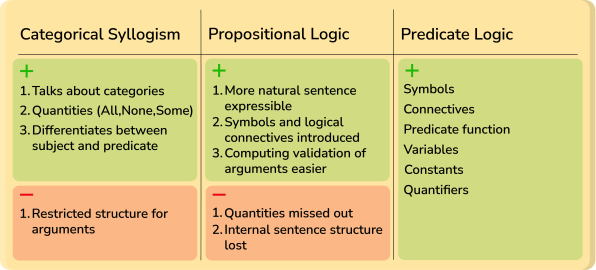
It’s important to highlight here that predicate logic imports the technique for validating arguments from propositional logic. This only means that the entire set of rules of inference and substitution gets inherited by predicate logic as well. However, because propositional logic doesn’t have quantifiers and variables, a couple of new rules of inference are created.
Reviewing inference rules
There are only ...

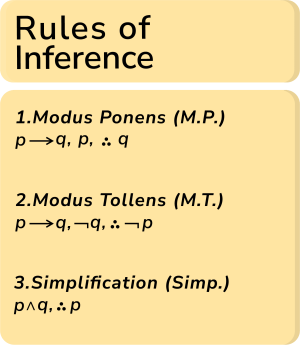
Modus ponens ...