Bottlenecks
Explore how bottlenecks limit performance in scalable software architectures. Understand causes such as inefficient algorithms, resource shortages, and poor communication between components. Learn practical ways to optimize algorithms, resource use, and network efficiency, and discover how monitoring helps identify and resolve bottlenecks to maintain system performance under increased workloads.
Overview
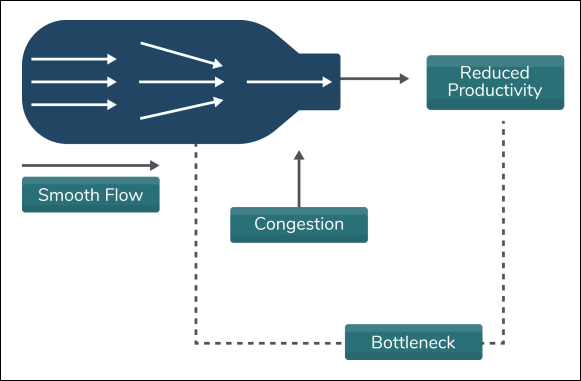
Bottlenecking occurs when a particular component or process in a system becomes a limiting factor that hinders the system’s overall performance. In a scalable software architecture, bottlenecking can occur when the system can’t handle the increased workload efficiently, resulting in poor performance or even downtime.

Potential causes
There are several potential causes of bottlenecking in scalable software architecture, including:
-
Inefficient algorithms or data structures: If the algorithms or data structures used by the system aren’t optimized for the workload, they might become a bottleneck as the workload increases.
-
Insufficient resources: If the system doesn’t have enough resources, such as memory, CPU, or ...