CLOUD LABS
Developing RESTful Microservices with API Gateway and DynamoDB
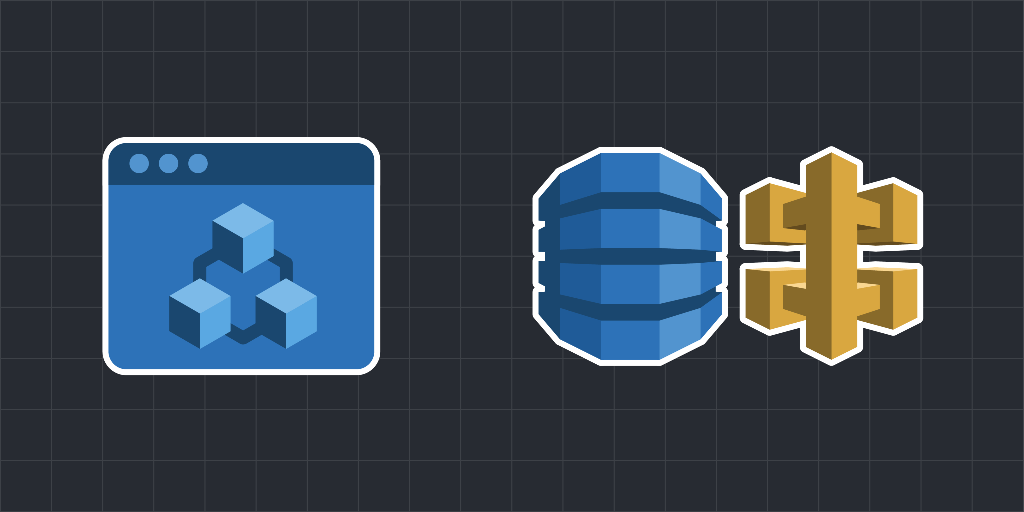
In this Cloud Lab, we’ll learn to create a REST API on Amazon API Gateway and integrate it directly with DynamoDB.
beginner
Certificate of Completion
Learning Objectives
API Gateway is one of the many services offered by AWS through which we can create, manage, and deploy different types of APIs, including HTTP, REST, and WebSocket.
In this Cloud Lab, you’ll create a REST API using the API Gateway service and integrate it directly with AWS DynamoDB. You’ll start by creating a table on DynamoDB to serve as the database for your API and insert data into the table using the AWS Python SDK. Next, you’ll create the REST API and configure its endpoints, methods, integrations, and data mappings with the DynamoDB table. Once the API is configured and deployed, you’ll invoke its different endpoints and view the results.
By the end of this Cloud Lab, you’ll have a strong understanding of REST APIs and the API Gateway service. You’ll be able to apply the knowledge you gain from this lab to create your own APIs with custom integrations with AWS services that can serve various real-world use cases.


Why RESTful microservices are still a core backend skill
Microservices architecture isn’t just a trend, it’s a practical way to ship and scale systems when multiple services, teams, and domains are involved. REST remains popular because it’s simple, language-agnostic, and easy to integrate across platforms.
But “RESTful” is more than using HTTP. Good REST APIs are predictable:
Resources have clear identifiers (URLs).
HTTP methods are used consistently (GET/POST/PUT/PATCH/DELETE).
Responses are structured and versionable.
Errors are meaningful and stable.
When you combine those principles with managed cloud services, you can build backend systems that scale without a lot of operational overhead.
Where API Gateway fits in a microservice architecture
API Gateway is commonly used as the front door for microservices. It handles:
Routing requests to backend integrations.
Authentication and authorization layers.
Rate limiting and throttling.
Request validation and transformation.
Observability hooks (logs/metrics).
Even when you have many services behind the scenes, API Gateway can provide a consistent interface to clients, web apps, mobile apps, internal tools, or partner APIs.
Why DynamoDB is a common choice for microservices
DynamoDB is a managed NoSQL database that’s frequently used for microservices because it offers:
Low-latency access at scale
Flexible schema design
Horizontal scaling without manual sharding
Built-in high availability
That said, DynamoDB works best when you design around its strengths: known access patterns, thoughtful partition keys, and minimizing “table scans” as your data grows.
Key design decisions for REST APIs backed by NoSQL
When you’re building REST services with a NoSQL backend, a few choices make a big difference:
Resource modeling: Design endpoints around resources users care about (e.g., /orders/{id}), not internal database tables.
Consistency and idempotency: Use idempotent operations where possible, and design update flows carefully to avoid accidental duplicates.
Pagination and filtering: Plan for “list” endpoints early, pagination patterns, and filter semantics keep services usable as data grows.
Error handling and validation: Define consistent error formats and validate inputs. It’s one of the easiest ways to improve developer experience.
Security boundaries: Even for “simple CRUD,” you want authorization controls, rate limits, and least-privilege access to data.
How to think about “microservice” in practice
A microservice isn’t “small code.” It’s a service with clear ownership, a stable contract, and independent deployment. Good microservices:
Have a single responsibility.
Own their data (or at least their access patterns).
Can be deployed independently.
Are observable (metrics/logs).
Fail in predictable ways.
Building a RESTful service with API Gateway and a managed database is one of the fastest ways to internalize these principles.
Before you start...
Try these optional labs before starting this lab.


Relevant Courses
Use the following content to review prerequisites or explore specific concepts in detail.
Felipe Matheus
Software Engineer
Adina Ong
Senior Engineering Manager
Clifford Fajardo
Senior Software Engineer
Thomas Chang
Software Engineer