Focus on mastering data structures (arrays, linked lists, stacks, queues, trees, graphs) and algorithms (sorting, searching, dynamic programming). Practice on platforms like Educative. Get comfortable with Java-specific features like collections, generics, and streams. Time management is crucial, so simulate timed coding interviews.
AI-powered learning
Save this course
Algorithms for Coding Interviews in Java
The ultimate guide to coding interviews in Java. Developed by FAANG engineers, tackle 50+ challenge problems, review detailed solutions, and learn strategies to craft optimal solutions.
4.5
151 Lessons
15h
Updated 5 months ago
Join 3 million developers at
Join 3 million developers at
LEARNING OBJECTIVES
- Analyze Java algorithms using primitive operation counts and Big O asymptotic analysis
- Compare algorithms by evaluating worst-, best-, and average-case time and space complexity
- Implement and evaluate sorting algorithms (selection, bubble, insertion, merge sort, quicksort) in Java
- Apply searching techniques (linear, binary, and modified binary search) to solve array and matrix problems
- Solve dynamic programming problems in Java using memoization, tabulation, and space optimization
- Implement greedy algorithms in Java and justify choices using greedy choice property and optimal substructure
- Build graph solutions in Java using adjacency lists, BFS/DFS, transpose, components, bipartite, and topological sort
Learning Roadmap
1.
Introduction
Introduction
Get familiar with foundational concepts, coding challenges, and advanced problem-solving strategies for Java.
2.
Algorithmic Paradigms
Algorithmic Paradigms
Grasp the fundamentals of brute force, greedy algorithms, divide and conquer, and dynamic programming.
3.
Asymptotic Analysis
Asymptotic Analysis
22 Lessons
22 Lessons
Master the steps to asymptotic analysis, comparing algorithm complexities, and solving complexity challenges.
4.
Sorting and Searching
Sorting and Searching
26 Lessons
26 Lessons
Discover algorithm techniques for sorting (like Merge Sort and QuickSort) and efficient searching methods.
5.
Dynamic Programming
Dynamic Programming
25 Lessons
25 Lessons
Deepen your knowledge of dynamic programming techniques for solving complex coding problems efficiently.
6.
Greedy Algorithms
Greedy Algorithms
20 Lessons
20 Lessons
Follow the process of designing and implementing efficient greedy algorithms to solve diverse optimization problems.
7.
Divide and Conquer
Divide and Conquer
23 Lessons
23 Lessons
Master the steps to applying divide and conquer for efficient problem-solving in algorithm design.
8.
Graph Algorithms
Graph Algorithms
22 Lessons
22 Lessons
Sharpen your skills in implementing and solving diverse graph algorithms efficiently.
9.
Appendix: Auxiliary Source Code
Appendix: Auxiliary Source Code
5 Lessons
5 Lessons
Unpack the core of auxiliary classes like Stack, Queue, PriorityQueue, HashMap, and ArrayList.
10.
Conclusion
Conclusion
2 Lessons
2 Lessons
Master the steps to understand efficient algorithms and enhance your technical interview skills.
Certificate of Completion
Showcase your accomplishment by sharing your certificate of completion.
Complete more lessons to unlock your certificate
Developed by MAANG Engineers
ABOUT THIS COURSE
Algorithms are one of the most common themes in coding interviews, so having a firm grip on them can be the difference between being hired or not. After this comprehensive course in Java, one of the most popular coding languages, you'll have an in-depth understanding of different algorithm types and be equipped with a simple process for approaching complex analysis.
As you progress through the course, you’ll be exposed to the most important algorithms that you're likely to encounter in an interview. You'll work your way through over 50 interactive coding challenges and review detailed solutions for each problem. And guess what? Even if you’re not yet fully comfortable with Java, you’ll walk away with the ability to craft optimal solutions for addressing tough coding interview questions in it.
ABOUT THE AUTHOR
Coderust
Coderust helps software developers like you ace your coding interviews. Our interactive interview-prep courses encourage you to get hands-on with the material and practice working through problems.
Trusted by 3 million developers working at companies
A
Anthony Walker
@_webarchitect_
E
Evan Dunbar
ML Engineer
S
Software Developer
Carlos Matias La Borde
S
Souvik Kundu
Front-end Developer
V
Vinay Krishnaiah
Software Developer
Built for 10x Developers
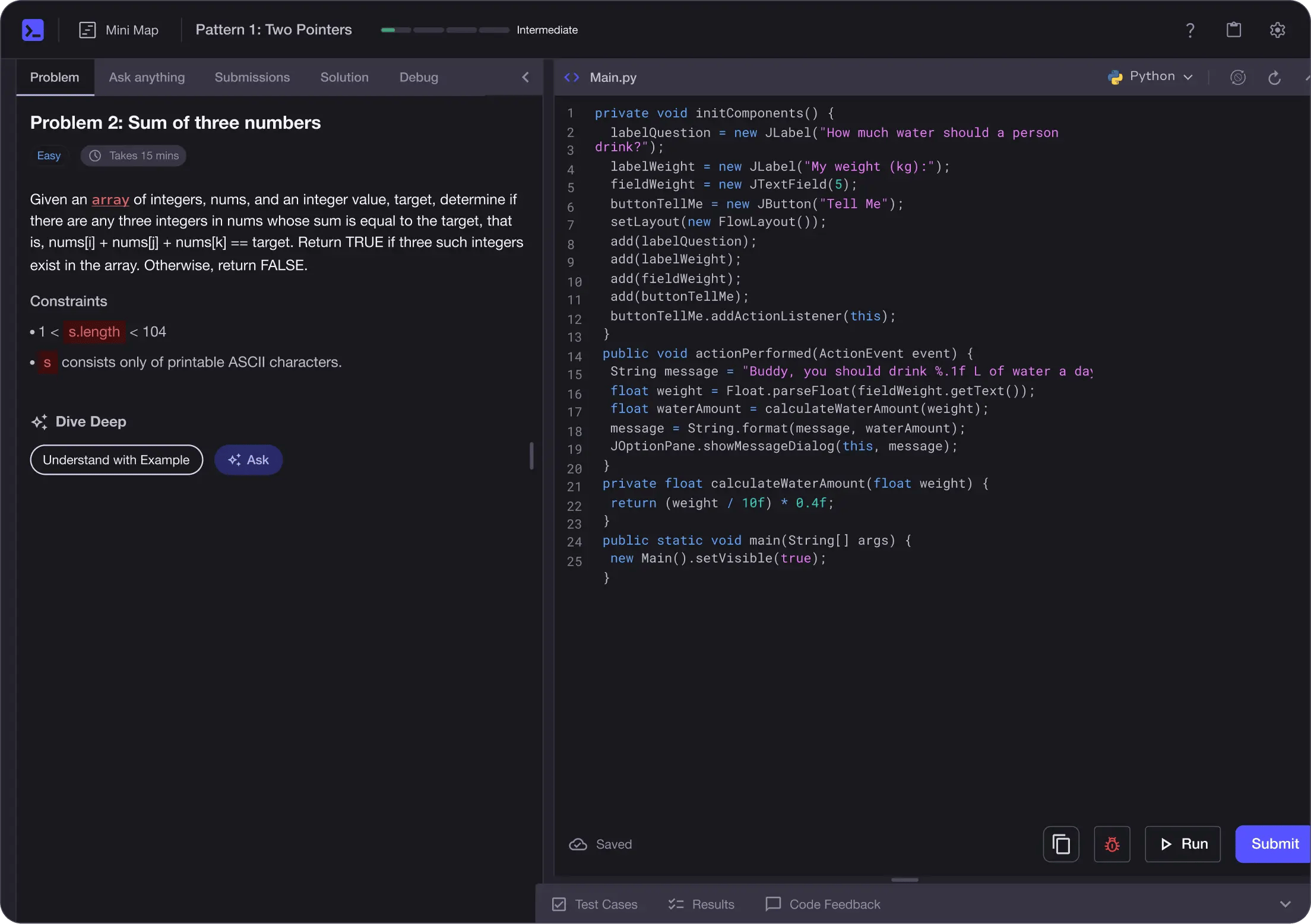
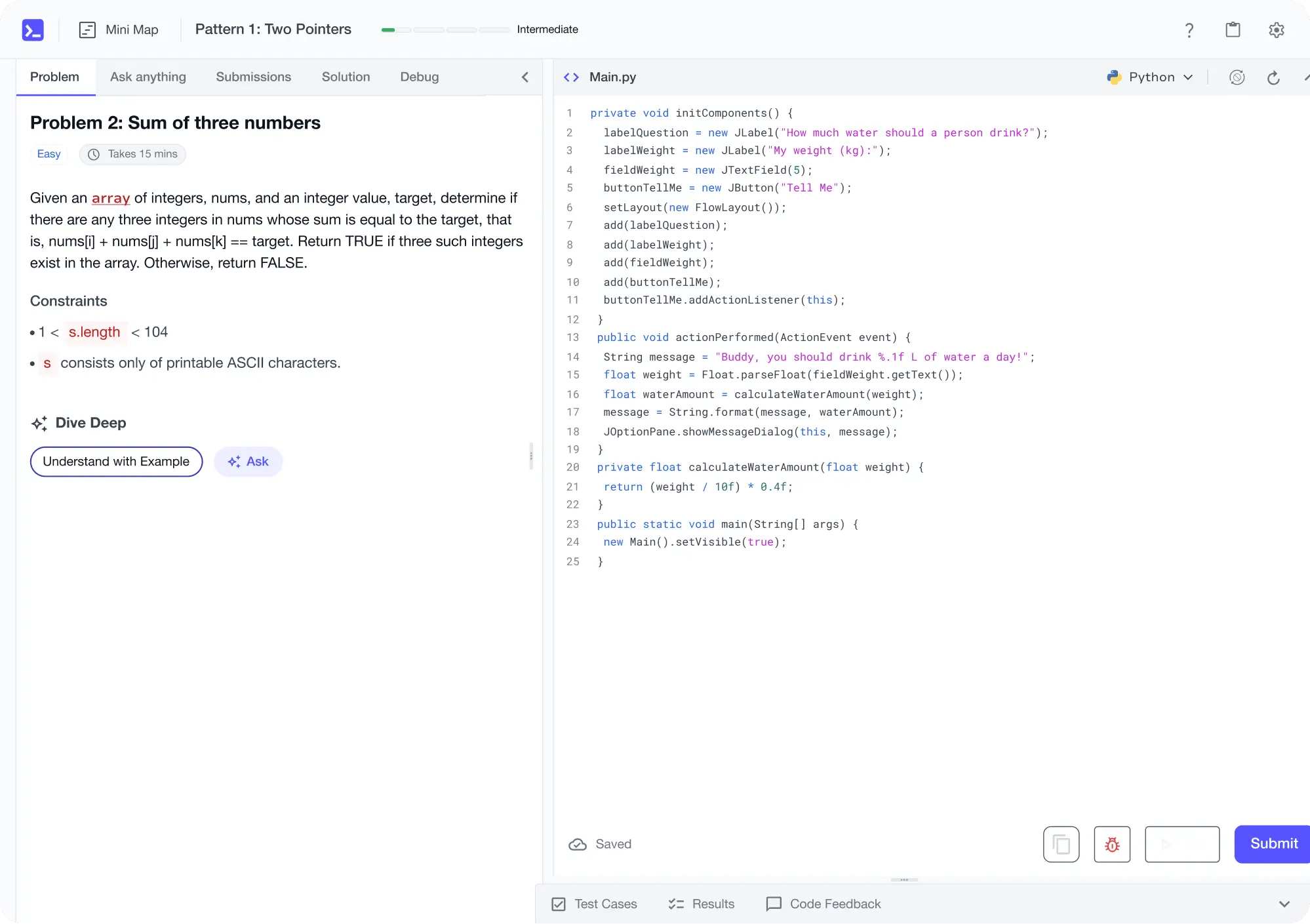
No Passive Learning
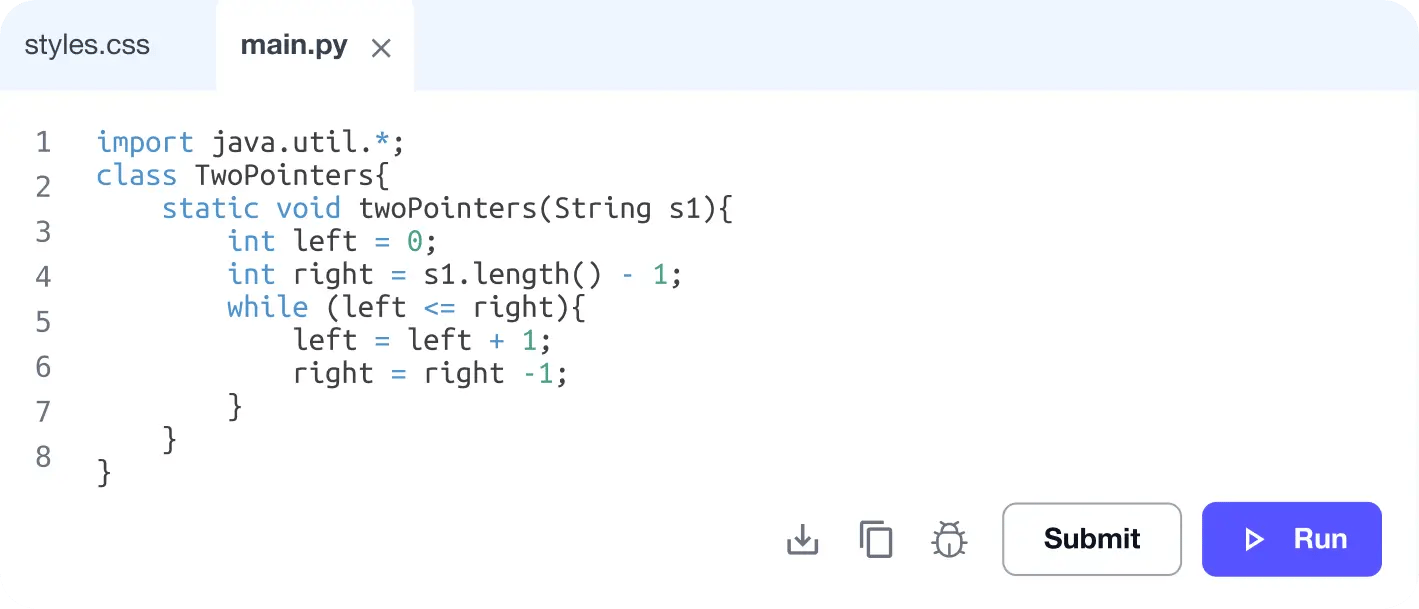
Learn by building with project-based lessons and in-browser code editor
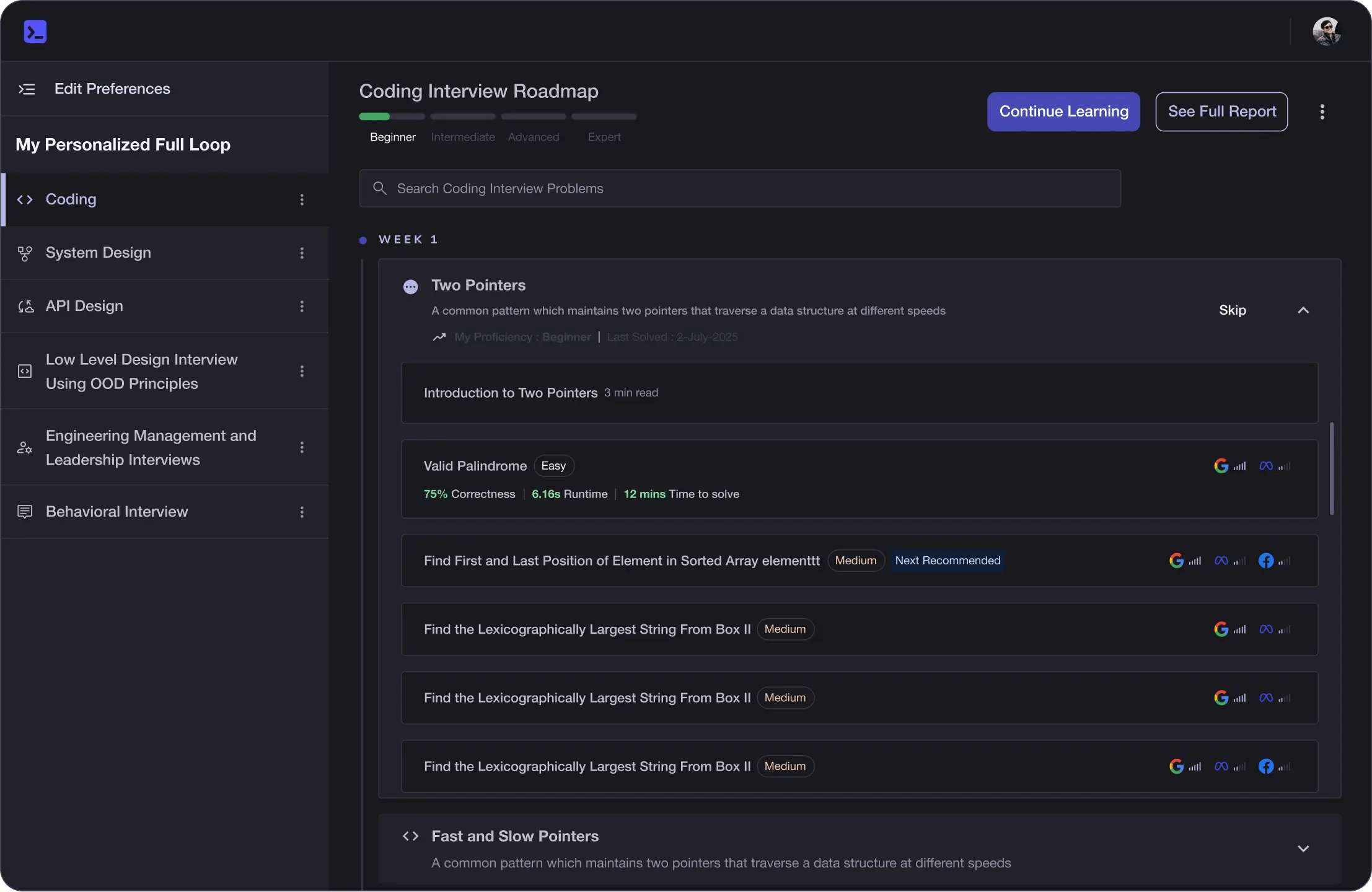
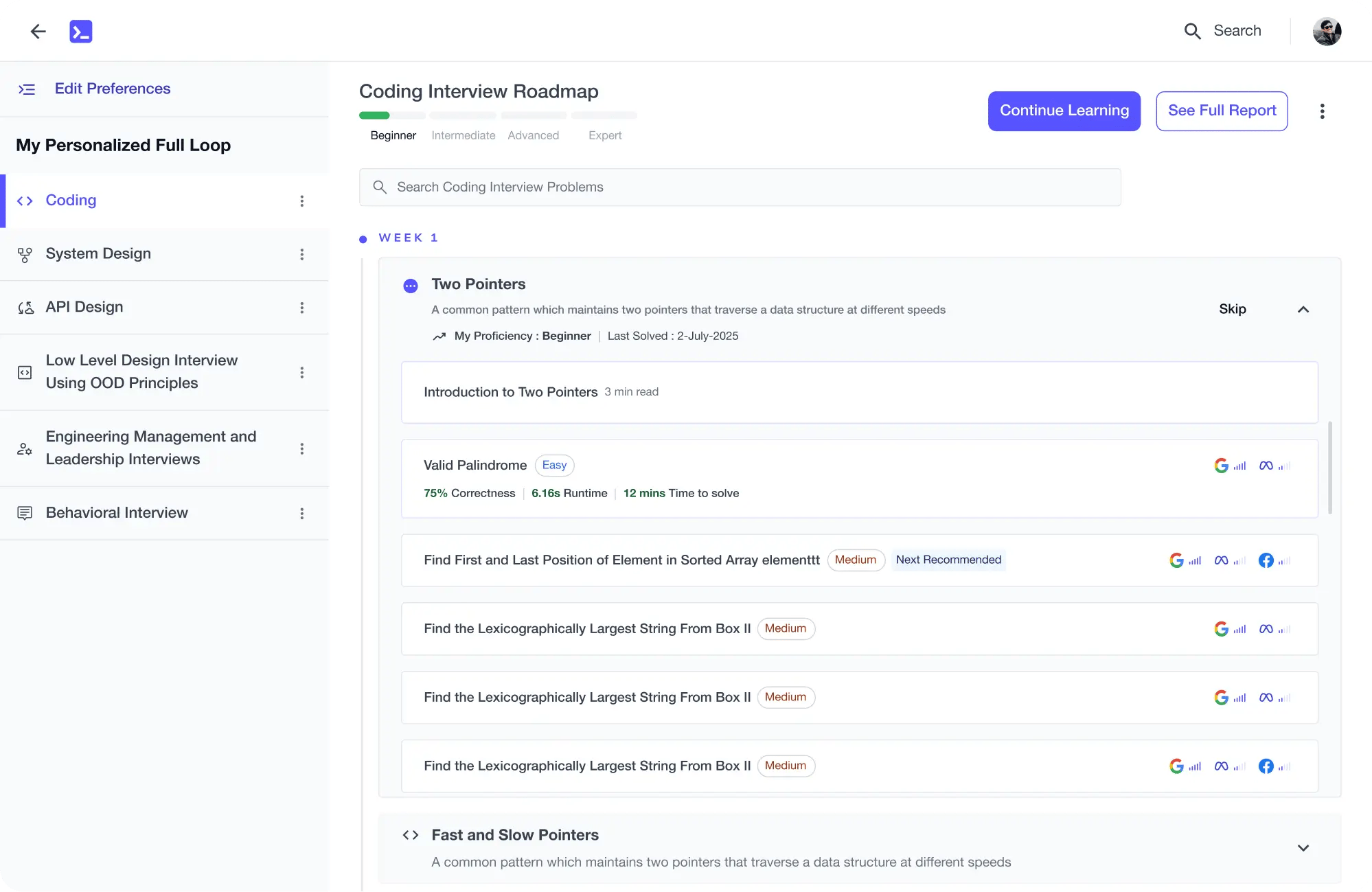
Personalized Roadmaps
The platform adapts to your strengths & skills gaps as you go
Future-proof Your Career
Get hands-on with in-demand skills
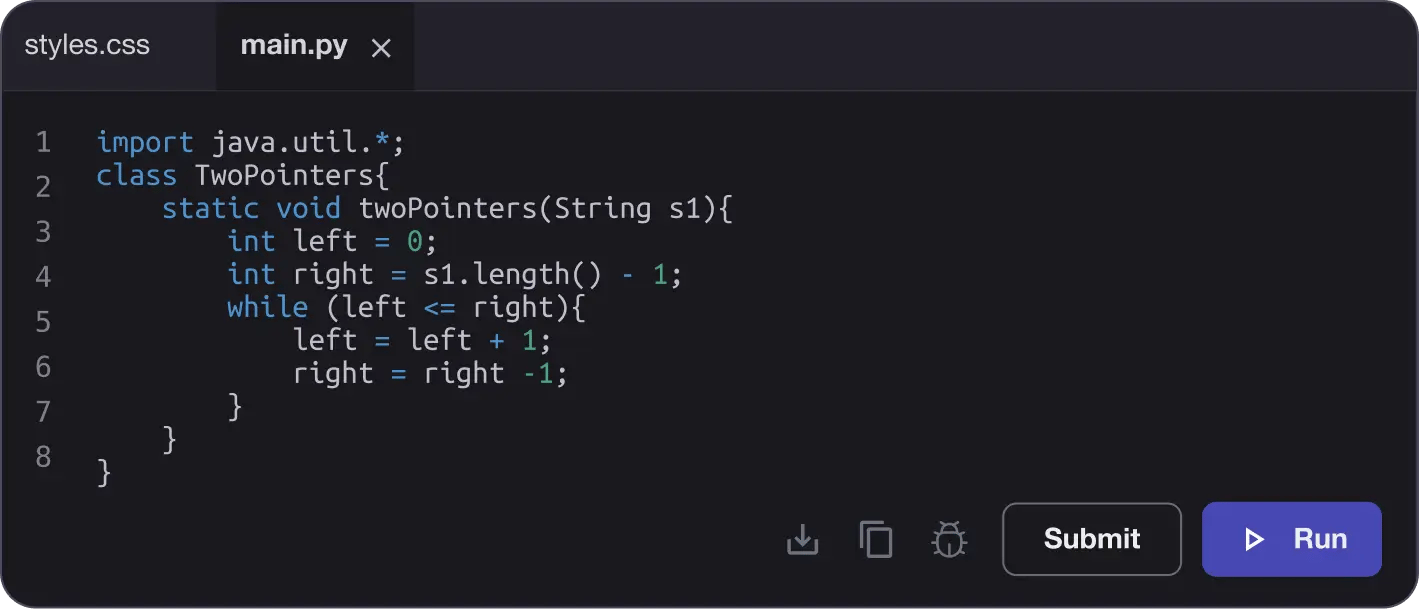
AI Code Mentor
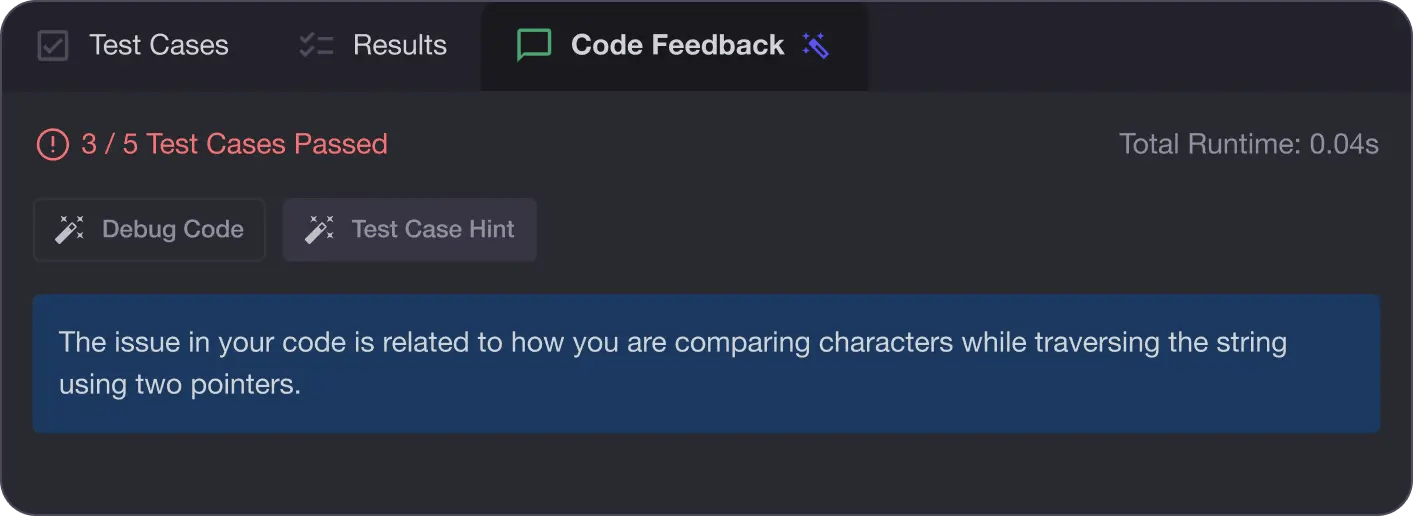
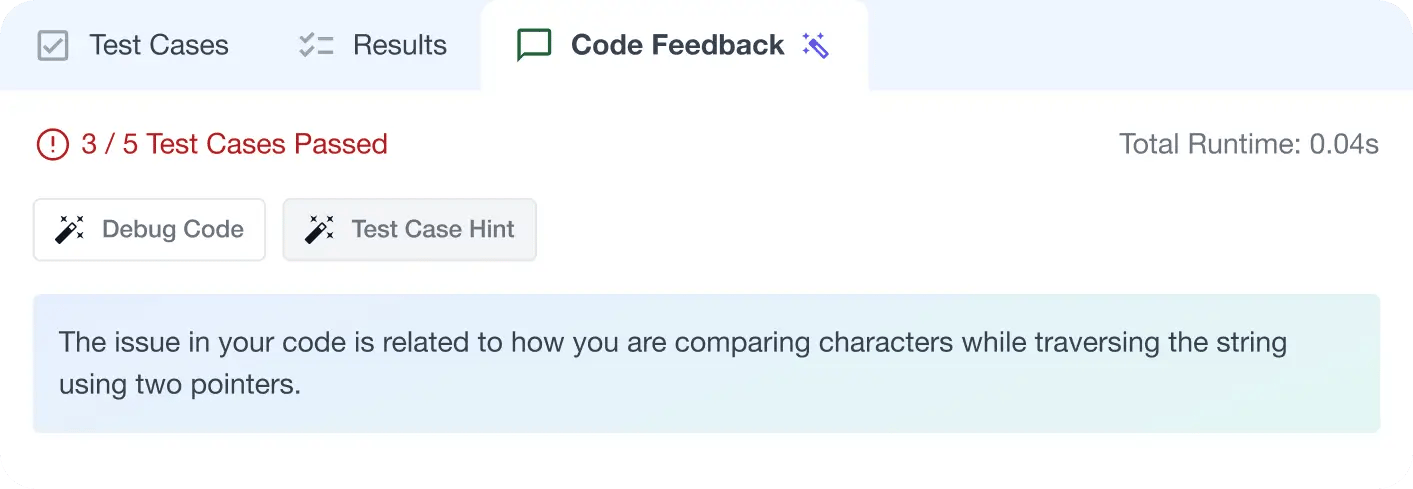
Write better code with AI feedback, smart debugging, and "Ask AI"
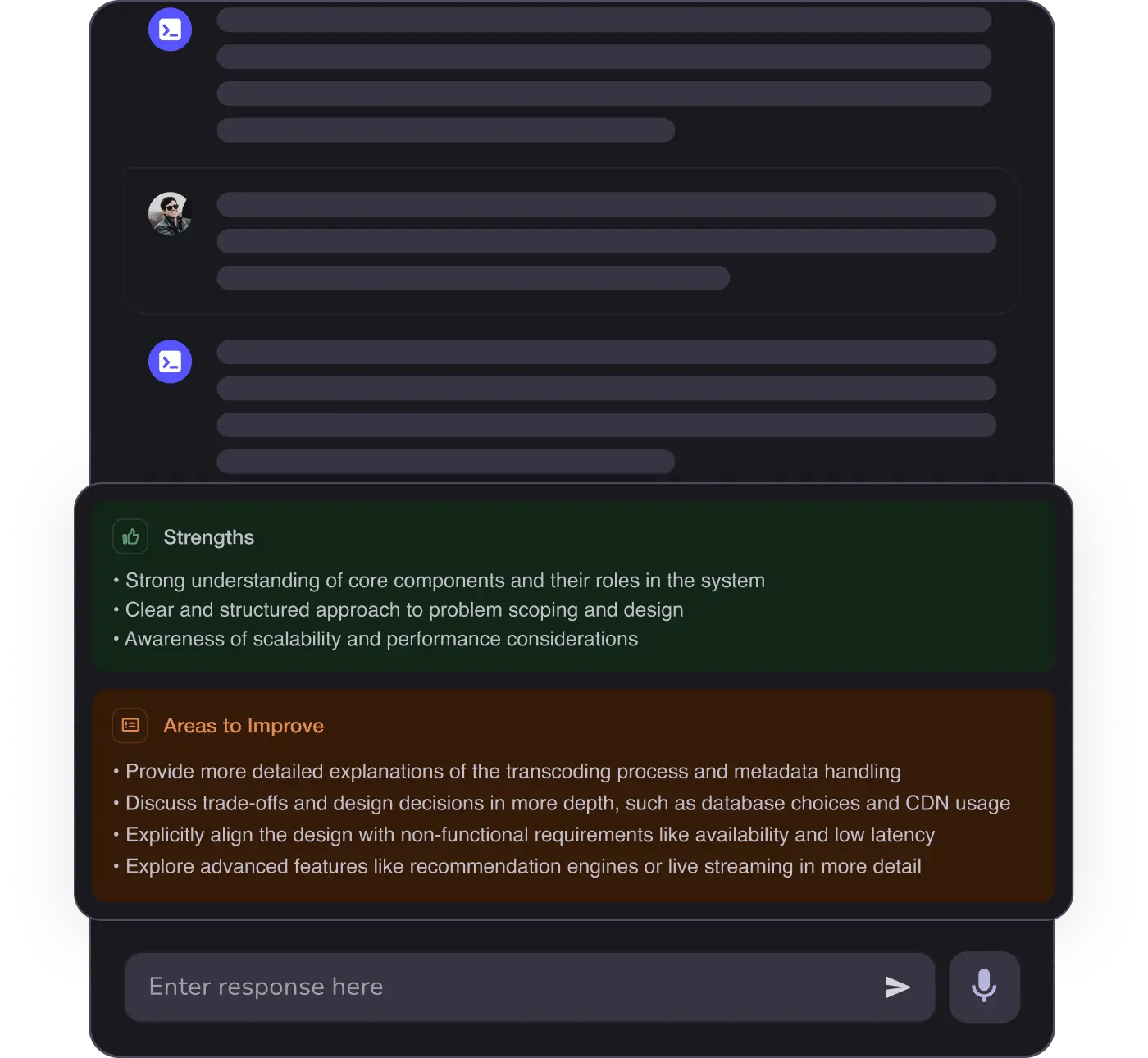
MAANG+ Interview Prep
AI Mock Interviews simulate every technical loop at top companies
Free Resources
Frequently Asked Questions
How do I prepare for a Java coding interview?
Is Java a good choice for coding interviews?
How do I improve my Java coding skills?
How do I write fast code in Java?
Why is Java good for algorithms?