HomeCoursesFoundations of Linux ARM64: Debug, Disassemble, and Reverse
Updated 27 Aug
AI-powered learning
Save

Foundations of Linux ARM64: Debug, Disassemble, and Reverse

Gain insights into debugging C/C++ programs on Linux ARM64, delve into program disassembly, probe memory/register changes using GDB, and discover techniques for core dump analysis and assembly-level debugging.

4.5
44 lessons
12h
Created by Dmitry Vostokov
Foundations of Linux ARM64: Debug, Disassemble, and Reverse
What's included
  • 44 lessons across 15 modules
  • 5 quizzes with instant feedback
  • AI Tutor on every lesson
Who wrote it
Dmitry Vostokov
Diagnostician. The Author of Diagnomicon.

I founded the pattern-oriented software diagnostics discipline (Systematic Software Diagnostics) and Software Diagnostics Institute (DA+TA: DumpAnalysis.org + TraceAnalysis.org), authored more than 50 books on software diagnostics, anomaly detection and analysis, software and memory forensics, root cause analysis and problem solving, memory dump analysis, debugging, software trace and log analysis, reverse engineering and malware analysis. I have more than 25 years of experience in software architecture, design, development, and maintenance in a variety of industries including leadership, technical and people management roles. In my spare time, I explore the mathematical and computer science foundations of Theoretical Software Diagnostics, application of formal logic, artificial intelligence, machine learning and data mining to diagnostics and anomaly detection, Software Narratology, its further development as Narratology of Things and Diagnostics of Things (DoT), Software Pathology, and Quantum Software Diagnostics. My practical focus is on software diagnostics engineering and diagnostics-driven development, diagnostics workflow and interaction. Recent interest areas also include cloud native computing, security, automation, functional programming, applications of category theory to software development and big data, and diagnostics of artificial intelligence.

Join 3.1 million developers at

What You'll Learn

  • Familiarity with disassembly in the GDB environment of simple C/C++ programs
  • An understanding of how to debug programs with a cross-sectional view to the contents of registers, stack, and memory
  • Ability to use GDB as a dump analysis tool
  • Hands-on experience to reconstruct simple C/C++ programs from the disassembly output
  • A deeper understanding of the basic assembly language programming skills

Learning Roadmap

44 Lessons5 Quizzes1 Assessment

2.

Memory, Registers, and Simple Arithmetic

Memory, Registers, and Simple Arithmetic

Unpack the core of memory and registers, arithmetic operations, and their implementation in ARM64.

3.

Code Optimization

Code Optimization

3 Lessons

3 Lessons

Go hands-on with GDB disassembly for both non-optimized and optimized C/C++ code.

4.

Number Representations

Number Representations

2 Lessons

2 Lessons

Grasp the fundamentals of number systems, including decimal, binary, ternary, and hexadecimal.

5.

Pointers

Pointers

6 Lessons

6 Lessons

Solve problems in Linux ARM64 debugging with advanced pointer operations and arithmetic.

6.

Bytes, Half Words, Words, and Double Words

Bytes, Half Words, Words, and Double Words

2 Lessons

2 Lessons

Investigate ARM64 memory management, organization, and the relationship between bytes, words, and memory addresses.

7.

Pointers to Memory

Pointers to Memory

3 Lessons

3 Lessons

Practice using pointers for memory management, addressing types, and debugging techniques in Linux ARM64.

8.

Logical Instructions and PC

Logical Instructions and PC

4 Lessons

4 Lessons

Get familiar with logical operations, zeroing methods, and the instruction pointer in ARM64.

9.

Reconstructing a Program with Pointers

Reconstructing a Program with Pointers

3 Lessons

3 Lessons

Unpack the core of program reconstruction using disassembly output and optimization techniques.

10.

Memory and Stacks

Memory and Stacks

3 Lessons

3 Lessons

Break apart stack operations, memory roles, and GDB exploration in ARM64 Linux.

11.

Frame Pointer and Local Variables

Frame Pointer and Local Variables

4 Lessons

4 Lessons

Enhance your skills in stack management, function prolog/epilog, and local variable debugging on ARM64.

12.

Function Parameters

Function Parameters

2 Lessons

2 Lessons

Take a closer look at ARM64 function parameters, stack usage, and debugging with GDB.

13.

More Instructions

More Instructions

2 Lessons

2 Lessons

Simplify complex topics like PSTATE flags, conditional jumps, TST and CMP instructions.

14.

Function Pointer Parameters

Function Pointer Parameters

2 Lessons

2 Lessons

Practice using GDB to explore function parameter implementation and arithmetic examples.

15.

Conclusion

Conclusion

2 Lessons

2 Lessons

Get familiar with ARM64 function prologs, epilogs, parameter passing, and practical disassembly.
Certificate of Completion
Showcase your accomplishment by sharing your certificate of completion.
Fahim Ul HaqFoundations of Linux ARM64:Debug, Disassemble, and ReverseFounder & CEO
About this course
WHY I WROTE THIS COURSE
The GNU Debugger (GDB) is used for debugging C/C++ programs in LINUX/UNIX environments. It is a good tool to investigate what is happening inside a program and how the contents inside the memory are changed with the execution of the program. The main focus of the course is the disassembly of the program. You’ll use the Linux ARM64 which is a popular RISC architecture. You’ll use simple operations in C/C++ such as assignment, increment, addition, multiplication. With the help of the GDB, you will probe into the contents of the registers and memory. You'll learn how they are changed while executing basic operations. With the help of the disassembly output, you’ll learn how a simple C/C++ program can be reconstructed. The disassembly output is important for debugging and core dump analysis. By the end of this course, you should be able to debug the programs and memory contents at assembly level when a program executes or probe into the problem when a program crashes.
ABOUT THE AUTHOR

Dmitry Vostokov

Diagnostician. The Author of Diagnomicon.

Learn more about Dmitry

Trusted by 3.1 million developers working at companies

These are high-quality courses. Trust me the price is worth it for the content quality. Educative came at the right time in my career. I'm understanding topics better than with any book or online video tutorial I've done. Truly made for developers. Thanks

A

Anthony Walker

@_webarchitect_

Just finished my first full #ML course: Machine learning for Software Engineers from Educative, Inc. ... Highly recommend!

E

Evan Dunbar

ML Engineer

You guys are the gold standard of crash-courses... Narrow enough that it doesn't need years of study or a full blown book to get the gist, but broad enough that an afternoon of Googling doesn't cut it.

S

Software Developer

Carlos Matias La Borde

I spend my days and nights on Educative. It is indispensable. It is such a unique and reader-friendly site

S

Souvik Kundu

Front-end Developer

Your courses are simply awesome, the depth they go into and the breadth of coverage is so good that I don't have to refer to 10 different websites looking for interview topics and content.

V

Vinay Krishnaiah

Software Developer

FOR TEAMS

Interested in this course for your business or team?

Unlock this course (and 1,000+ more) for your entire org with DevPath

Built for 10x Developers

No Passive Learning
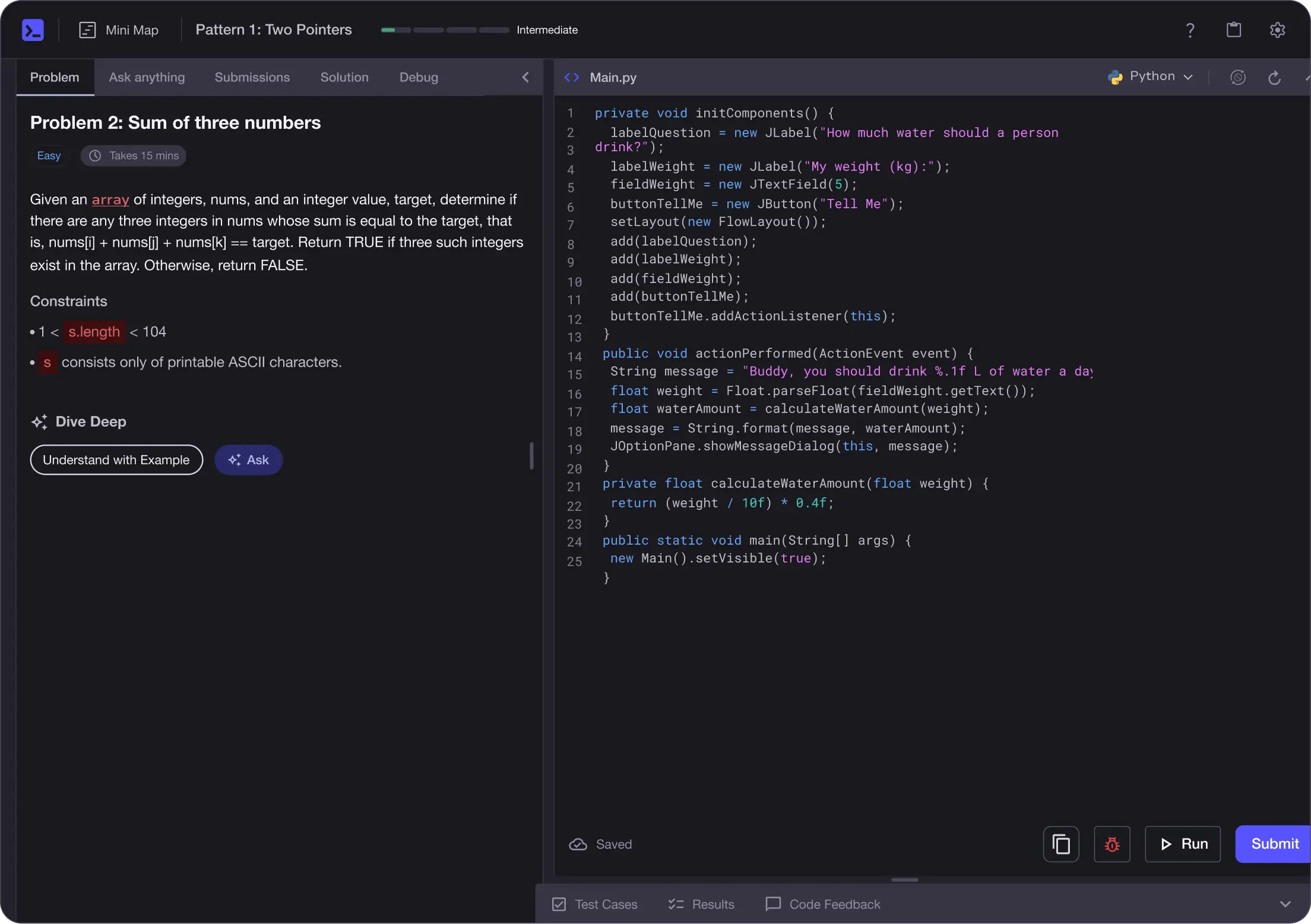
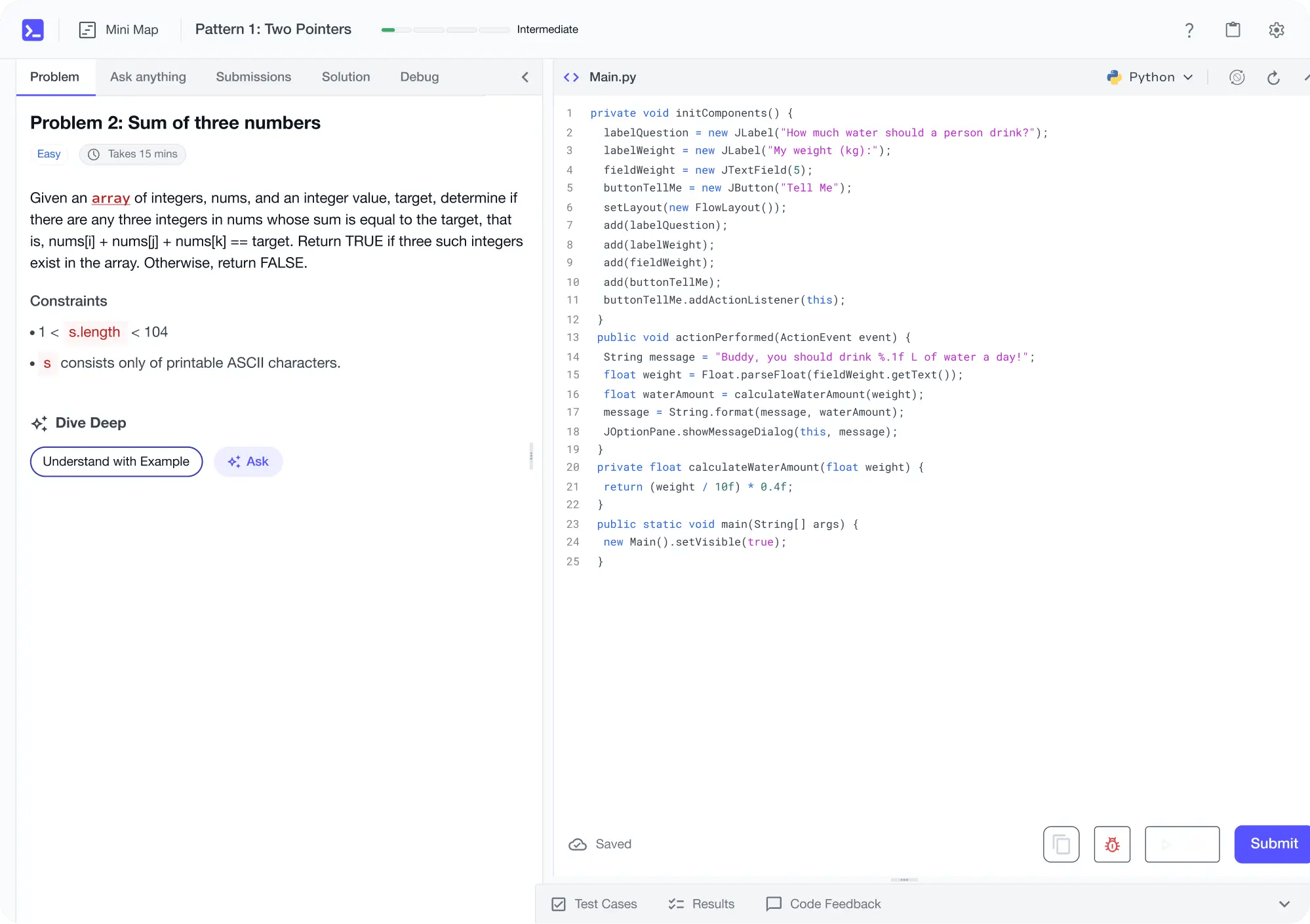
Learn by building with project-based lessons and in-browser code editor
Learn by DoingLearn by Doing
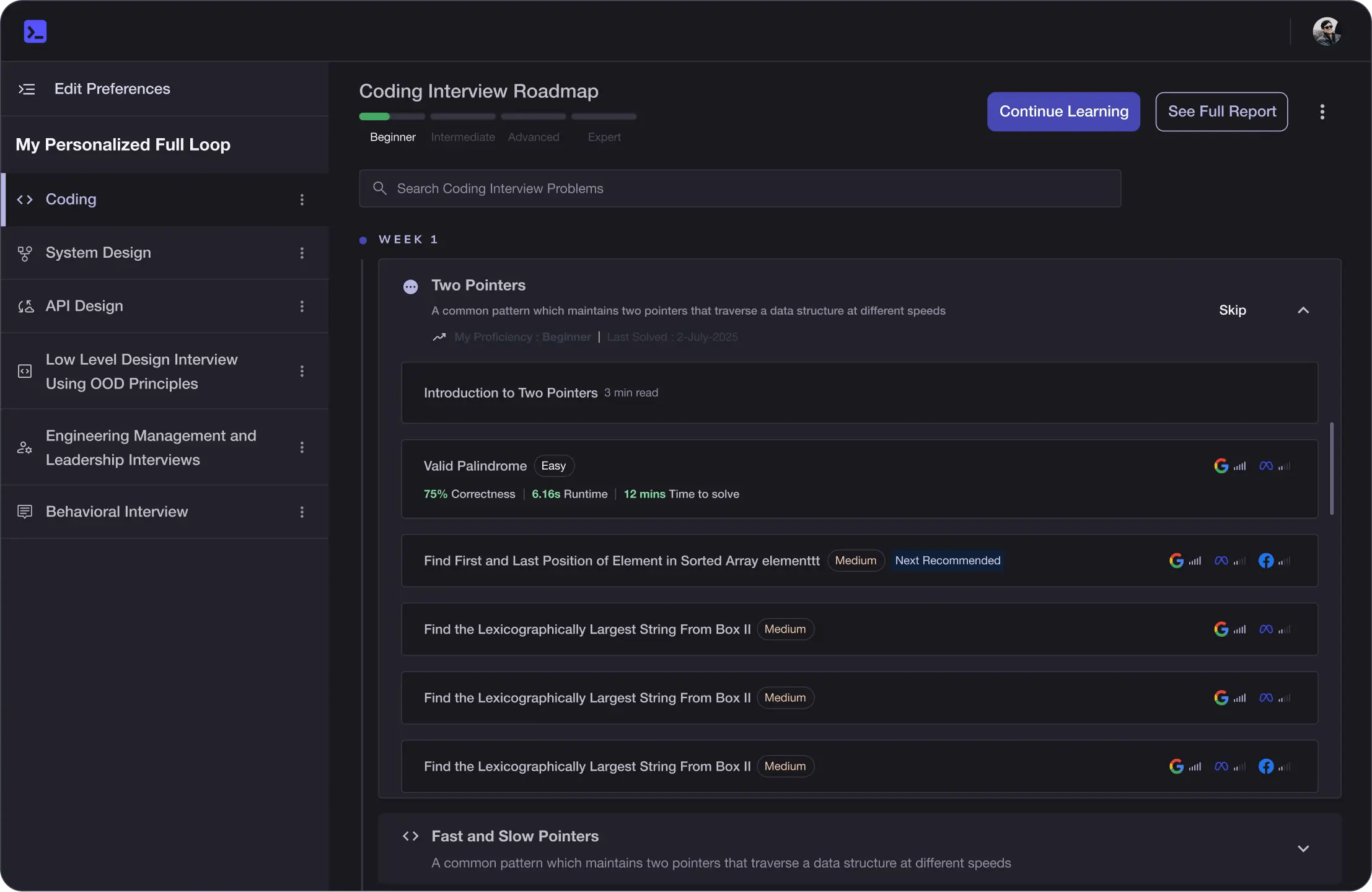
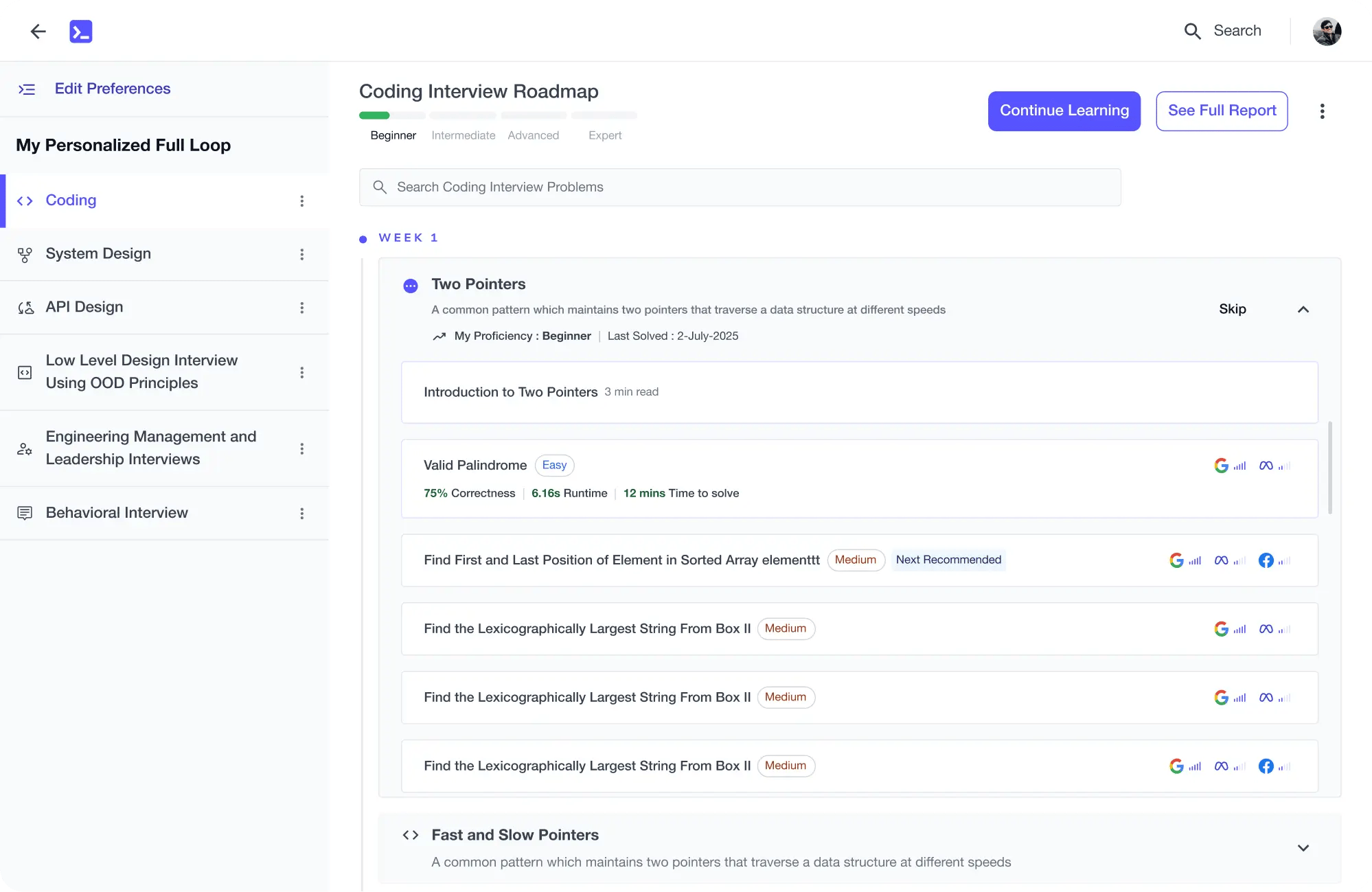
Personalized Roadmaps
The platform adapts to your strengths & skills gaps as you go
Learn by DoingLearn by Doing
Future-proof Your Career
Get hands-on with in-demand skills
Learn by DoingLearn by Doing
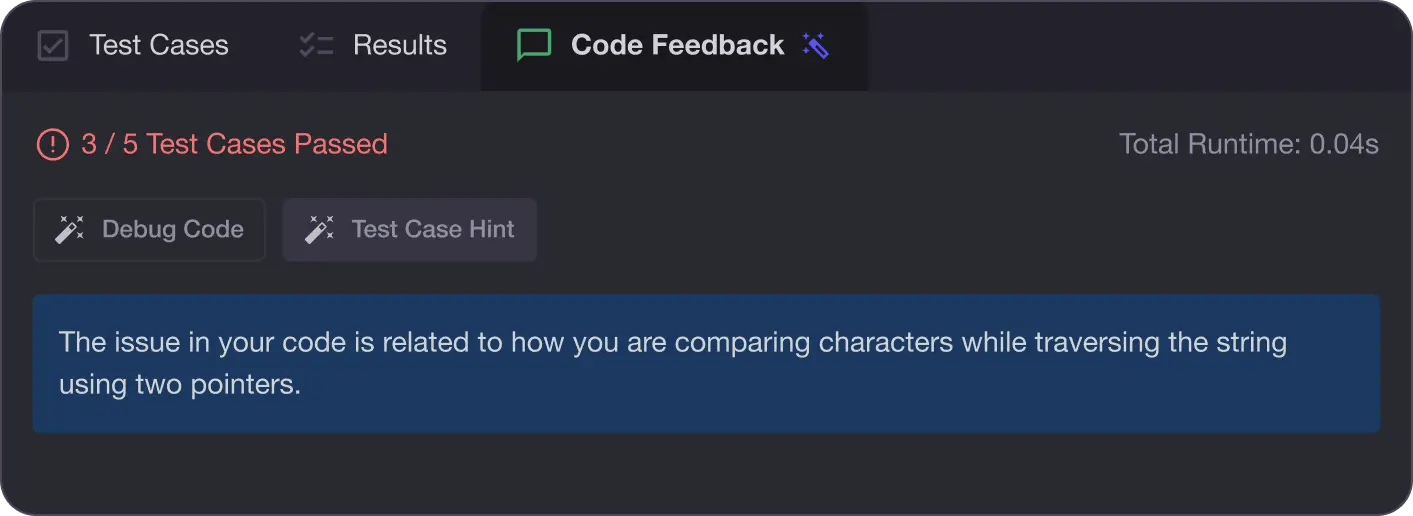
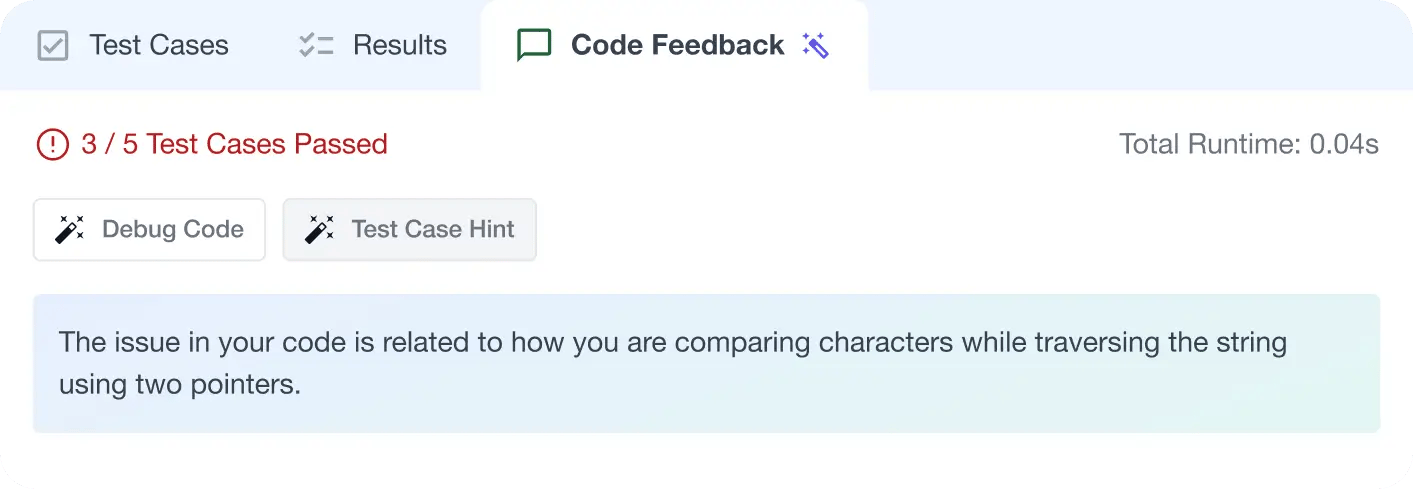
AI Code Mentor
Write better code with AI feedback, smart debugging, and "Ask AI"
Learn by DoingLearn by Doing
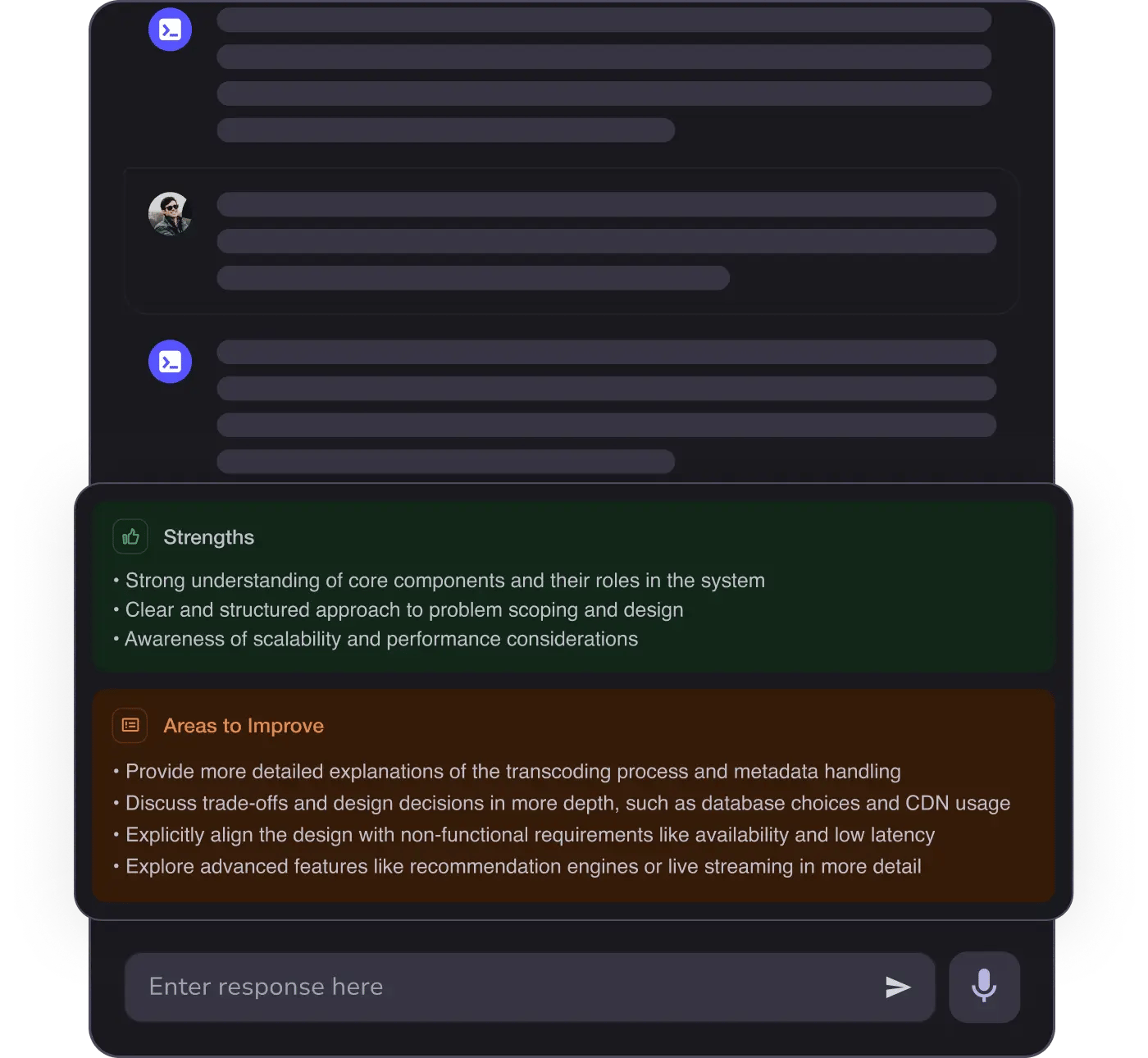
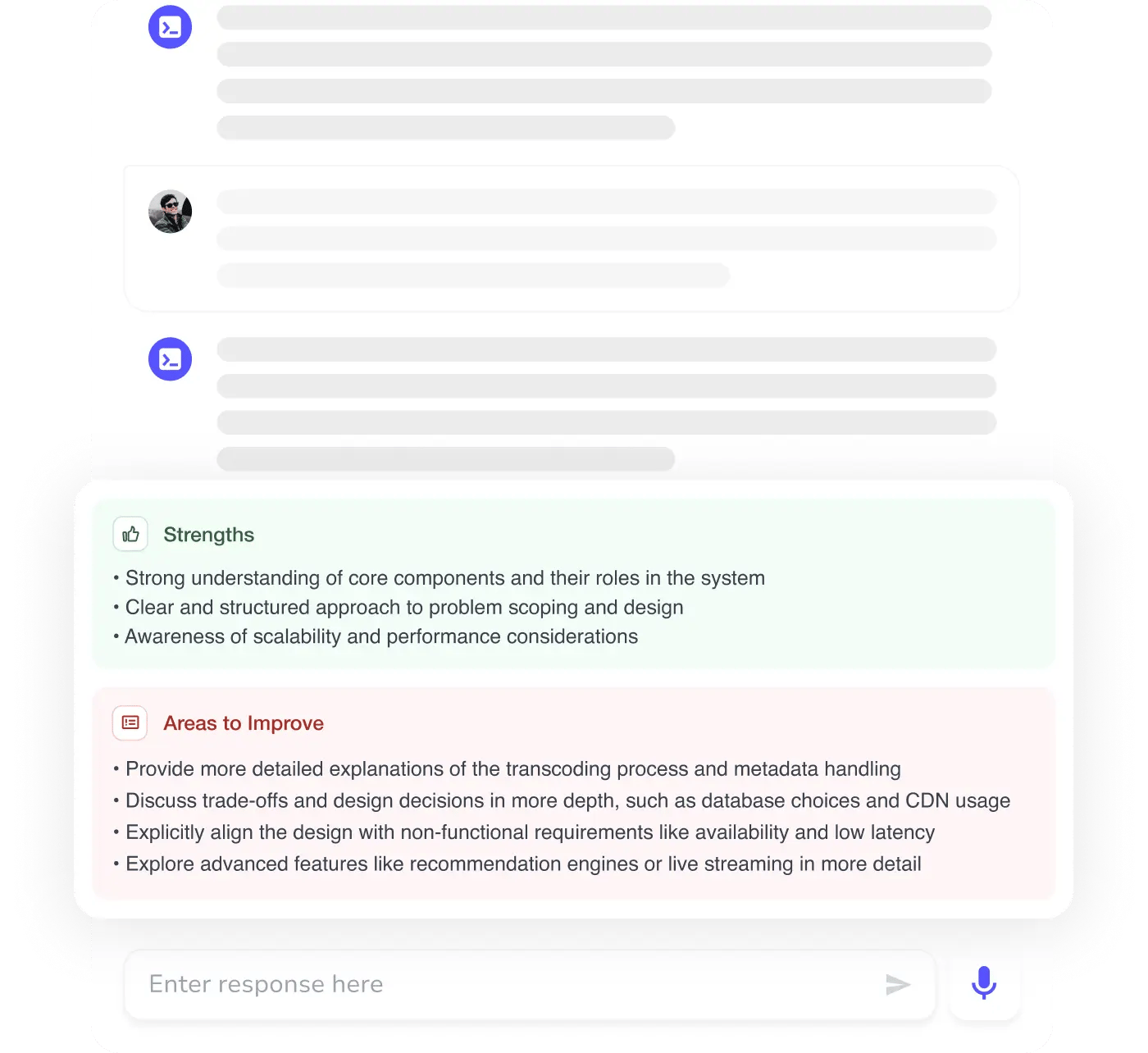
MAANG+ Interview Prep
AI Mock Interviews simulate every technical loop at top companies
Learn by DoingLearn by Doing

Free Resources