MapReduce Framework
Explore how the MapReduce framework enables distributed processing of large datasets in parallel across multiple nodes. Understand its two main tasks, Map and Reduce, through clear examples like word counting. Learn the process of mapping data into key-value pairs, shuffling, and reducing to aggregate results. This lesson also covers the limitations of MapReduce and its ideal use cases in batch processing rather than real-time or streaming data.
We'll cover the following...
MapReduce
MapReduce is a programming model introduced by Google. It is part of the Hadoop Ecosystem. It enables us to process large datasets in a distributed environment in a distributed and parallel manner.
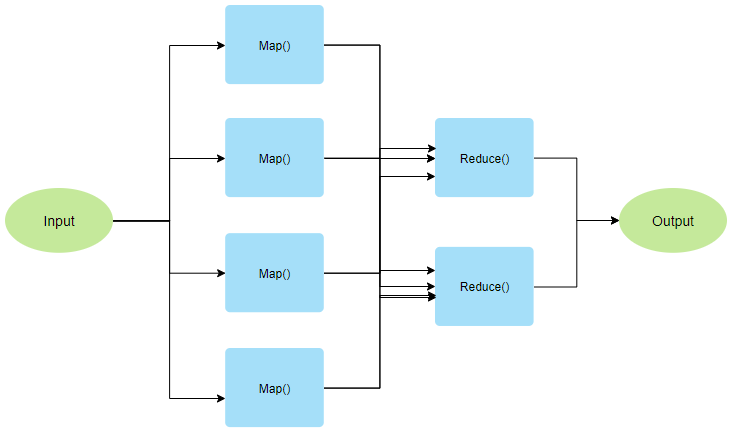
MapReduce consists of two tasks: Map and Reduce, as shown in the diagram above. The Reduce operation runs after the Map operation. The Map operation takes the input, applies the processing logic, and produces output in the form of pairs.
Next, the Reducer receives the pairs from multiple Map jobs, as shown in the diagram above. The responsibility of the Reducer is to aggregate the intermediate results produced by the Mapper functions and then generate the final output.
Word count example
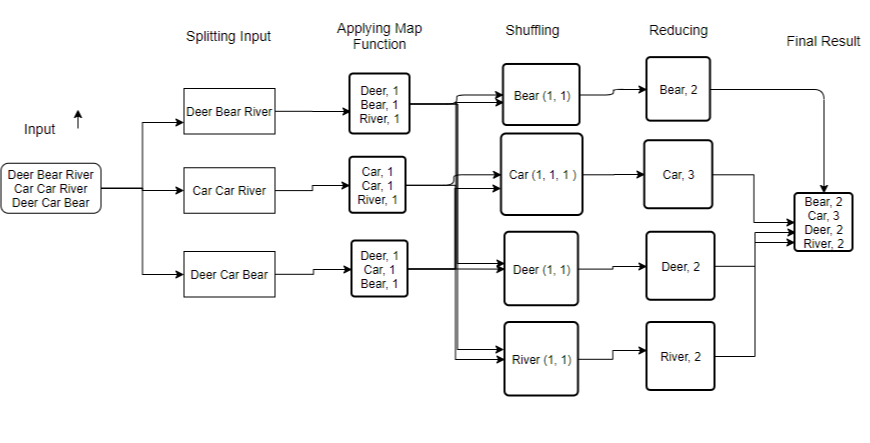
In the above example, we count the occurrence of different words present in a document using the ...