How to train an AI agent
Curious about building intelligent AI systems? Learning how to train an AI agent helps you understand reinforcement learning, environments, and decision systems that power modern autonomous AI applications.
Artificial intelligence systems have evolved rapidly in recent years, and one of the most exciting developments is the emergence of AI agents capable of reasoning, planning, and executing tasks. As these systems become more powerful, many developers and researchers begin asking the same question: how to train an AI agent effectively.
Training an AI agent involves much more than building a simple prompt-response model. Agents must learn how to interpret goals, analyze environments, take actions, and evaluate outcomes while gradually improving their performance through experience or feedback.
Understanding how to train an AI agent requires exploring multiple concepts, including machine learning, reinforcement learning, data pipelines, and System Design. Developers who approach this process with a clear understanding of agent architecture can build systems capable of solving increasingly complex tasks.
Build AI Agents and Multi-Agent Systems with CrewAI
Building AI agents and multi-agent systems with CrewAI is quickly becoming a core capability for developers working with modern LLM-powered applications. As workflows grow more complex, the shift is no longer about single prompts, but about orchestrating multiple agents that can collaborate, delegate tasks, and operate as coordinated systems. I built this course from my work in adaptive AI and intelligent orchestration, where designing agentic workflows requires structure, coordination, and control. A recurring pattern I observed was that developers could build individual agents, but struggled to scale them into reliable multi-agent systems. CrewAI provides a practical framework for this, and this course is designed to make it actionable. You’ll learn how to build AI agents and multi-agent systems with CrewAI through hands-on workflows, starting with core agent concepts, then progressing into task delegation, hierarchical orchestration, and human-in-the-loop systems. You’ll implement real automation pipelines and explore advanced features like conditional tasks, monitoring, and scalable agent operations. Developers are already using CrewAI to build coordinated AI systems at scale. If you want to move from single agents to fully orchestrated AI workflows, this is where you begin.
Understanding What An AI Agent Is#
Before getting started with AI agents, it is important to understand the fundamental idea behind agent-based artificial intelligence systems. An AI agent is a system that perceives information from an environment, reasons about a goal, and performs actions to achieve that objective.
Traditional machine learning models often focus on prediction tasks such as classification or regression. AI agents operate differently because they interact with environments over time while making sequential decisions.
Agents therefore combine perception, reasoning, and action within a continuous decision-making loop. This capability allows them to solve problems that involve multiple steps and changing conditions.
System Type | Behavior |
Machine Learning Model | Predicts outcomes from input data |
Language Model | Generates responses from prompts |
AI Agent | Performs actions to achieve goals |
Autonomous Agent | Operates with minimal supervision |
This distinction highlights why training agents involves additional design challenges compared with traditional AI models.
Become an Agentic AI Expert
Agentic AI represents the next evolution of artificial intelligence, creating autonomous systems that can reason, plan, and execute complex tasks. As businesses seek to automate sophisticated workflows and solve dynamic problems, the demand for experts who can design, build, and manage these intelligent agents is skyrocketing. This “Agentic AI” Skill Path provides a comprehensive journey to becoming an agentic AI expert. We’ll begin with the foundations of AI agents, then dive into hands-on development by building multi-agent systems with CrewAI. You’ll advance to mastering architectural design patterns for robust solutions and learn to build scalable applications with the Model Context Protocol (MCP), concluding with high-level system design. By the end of this Skill Path, you’ll possess the end-to-end expertise to architect and deploy sophisticated agentic systems.
The Core Components Of AI Agent Training#
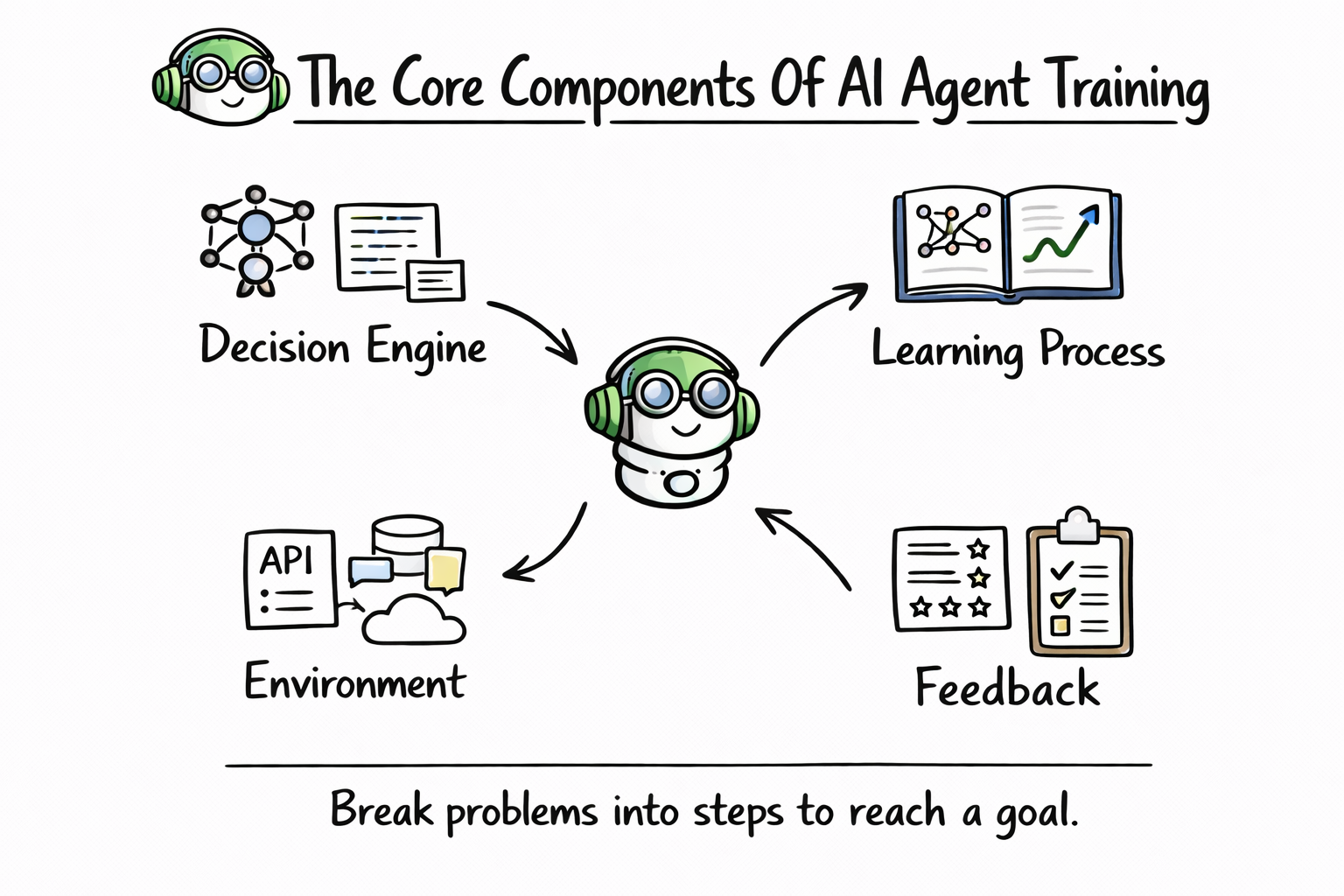
Understanding how to train an AI agent requires examining the components that support agent behavior. Most agent systems include a decision engine, a learning process, an environment where actions occur, and a feedback system that evaluates performance.
The decision engine determines what action the agent should take at each step. This component may involve a neural network, a language model, or a policy-based decision algorithm.
The environment represents the context in which the agent operates. In software systems, the environment might include APIs, databases, or simulated environments where the agent interacts with information.
Component | Purpose |
Decision Engine | Determines the agent’s actions |
Environment | Provides information and context |
Action System | Executes tasks or commands |
Feedback Mechanism | Evaluates the results of actions |
Learning Process | Updates the agent’s strategy |
These components work together to support the training and improvement of agent behavior.
Types Of AI Agent Training Methods#
When developers explore how to train an AI agent, they usually encounter several training approaches depending on the type of agent being built. Each method focuses on teaching the agent how to make better decisions over time.
Supervised learning involves training an agent using labeled datasets where correct outputs are already known. This method is useful when agents need to learn structured decision patterns.
Reinforcement learning represents another major approach in which the agent learns through interaction with an environment. The agent receives rewards or penalties based on its actions and gradually improves its strategy.
Training Method | Description |
Supervised Learning | Training using labeled data |
Reinforcement Learning | Learning through rewards and feedback |
Imitation Learning | Learning from expert demonstrations |
Self-Supervised Learning | Learning patterns without explicit labels |
Each of these training approaches plays a role in building intelligent agents.
Reinforcement Learning In Agent Training#
Reinforcement learning is one of the most important methods used when exploring how to train an AI agent. In this approach, the agent learns by interacting with an environment and receiving rewards based on the outcomes of its actions.
The agent attempts to maximize long-term rewards by choosing actions that lead to favorable outcomes. Over time, the agent learns which strategies produce the best results.
Reinforcement learning has been widely used in robotics, game-playing systems, and complex decision-making applications.
Reinforcement Learning Concept | Purpose |
Agent | The decision-making system |
Environment | The world the agent interacts with |
Action | A decision made by the agent |
Reward | Feedback for a successful action |
Policy | The strategy the agent learns |
These concepts form the foundation of reinforcement learning systems used in modern AI agents.
Training Agents Using Large Language Models#
In recent years, many developers have started building AI agents using large language models as the reasoning component. Language models provide natural language understanding and decision-making capabilities that simplify the process of designing agents.
Instead of training a model entirely from scratch, developers can use pretrained models and fine-tune them for specific tasks. This approach significantly reduces the amount of training data required.
Language model–based agents typically combine reasoning capabilities with structured tool usage. The model interprets instructions and determines which actions the agent should perform.
Capability | Contribution To Agent Training |
Natural Language Understanding | Interprets user goals |
Reasoning | Generates plans and strategies |
Context Processing | Maintains conversation state |
Instruction Following | Executes structured tasks |
This approach has accelerated the development of intelligent agent systems across many industries.
Creating Training Environments For Agents#
The environment plays a critical role in how to train an AI agent because it determines the context in which the agent learns. A well-designed environment provides meaningful feedback that helps the agent improve its behavior.
Training environments may include simulated environments, real-world data systems, or interactive software platforms. Simulations are often used when real-world experimentation would be expensive or risky.
For example, robotics agents often train in simulated environments before being deployed in physical systems. Software agents may train using synthetic datasets or controlled testing platforms.
Designing environments that accurately represent real-world conditions improves the effectiveness of agent training.
Building A Feedback And Evaluation System#
A crucial part of how to train an AI agent involves creating feedback mechanisms that evaluate the agent’s performance. Without feedback, the agent cannot determine whether its actions are improving the outcome.
Feedback may take the form of reward signals, performance scores, or evaluation metrics that measure task completion. These signals guide the agent toward better decision-making strategies.
Evaluation systems also help developers monitor the agent’s behavior and identify potential weaknesses in the training process. By analyzing performance metrics, developers can refine training strategies and improve the agent’s capabilities.
Data Requirements For Agent Training#
Data plays an essential role in training AI agents because it provides the information needed for learning patterns and strategies. Different types of agents require different kinds of training data.
Supervised learning systems require labeled datasets that demonstrate correct decision patterns. Reinforcement learning systems generate their own training data through interactions with environments.
Data Type | Role In Training |
Labeled Data | Provides correct outputs for supervised learning |
Interaction Data | Generated during reinforcement learning |
Demonstration Data | Shows expert behavior |
Synthetic Data | Simulated scenarios for training |
Managing training data effectively helps ensure the agent learns accurate and reliable strategies.
Challenges In Training AI Agents#
Although modern frameworks make it easier to build agents, training these systems still presents several technical challenges. One of the most common challenges involves ensuring stable learning during reinforcement training processes.
Agents may initially explore inefficient strategies before discovering effective behaviors. This exploration process can lead to unstable performance during early training stages.
Another challenge involves balancing exploration and exploitation. Agents must explore new strategies while also applying the strategies that have already proven successful.
Training environments also need to be carefully designed so that reward signals encourage the desired behavior. Poorly designed reward systems may cause agents to learn unintended strategies.
Skills Required To Train AI Agents#
Developers interested in learning how to train an AI agent often need a combination of machine learning knowledge and software engineering skills. Training agents requires understanding both algorithmic learning processes and System Design principles.
Agentic System Design
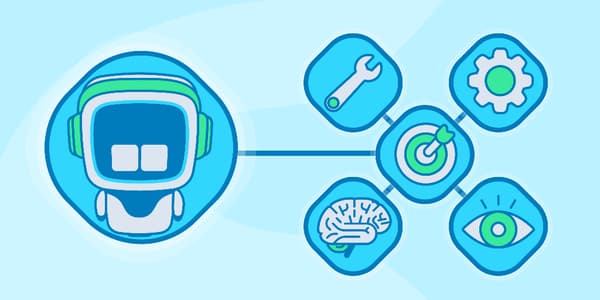
Agentic system design is rapidly redefining how modern AI systems are built, moving from single-model interactions to autonomous, multi-step systems that can reason, plan, and act. As large language models evolve, the real challenge is no longer just using them, but orchestrating them into reliable, goal-driven agents that operate safely and effectively in real-world environments. I built this course from my work in adaptive AI and intelligent systems, where designing autonomous behavior requires more than model accuracy. It demands structured reasoning, control, and safety. A recurring pattern I observed was that teams could experiment with LLMs, but struggled to design cohesive agentic systems that could handle ambiguity, coordinate tasks, and remain aligned with user intent. This course is designed to bring that structure. You will study real-world examples, including the Multi-Agent Conversational Recommender System (MACRS), NVIDIA’s Eureka for reward generation, and advanced agents navigating live websites and creating complex images. Drawing on insights from industry deployments and cutting-edge research, you will gain the foundational knowledge to confidently start designing your agent-based systems. Engineers and researchers are already using these patterns to build next-generation AI systems. If you want to design agents that go beyond prompts and into action, this is where to begin.
Programming skills in languages such as Python are essential because most AI training frameworks rely on Python-based libraries. Knowledge of machine learning frameworks such as TensorFlow or PyTorch also helps developers implement training pipelines.
Skill Area | Importance |
Machine Learning | Understand training algorithms |
Programming | Implement agent systems |
Data Engineering | Manage datasets and pipelines |
System Design | Build scalable architectures |
Experimentation | Evaluate model performance |
Developers who combine these skills can design robust and scalable agent training systems.
A Realistic Learning Path For Agent Training#
Developers who want to learn how to train an AI agent should follow a gradual learning path that builds both theoretical knowledge and practical experience. Starting with machine learning fundamentals provides a strong foundation for understanding agent training techniques.
The next step involves learning reinforcement learning concepts and experimenting with simple environments such as grid-world simulations or game environments. These early projects help developers understand how reward systems influence agent behavior.
As developers gain experience, they can begin integrating language models, tool systems, and complex planning mechanisms into their agents.
Learning Stage | Focus |
Stage 1 | Machine learning fundamentals |
Stage 2 | Reinforcement learning basics |
Stage 3 | Training simple agents in simulated environments |
Stage 4 | Integrating tools and APIs |
Stage 5 | Building real-world autonomous agents |
This progression allows developers to build expertise gradually without becoming overwhelmed by system complexity.
Real-World Applications Of Trained AI Agents#
AI agents trained through reinforcement learning and language model integration are already transforming several industries. These systems automate tasks that previously required manual decision-making.
In software development environments, trained agents assist with debugging, code generation, and system analysis. In data science workflows, agents can gather information, analyze datasets, and generate reports.
Agents are also used in robotics, logistics systems, customer support platforms, and financial analysis tools. As training techniques continue to improve, these systems are expected to become increasingly capable and reliable.
Industry | Example Agent Application |
Software Development | Code generation and debugging |
Robotics | Autonomous navigation systems |
Customer Support | Intelligent service assistants |
Data Science | Automated analysis pipelines |
These applications demonstrate the growing importance of agent training in modern AI systems.
The Future Of AI Agent Training#
Research in agent training continues to evolve rapidly as developers experiment with new architectures and learning techniques. Advances in reinforcement learning, self-supervised learning, and hybrid training systems are expanding the capabilities of intelligent agents.
Future agents may combine multiple learning strategies to improve adaptability and reasoning capabilities. Multi-agent systems may also enable collaborative AI networks where multiple agents coordinate to solve large-scale problems.
Understanding how to train an AI agent today prepares developers for the next generation of intelligent systems that will operate across complex digital environments.
Final Thoughts#
Learning how to train an AI agent requires understanding both machine learning principles and system architecture design. Effective agent training involves building environments, designing reward systems, integrating reasoning models, and continuously evaluating performance.
Although the process can be technically challenging, modern frameworks and pretrained models have significantly lowered the barrier to entry for developers interested in building agent-based systems.
As AI technology continues to evolve, developers who understand agent training techniques will play a crucial role in designing intelligent systems capable of solving complex real-world problems.