Is Gemini an LLM? Understanding Google’s Gemini AI models
Is Gemini just another LLM or something more? Discover how Google’s Gemini goes beyond text with powerful multimodal capabilities. Learn what sets it apart, how it works, and why it matters for the future of AI.
Artificial intelligence systems capable of generating text, answering questions, assisting with programming, and analyzing data have become increasingly common. As developers and learners explore modern AI tools, they frequently encounter models such as GPT, Claude, and Gemini. This naturally leads many people to ask is Gemini an LLM in the same sense as other well-known language models.
Gemini, developed by Google DeepMind, represents a new generation of AI systems that extend beyond traditional language models. While many AI systems initially focused on processing and generating text, newer architectures are designed to understand multiple forms of information simultaneously.
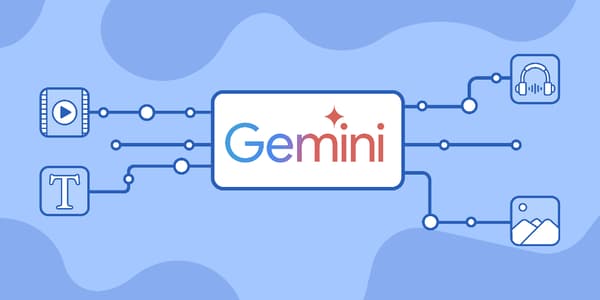
Gemini reflects this shift in artificial intelligence development. Instead of focusing solely on language processing, Gemini integrates text understanding with broader multimodal capabilities. These capabilities allow the system to process images, code, structured data, and other types of information, making it more flexible than earlier generations of AI models.
Google Gemini for Beginners: From Basics to Building AI Apps
Unlock the power of Google Gemini, Google’s cutting-edge generative AI model, and discover its transformative potential. This course deeply explains Gemini’s capabilities, including text-to-text, image-to-text, text-to-code, and speech-to-text functionalities. Begin with an introduction to unimodal and multimodal models and learn how to set up Gemini using the Google Gemini API. Dive into prompting techniques and practical applications, such as building a real-world Pictionary game powered by Gemini. Explore Google Vertex AI tools to enhance and deploy your AI models, incorporating features like speech-to-text. This course is perfect for developers, data scientists, and anyone excited to explore the transformative potential of Google’s Gemini AI.
Understanding what large language models are and how Gemini differs from them helps clarify where this technology fits within the evolving AI landscape.
What is a large language model (LLM)?#
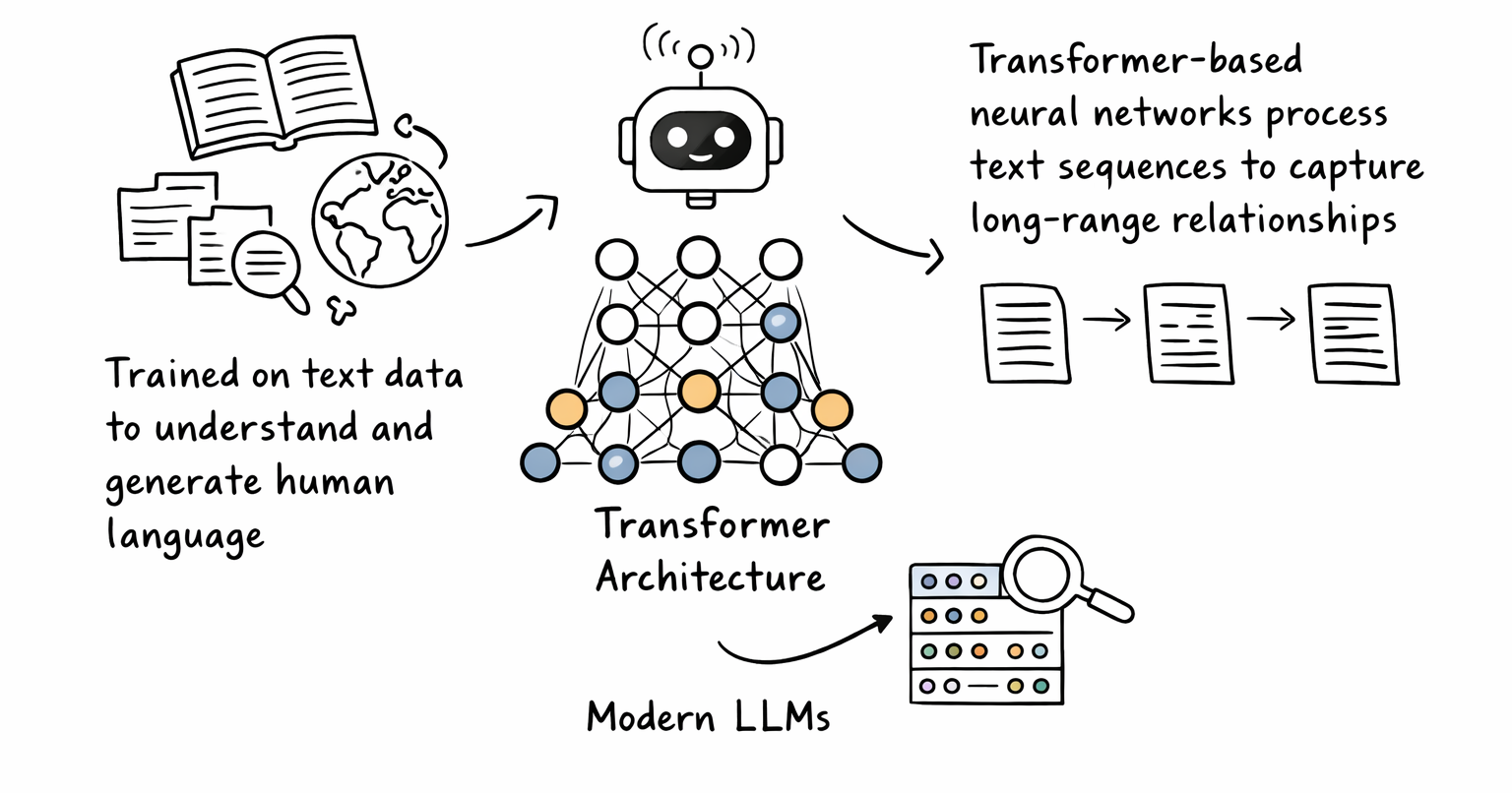
Large language models are machine learning systems trained on vast collections of text data to understand and generate human language. These models learn statistical patterns within written language and use those patterns to produce coherent responses when given prompts.
Modern LLMs are typically built using transformer-based neural network architectures. The transformer architecture allows models to process entire sequences of text simultaneously while capturing relationships between words and phrases across long passages.
Several characteristics define large language models.
First, LLMs are trained on massive text datasets that may include books, websites, articles, and code repositories. This training process allows the model to learn grammar, context, and factual associations.
Second, these models generate language by predicting the next token in a sequence. During inference, the model evaluates possible tokens based on probability and selects those most likely to produce coherent output.
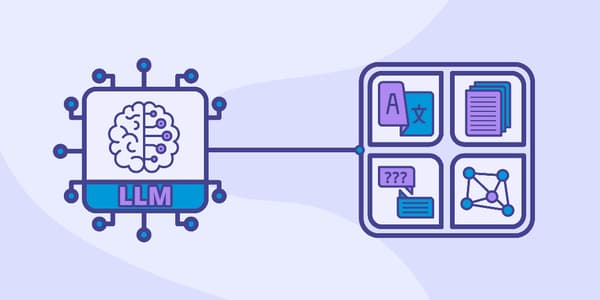
Third, LLMs can perform a wide range of language-related tasks without being explicitly trained for each one. These tasks include summarization, translation, code generation, conversational responses, and question answering.
The emergence of transformer architectures and large-scale training infrastructure enabled the rapid advancement of modern language models, which now power many AI assistants and development tools.
Essentials of Large Language Models: A Beginner’s Journey
Large language models (LLMs) are at the core of today’s AI transformation, powering everything from conversational agents to code generation and enterprise automation. As adoption accelerates, understanding how LLMs actually work, and how to use them effectively in real systems, is no longer optional for developers and data professionals. I built this course from my work in neural networks and intelligent systems, where LLMs represent a shift from traditional modeling to probabilistic reasoning at scale. A recurring pattern I observed was that many practitioners could use APIs but lacked a clear mental model of how LLMs process language, make decisions, and fail in edge cases. This course is designed to bridge that gap with a systems-level perspective. You’ll learn LLM fundamentals from first principles, covering architecture, tokenization, embeddings, attention, and training dynamics, before moving into practical workflows like prompting, retrieval-augmented generation (RAG), and tool integration. Each concept is tied to how LLMs are actually deployed in production systems. Engineers and researchers are already building on these foundations to create real-world AI applications. If you want to go beyond surface-level usage of LLMs, this is where you begin.
Understanding the Gemini model family#
Gemini is a family of AI models created by Google DeepMind and designed to extend beyond traditional text-based language systems. Rather than focusing exclusively on language prediction, Gemini models are built to reason across multiple types of input.
The Gemini family includes several model variants optimized for different performance and deployment requirements. These models share a core architecture designed to integrate information from multiple modalities.
Gemini models can process several types of information, including:
Natural language text
Images and visual information
Programming code
Structured and semi-structured data
This design allows Gemini to interpret and generate responses that combine multiple types of input. For example, the system can analyze an image, describe its contents, and integrate that visual interpretation with textual reasoning.
Because the models are designed from the beginning to support multiple modalities, Gemini represents an evolution beyond earlier AI systems that handled only text.
Gemini architecture explanation#
To understand the architecture of Gemini, it is helpful to think of the system as a multimodal transformer-based model. While it still relies on transformer principles similar to traditional language models, the architecture is designed to process multiple forms of data within a shared reasoning framework.
Instead of training separate models for different tasks, Gemini integrates several data modalities into a unified representation space. This means that images, text, and other inputs can be interpreted together rather than processed independently.
During training, the model learns relationships between different types of data. For example, it may learn how textual descriptions correspond to visual features within images or how code snippets relate to natural language explanations.
This unified architecture enables cross-modal reasoning. For instance, a user could provide an image of a chart along with a question about the data it represents. The model can analyze the visual structure of the chart and combine that understanding with natural language reasoning to generate an answer.
The architectural design of Gemini is therefore broader than a standard language model while still retaining strong language generation capabilities.
Is Gemini an LLM?#
When people ask is Gemini an LLM, the answer requires a nuanced explanation. Gemini does contain a large language model component responsible for understanding and generating natural language. This component allows the system to perform tasks such as answering questions, writing code, summarizing text, and generating explanations.
However, Gemini also includes capabilities that go beyond traditional LLM design. Unlike earlier models that primarily process text, Gemini can analyze visual inputs, interpret complex datasets, and integrate multiple forms of information within a single reasoning process.
Because of these capabilities, many researchers describe Gemini as part of a broader class of systems known as multimodal foundation models. These models extend the concept of large language models by supporting reasoning across different types of data.
In practical terms, Gemini can still perform the tasks typically associated with LLMs, but its architecture allows it to handle additional inputs and perform more complex forms of reasoning.
Comparing traditional LLMs and multimodal models#
As AI systems evolve, the distinction between text-focused language models and multimodal models becomes increasingly important.
Feature | Traditional LLM | Gemini-style multimodal model |
Primary input | Text | Text, images, and other data |
Training focus | Language prediction | Multimodal reasoning |
Capabilities | Text generation and analysis | Cross-modal reasoning |
Traditional LLMs specialize in processing and generating text. They are highly effective at tasks such as summarization, conversational interaction, and code generation.
Multimodal models extend these capabilities by incorporating additional types of input. This allows them to analyze visual information, interpret diagrams, and combine different forms of data within a single reasoning process.
By integrating multiple modalities, models such as Gemini can perform tasks that require broader contextual understanding.
How Gemini works in practice#
Gemini demonstrates its capabilities through a variety of practical tasks that combine language understanding with other forms of reasoning.
One example involves analyzing visual content. A user might upload an image and ask the model to explain what it shows or identify important elements within the scene. Gemini can interpret visual information and generate detailed explanations based on that analysis.
Another common use case involves programming assistance. Developers can provide code snippets and ask the model to debug errors, explain algorithms, or suggest improvements. Because the model understands both programming syntax and natural language instructions, it can support complex development workflows.
Gemini can also answer complex questions that involve multiple types of data. For instance, a user might provide a dataset alongside a question about trends within the data. The system can interpret the data structure and generate analytical insights.
These capabilities illustrate how Gemini expands the scope of tasks traditionally associated with language models.
Real-world applications of Gemini#
Systems based on Gemini are already being integrated into a range of practical applications.
One prominent example is AI-powered assistants. These systems combine conversational capabilities with broader reasoning functions, enabling users to ask questions, analyze documents, and receive contextual guidance.
Programming copilots also benefit from Gemini’s capabilities. By analyzing code, documentation, and user instructions, the model can assist developers with debugging, code generation, and software design.
Another important application area involves research and knowledge exploration. Gemini can process large volumes of information and generate structured explanations that help users understand complex topics.
Data analysis and automation tools also increasingly rely on multimodal models. By interpreting both structured data and natural language queries, these systems can generate reports, identify trends, and automate repetitive tasks.
Why modern AI models are becoming multimodal#
The evolution of artificial intelligence is increasingly driven by the need to understand multiple forms of information simultaneously. Real-world problems rarely involve only text; instead, they often combine documents, images, structured data, and other inputs.
Developers building AI-powered tools want systems that can reason across these different types of data. Multimodal architectures enable AI assistants to interpret charts, analyze screenshots, process natural language instructions, and generate responses that combine these sources of information.
This shift toward multimodal AI helps explain why developers often ask is Gemini an LLM when exploring the model’s capabilities. Although Gemini includes a powerful language modeling component, its broader architecture reflects the next stage in AI development.
As AI systems continue to evolve, multimodal reasoning is likely to become a central feature of advanced foundation models.
FAQ#
What makes a model a large language model?#
A large language model is defined primarily by its training objective and data sources. These models are trained on vast collections of text data and learn to generate language by predicting the next token in a sequence. Their primary capabilities involve understanding, generating, and manipulating natural language.
Is Gemini similar to GPT models?#
Gemini shares many architectural principles with GPT-style models, including the use of transformer-based neural networks. Both systems generate language and perform reasoning tasks based on textual prompts. However, Gemini is designed with broader multimodal capabilities that allow it to analyze images and other data types alongside text.
What does multimodal AI mean?#
Multimodal AI refers to systems that can process and reason about multiple forms of information. Instead of focusing solely on text, multimodal models can interpret images, audio, video, and structured data. This ability allows them to perform more complex tasks that involve different types of input simultaneously.
How does Gemini differ from traditional AI chatbots?#
Traditional chatbots typically rely on rule-based systems or simple natural language processing models that respond to predefined patterns. Gemini, by contrast, is built on advanced neural network architectures capable of generating original responses, interpreting multiple types of data, and reasoning across complex inputs.
Conclusion#
Gemini represents a significant step forward in the evolution of artificial intelligence systems. While it includes a powerful language model capable of understanding and generating text, its architecture extends beyond traditional language modeling.
Understanding whether Gemini is an LLM helps clarify how modern AI systems are evolving from text-focused language models into more advanced multimodal architectures. By integrating language understanding with visual reasoning and structured data analysis, Gemini demonstrates how AI models are becoming more versatile and capable of solving complex real-world problems.
Happy learning!
