Logical thinking is the ability to analyze a situation systematically, evaluate evidence, and draw sound conclusions based on reasoning and facts. It involves creating valid arguments, identifying logical relationships, and solving problems using structured and coherent approaches.
Updated 5 months ago
AI-powered learning
Save this course
Logical Thinking
Learn critical thinking and logical reasoning to create valid arguments, avoid logical fallacies, and solve real-world problems using tools like if-then implications and Aristotle’s logic.
37 lessons
3h
Created by Educative
What's included
- 37 lessons across 9 modules
- 8 quizzes with instant feedback
- AI Tutor on every lesson
Join 3.1 million developers at
What You'll Learn
- A strong foundation in critical thinking and its relationship to problem-solving in real-world problems
- An understanding of logical fallacies, such as fallacies of relevance and ambiguity, and learning to recognize them in everyday arguments
- The ability to structure a logical argument and evaluate it based on the laws of logic and building blocks like categorical syllogism and categorical propositions
- Proficiency in resolving real-world problems through knowledge and reasoning using modern logic and its tools, including logical operators and if-then implications
Learning Roadmap
1.
Introduction to Logical Thinking
Introduction to Logical Thinking
Learn logical structures, enhance reasoning skills, and explore practical logic applications in everyday scenarios.
2.
Fallacies in Logic
Fallacies in Logic
Unpack logical fallacies examples, including fallacies in logic, fallacies of relevance, and fallacies of ambiguity, to improve your fallacies argument.
3.
Logical Argument
Logical Argument
6 Lessons
6 Lessons
Understand how language conveys logical arguments, using if-then implications and logical operators to construct clear and valid reasoning.
4.
What Is Logic?
What Is Logic?
7 Lessons
7 Lessons
Explore what logic is. Its laws of logic, key building blocks, and how knowledge and reasoning ensure validity in arguments.
5.
First Theory of Logic: Aristotle’s Logic
First Theory of Logic: Aristotle’s Logic
3 Lessons
3 Lessons
Explore Aristotle’s logic, categorical propositions, and categorical syllogism forms for assessing argument validity.
6.
Second Theory of Logic: Propositional Logic
Second Theory of Logic: Propositional Logic
7 Lessons
7 Lessons
Learn propositional logic with syllogism, truth tables, rules of inference, rules of substitution, and natural deduction proof.
7.
Third Theory of Logic: Predicate Logic
Third Theory of Logic: Predicate Logic
3 Lessons
3 Lessons
Piece together predicate logic, focusing on quantifiers and validation rules for constructing valid logical arguments.
8.
Logical Reasoning in Action
Logical Reasoning in Action
3 Lessons
3 Lessons
Apply logical reasoning in legal cases, problem-solving, puzzle-solving, and computing logic.
Certificate of Completion
Showcase your accomplishment by sharing your certificate of completion.
Complete more lessons to unlock your certificate
Developed by MAANG Engineers
Trusted by 3.1 million developers working at companies
A
Anthony Walker
@_webarchitect_
E
Evan Dunbar
ML Engineer
S
Software Developer
Carlos Matias La Borde
S
Souvik Kundu
Front-end Developer
V
Vinay Krishnaiah
Software Developer
Frequently Asked Questions
What is logical thinking?
What is a fallacy in logic?
What is an example of a proposition in logic?
What is a predicate term in logic?
Built for 10x Developers
No Passive Learning
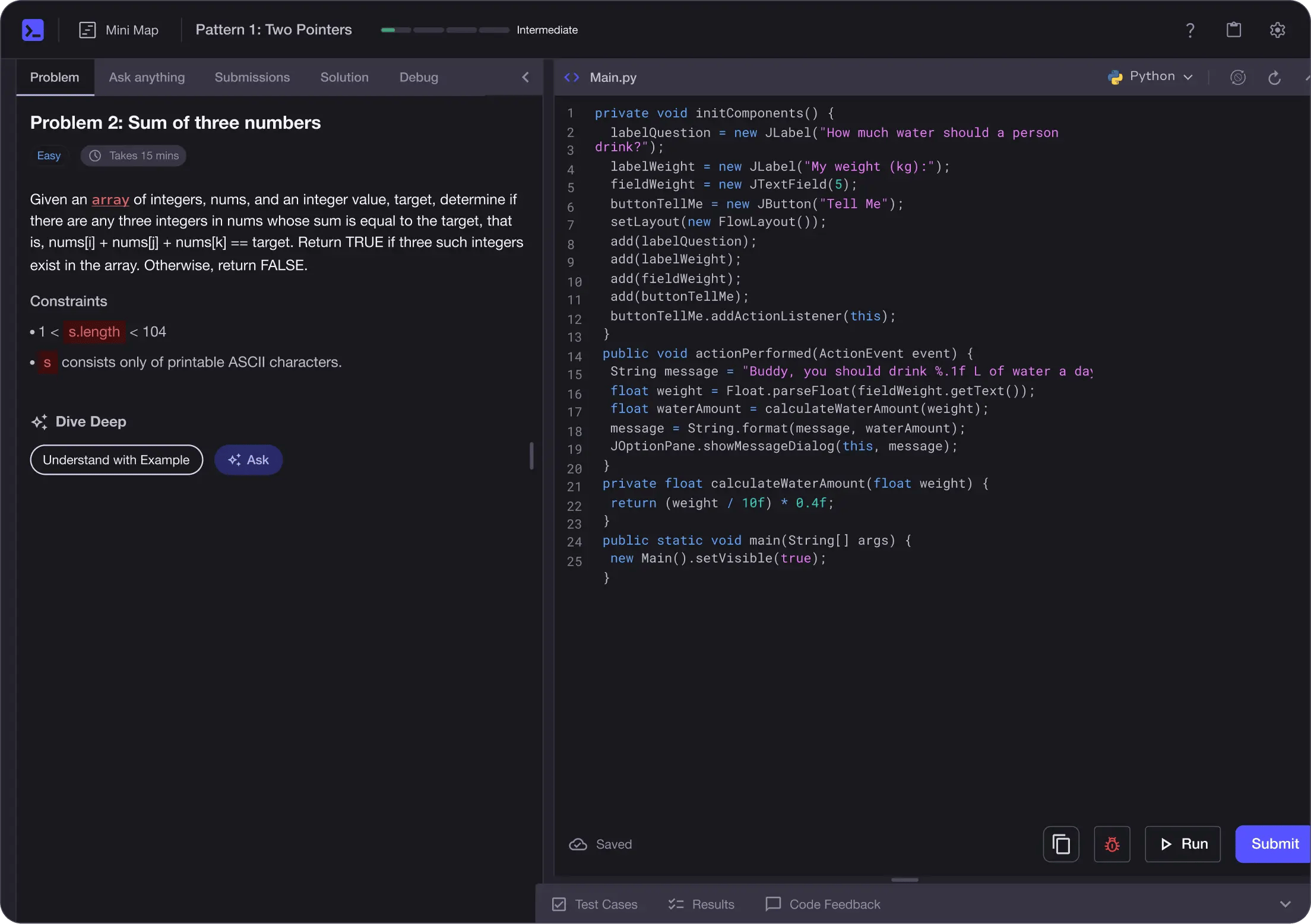
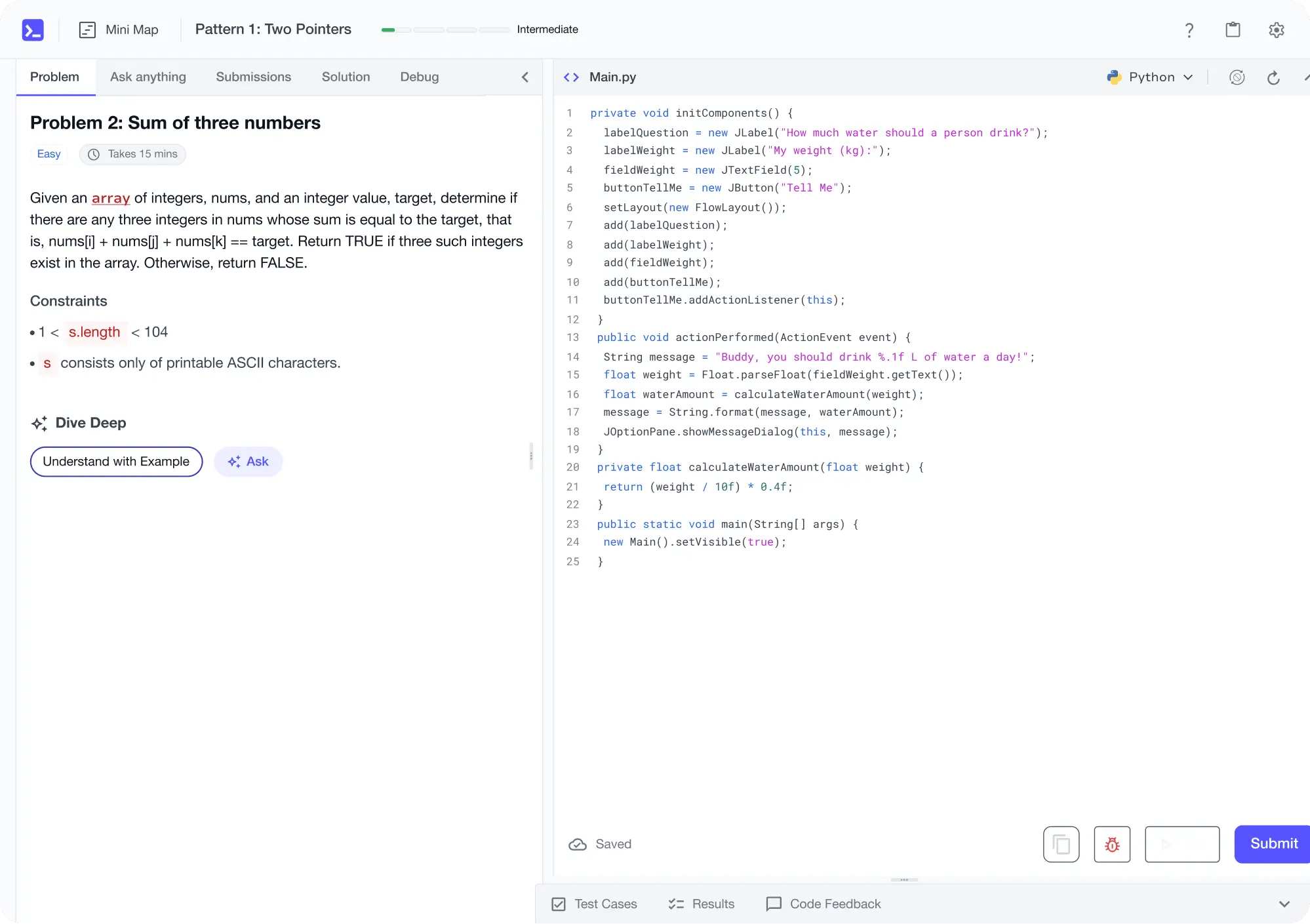
Learn by building with project-based lessons and in-browser code editor
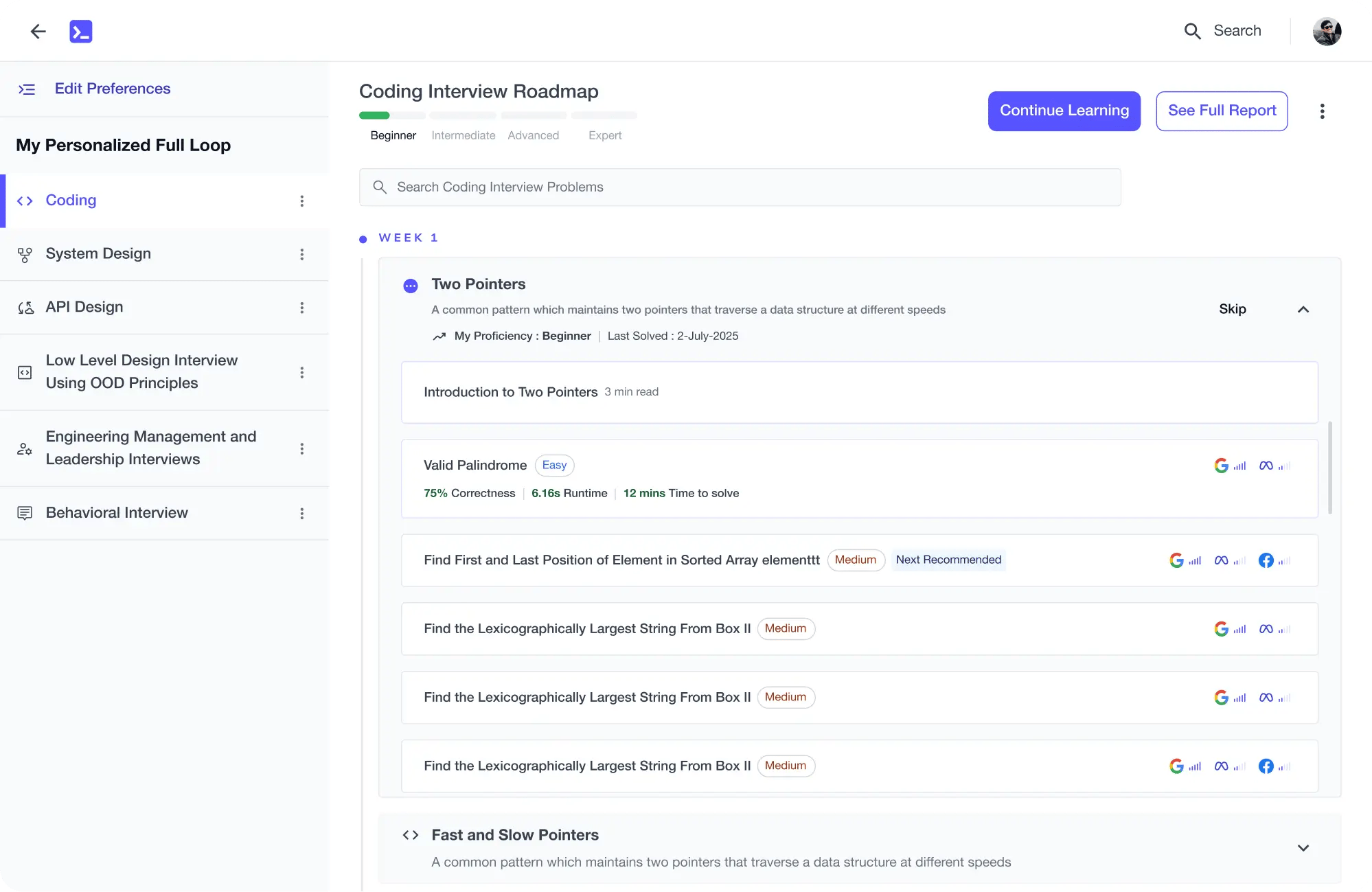
Personalized Roadmaps
The platform adapts to your strengths & skills gaps as you go

Future-proof Your Career
Get hands-on with in-demand skills
AI Code Mentor
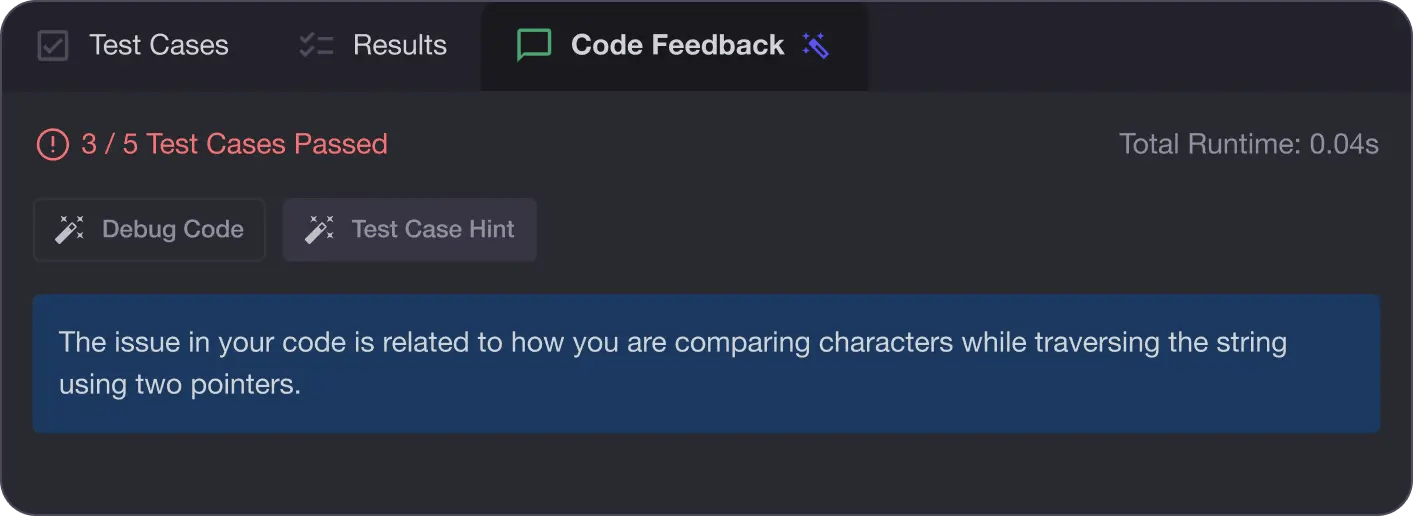
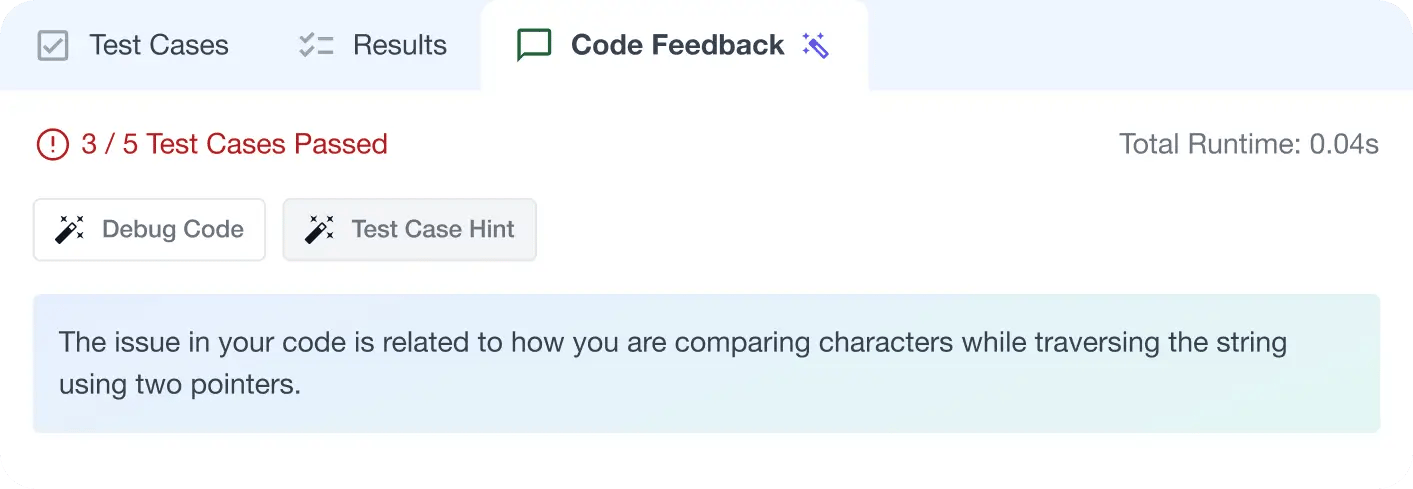
Write better code with AI feedback, smart debugging, and "Ask AI"
MAANG+ Interview Prep
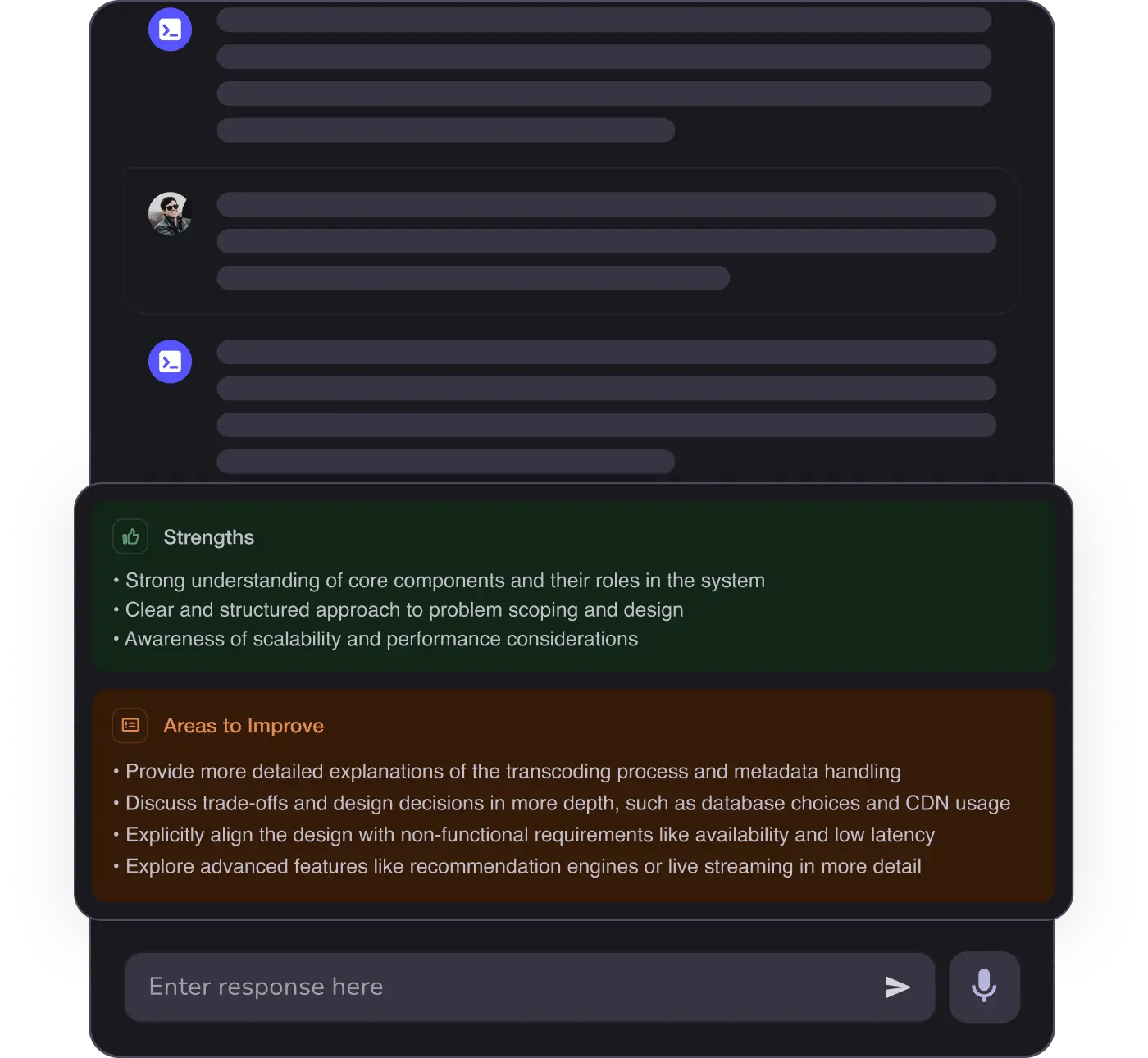
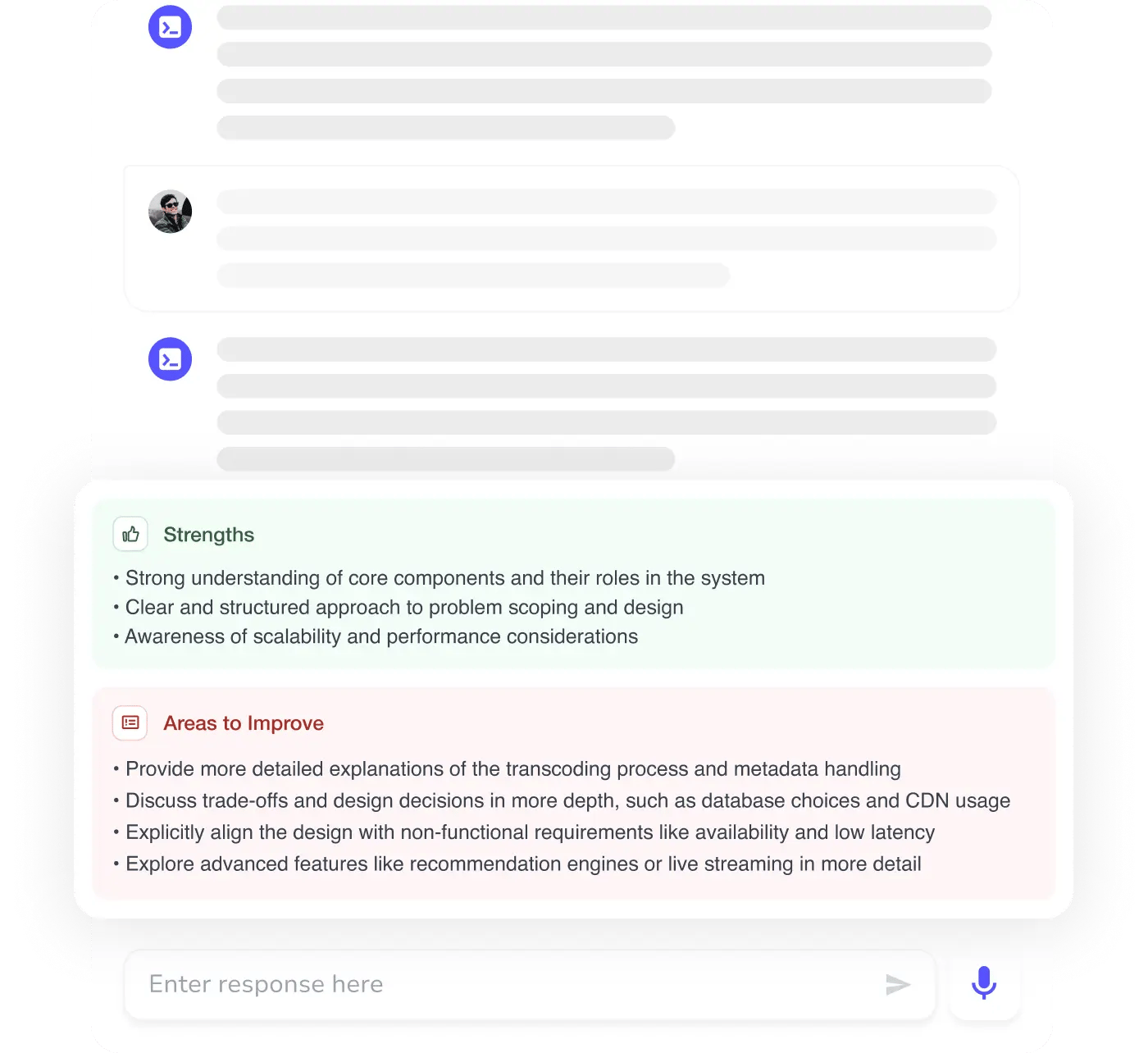
AI Mock Interviews simulate every technical loop at top companies
Free Resources
