An object-oriented design (OOD) interview is a specialized technical interview used to evaluate your understanding of object-oriented programming principles and your ability to apply these principles to solve design problems. Typically lasting 45-60 minutes, this interview covers the basics of object-oriented programming and more complex concepts such as design principles and patterns. This is crucial for roles at major tech companies like Apple, Google, Meta, Microsoft, and Amazon.
AI-powered learning
Save this course
Grokking the Low Level Design Interview Using OOD Principles
A battle-tested guide to object-oriented design interviews—developed by FAANG engineers. Master OOD fundamentals and practice real-world interview questions.
4.7
215 Lessons
19 Mock Interviews
70h
Updated 1 month ago
Join 3 million developers at
Join 3 million developers at
LEARNING OBJECTIVES
- Apply OOP fundamentals, including encapsulation, abstraction, inheritance, and polymorphism, to real design problems
- Use SOLID principles and common design patterns (creational, structural, behavioral) to write clean, maintainable systems
- Break down open-ended OOD interview problems into requirements, components, and interactions using a bottom-up approach
- Design class, use case, sequence, and activity diagrams for 20+ real-world systems (parking lots, elevators, Amazon, LinkedIn, and more)
- Implement complete solutions in Java, Python, C++, C#, or JavaScript
- Practice with 19 mock interviews simulating real-world FAANG OOD rounds
Why choose this course?
Learn to think like a Software Architect
Top engineers stand out because they can design scalable, maintainable systems, not just write code. Mastering object-oriented design principles and design (LLD) concepts helps you think like an architect and build software that lasts.
Strengthen your OOD fundamentals
Build a solid foundation with key object-oriented concepts such as encapsulation, abstraction, inheritance, and polymorphism.
Design real-world systems step by step
Start with classic case studies like Parking Lot and Library Management to practice defining system requirements and creating use case, class, sequence, and activity diagrams.
Put your skills to the test
At the end of each case study, put your knowledge into action through an interactive mock interview.
Learning Roadmap
1.
Introduction
Introduction
This chapter introduces the course, including its prerequisites, structure, strengths, and the target audience.
2.
Cornerstones of Object-Oriented Programming
Cornerstones of Object-Oriented Programming
This chapter covers the background of OOP, focusing on encapsulation, abstraction, inheritance, and polymorphism, ending with a quiz on basics.
3.
Object-Oriented Design
Object-Oriented Design
8 Lessons
8 Lessons
This chapter explores how to conduct object-oriented analysis and design using UML, covering various diagrams like use case, class, sequence, and activity.
4.
Object-Oriented Design Principles
Object-Oriented Design Principles
7 Lessons
7 Lessons
This chapter covers the SOLID design principles: Single Responsibility, Open Closed, Liskov Substitution, Interface Segregation, and Dependency Inversion.
5.
Design Patterns
Design Patterns
7 Lessons
7 Lessons
This chapter teaches you about the classification of design patterns, including creational, structural, and behavioral patterns, followed by a quiz.
7.
Designing a Parking Lot
Designing a Parking Lot
9 Lessons
9 Lessons
This chapter covers the design of a parking lot system, including requirements, UML diagrams, and implementation code to illustrate practical application.
8.
Designing an Elevator System
Designing an Elevator System
9 Lessons
9 Lessons
This chapter shows the design of an elevator system, detailing the requirements, use case, class, sequence, and activity diagrams, and the implementation code.
9.
Designing a Library Management System
Designing a Library Management System
9 Lessons
9 Lessons
This chapter teaches you the design of a library management system with requirements, use case, class, sequence, activity diagrams, and implementation code.
10.
Designing the Amazon Locker Service
Designing the Amazon Locker Service
9 Lessons
9 Lessons
This chapter covers the design of the Amazon Locker Service, focusing on requirements, UML diagrams, and implementation code to create a complete system.
11.
Designing a Vending Machine
Designing a Vending Machine
8 Lessons
8 Lessons
In this chapter, you will learn the design of a vending machine, including requirements, use case, class, activity diagrams, and implementation code.
12.
Designing an Online Blackjack Game
Designing an Online Blackjack Game
8 Lessons
8 Lessons
This chapter explores how to design an online blackjack game, covering requirements, use case, class, activity diagrams, and implementation code.
13.
Designing a Meeting Scheduler
Designing a Meeting Scheduler
9 Lessons
9 Lessons
This chapter shows the design of a meeting scheduler system, detailing the requirements, UML diagrams, and implementation code for the complete design.
14.
Designing a Movie Ticket Booking System
Designing a Movie Ticket Booking System
9 Lessons
9 Lessons
This chapter covers the design of a movie ticket booking system, including requirements, UML diagrams, and implementation code to build the system.
15.
Designing a Car Rental System
Designing a Car Rental System
9 Lessons
9 Lessons
This chapter teaches you the design of a car rental system, detailing requirements, UML diagrams, and implementation code for a functional system.
16.
Designing ATM
Designing ATM
9 Lessons
9 Lessons
In this chapter, you will discover the design of an ATM system, focusing on requirements, use case, class, sequence, activity diagrams, and implementation code.
17.
Designing a Chess Game
Designing a Chess Game
8 Lessons
8 Lessons
This chapter shows the design of a chess game, including requirements, use case, class, activity diagrams, and implementation code to develop the game.
18.
Designing a Hotel Management System
Designing a Hotel Management System
9 Lessons
9 Lessons
This chapter covers the design of a hotel management system, detailing the requirements, UML diagrams, and implementation code for a complete system.
19.
Designing the Amazon Online Shopping System
Designing the Amazon Online Shopping System
9 Lessons
9 Lessons
This chapter teaches you the design of the Amazon online shopping system, focusing on requirements, UML diagrams, and implementation code.
20.
Designing Stack Overflow
Designing Stack Overflow
9 Lessons
9 Lessons
In this chapter, you will learn the design of Stack Overflow, including requirements, use case, class, sequence, activity diagrams, and implementation code.
21.
Designing a Restaurant Management System
Designing a Restaurant Management System
9 Lessons
9 Lessons
This chapter explores how to design a restaurant management system, covering requirements, UML diagrams, and implementation code for the system.
22.
Designing Facebook
Designing Facebook
9 Lessons
9 Lessons
This chapter shows the design of the Facebook system, detailing requirements, use case, class, sequence, activity diagrams, and implementation code.
23.
Designing an Online Stock Brokerage System
Designing an Online Stock Brokerage System
9 Lessons
9 Lessons
This chapter covers the design of an online stock brokerage system, including requirements, UML diagrams, and implementation code.
24.
Designing a Jigsaw Puzzle
Designing a Jigsaw Puzzle
4 Lessons
4 Lessons
In this chapter, you will discover the design of a jigsaw puzzle, focusing on requirements, class diagram, and implementation code for the puzzle.
25.
Designing an Airline Management System
Designing an Airline Management System
9 Lessons
9 Lessons
This chapter shows the design of an airline management system, detailing the requirements, UML diagrams, and implementation code for the system.
26.
Designing ESPNcricinfo
Designing ESPNcricinfo
9 Lessons
9 Lessons
This chapter covers the design of the ESPNcricinfo system, including requirements, use case, class, sequence, activity diagrams, and implementation code.
27.
Designing LinkedIn
Designing LinkedIn
9 Lessons
9 Lessons
This chapter explores how to design the LinkedIn system, covering requirements, UML diagrams, and implementation code for a complete design.
28.
Wrapping Up
Wrapping Up
2 Lessons
2 Lessons
This chapter concludes the course with valuable tips for excelling in object-oriented design interviews.
Certificate of Completion
Showcase your accomplishment by sharing your certificate of completion.
Complete more lessons to unlock your certificate
Developed by MAANG Engineers
ABOUT THIS COURSE
Low-level design interviews test something most engineers don't practice enough: taking a vague, open-ended prompt as "design a parking lot" or "design Stack Overflow" and turning it into a structured, implementable system with clearly defined classes, relationships, and behaviors. Knowing what inheritance is won't get you through. You need to demonstrate that you can use it to model a real system under time pressure.
This course teaches that skill through repetition across 20+ real-world design problems. Each one follows the same structured approach: define requirements, identify key objects and relationships, model the system with UML diagrams (class, use case, sequence, activity), and then implement working code. By the time you've designed your fifth or sixth system, the process becomes second nature, which is exactly the point.
We start with the foundations: OOP concepts, SOLID principles, and the most commonly tested design patterns. Then we move into the problems themselves: parking lots, elevator systems, Amazon's online shopping platform, chess, LinkedIn, and more. Each problem comes with a full walkthrough and a mock interview so you can test yourself under realistic conditions.
Whether you're preparing for your first low-level design round or you've been avoiding this part of the loop, this course gives you a repeatable framework for breaking down any OOD problem systematically.
ABOUT THE AUTHOR
Fahim ul Haq
Software Engineer, Distributed Storage at Meta and Microsoft, Educative (Co-founder & CEO)
Trusted by 3 million developers working at companies
A
Amir Sayyed
Learner
S
Sunil Kumawat
Senior Software Engineer @ Detech Technologies
K
Krishna K.
Spotnana
Built for 10x Developers
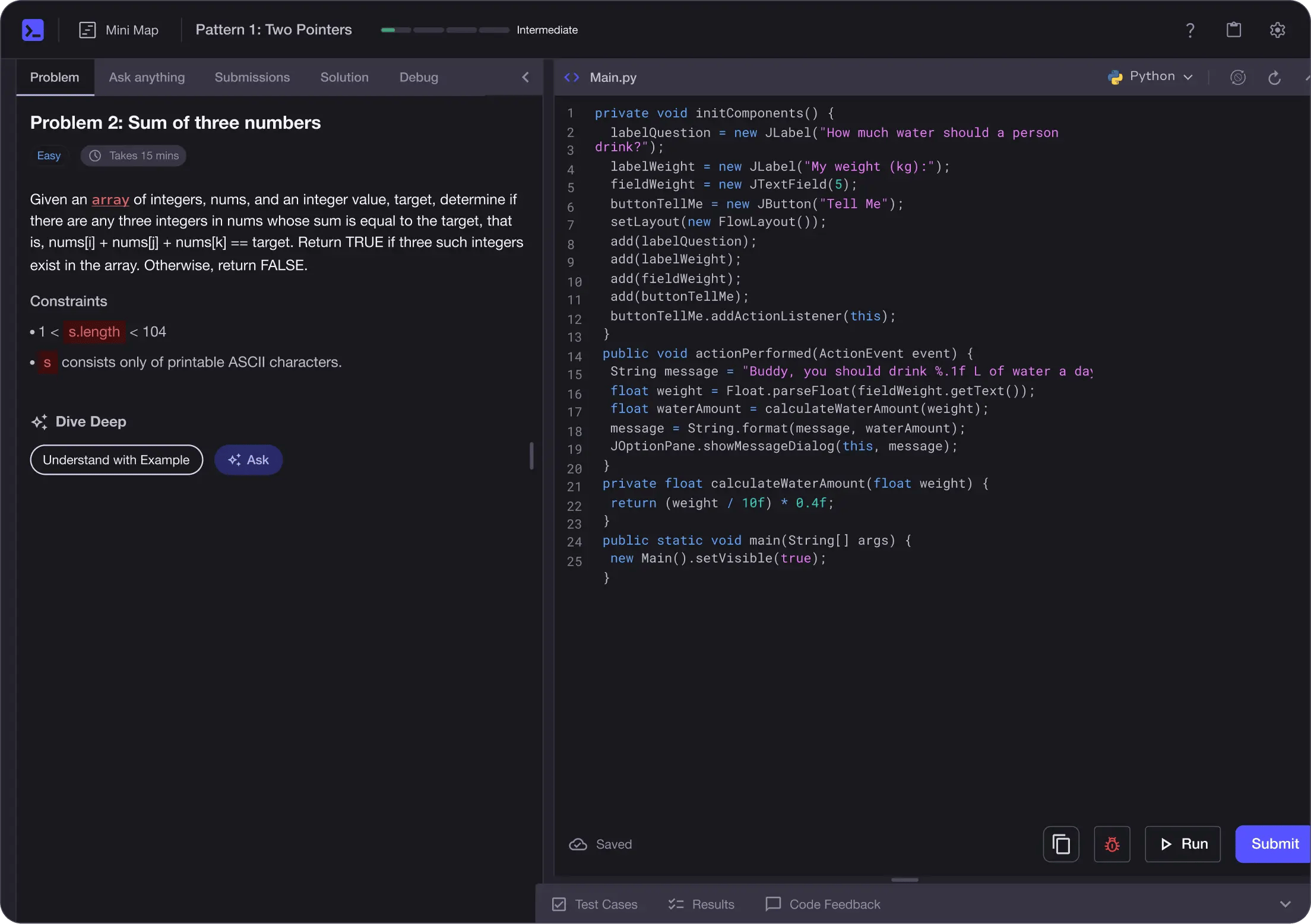
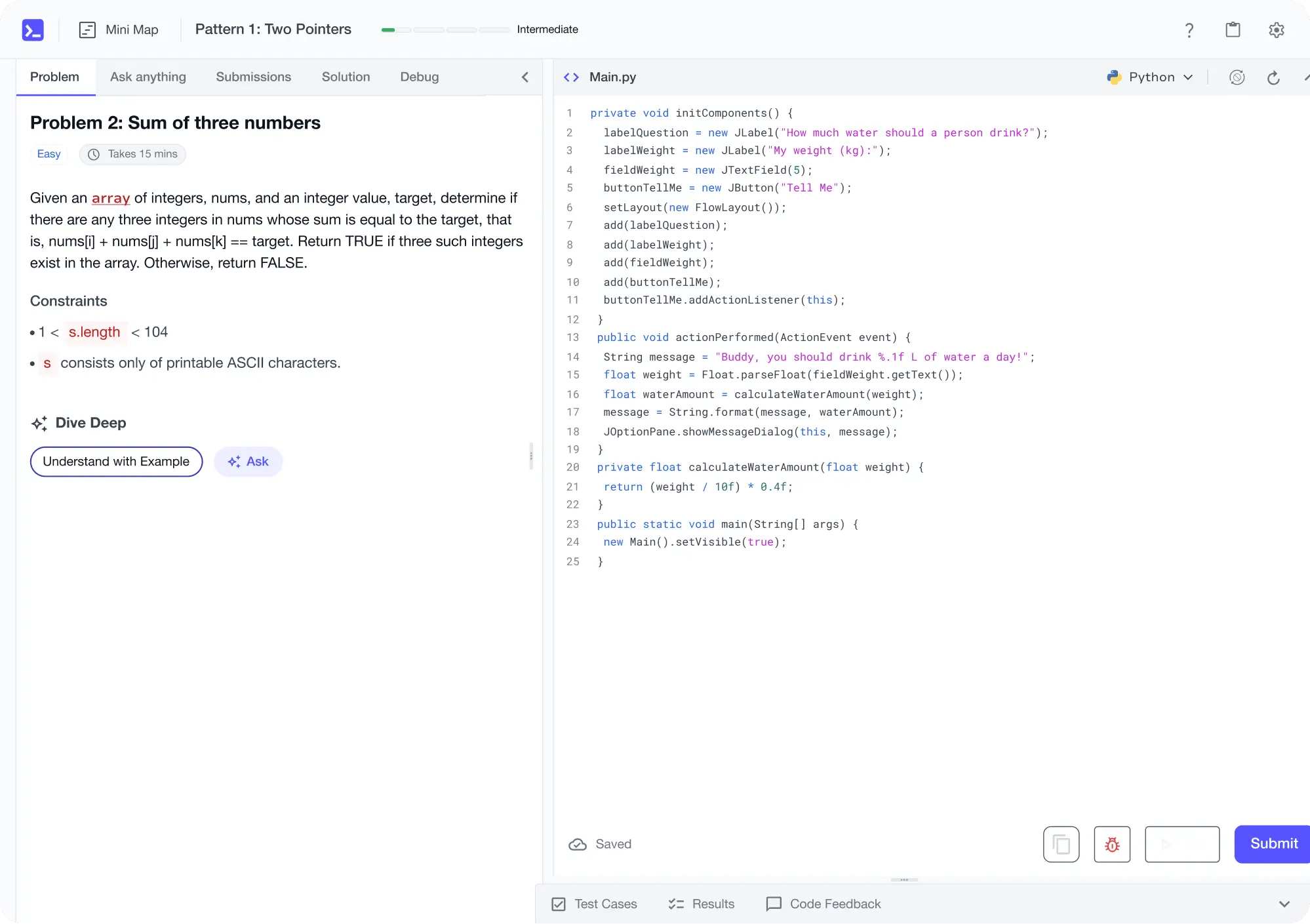
No Passive Learning
Learn by building with project-based lessons and in-browser code editor
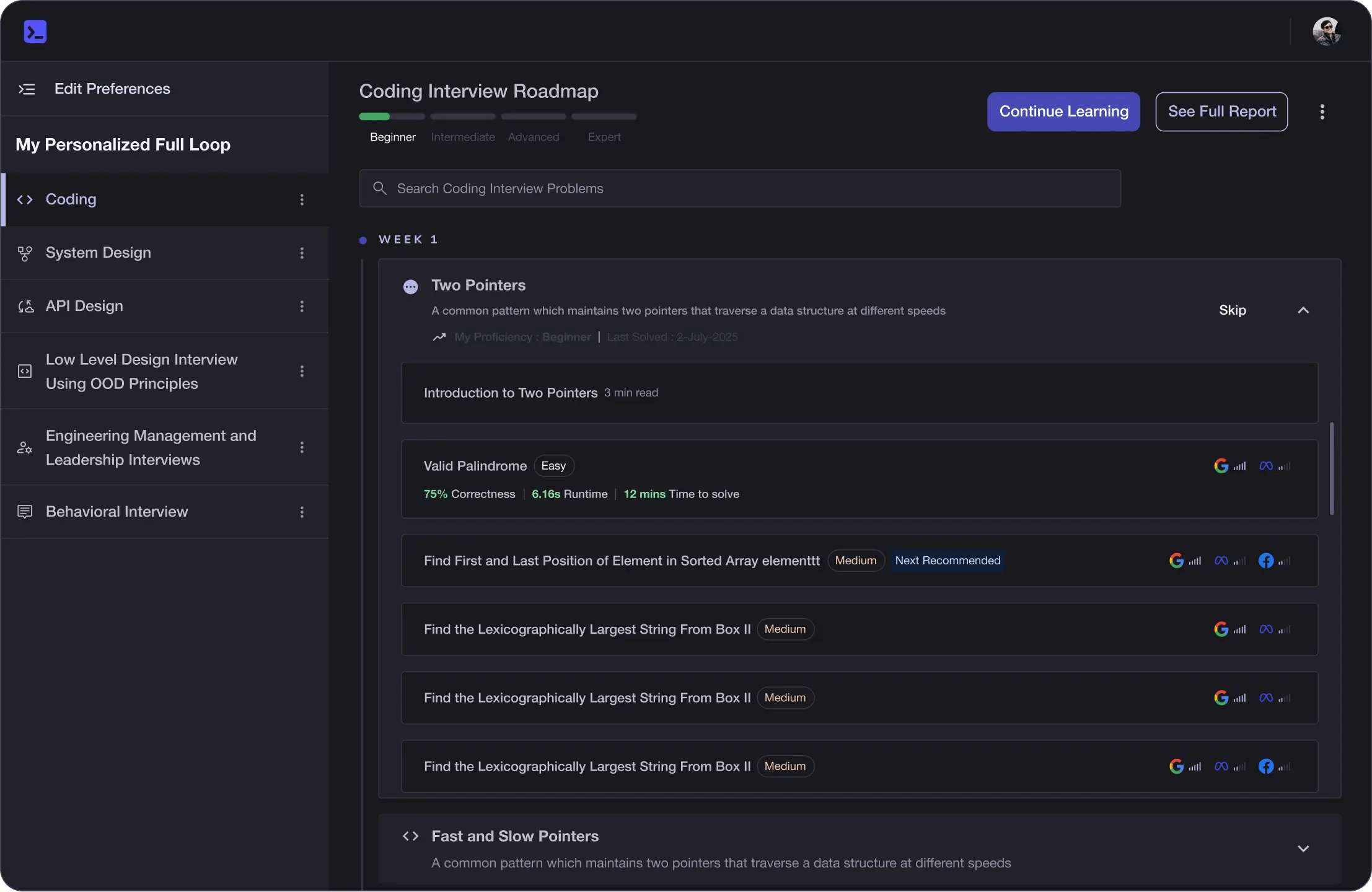
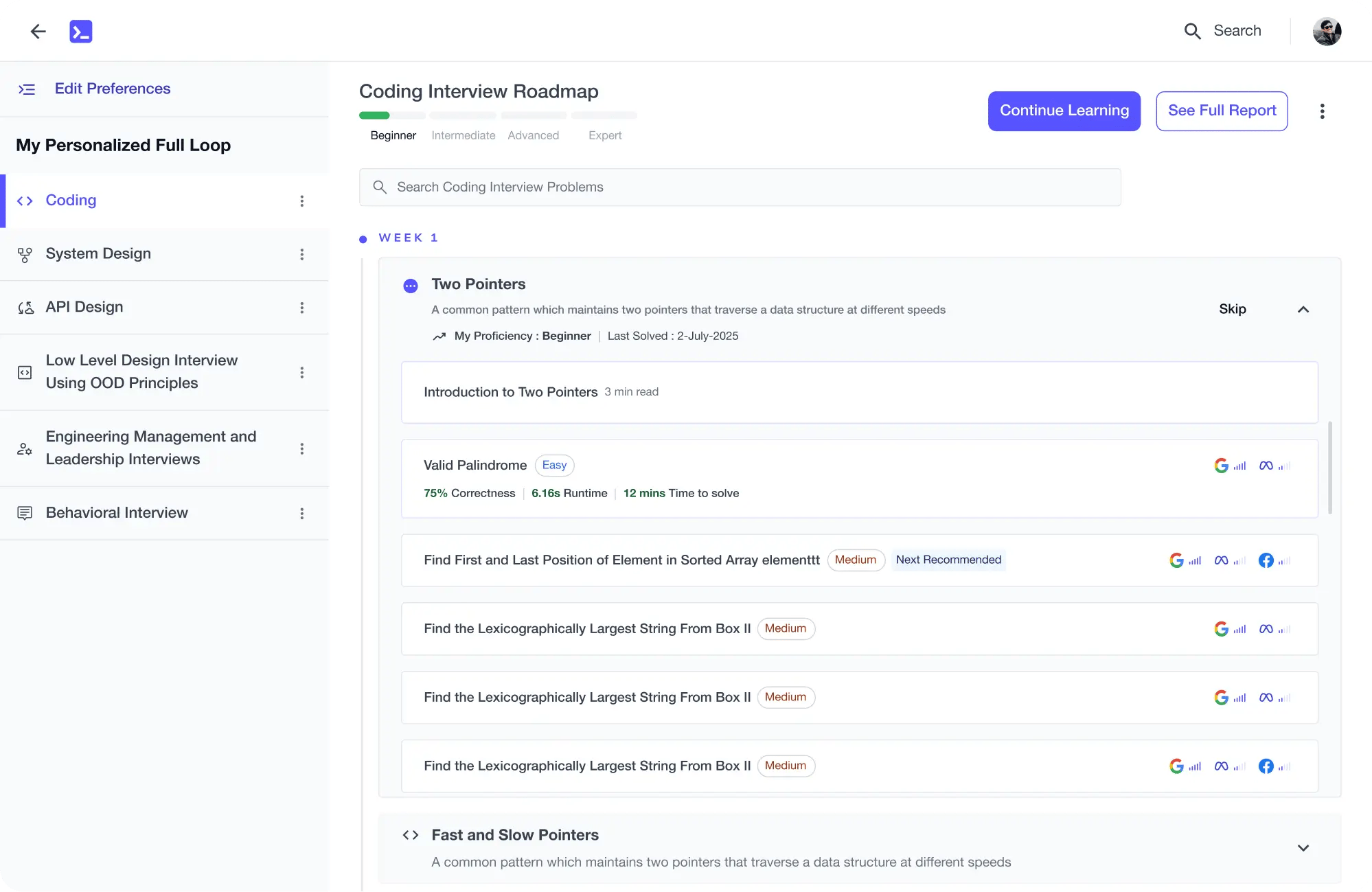
Personalized Roadmaps
The platform adapts to your strengths & skills gaps as you go
Future-proof Your Career
Get hands-on with in-demand skills
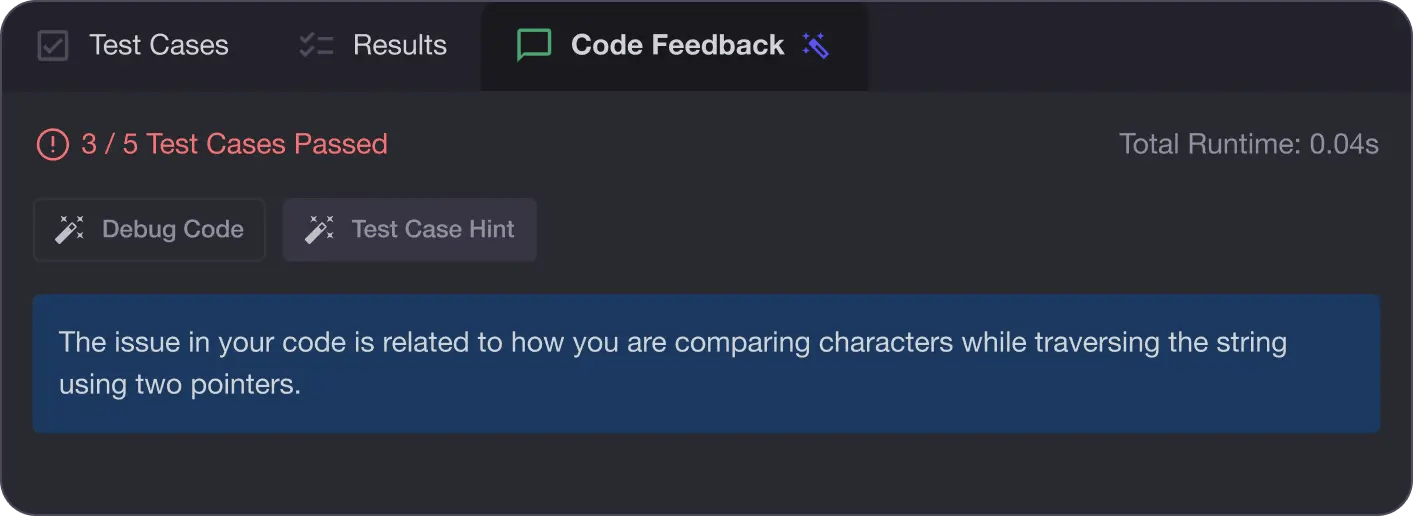
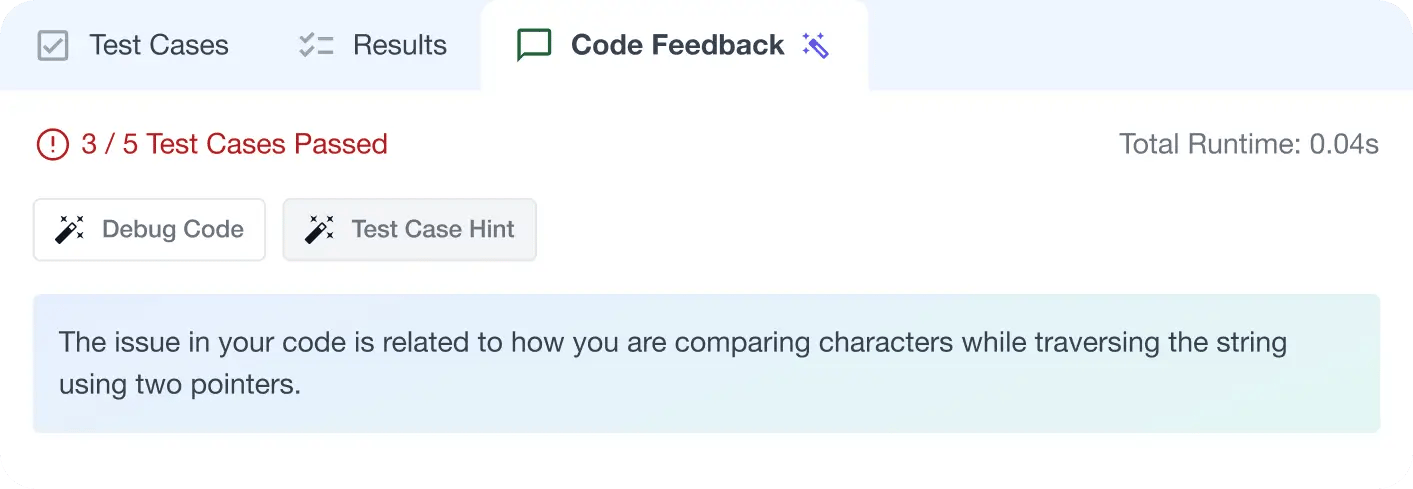
AI Code Mentor
Write better code with AI feedback, smart debugging, and "Ask AI"
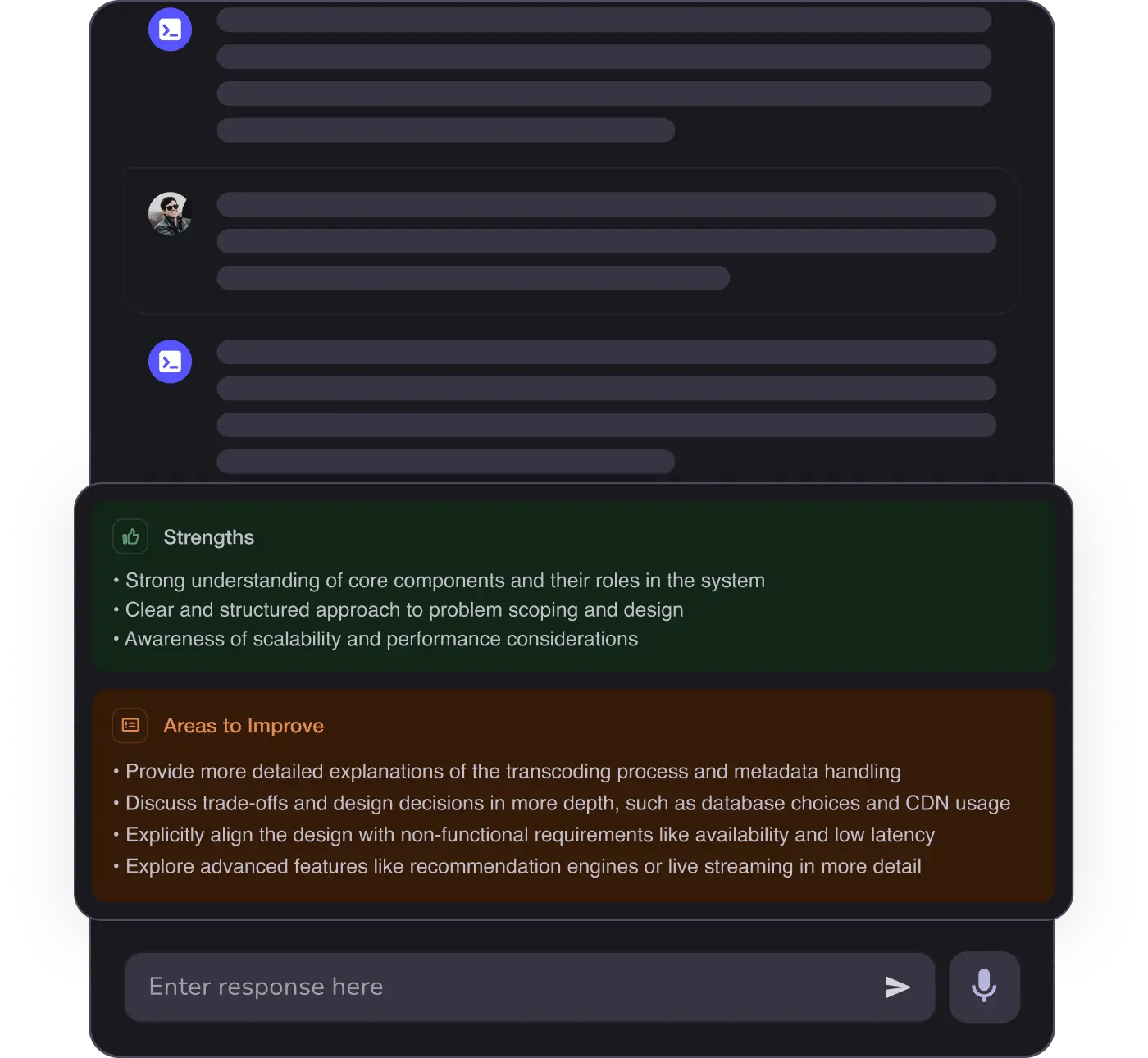
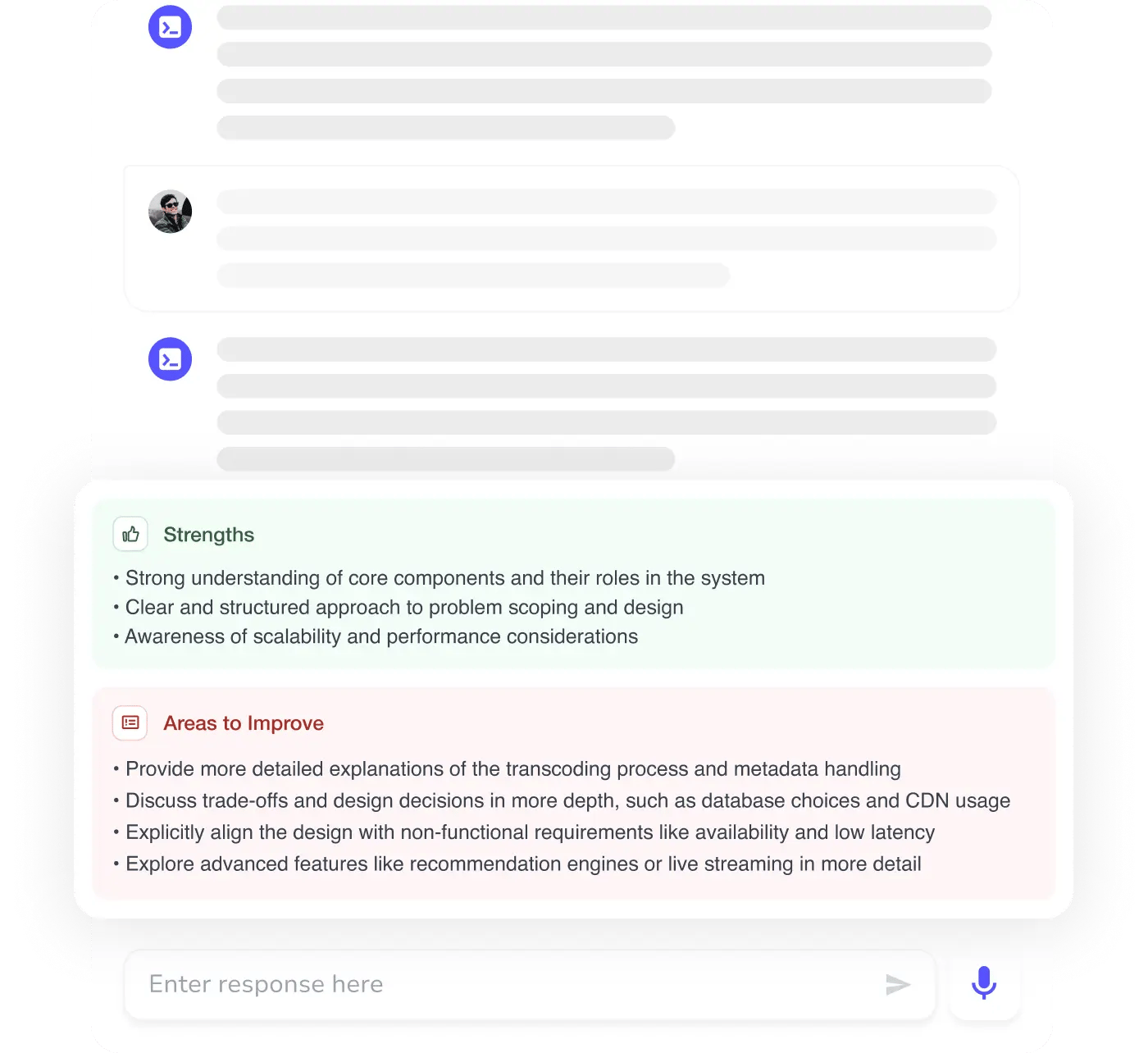
MAANG+ Interview Prep
AI Mock Interviews simulate every technical loop at top companies
Free Resources
Frequently Asked Questions
What is an object-oriented design interview?
How to prepare for an OOD interview?
What are the principles of Low-Level Design?
How do you answer Low-Level Design questions?
What is the primary focus of this course?
Who should take this course?
What skills will I gain from this course?
What tools will I use to present solutions?
How will this course help me in a software engineering interview?
What companies’ interview processes are referenced in this course?
