Java is not too hard to learn for beginners, but its syntax can be more complex compared to languages like Python. Mastering object-oriented programming and advanced concepts may take some time, but it’s manageable with practice.
This hands-on Java course helps absolute beginners write their first lines of code, build interactive programs, and understand core programming concepts through playful examples and real-life logic.
4.5
73 Lessons
10h
Updated 5 months ago
Join 3.1 million developers at
Join 3.1 million developers at
LEARNING OBJECTIVES
- The ability to write Java programs with logic, input, loops, and structured flow
- Hands-on experience building projects using classes, objects, and reusable methods
- The ability to create and use classes, objects, methods, and encapsulation
- The ability to apply concepts through mini games and projects
- Hands-on experience building a strong Java foundation for development in Android, backend, or desktop apps
- An experience of how to leverage AI as a work partner
Learning Roadmap
YOUR ROADMAP
1.
Talk to the Machine
Talk to the Machine
Get Java talking, calculating, and storing values.
Say “Hello, World!”Quiz: “Hello, World!”Challenge: Print More Messages!Do Some MathQuiz: Do Some MathChallenge: Arithmetic OperationsRemember ThingsQuiz: Remember ThingsChallenge: Store Personal Info in JavaWork with the TextQuiz: Work with the TextChallenge: Personalize Your Java OutputAsk the UserQuiz: Ask the UserChallenge: Get to Know the User
2.
Teach It to Think
Teach It to Think
Use logic, branching, and repetition.
3.
Give It Structure
Give It Structure
13 Lessons
13 Lessons
Model your world with classes and methods.
4.
Make It Real
Make It Real
10 Lessons
10 Lessons
Build more complete apps with a real-world structure.
5.
Learn Java in the Age of AI
Learn Java in the Age of AI
6 Lessons
6 Lessons
Build your Java portfolio by creating a Budget Tracker, enhancing coding skills through AI collaboration.
Certificate of Completion
Showcase your accomplishment by sharing your certificate of completion.
Complete more lessons to unlock your certificate
Developed by MAANG Engineers
ABOUT THIS COURSE
You’ll start Java with the basics, such as printing messages, doing math, and working with user input, before exploring loops, conditionals, and object-oriented programming. Along the way, you’ll build real console apps, like games and menu systems, while learning how to structure your code using classes, methods, and objects. You’ll also practice prompting AI to generate, refine, and debug code, building syntax skills and confidence with AI-enabled workflows.
This course emphasizes hands-on learning and real-world modeling, making Java feel less intimidating and more intuitive. Whether you’re aiming to become an Android developer or backend engineer, or just want a solid foundation in programming, this course will help you write clean, structured code and confidently take your first step into software development. You need to know absolutely nothing about programming before your first lesson.
Trusted by 3.1 million developers working at companies
A
Anthony Walker
@_webarchitect_
E
Evan Dunbar
ML Engineer
S
Software Developer
Carlos Matias La Borde
S
Souvik Kundu
Front-end Developer
V
Vinay Krishnaiah
Software Developer
Built for 10x Developers
No Passive Learning
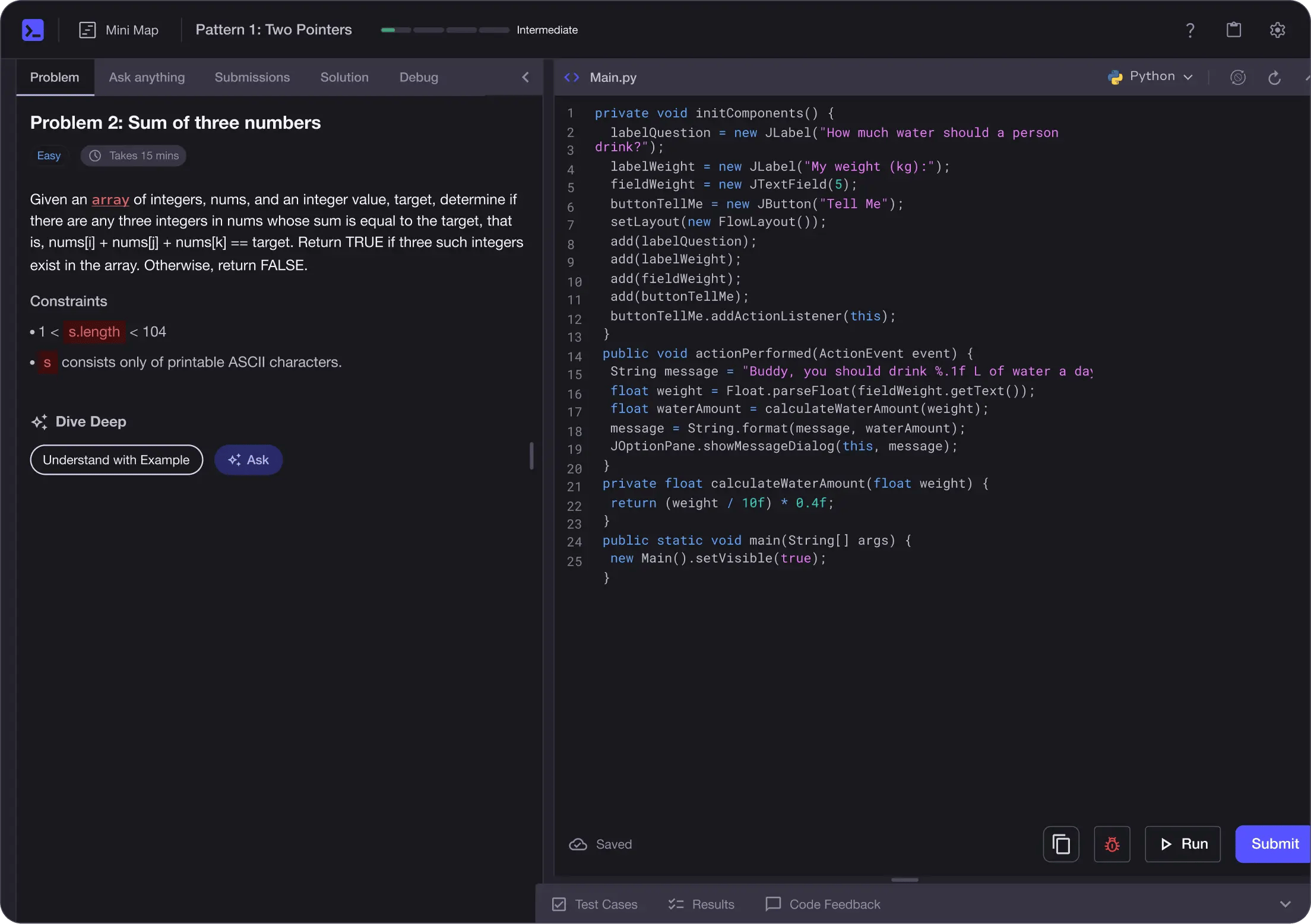
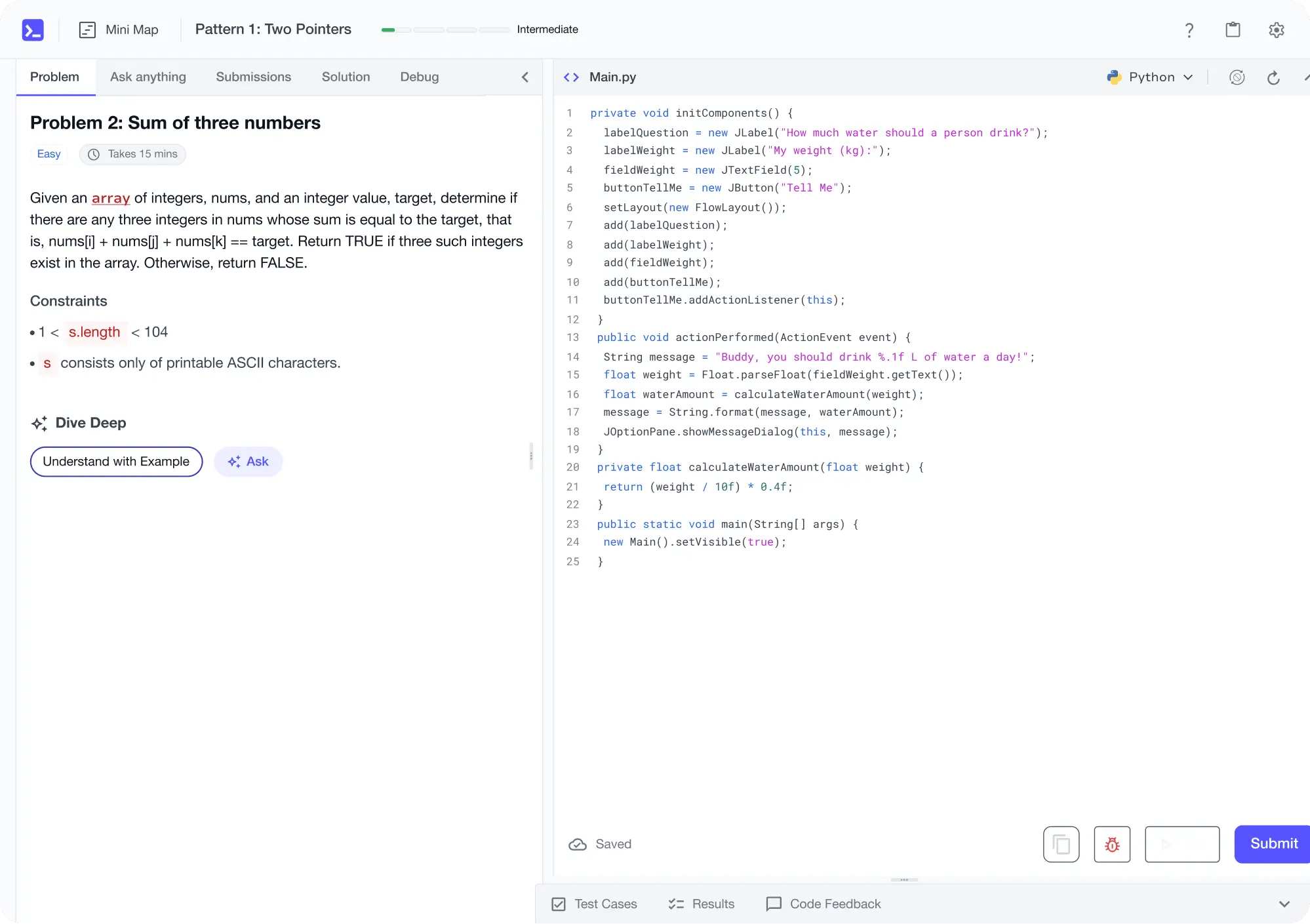
Learn by building with project-based lessons and in-browser code editor
Personalized Roadmaps
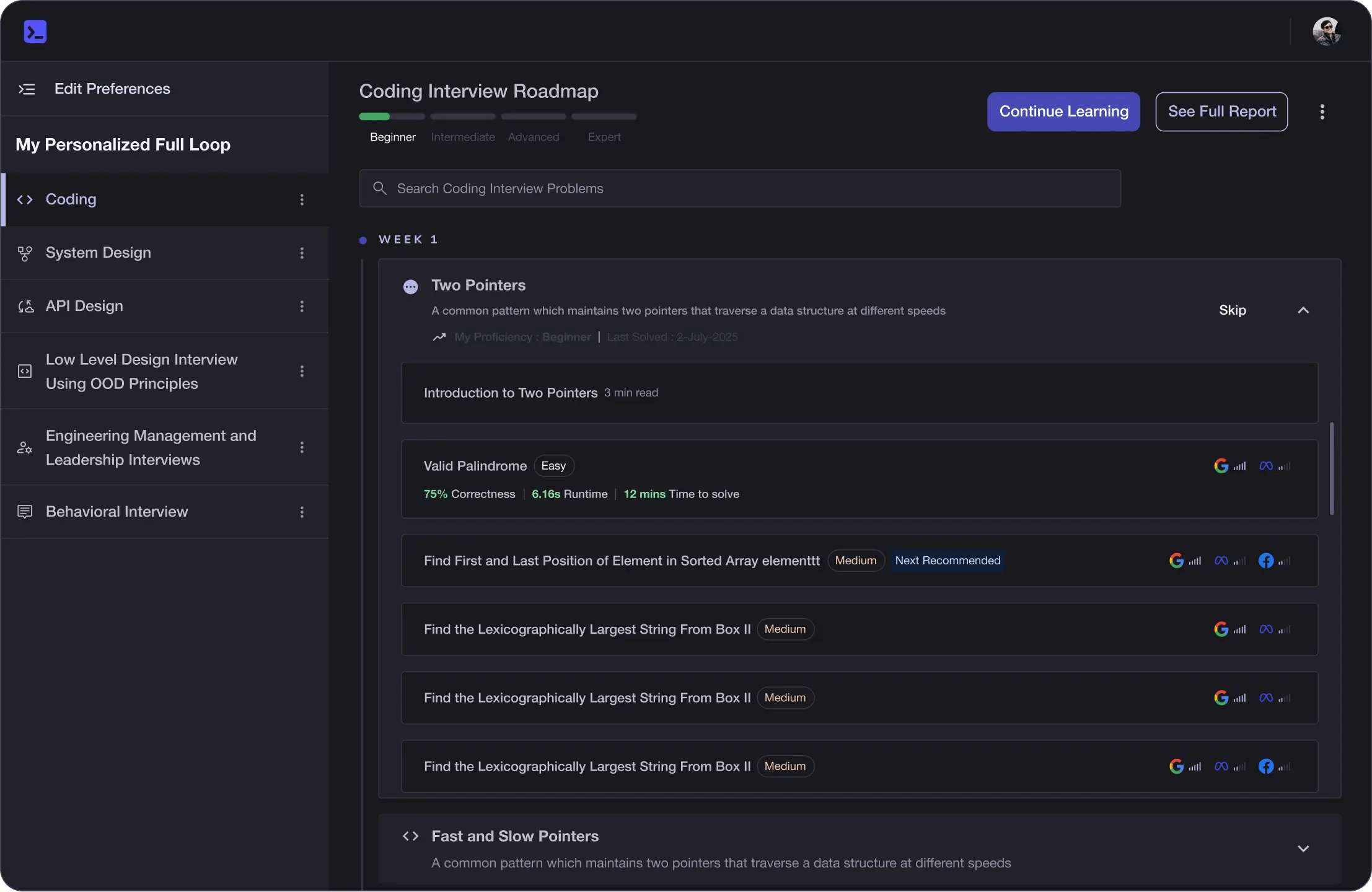
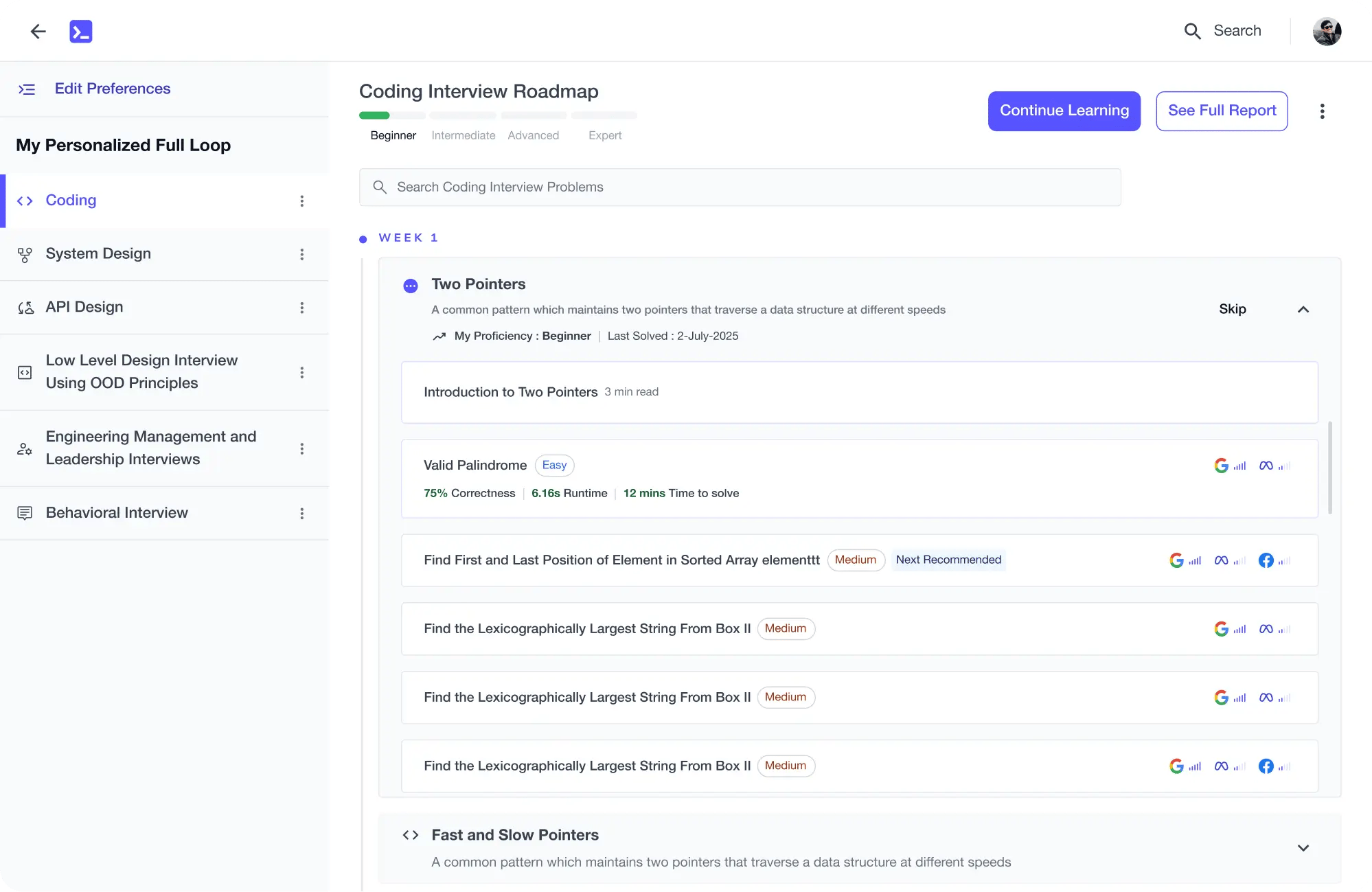
The platform adapts to your strengths & skills gaps as you go
Future-proof Your Career
Get hands-on with in-demand skills
AI Code Mentor
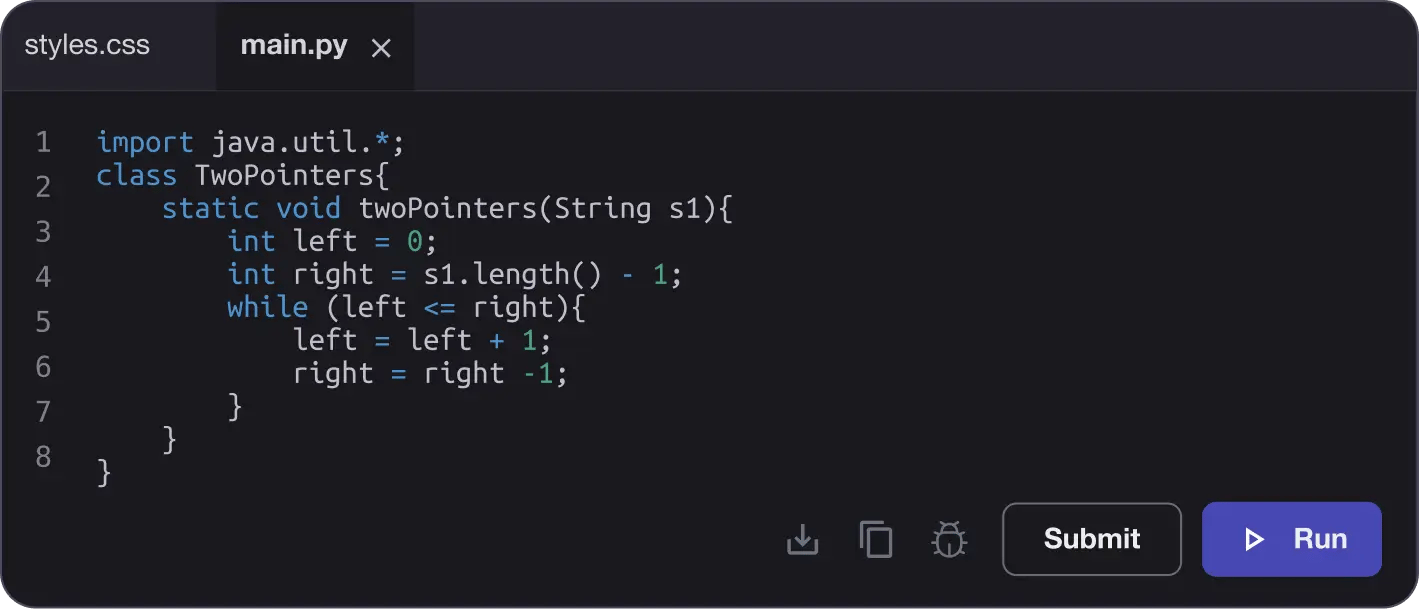
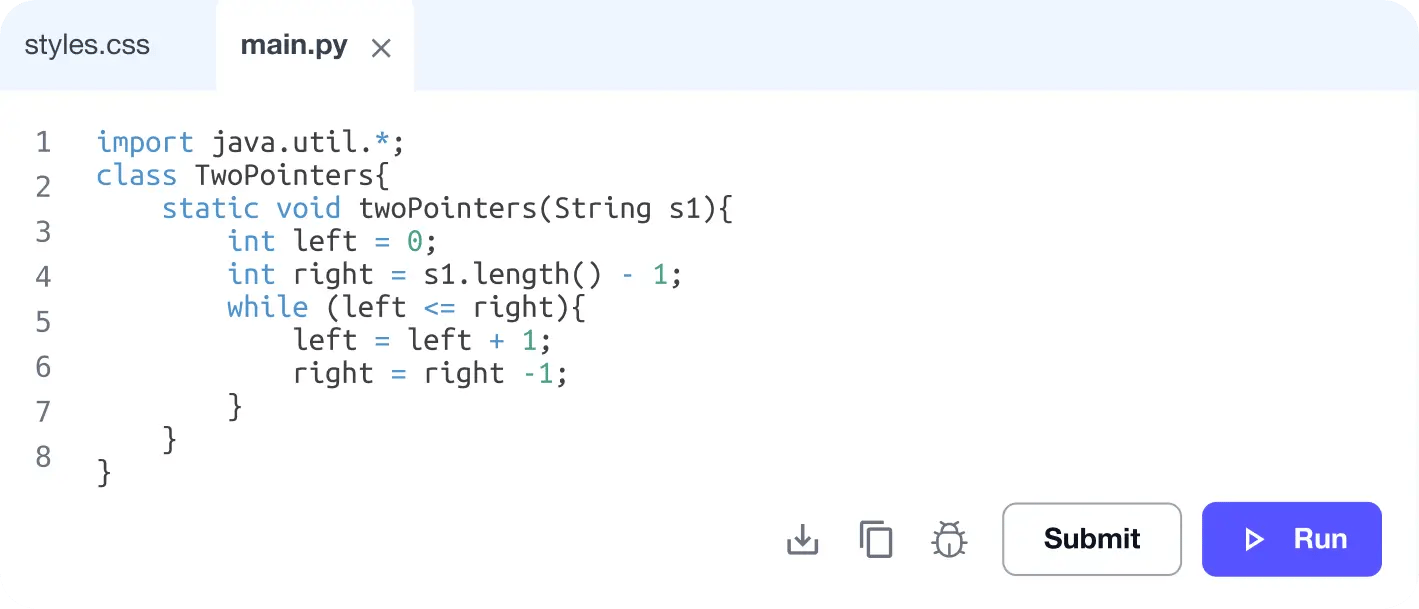
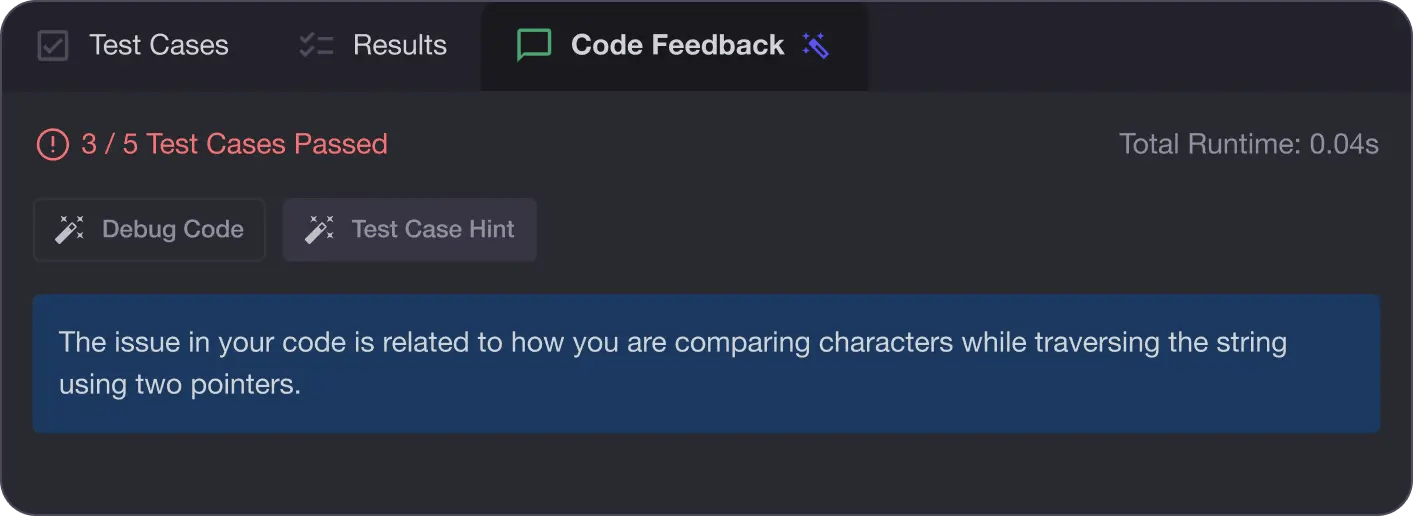
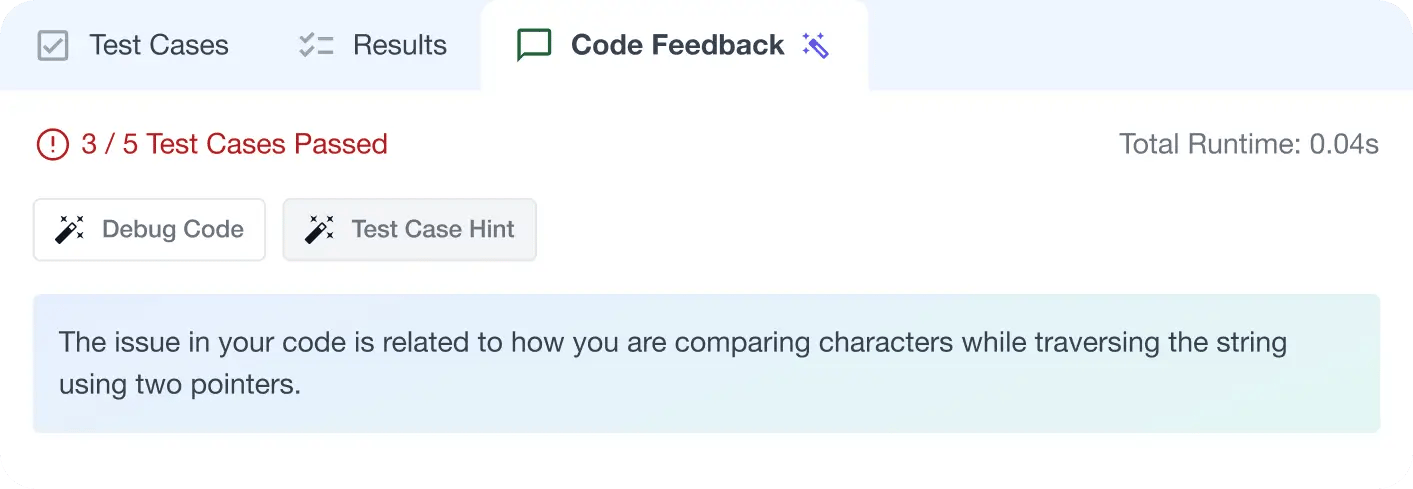
Write better code with AI feedback, smart debugging, and "Ask AI"
MAANG+ Interview Prep
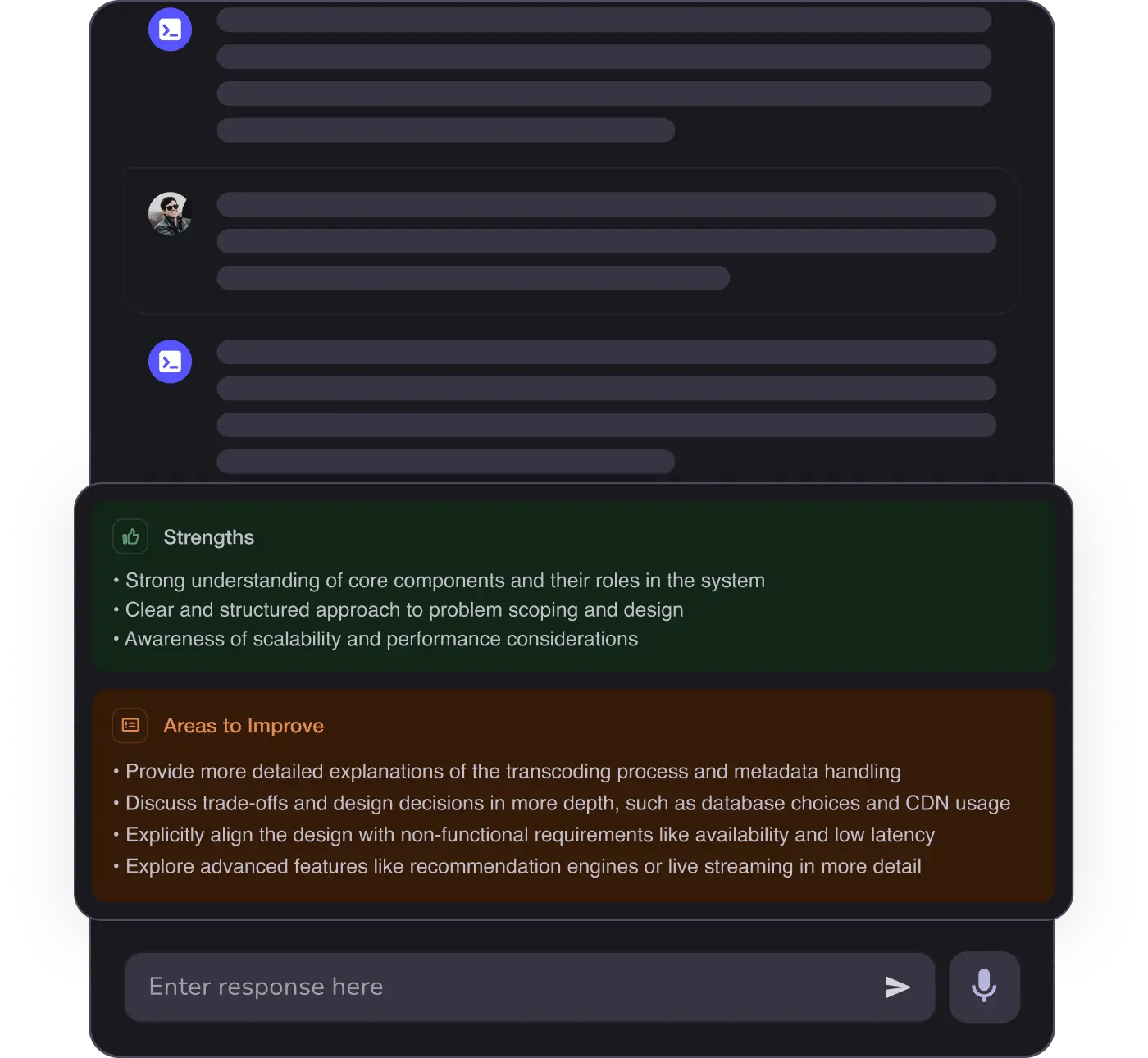
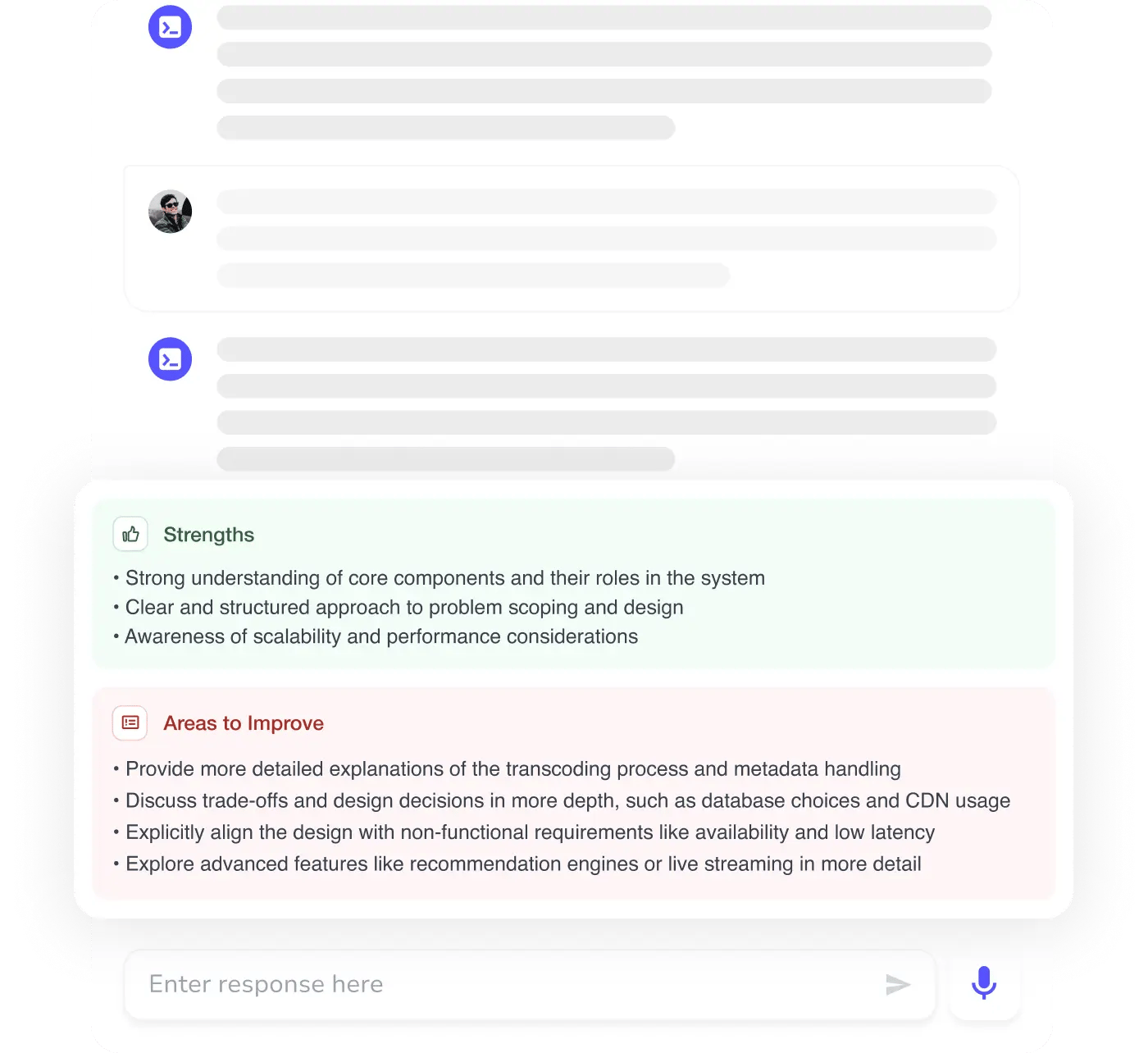
AI Mock Interviews simulate every technical loop at top companies
Frequently Asked Questions
Is Java hard to learn?
How long does it take to learn Java?
Is it difficult to learn Java?
Can I teach myself Java?
Can I learn Java in 1 month?
How to learn Java?
