Adobe Software Engineer Interview Guide
The Adobe software engineer interview follows a multi-stage process that includes recruiter screening, technical coding rounds, an optional online assessment, and an on-site interview with panel discussions and presentations. Preparation should cover coding fundamentals like data structures and algorithms, System Design tailored to Adobe's creative-tool domain, and behavioral stories aligned with Adobe's core values.
Key takeaways
- Multi-round process: Expect an initial phone screen, multiple technical interviews focused on coding and algorithms, a possible timed online assessment covering aptitude and logic, and a final on-site round with panels and presentations.
- Core coding topics: Recurring problem domains include arrays and strings (sliding window, two-pointer), trees and graphs (traversals, cycle detection), dynamic programming, hash maps, and bit manipulation.
- Domain-aware System Design: Adobe interviewers often frame design problems around creative assets, real-time collaboration, conflict resolution with OT or CRDTs, delta compression, and offline sync rather than generic textbook scenarios.
- Behavioral alignment with Adobe values: Structure your stories using the STAR format and explicitly map them to Adobe's values of being Genuine, Exceptional, Innovative, and Involved, with measurable impact wherever possible.
- Practice with intention: Use pattern-based catalogs instead of random problems, simulate 45-minute time constraints, and optimize solutions by reflecting on missed edge cases after each attempt.
When we talk about some big tech companies worldwide, we can not skip Adobe's name from the list. Adobe's influence in the design industry is impeccable. From creating PDFs to now introducing AI designs in their software, Adobe has always amazed us with its technological advancements. Whether you’re a designer or tech-savvy, Adobe should be on your list.
As a tech enthusiast, if you’re planning to secure a job at Adobe, we've got you. We’re here to help you have a smooth journey and prepare you for your Adobe engineer interview. Let’s get started!
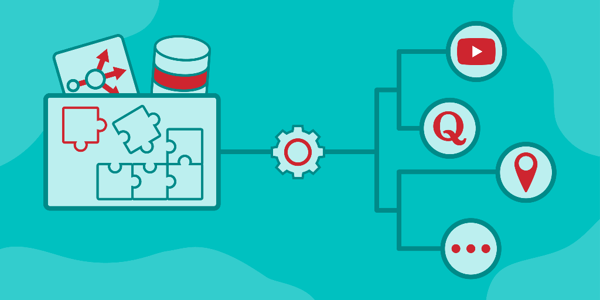
For a decade, when developers talked about how to prepare for System Design Interviews, the answer was always Grokking System Design. This is that course — updated for the current tech landscape. As AI handles more of the routine work, engineers at every level are expected to operate with the architectural fluency that used to belong to Staff engineers. That's why System Design Interviews still determine starting level and compensation, and the bar keeps rising. I built this course from my experience building global-scale distributed systems at Microsoft and Meta — and from interviewing hundreds of candidates at both companies. The failure pattern I kept seeing wasn't a lack of technical knowledge. Even strong coders would hit a wall, because System Design Interviews don't test what you can build; they test whether you can reason through an ambiguous problem, communicate ideas clearly, and defend trade-offs in real time (all skills that matter more than ever now in the AI era). RESHADED is the framework I developed to fix that: a repeatable 45-minute roadmap through any open-ended System Design problem. The course covers the distributed systems fundamentals that appear in every interview – databases, caches, load balancers, CDNs, messaging queues, and more – then applies them across 13+ real-world case studies: YouTube, WhatsApp, Uber, Twitter, Google Maps, and modern systems like ChatGPT and AI/ML infrastructure. Then put your knowledge to the test with AI Mock Interviews designed to simulate the real interview experience. Hundreds of thousands of candidates have already used this course to land SWE, TPM, and EM roles at top companies. If you're serious about acing your next System Design Interview, this is the best place to start.
Adobe Software Interview Process#
The process of getting hired starts by applying for the position of software engineer at Adobe. There are multiple ways to apply at Adobe. For freshers, you can apply at one of Adobe’s recruitment drives or career fairs, or you can just use the company’s online portals. For experienced software engineers, it’s best to apply via Adobe’s online portal. After you’ve applied for the software engineer position, it’s best to wait and prepare for the interview.
Initial Screening#
The first step of the Adobe software interview process is the initial recruiter screening. After you’ve been shortlisted for the position, you will receive a call from the hiring manager. This is a typical phone screening call in which the hiring manager will ask about your current job and determine if you’re open to the new position. The hiring manager may also ask about your interests, experiences, and domain knowledge.
This is usually a short call that lasts about 25-30 minutes. If you’re cleared in the initial screening, you will move to the next round of interviews. As an interviewee, it’s important to mention your experience and any achievements in your professional life.
Technical Interview Rounds#
The real game begins after the initial screening, when cleared candidates undergo a few technical interview rounds. During these interviews, candidates will be asked questions related to coding, data structures, and algorithms. For instance, while coding tests might require crafting specific functions or comprehensive programs, data-structure assessments could entail the implementation or application of tasks involving entities like trees or linked lists.
Adobe, like many leading tech firms, often leans on platforms such as HackerRank and Codility for its technical assessments. HackerRank offers diverse coding challenges, allowing solutions in multiple languages, while Codility stresses real-world problems, assessing the correctness and efficiency of solutions within tight timeframes.
Common Themes & Sample Problems in Adobe Interviews#
To sharpen your preparation for an Adobe software engineer interview, here are recurring themes and sample problems drawn from recent candidate experiences:
Recurring question domains:
Arrays & Strings: sliding window, two-pointer, substring problems
Hash maps/frequency counting
Trees & Graphs: traversals, shortest paths, connectivity
Dynamic Programming: knapsack, coin change, sequence alignment
Bit Manipulation
SQL / Data queries for backend roles
Domain-specific challenges: image processing, version diff, document merging, caching logic
Sample problems:
Minimum jumps to reach end — classic dynamic programming / greedy hybrid (often appears in past Adobe interviews)
Detect cycles or connectivity in graphs (BFS/DFS)
Design an autocomplete system: Given a prefix stream, suggest top-k likely completions, support insert/update
Design a file syncing system: Handle conflict resolution, version control, and efficient delta transmission
How to practice
Use pattern catalogs (sliding window, dynamic programming, recursion) rather than random problems.
Time your practice under 45-minute constraints to simulate real interview pressure.
After solving, rewrite your solution, optimize, and reflect on edge cases you missed.
Technical Assessment (If Required)#
Candidates are also asked to complete a technical assessment after their online technical interview. Recruiters usually share a link to an online assessment that candidates must complete and submit in a given time period. The technical assessment usually consists of two types of questions:
Aptitude and Logic
Technical and Coding
The aptitude and logic component is strategically designed to gauge a candidate’s analytical thinking and problem-solving acumen. It borrows elements from conventional IQ evaluations, challenging individuals on both mathematical and logical fronts.
On the logical side, Adobe often tosses in intriguing riddles and data interpretation challenges, probing your ability to think outside of the box and derive cogent insights from complex data sets. Keep in mind that Adobe’s preferred languages are C++ and Java. Luckily, Educative-99 offers extensive interview prep questions in both languages. You can prepare thoroughly for your Adobe software engineer interview with Educative’s courses and skill paths.
On-Site Interview#
The on-site interview plays a pivotal role in the hiring process. The on-site interview day typically starts with meeting some individuals from Adobe before facing rigorous panel interviews and individual presentations, etc. Such presentations often allow candidates to showcase their prior projects, technical prowess, and problem-solving capabilities. In contrast, panel interviews enable multiple team members to evaluate the depth of a candidate’s knowledge, cultural fit, and adaptability.
One of the standout aspects of the on-site interview is the irreplaceable value of face-to-face interactions. Beyond assessing technical and behavioral compatibility, these interactions allow candidates to truly connect with potential future colleagues and team members. It’s a chance to gauge the team’s dynamics, understand work culture nuances, and envision your place in the Adobe family.
Role Levels & What’s Expected at Each Tier#
Understanding leveling at Adobe will help you calibrate your depth of preparation. Adobe roles typically follow this progression:
Level | Expectation in an interview |
Software Engineer I/Entry | Basic DSA, coding speed, clarity of thought, problem-solving on standard patterns |
Software Engineer II/Mid | More complex problems, moderate system design, ability to discuss tradeoffs, and scalability |
Senior/Lead | Own end-to-end design, large system architecture, mentorship examples, and domain impact |
During your Adobe software engineer interview, questions may scale accordingly — e.g., a senior candidate might face multi-component system design (caching, indexing, consistency) instead of a single API. Align your preparation to the level you're applying for.
Insider Tips for Adobe Software Engineer Interview Success#
Before diving into the actual interview, practice mock interviews and commonly asked questions. Make sure you spend some time on interview prep before appearing for the interview.
Adobe is not just a software company — it’s a cultural icon in the tech world. Taking the time to familiarize yourself with Adobe’s diverse range of products is essential. Beyond the products, understanding Adobe’s history, values, and vision for the future can offer you a significant edge.
Throughout the interview process, prioritize clarity in communication. Whether discussing a complex algorithm, elaborating on past projects, or asking questions about the role, concise yet comprehensive communication can leave a lasting impression.
System Design & Architecture: Thinking in Adobe’s Domain#
At Adobe, system design rounds can go beyond textbook systems. Interviewers may expect you to translate designs to the constraints of creative assets, document formats, or syncing across devices. Here’s how to approach:
Key considerations:
Asset size / storage: versions, delta compression, chunking files
Real-time collaboration / conflict resolution: OT (operational transforms) or CRDTs
Latency vs consistency tradeoffs: e.g. live preview synchronization
Scalability of metadata / indexing: searching among many assets
Fault tolerance: version rollback, offline support
Sample design prompt:
“Design a system to sync large documents (images + vector layers) across clients with offline edits and conflict resolution.”
Suggested steps:
Define use cases & constraints
Sketch component breakdown (client, sync server, conflict engine, storage, queue)
Address tradeoffs (immediate sync vs batching)
Propose APIs and data models
Talk through failure recovery, consistency guarantees
During an Adobe software engineer interview, using domain analogies—like how Creative Cloud handles assets—can earn extra points.
Behavioral & Value-driven Stories (STAR + Adobe values)#
Behavioral rounds differentiate candidates who fit the role technically from those who’ll thrive in Adobe’s culture. Adobe values include Genuine, Exceptional, Innovative, Involved (often in internal messaging). Use STAR stories that explicitly map to these.
Examples:
Genuine: “I admitted a mistake in a release, explained to stakeholders, and fixed the issue proactively.”
Innovative: “I introduced a new caching mechanism that reduced rendering latency by 30%.”
Involved: “I mentored juniors, organized internal tech talks, and took cross-team features.”
Exceptional: “I went beyond specs to build an internal tool that saved 20% of dev time.”
Structure & tips:
In your response, name the value (“this showed I was truly innovative”) to signal alignment.
Keep it tight: 1 minute context, 2 minutes action, 1 minute result + reflection.
Prefer examples with measurable impact (metrics) or cross-team collaboration.