Generative AI System Design Explained
Want to master Generative AI System Design? Learn how to architect scalable, cost-efficient, and safe AI platforms with smart orchestration, GPU scheduling, and moderation pipelines. Design beyond the model and build production-ready AI systems with confidence
Generative AI systems have rapidly moved from novelty to necessity. From text and image generation to code completion and audio synthesis, generative models now power products used by millions of people every day. While the models themselves get much of the attention, the real engineering challenge lies in designing systems that can serve these models reliably, safely, and at scale.
That’s why Generative AI System Design has become an important System Design interview question. It combines classic distributed systems concepts with new constraints introduced by AI workloads: expensive inference, variable latency, safety enforcement, and cost control. Designing a generative AI system isn’t just about running a model; it’s about orchestrating an entire platform around it.
In this blog, we’ll walk through how to design a production-ready generative AI system, focusing on architecture, trade-offs, and real-world constraints rather than model internals.
Grokking the Generative AI System Design
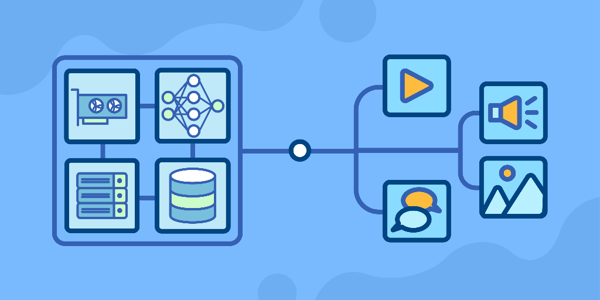
GenAI System Design is emerging as its own interview category at top tech companies, distinct from traditional ML System Design. The questions are different, the architectures are different, and the scale considerations (GPU compute, parallelism, inference optimization) require their own mental models. Having spent years researching adaptive AI systems and neural networks, and now leading the creation of learning content at Educative, I designed this course to bridge that gap between understanding generative AI conceptually and being able to architect these gen AI systems end-to-end. You'll learn the SCALED framework, which is a 6-step methodology for breaking down any GenAI System Design problem, then apply it across five real-world systems spanning text, image, speech, and video generation. Each case study walks through training architecture, deployment design, and the specific tradeoffs involved in that modality. Before diving into the case studies, the course covers the foundational concepts you'll need: neural networks, transformers, tokenization, embeddings, parallelism strategies, inference optimization, RAG, and fine-tuning. You'll also learn how to do back-of-the-envelope calculations for LLM training and deployment. A bonus: if you have a GenAI or ML System Design interview coming up, this will give you both the framework and the depth to handle whatever systems are asked to design.
Understanding the core problem in generative AI System Design#
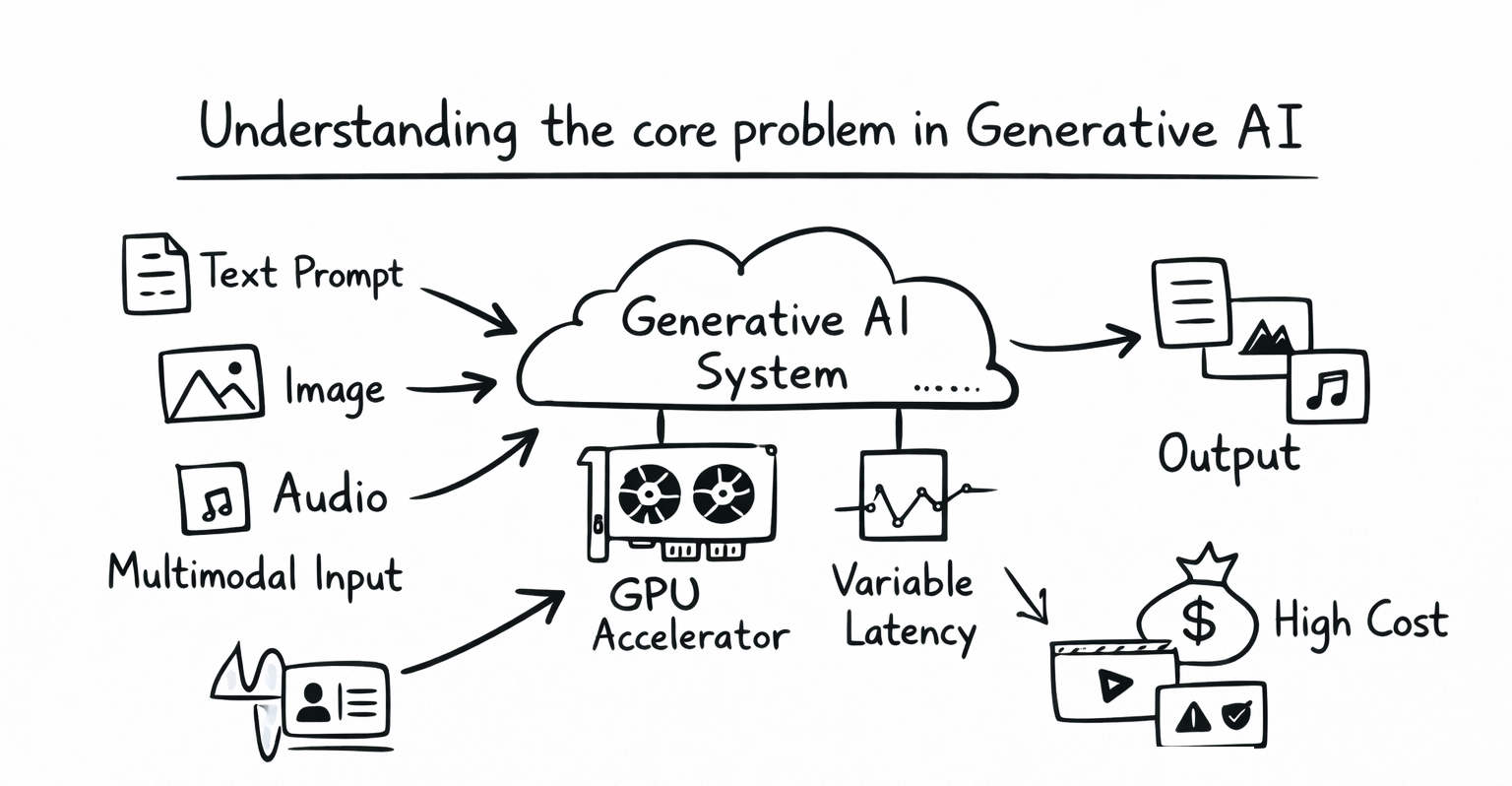
At its core, a generative AI system accepts structured or unstructured input and produces new content. The input may be a text prompt, an image, an audio snippet, or a multimodal request. The output is newly generated content synthesized from learned patterns.
Unlike traditional web systems that retrieve stored records or perform deterministic transformations, generative systems create outputs dynamically. This difference introduces architectural implications that dominate Generative AI System Design.
Grokking Modern System Design Interview

For a decade, when developers talked about how to prepare for System Design Interviews, the answer was always Grokking Modern System Design Interview. This is that course — updated for the current tech landscape. As AI handles more of the routine work, engineers at every level are expected to operate with the architectural fluency that used to belong to Staff engineers. That's why System Design Interviews still determine starting level and compensation, and the bar keeps rising. I built this course from my experience building global-scale distributed systems at Microsoft and Meta — and from interviewing hundreds of candidates at both companies. The failure pattern I kept seeing wasn't a lack of technical knowledge. Even strong coders would hit a wall, because System Design Interviews don't test what you can build; they test whether you can reason through an ambiguous problem, communicate ideas clearly, and defend trade-offs in real time (all skills that matter more than ever now in the AI era). RESHADED is the framework I developed to fix that: a repeatable 45-minute roadmap through any open-ended System Design problem. The course covers the distributed systems fundamentals that appear in every interview – databases, caches, load balancers, CDNs, messaging queues, and more – then applies them across 13+ real-world case studies: YouTube, WhatsApp, Uber, Twitter, Google Maps, and modern systems like ChatGPT and AI/ML infrastructure. Then put your knowledge to the test with AI Mock Interviews designed to simulate the real interview experience. Hundreds of thousands of candidates have already used this course to land SWE, TPM, and EM roles at top companies. If you're serious about acing your next System Design Interview, this is the best place to start.
Inference is compute-heavy and often requires GPUs or specialized accelerators. Latency varies depending on model size, input length, and output length. Traffic patterns can be bursty and unpredictable. Outputs must pass through moderation pipelines to ensure safety and compliance. Cost per request is materially higher than typical REST APIs.
The dominant concerns in Generative AI System Design are not storage optimization or database indexing. Instead, they are orchestration, scheduling, cost control, fairness, and safe execution of compute-intensive tasks.
Functional requirements of a generative AI platform#
Functional requirements define what the system must accomplish from a user or developer perspective.
At a minimum, a generative AI system must accept a request, process it using a model, and return generated output. Depending on the product scope, this may include text generation, image synthesis, code completion, audio generation, or multimodal responses.
A production system must support multiple interaction patterns. Some requests are synchronous, such as chat completions. Others are asynchronous, such as video generation jobs. Users may need the ability to refine prompts, request variations, retry failed outputs, or track job status.
The following table summarizes typical functional capabilities in Generative AI System Design.
Functional Capability | Description |
Request submission | Accept prompts via API, SDK, or UI |
Multi-modality support | Text, image, audio, or combined input |
Response delivery | Synchronous streaming or async job completion |
Iterative refinement | Allow retries and variations |
Status tracking | Expose request state and metadata |
In interviews, you can scope the problem to one modality, such as text generation, unless the interviewer explicitly requires multimodal coverage.
System Design Deep Dive: Real-World Distributed Systems

Modern software systems are expected to operate at a massive scale while meeting strict reliability and latency requirements. Whether it’s a feed refresh, a payment request, or a real-time analytics query, users expect systems to respond instantly and consistently. That expectation has raised the bar for engineers today, understanding that System Design isn’t optional. It’s a core skill for building and evaluating production-grade systems. I built this course from my experience working on large-scale distributed systems at Microsoft (Azure) and Meta (Scuba), and from interviewing hundreds of candidates across both companies. The pattern I kept seeing was this: candidates understood individual components, but struggled to combine them into a coherent system. They knew what a cache or load balancer was, but not when or why to use it. This course is designed to bridge that gap. We start with the foundational building blocks of System Design, including databases, caching layers, load balancing, and messaging systems, and focus on how they interact under real-world constraints. From there, we analyze systems built by companies like Google, Facebook, and Amazon, breaking them down to understand the trade-offs behind each design decision. The goal is not just to learn concepts, but to develop the ability to reason through them in practice. This approach has helped a large number of engineers build stronger intuition for System Design and perform better in interviews. If you want to understand how real systems are designed and be able to design them yourself, this course gives you a clear, practical path forward.
Non-functional requirements that shape architecture#
Non-functional requirements drive most architectural decisions in Generative AI System Design.
Inference is expensive and often slower than traditional API calls. This shifts focus from pure latency minimization to predictable performance and cost efficiency. Scalability must handle traffic growth without overprovisioning GPUs. High availability is essential because generative AI systems often power customer-facing workflows. Fairness mechanisms must prevent resource monopolization by a small subset of users.
Scalability & System Design for Developers

As you progress in your career as a developer, you'll be increasingly expected to think about software architecture. Can you design systems and make trade-offs at scale? Developing that skill is a great way to set yourself apart from the pack. In this Skill Path, you'll cover everything you need to know to design scalable systems for enterprise-level software.
The table below outlines key non-functional constraints and their architectural implications.
Non-Functional Requirement | Architectural Impact |
Scalability | Horizontal scaling of inference workers |
Predictable latency | Queueing and scheduling strategies |
High availability | Redundant model serving clusters |
Cost efficiency | Batching and resource pooling |
Safety enforcement | Pre- and post-generation moderation |
Fair usage | Rate limiting and quota systems |
Strong Generative AI System Design explicitly prioritizes these concerns rather than assuming they are automatically satisfied.
High-level architecture of a generative AI platform#
A production-ready generative AI system is best understood as a layered architecture with clear separation of responsibilities.
At the edge of the system are client interfaces, such as web applications, mobile apps, SDKs, and APIs. These connect to an API gateway that handles authentication, rate limiting, and request routing.
After ingestion, requests pass through validation and safety pipelines before reaching inference orchestration. A scheduler assigns tasks to compute-backed model serving infrastructure. Generated outputs are stored in object storage if needed and delivered back to the client. Observability systems monitor latency, cost, and error rates across the stack.
The table below presents a simplified high-level component map.
Layer | Responsibility |
Client interface | Accept user input |
API gateway | Authentication and rate limiting |
Validation service | Input normalization and checks |
Moderation pipeline | Safety enforcement |
Scheduler | Queueing and resource allocation |
Model serving cluster | Run inference on GPUs |
Storage layer | Store generated artifacts |
Monitoring system | Track metrics and costs |
This modular architecture allows each component to evolve independently as models, policies, and traffic patterns change.
Request ingestion and validation#
Every generation request begins at the ingestion layer. This layer is responsible for authenticating users, applying rate limits, and validating request parameters.
Validation ensures that inputs are within acceptable bounds, such as maximum prompt length or supported formats. Early validation protects expensive compute resources from malformed or malicious requests. For example, excessively long prompts may be truncated or rejected before reaching inference.
This layer may also inject system-level instructions or formatting before passing the request downstream. By enforcing guardrails early, the system preserves GPU resources for legitimate workloads.
Safety and moderation as a first-class pipeline#
Safety is not an afterthought in Generative AI System Design. It is a core architectural pillar.
Before inference, prompts may be screened for prohibited content. After generation, outputs must be evaluated for policy violations. Moderation logic may include rule-based filters, classifier models, or human review escalation.
Treating moderation as a pipeline rather than a static filter provides flexibility. Policies evolve over time. New abuse patterns emerge. A modular moderation service allows independent updates without redeploying the entire inference stack.
The table below illustrates the moderation lifecycle.
Stage | Purpose |
Pre-generation screening | Block unsafe prompts |
Inference | Generate content |
Post-generation filtering | Detect unsafe outputs |
Escalation | Flag for manual review if needed |
Embedding safety checks into the request lifecycle ensures compliance while preserving system integrity.
Inference orchestration and scheduling#
Inference orchestration is the operational core of Generative AI System Design.
Once a request passes validation and moderation, it enters a scheduling system. The scheduler determines when and where inference should execute. Because GPUs are scarce and expensive, efficient scheduling is critical.
Requests may be queued during peak load. Scheduling algorithms can prioritize premium users or shorter requests. Some systems dynamically route traffic to different model sizes based on cost or latency goals.
The following table outlines common scheduling concerns.
Scheduling Concern | Why It Matters |
Queue depth | Prevent overload during bursts |
Fairness | Avoid resource monopolization |
Model routing | Balance quality and cost |
GPU utilization | Maximize hardware efficiency |
Intelligent scheduling directly influences user experience and infrastructure expenses.
Model serving infrastructure#
Model serving infrastructure is where inference physically occurs. Workers run on GPU-backed instances and load models into memory to process requests.
To ensure resilience and scalability, inference workers are typically stateless. This design allows horizontal scaling and easier failure recovery. Model versioning enables controlled rollouts and A/B testing. Warm model loading reduces cold-start latency.
Because models can be memory-intensive, resource isolation and careful provisioning are essential. Overloading a single GPU instance can cause cascading performance degradation.
A well-designed serving layer treats models as managed artifacts, enabling safe upgrades and rollbacks without downtime.
Streaming versus asynchronous workflows#
Generative AI platforms often support multiple response modes.
For text generation, streaming token-by-token responses reduces perceived latency. The user begins receiving output before inference fully completes. This requires long-lived connections and backpressure management.
For heavier workloads such as image or video generation, asynchronous processing is more common. The system returns a job ID and processes the task in the background. The client polls or receives callbacks when the output is ready.
The table below compares these patterns.
Mode | Best For | Architectural Requirement |
Streaming | Text generation | Persistent connections |
Asynchronous | Image or video generation | Job tracking and status APIs |
Supporting both modes increases flexibility but adds orchestration complexity.
Storage of generated outputs#
Generated artifacts may need to be stored for later retrieval. Large outputs such as images or audio files are typically stored in object storage systems optimized for durability and scalability. Metadata such as prompts, timestamps, and user IDs is stored in a structured database.
Separating raw outputs from metadata improves scalability and retrieval efficiency. Content delivery networks may cache frequently accessed outputs to reduce load on storage backends.
Failure handling and reliability#
Failures are inevitable in compute-heavy systems. GPU instances may crash. Inference jobs may time out. Moderation may block content.
Robust Generative AI System Design anticipates these scenarios. Idempotent request handling ensures retries do not produce duplicate artifacts. Retry policies must include limits to avoid runaway costs. Clear error responses build user trust.
Graceful degradation strategies are also important. For example, if the highest-quality model is unavailable, the system may route traffic to a smaller fallback model.
Reliability is not about eliminating failures. It is about making them predictable and manageable.
Observability and operational monitoring#
Operating a generative AI system without observability is risky. Monitoring must include both traditional system metrics and AI-specific signals.
The table below summarizes key metrics.
Metric Category | Examples |
Performance | Latency, throughput |
Infrastructure | GPU utilization, memory usage |
Queue health | Depth and wait time |
Safety | Moderation rate and false positives |
Cost | Cost per request or token |
Visibility into these metrics allows teams to detect bottlenecks, scale proactively, and manage spending effectively.
Cost management as a first-class constraint#
Cost control is a defining challenge in Generative AI System Design. Inference cost scales with model size, token count, and concurrency.
Techniques such as batching requests, truncating excessive input, tiered service levels, and model routing help reduce expenses. For example, shorter prompts reduce token processing time. Lower-tier users may be routed to smaller models.
Cost awareness demonstrates engineering maturity. In interviews, explicitly connecting architecture decisions to cost implications strengthens your answer.
Multi-tenancy and fair usage#
Generative AI platforms often serve diverse customers. Multi-tenancy introduces isolation and fairness challenges.
The system must enforce per-tenant quotas and rate limits. Priority scheduling may allocate additional resources to premium customers. Separate resource pools can prevent noisy neighbors from degrading performance.
Fairness mechanisms ensure consistent service levels across user segments.
How interviewers evaluate generative AI System Design#
Interviewers are not testing deep learning knowledge. They are evaluating your ability to design systems around AI workloads.
They assess whether you can reason about compute-heavy, bursty traffic. They observe how you integrate moderation pipelines. They evaluate how you balance latency, scalability, and cost. They listen for structured explanations and clear trade-offs.
Strong answers emphasize orchestration, safety, resource management, and operational maturity rather than model internals.
Final thoughts#
Generative AI System Design represents a new frontier in System Design interviews. It requires combining distributed systems principles with AI-specific constraints such as expensive inference, safety enforcement, and cost control.
A strong design embraces asynchronous workflows, intelligent scheduling, modular moderation pipelines, and disciplined resource management. If you can clearly describe how a request flows from ingestion through validation, moderation, inference, storage, and delivery, you demonstrate the system-level judgment required to build real-world generative AI platforms at scale.
