How to build effective AI agents
Curious about how modern AI systems complete complex tasks? Learning how we build effective agents helps developers design smarter AI applications that can reason, plan, and execute real-world workflows with reliability and efficiency.
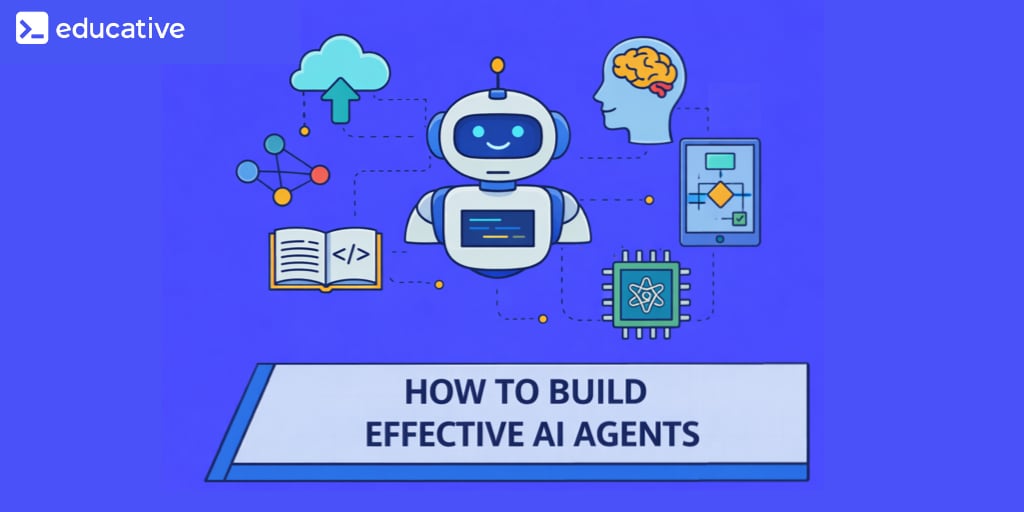
Artificial intelligence systems are evolving rapidly, and one of the most important advancements in modern AI development is the emergence of autonomous agents. Developers, researchers, and AI engineers are increasingly focused on how we build effective agents that can reason, plan, and execute complex tasks with minimal human intervention.
An AI agent is more than a simple chatbot or prompt-response model because it can interact with external tools, maintain context across multiple steps, and make decisions based on dynamic information. These capabilities allow agents to automate complex workflows such as research, coding, scheduling, and data analysis.
Build AI Agents and Multi-Agent Systems with CrewAI

Building AI agents and multi-agent systems with CrewAI is quickly becoming a core capability for developers working with modern LLM-powered applications. As workflows grow more complex, the shift is no longer about single prompts, but about orchestrating multiple agents that can collaborate, delegate tasks, and operate as coordinated systems. I built this course from my work in adaptive AI and intelligent orchestration, where designing agentic workflows requires structure, coordination, and control. A recurring pattern I observed was that developers could build individual agents, but struggled to scale them into reliable multi-agent systems. CrewAI provides a practical framework for this, and this course is designed to make it actionable. You’ll learn how to build AI agents and multi-agent systems with CrewAI through hands-on workflows, starting with core agent concepts, then progressing into task delegation, hierarchical orchestration, and human-in-the-loop systems. You’ll implement real automation pipelines and explore advanced features like conditional tasks, monitoring, and scalable agent operations. Developers are already using CrewAI to build coordinated AI systems at scale. If you want to move from single agents to fully orchestrated AI workflows, this is where you begin.
Understanding how we build effective agents requires examining both the technical architecture and the design principles behind successful agent systems. Effective agents combine large language models, structured reasoning mechanisms, tool usage, and memory systems to perform tasks reliably and efficiently.
Understanding What AI Agents Are#

Before exploring how we build effective agents, it is important to understand what distinguishes an AI agent from a traditional AI model and how an AI agent is used. A standard language model processes an input prompt and generates an output, while an agent can perform a sequence of actions in order to complete a goal.
Agents typically operate within a loop that involves observing information, reasoning about the situation, taking an action, and then evaluating the result. This process allows agents to break down complex problems into smaller steps that can be solved incrementally.
The concept of agency in artificial intelligence focuses on decision-making and autonomy. Instead of responding passively to a user request, an agent actively decides which tools to use and which actions to take to accomplish the task.
System Type | Characteristics |
Language Model | Generates responses to prompts |
AI Assistant | Provides guided responses |
AI Agent | Plans actions and executes tasks |
Autonomous Agent | Operates with minimal supervision |
Agents, therefore, represent a shift from reactive AI toward systems capable of goal-directed behavior.
Core Components Of Effective AI Agents#
Understanding how we build effective agents requires examining the fundamental components that allow these systems to operate autonomously. Most modern AI agents share a similar architecture that integrates reasoning, planning, tools, and memory.
The first component involves a reasoning engine powered by large language models or specialized decision systems. This engine interprets user goals, analyzes available information, and determines the next action in the workflow.
Another critical component involves tool integration, which allows agents to interact with external systems such as APIs, databases, search engines, and development environments. Tools enable agents to move beyond text generation and perform meaningful tasks in real-world environments.
Component | Function |
Reasoning Engine | Interprets goals and determines actions |
Planning Module | Breaks complex tasks into steps |
Tool Integration | Allows interaction with external systems |
Memory System | Stores context and historical data |
Execution Loop | Repeats reasoning and action cycles |
Together, these components create an architecture capable of supporting intelligent task execution.
Become an Agentic AI Expert
Agentic AI represents the next evolution of artificial intelligence, creating autonomous systems that can reason, plan, and execute complex tasks. As businesses seek to automate sophisticated workflows and solve dynamic problems, the demand for experts who can design, build, and manage these intelligent agents is skyrocketing. This “Agentic AI” Skill Path provides a comprehensive journey to becoming an agentic AI expert. We’ll begin with the foundations of AI agents, then dive into hands-on development by building multi-agent systems with CrewAI. You’ll advance to mastering architectural design patterns for robust solutions and learn to build scalable applications with the Model Context Protocol (MCP), concluding with high-level system design. By the end of this Skill Path, you’ll possess the end-to-end expertise to architect and deploy sophisticated agentic systems.
The Role Of Large Language Models In Agents#
The way Large language models are trained serves as the cognitive foundation for most modern AI agents. These models provide the reasoning ability required for interpreting instructions, generating plans, and interacting with tools.
Language models allow agents to understand natural language instructions and convert them into structured actions. They also provide the ability to analyze results from previous steps and adjust strategies accordingly.
However, language models alone cannot build effective agents because they lack persistent memory and structured control systems. Developers must therefore design agent frameworks that guide how language models interact with tools and data sources.
Capability | Contribution To Agent Behavior |
Natural Language Understanding | Interprets user requests |
Reasoning | Generates plans and decisions |
Context Interpretation | Maintains conversational continuity |
Output Generation | Produces instructions and responses |
The language model, therefore, acts as the reasoning layer within a broader system architecture.
Essentials of Large Language Models: A Beginner’s Journey
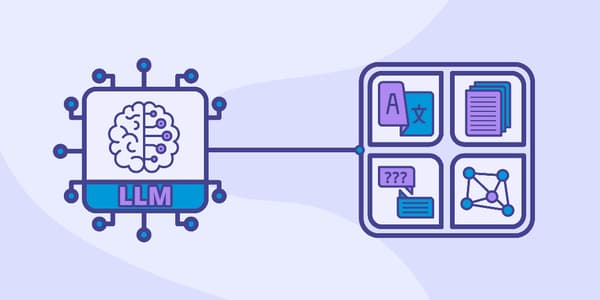
Large language models (LLMs) are at the core of today’s AI transformation, powering everything from conversational agents to code generation and enterprise automation. As adoption accelerates, understanding how LLMs actually work, and how to use them effectively in real systems, is no longer optional for developers and data professionals. I built this course from my work in neural networks and intelligent systems, where LLMs represent a shift from traditional modeling to probabilistic reasoning at scale. A recurring pattern I observed was that many practitioners could use APIs but lacked a clear mental model of how LLMs process language, make decisions, and fail in edge cases. This course is designed to bridge that gap with a systems-level perspective. You’ll learn LLM fundamentals from first principles, covering architecture, tokenization, embeddings, attention, and training dynamics, before moving into practical workflows like prompting, retrieval-augmented generation (RAG), and tool integration. Each concept is tied to how LLMs are actually deployed in production systems. Engineers and researchers are already building on these foundations to create real-world AI applications. If you want to go beyond surface-level usage of LLMs, this is where you begin.
Designing The Agent Decision Loop#
One of the most important aspects of how we build effective agents involves designing the decision loop that governs agent behavior. The decision loop determines how the agent processes information, plans actions, and evaluates results.
Most agent systems follow a cycle that includes observing the environment, reasoning about possible actions, executing a selected action, and then analyzing the outcome. This iterative process allows agents to gradually progress toward a goal while adapting to new information.
A well-designed decision loop prevents agents from making arbitrary or repetitive actions. Developers often introduce constraints and evaluation checkpoints to ensure the agent behaves in a predictable and reliable manner.
Stage | Description |
Observation | Agent gathers relevant information |
Reasoning | Agent evaluates possible actions |
Action | Agent executes a chosen step |
Evaluation | Agent analyzes the outcome |
This loop enables agents to handle complex tasks that require multiple sequential decisions.
Building Tool-Enabled Agents#
One of the defining characteristics of modern AI agents is their ability to use tools. Tool integration allows agents to perform actions that go beyond text generation.
For example, an agent might search the web for information, execute code, query a database, or schedule tasks in external systems. These capabilities allow agents to operate within real software environments rather than isolated chat interfaces.
Effective tool integration requires careful design because agents must understand when and how to use each available tool. Developers typically provide structured descriptions of tools so the agent can determine which one is appropriate for a given task.
Tool Type | Example Usage |
Search Tools | Gathering external information |
Code Execution | Running scripts and calculations |
APIs | Interacting with services |
Databases | Querying structured data |
File Systems | Reading or writing documents |
By combining reasoning with tool usage, agents can solve problems that require both analysis and action.
The Importance Of Memory In Agent Systems#
Memory systems play a crucial role in how we build effective agents. Without memory, an agent would treat each task as an isolated interaction without learning from previous steps.
Memory allows agents to store intermediate results, maintain long-term context, and remember relevant information across sessions. This capability enables agents to handle complex workflows that involve multiple stages or extended conversations.
Developers often implement two types of memory systems within agent architectures. Short-term memory manages context during a task, while long-term memory stores information that persists beyond individual interactions.
Memory Type | Purpose |
Short-Term Memory | Maintains task context |
Long-Term Memory | Stores historical knowledge |
External Memory | Uses databases or vector stores |
Memory, therefore, enables agents to operate with greater continuity and contextual awareness.
Planning And Task Decomposition#
Another essential principle in how we build effective agents involves planning complex tasks before execution. Instead of attempting to solve a problem in a single step, effective agents break tasks into smaller, manageable actions.
Task decomposition allows agents to analyze large problems such as building software, writing research reports, or performing multi-step data analysis. By dividing tasks into sequential actions, agents can maintain clearer reasoning pathways.
Planning modules often use the language model to generate a step-by-step strategy before executing individual actions. This approach reduces errors and improves the agent’s ability to complete long workflows successfully.
Planning Stage | Purpose |
Goal Definition | Clarifies the final objective |
Task Breakdown | Divides the goal into steps |
Execution Strategy | Determines the order of actions |
Monitoring | Evaluates progress |
Planning, therefore, provides structure to the agent’s reasoning process.
Ensuring Reliability And Safety#
As agent systems become more autonomous, reliability and safety become critical considerations. Developers must design safeguards that prevent agents from making harmful or unintended actions.
One approach involves limiting the tools and environments an agent can access. By restricting permissions, developers can prevent agents from performing operations that might compromise system integrity.
Another strategy involves implementing evaluation checkpoints where the agent verifies its decisions before executing critical actions. These checkpoints help ensure that reasoning steps remain aligned with the intended task.
Reliability also depends on monitoring agent behavior and continuously improving prompt structures, tool descriptions, and decision frameworks.
Common Challenges In Building AI Agents#
Although agent technology has advanced rapidly, developers still face several challenges when designing effective systems. One major difficulty involves ensuring consistent reasoning across long task sequences.
Language models sometimes produce inconsistent decisions when tasks involve multiple reasoning steps. Developers often address this challenge by introducing structured planning prompts and verification steps.
Another challenge involves managing the complexity of tool integration. As agents gain access to more tools, selecting the correct tool at the appropriate time becomes increasingly difficult.
These challenges highlight why building effective agents requires both strong technical architecture and thoughtful design practices.
Real-World Applications Of AI Agents#
AI agents are increasingly used across many industries because they can automate complex workflows that previously required human intervention. These systems can assist developers, researchers, analysts, and business teams.
In software development, agents can help write code, debug errors, and manage development environments. In research workflows, agents can gather information from multiple sources and synthesize insights into structured reports.
Agents are also used in customer support systems, data analysis platforms, and workflow automation tools. As these systems mature, they are expected to play an increasingly important role in modern software infrastructure.
Industry | Example Agent Use Case |
Software Development | Code generation and debugging |
Research | Information gathering and summarization |
Customer Support | Automated assistance systems |
Data Analysis | Data querying and report generation |
These applications demonstrate the transformative potential of well-designed agent systems.
The Future Of AI Agent Development#
The rapid growth of agent frameworks suggests that autonomous AI systems will become increasingly sophisticated in the coming years. Developers are exploring new architectures that combine planning, reasoning, and learning to create more capable agents.
Future agent systems may integrate reinforcement learning techniques, enabling agents to improve their performance over time. Advances in memory architectures and multi-agent coordination may also enable agents to collaborate on complex tasks.
Understanding how we build effective agents today provides valuable insights into the direction of future AI systems. As these technologies evolve, developers who understand agent architecture will be well-positioned to build next-generation AI applications.
Final Thoughts#
Learning how we build effective agents involves understanding the interplay between reasoning systems, planning mechanisms, tool integration, and memory architectures. Effective agent design requires careful attention to decision loops, task decomposition, and system reliability.
As AI agents continue to evolve, they will play an increasingly important role in automating complex workflows across many industries. Developers who invest time in understanding agent architecture will gain valuable skills for building intelligent systems capable of solving real-world problems.
The ability to design reliable and capable agents will likely become one of the most important competencies in modern AI development.
