Setting Values during Installation
Explore how to customize Helm chart installations by setting values during deployment. Learn to use values.yaml files and the --set flag to modify default configurations, enabling you to tailor applications for different versions, replicas, and environments efficiently.
We'll cover the following...
Helm chart default values
Most Helm charts can be installed with a simple command in which we only specify the name of a chart and a release. But what if it’s not enough and we need to have a different version of an application than the latest? Or if our incoming traffic is so heavy that we require two or more instances of the same application?
Luckily, there is a solution to this and other similar problems: the values.yaml file. Each Helm chart should have it. It plays the role of a chart’s interface that is used to interact with it. It’s essentially a YAML file that contains several properties which we can change to tweak a Helm release. All of them are declared in the file with the default values.
By reading it we can find out that the resulting container is based on kubernetesui/dashboard and the version v2.4.0. Moreover, default instances, i.e., replicas, are declared with a replicaCount property (here it is 1).

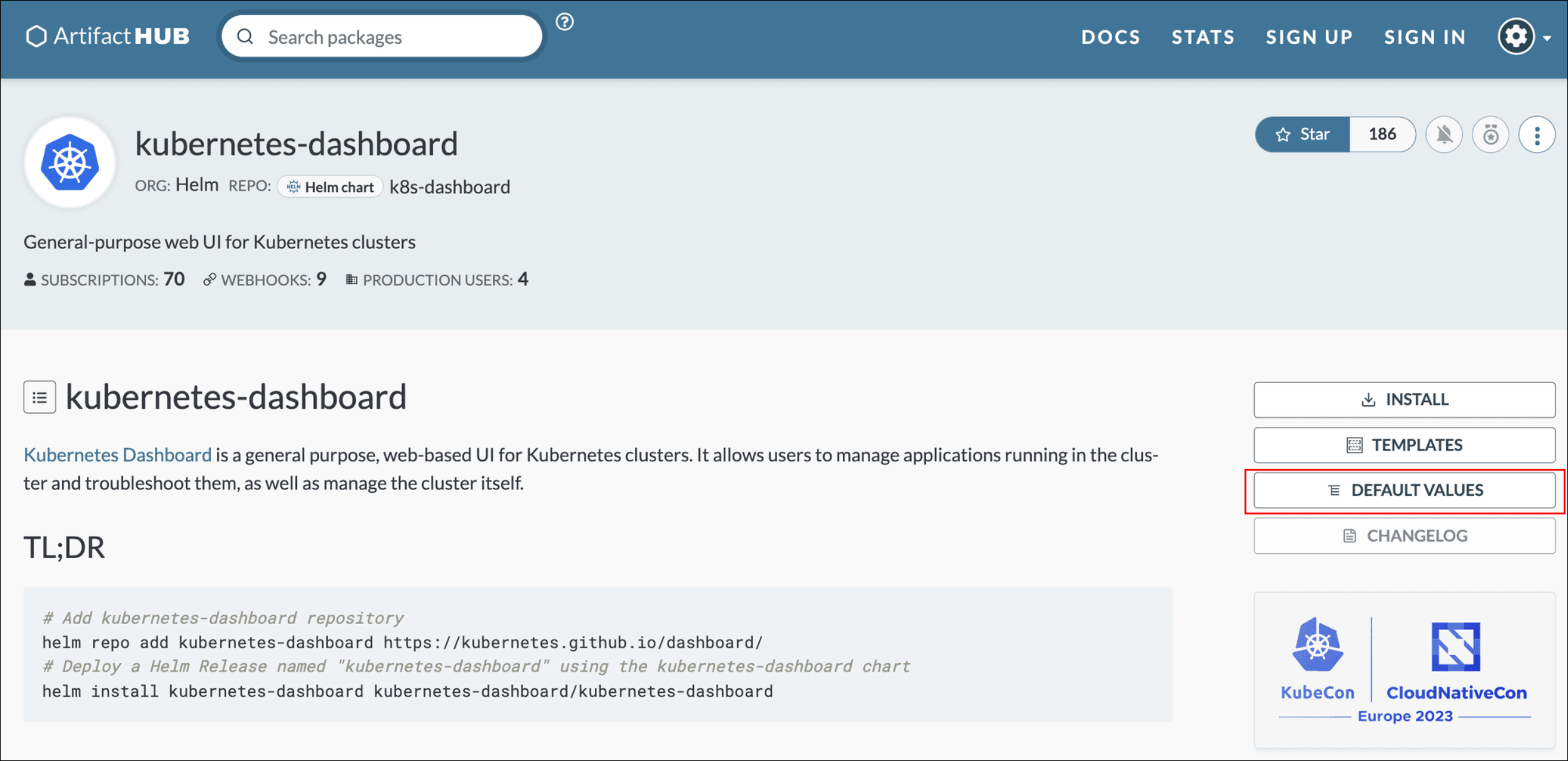
If we don’t use a chart that’s on Artifact ...