HomeCoursesGrokking Dynamic Programming Interview in JavaScript
AI-powered learning
Save

Grokking Dynamic Programming Interview in JavaScript

Gain insights into dynamic programming in JavaScript with strategies developed by FAANG engineers. Practice with real-world interview questions and get interview-ready in just a few hours.

53 Lessons
25h
Also available in
C++
Java
JavaScript
Python
Also available in
JavaScriptJavaScript
Join 2.9 million developers at
LEARNING OBJECTIVES
  • A deep understanding of the essential patterns behind common dynamic programming interview questions—without having to drill endless problem sets
  • The ability to identify and apply the underlying pattern in an interview question by assessing the problem statement
  • Familiarity with dynamic programming techniques with hands-on practice in a setup-free coding environment
  • The ability to efficiently evaluate the tradeoffs between time and space complexity in different solutions
  • A flexible conceptual framework for solving any dynamic programming question, by connecting problem characteristics and possible solution techniques

Learning Roadmap

53 Lessons44 Challenges

1.

Getting Started

Getting Started

Get familiar with dynamic programming essentials, ideal for coding interviews and runtime efficiency.

3.

Unbounded Knapsack

Unbounded Knapsack

6 Lessons

6 Lessons

Examine key strategies for solving Unbounded Knapsack, Maximum Ribbon Cut, Rod Cutting, Minimum Coin Change, and Coin Change II problems.

4.

Recursive Numbers

Recursive Numbers

12 Lessons

12 Lessons

Enhance your skills in solving complex recursive problems using dynamic programming techniques.

5.

Longest Common Substring

Longest Common Substring

16 Lessons

16 Lessons

Deepen your knowledge of solving various substring and subsequence problems using dynamic programming.

6.

Palindromic Subsequence

Palindromic Subsequence

6 Lessons

6 Lessons

Follow the process of finding, optimizing palindromic subsequences, substrings, and partitioning using dynamic programming.
Certificate of Completion
Showcase your accomplishment by sharing your certificate of completion.
Author NameGrokking Dynamic Programming Interviewin JavaScript
Developed by MAANG Engineers
Every Educative lesson is designed by a team of ex-MAANG software engineers and PhD computer science educators, and developed in consultation with developers and data scientists working at Meta, Google, and more. Our mission is to get you hands-on with the necessary skills to stay ahead in a constantly changing industry. No video, no fluff. Just interactive, project-based learning with personalized feedback that adapts to your goals and experience.
ABOUT THIS COURSE
Some of the toughest questions in technical interviews require dynamic programming solutions. Dynamic programming (DP) is an advanced optimization technique applied to recursive solutions. However, DP is not a one-size-fits-all technique, and it requires practice to develop the ability to identify the underlying DP patterns. With a strategic approach, coding interview prep for DP problems shouldn’t take more than a few weeks. This course starts with an introduction to DP and thoroughly discusses five DP patterns. You’ll learn to apply each pattern to several related problems, with a visual representation of the working of the pattern, and learn to appreciate the advantages of DP solutions over naive solutions. After completing this course, you will have the skills you need to unlock even the most challenging questions, grok the coding interview, and level up your career with confidence. This course is also available in C++, Java, and Python—with more coming soon!

Trusted by 2.9 million developers working at companies

These are high-quality courses. Trust me the price is worth it for the content quality. Educative came at the right time in my career. I'm understanding topics better than with any book or online video tutorial I've done. Truly made for developers. Thanks

A

Anthony Walker

@_webarchitect_

Just finished my first full #ML course: Machine learning for Software Engineers from Educative, Inc. ... Highly recommend!

E

Evan Dunbar

ML Engineer

You guys are the gold standard of crash-courses... Narrow enough that it doesn't need years of study or a full blown book to get the gist, but broad enough that an afternoon of Googling doesn't cut it.

S

Software Developer

Carlos Matias La Borde

I spend my days and nights on Educative. It is indispensable. It is such a unique and reader-friendly site

S

Souvik Kundu

Front-end Developer

Your courses are simply awesome, the depth they go into and the breadth of coverage is so good that I don't have to refer to 10 different websites looking for interview topics and content.

V

Vinay Krishnaiah

Software Developer

Built for 10x Developers

No Passive Learning
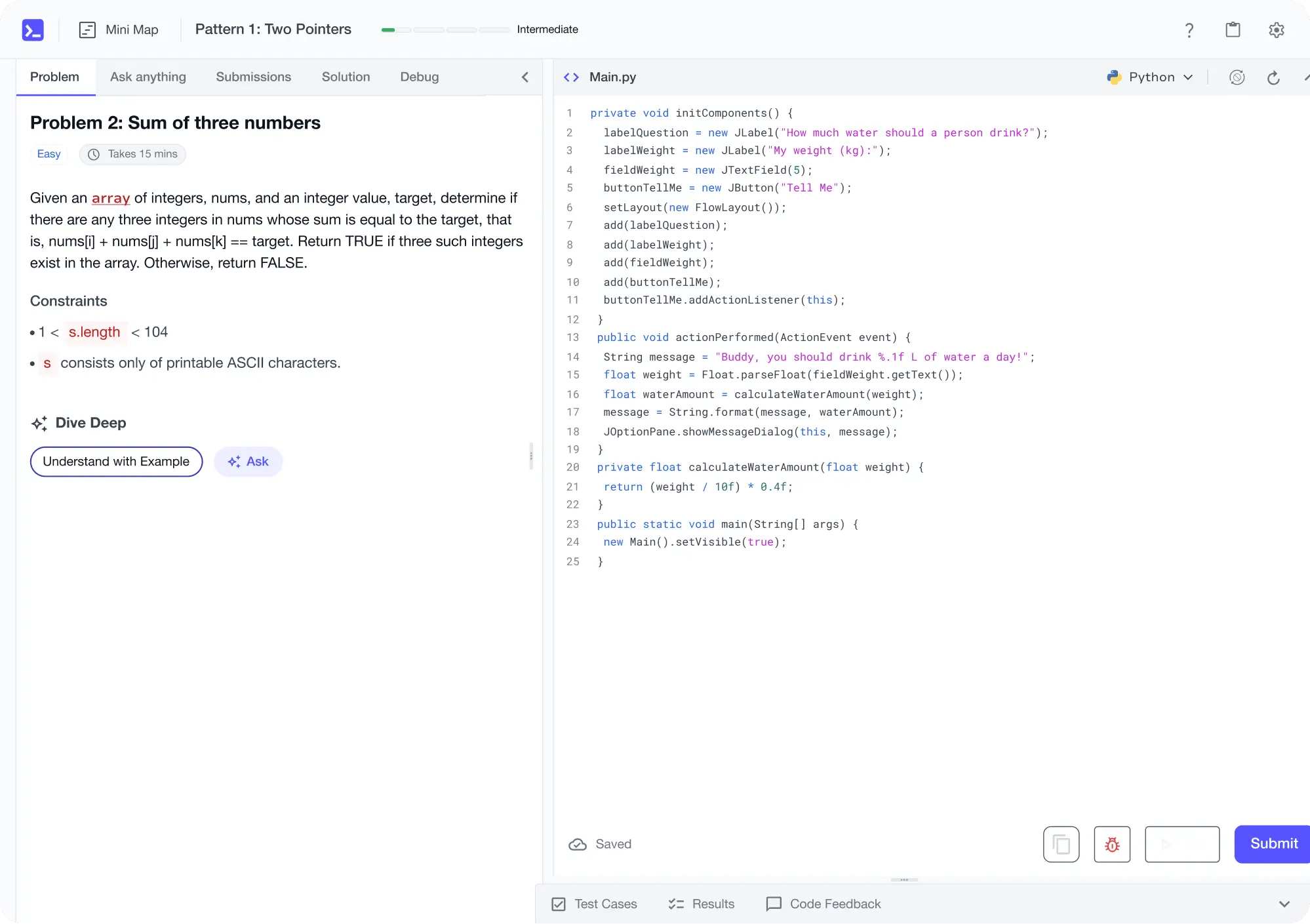
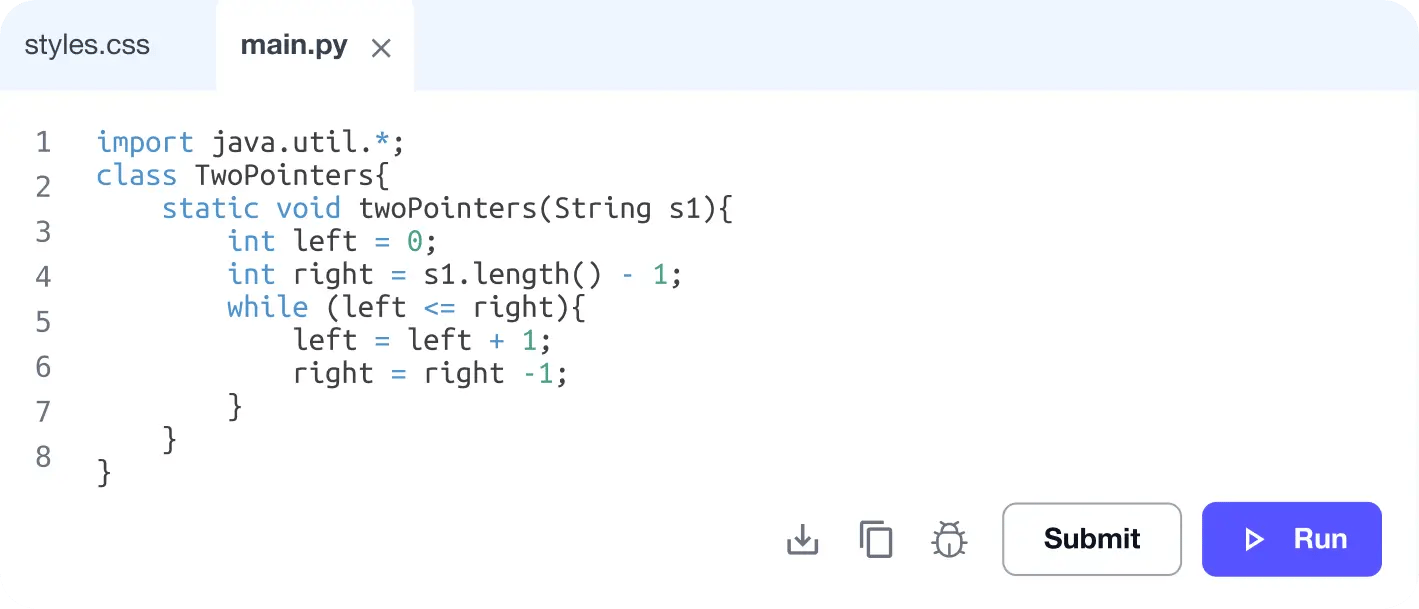
Learn by building with project-based lessons and in-browser code editor
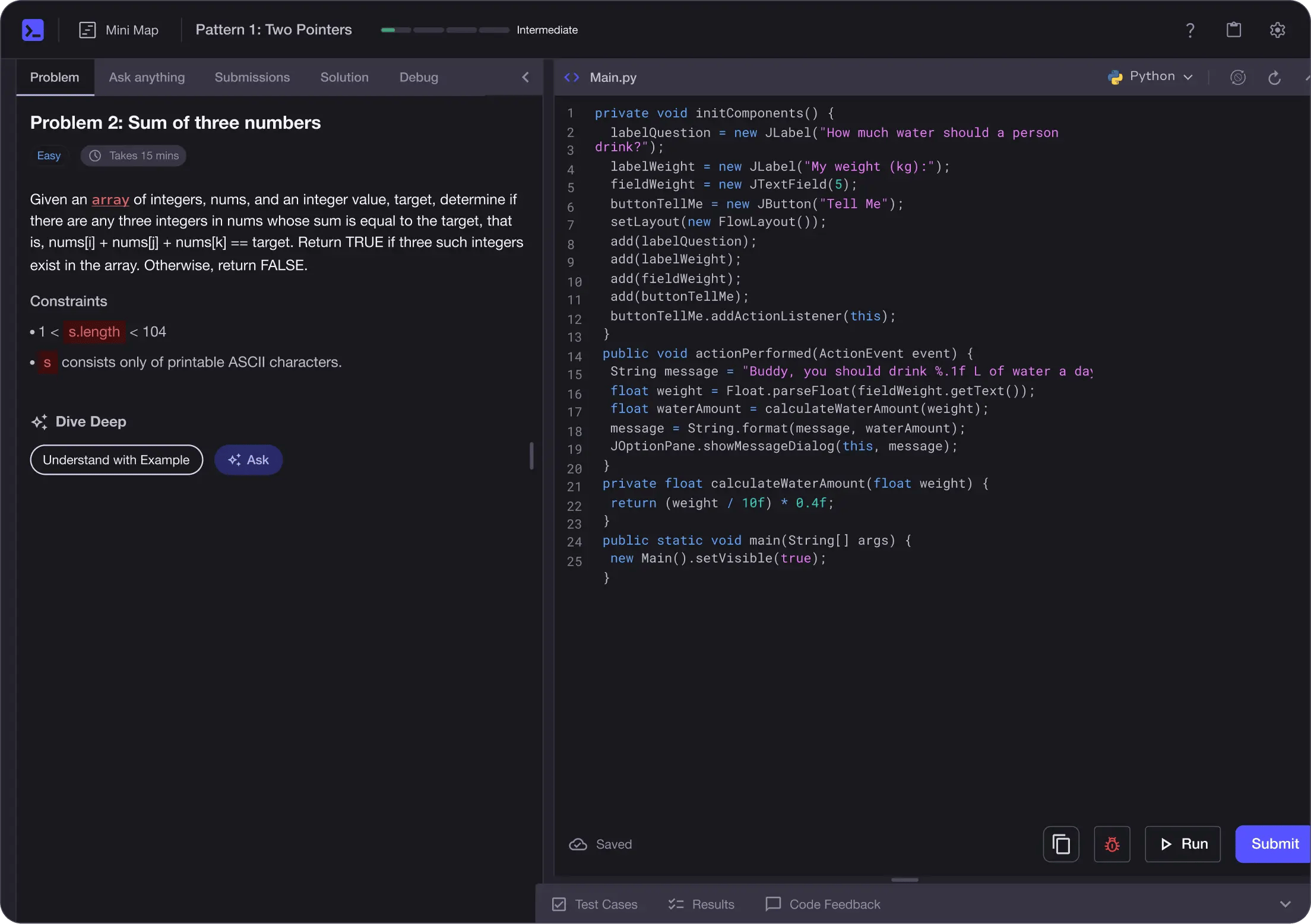
Learn by Doing
Personalized Roadmaps
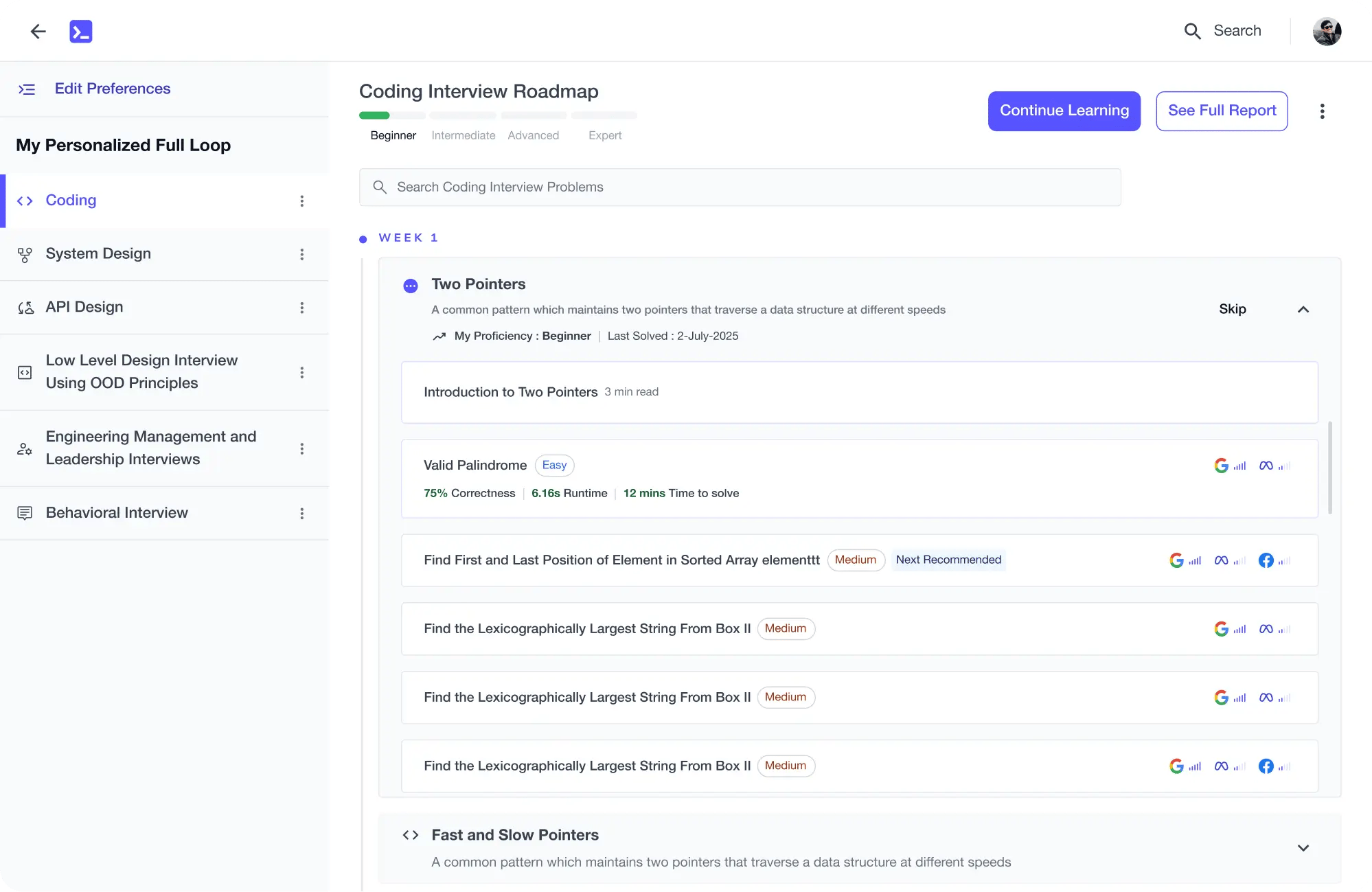
The platform adapts to your strengths & skills gaps as you go
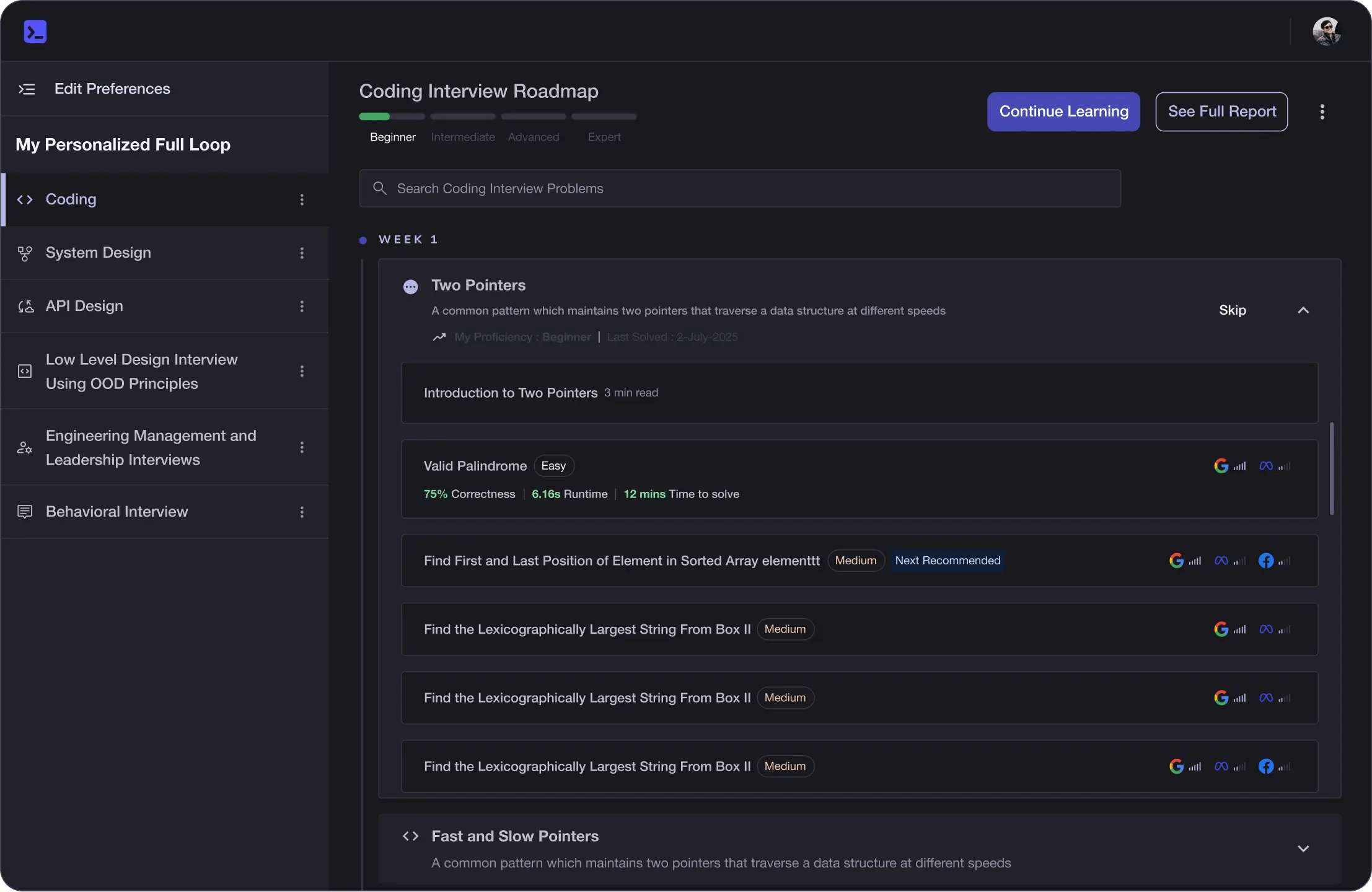
Learn by Doing
Future-proof Your Career
Get hands-on with in-demand skills
Learn by Doing
AI Code Mentor
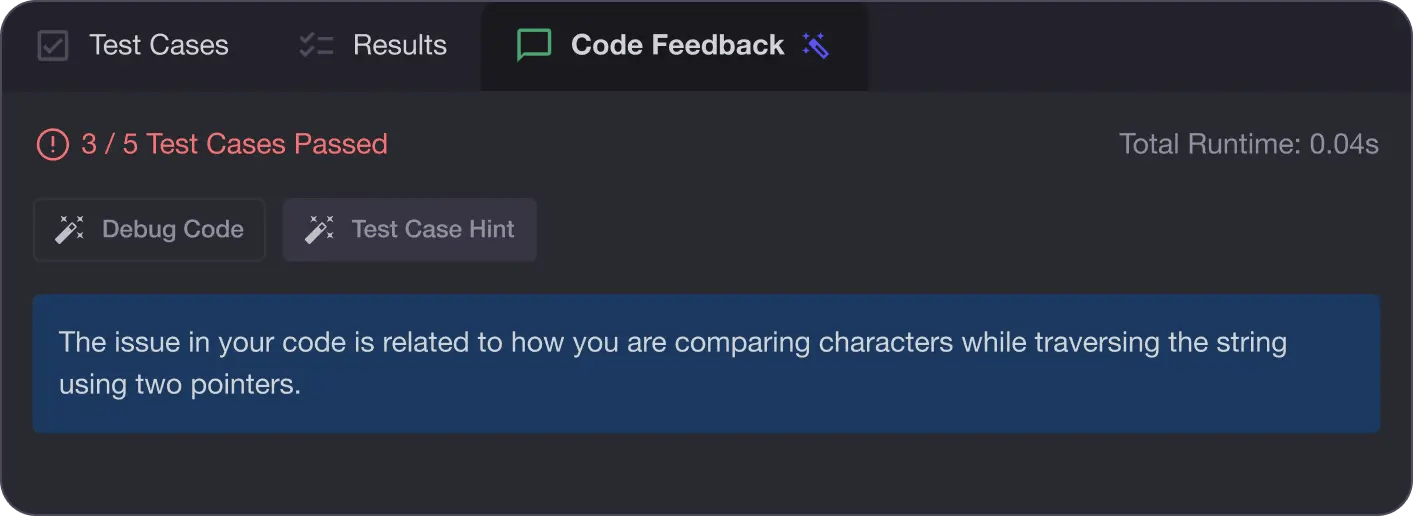
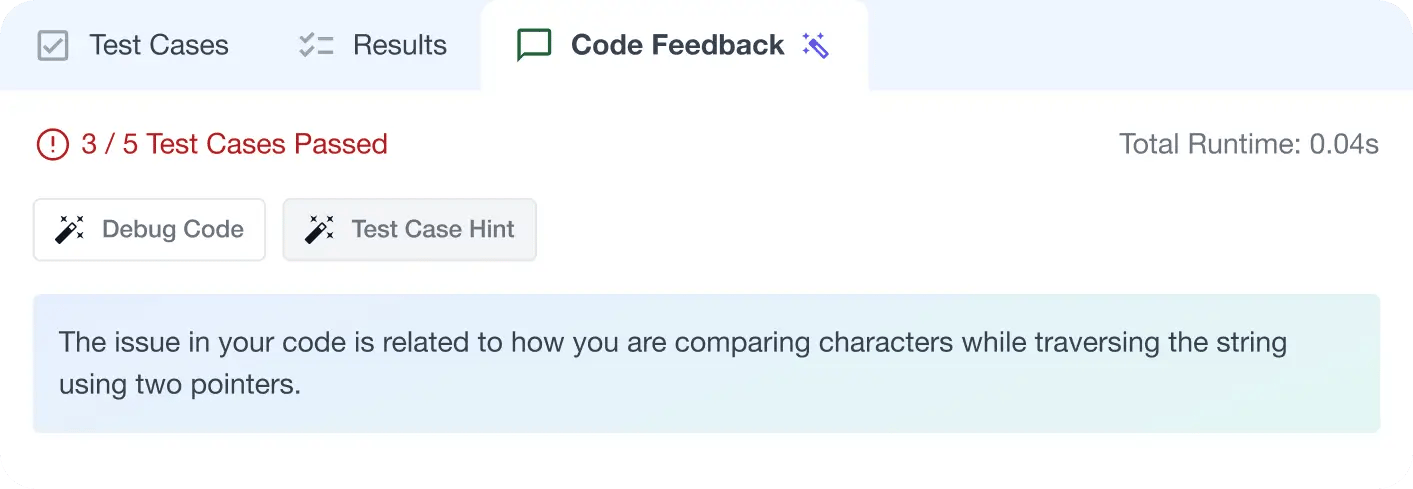
Write better code with AI feedback, smart debugging, and "Ask AI"
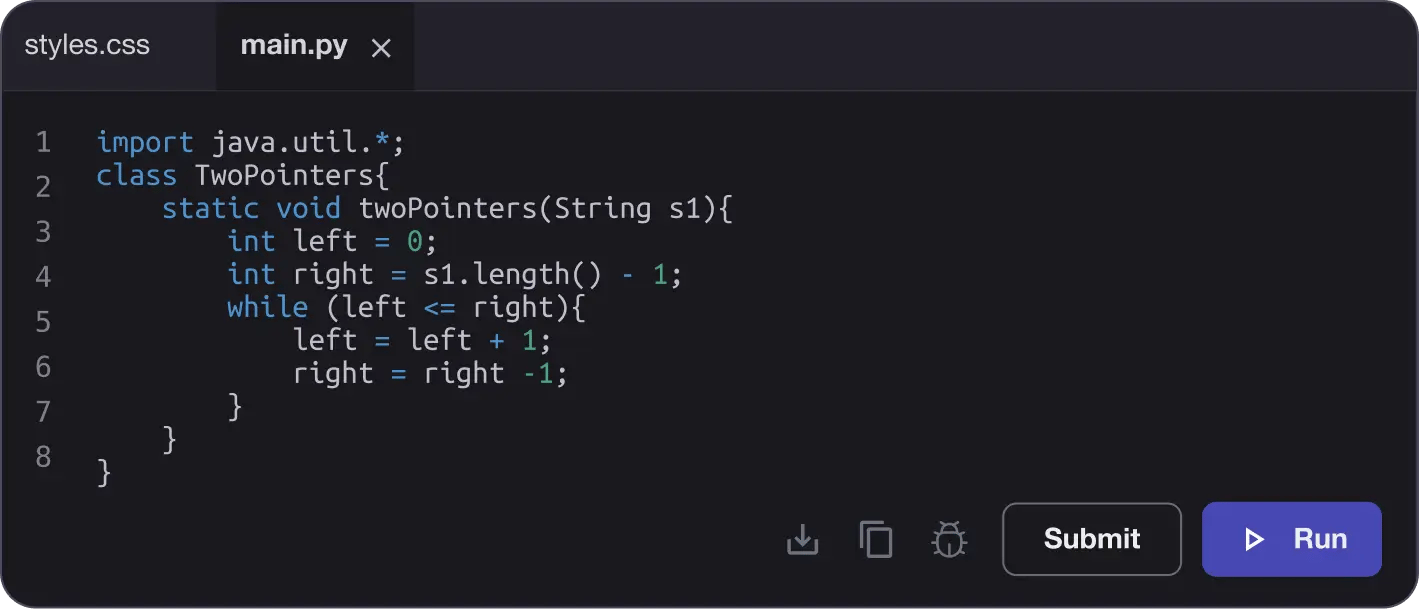
Learn by Doing
Learn by Doing
MAANG+ Interview Prep
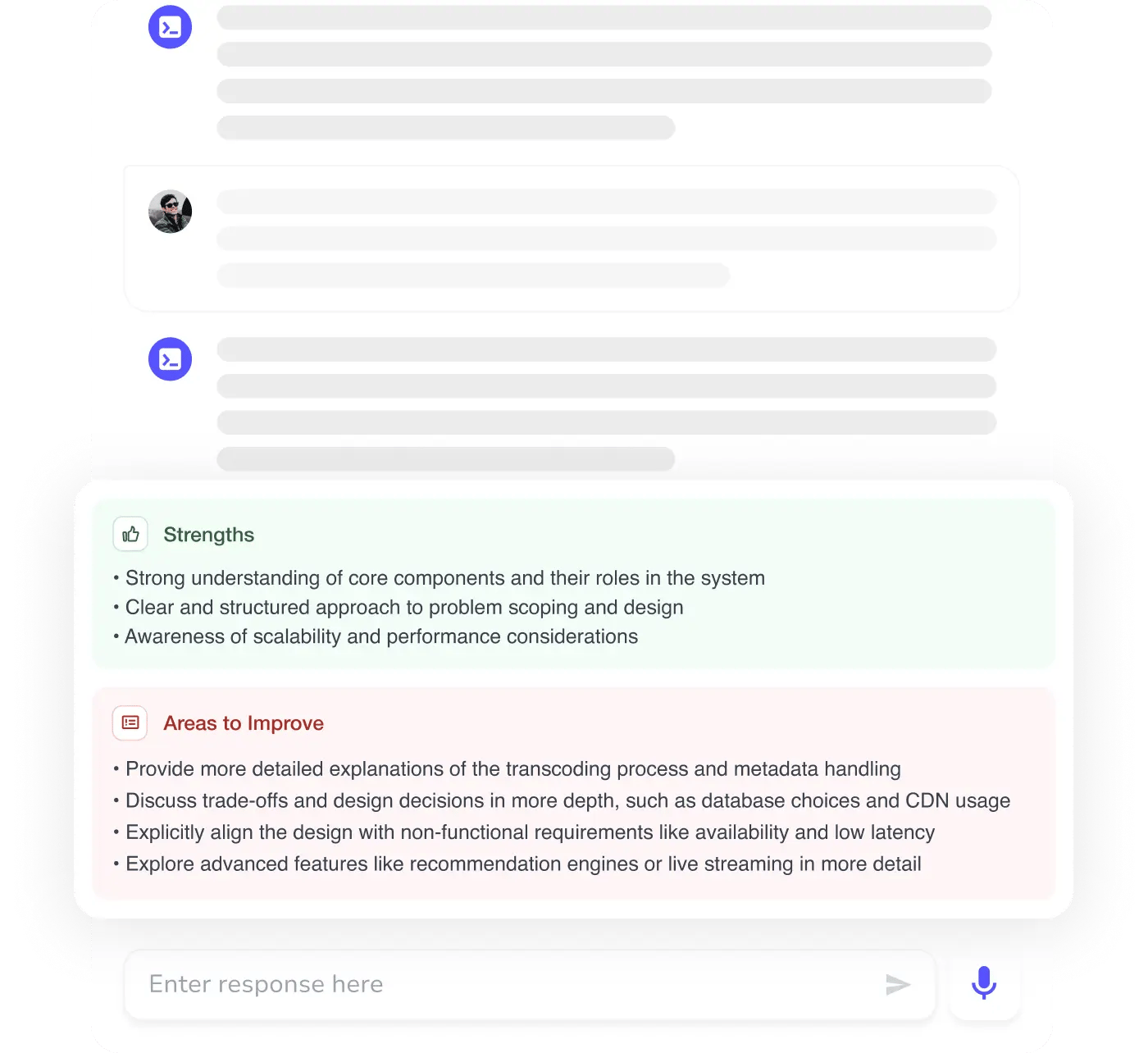
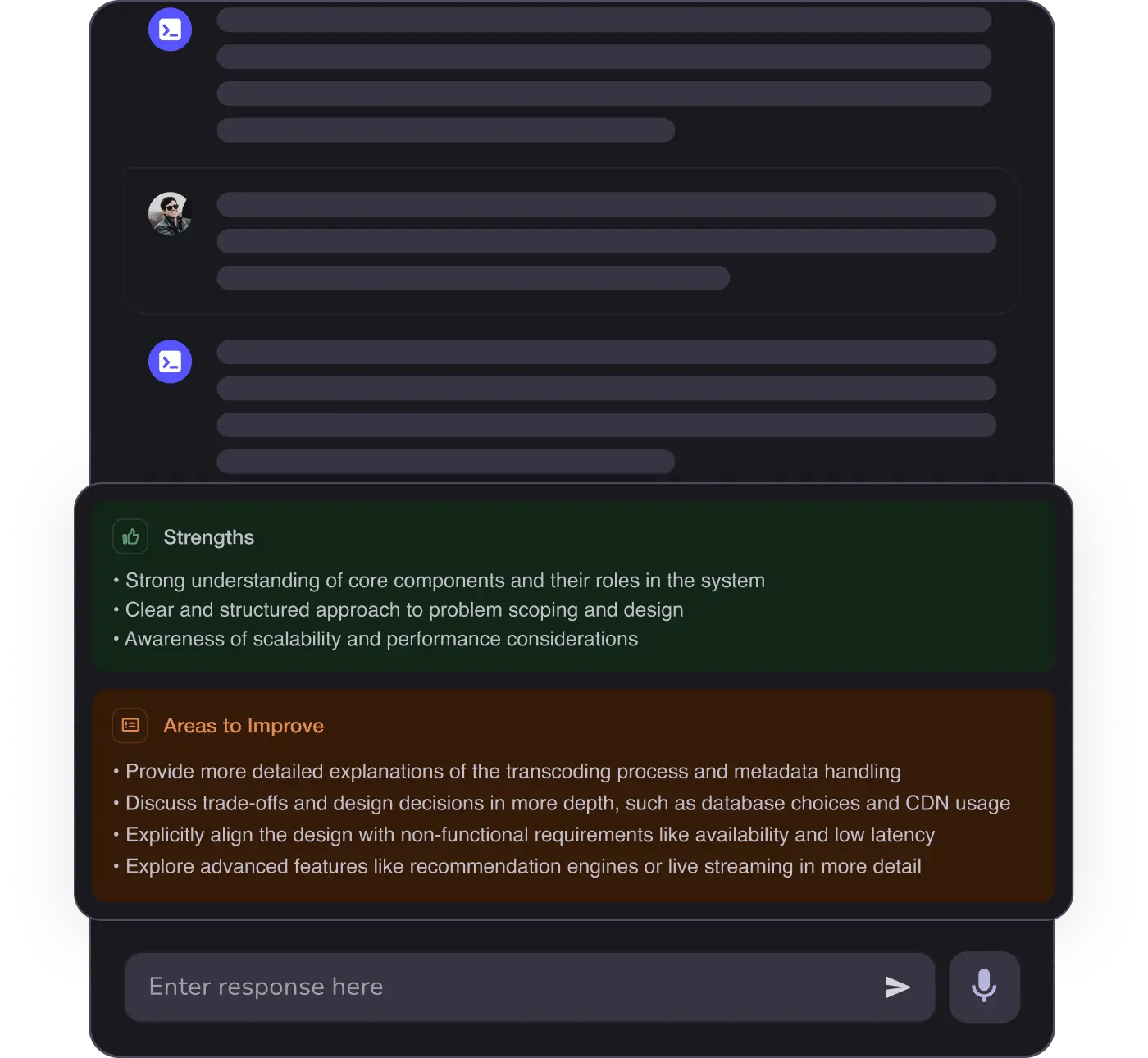
AI Mock Interviews simulate every technical loop at top companies
Learn by Doing

Free Resources

Frequently Asked Questions

How can I improve my intuition for solving dynamic programming problems?

To develop a strong intuition for DP problems, start by solving simpler problems like Fibonacci or coin change, focusing on how subproblems overlap. Practice breaking down problems into smaller components and recognize patterns like overlapping subproblems and optimal substructure. Gradually move on to more complex problems and study different DP patterns to build understanding.

Why is dynamic programming considered more efficient than brute-force solutions?

Dynamic programming is more efficient because it eliminates redundant computations by storing the results of subproblems. In brute-force methods, the same subproblems are often recalculated multiple times, leading to exponential time complexity. DP reduces this by solving each subproblem once and using that result whenever needed, cutting the overall time complexity.

How do I choose between memoization and tabulation in a dynamic programming problem?

The choice between memoization and tabulation depends on the problem and the desired approach. If you’re more comfortable with recursion and want to solve the problem top-down, memoization is ideal. Tabulation, however, is preferred when you can iteratively build the solution from base cases up in a bottom-up manner, and it’s often easier to visualize and manage certain problems.

What are some common mistakes to avoid when solving dynamic programming problems?

One common mistake is not correctly identifying overlapping subproblems or optimal substructure, leading to inefficient solutions. Another issue is poor table or memoization setup, such as failing to initialize base cases correctly. Also, forgetting to handle edge cases or ignoring time and space complexity optimizations can lead to suboptimal performance.

How can dynamic programming be applied in real-world applications?

Dynamic programming is used in various real-world applications, such as optimization problems in finance (e.g., portfolio optimization), operations research (e.g., supply chain management), and computer science (e.g., text processing, network routing). It’s particularly useful in problems where decisions must be made sequentially, and resource optimization is critical.