Anthropic System Design Interview
Preparing for the Anthropic System Design interview requires mastering scalable AI infrastructure, LLM inference systems, and safety-first architecture. Learn how to design reliable AI platforms, integrate guardrails, and explain trade-offs clearly.
Preparing for the Anthropic System Design interview means understanding how to architect next-generation AI systems that are safe, robust, and highly scalable. Unlike typical big-tech interviews, Anthropic’s focus is rooted in AI alignment, LLM inference at scale, safety framework integration, responsible training, and human-driven oversight.
Claude and other Anthropic models operate across millions of users, enterprise deployments, and latency-sensitive production environments. Your responsibility as a candidate is to demonstrate that you can design high-integrity AI systems that prioritize reliability, transparency, and safe behavior at every stage of the ML lifecycle.
Grokking Modern System Design Interview

For a decade, when developers talked about how to prepare for System Design Interviews, the answer was always Grokking System Design. This is that course — updated for the current tech landscape. As AI handles more of the routine work, engineers at every level are expected to operate with the architectural fluency that used to belong to Staff engineers. That's why System Design Interviews still determine starting level and compensation, and the bar keeps rising. I built this course from my experience building global-scale distributed systems at Microsoft and Meta — and from interviewing hundreds of candidates at both companies. The failure pattern I kept seeing wasn't a lack of technical knowledge. Even strong coders would hit a wall, because System Design Interviews don't test what you can build; they test whether you can reason through an ambiguous problem, communicate ideas clearly, and defend trade-offs in real time (all skills that matter more than ever now in the AI era). RESHADED is the framework I developed to fix that: a repeatable 45-minute roadmap through any open-ended System Design problem. The course covers the distributed systems fundamentals that appear in every interview – databases, caches, load balancers, CDNs, messaging queues, and more – then applies them across 13+ real-world case studies: YouTube, WhatsApp, Uber, Twitter, Google Maps, and modern systems like ChatGPT and AI/ML infrastructure. Then put your knowledge to the test with AI Mock Interviews designed to simulate the real interview experience. Hundreds of thousands of candidates have already used this course to land SWE, TPM, and EM roles at top companies. If you're serious about acing your next System Design Interview, this is the best place to start.
This blog breaks down what the Anthropic System Design interview questions evaluate, common design prompts, and how to deliver a high-scoring, safety-focused System Design.
What the Anthropic System Design interview evaluates#
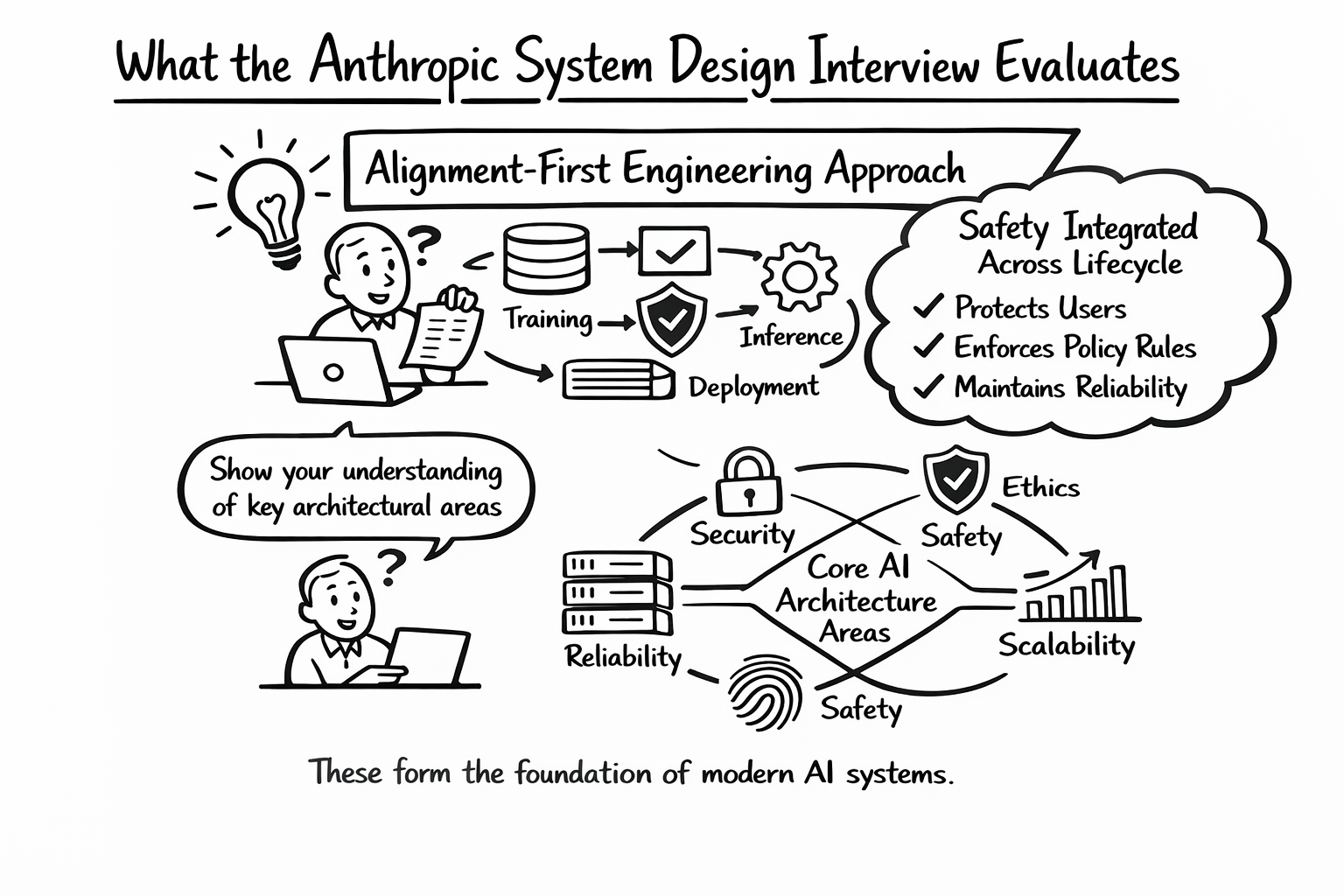
Anthropic takes a unique alignment-first engineering approach, which means that System Design candidates must demonstrate how safety principles integrate into every stage of the machine learning lifecycle. Interviewers are not simply evaluating whether you can design a fast system; they want to see whether your design protects users, enforces policy rules, and maintains reliability even under extreme scale.
To evaluate this, Anthropic focuses on several major architectural areas that together form the foundation of modern AI systems.
Grokking the Generative AI System Design
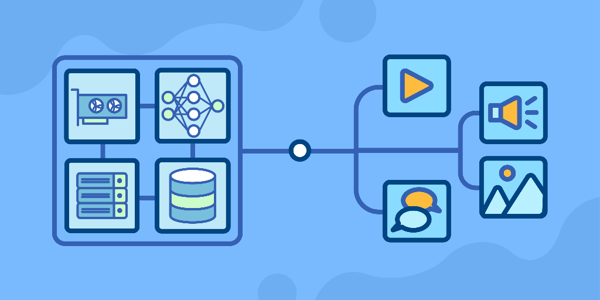
GenAI System Design is emerging as its own interview category at top tech companies, distinct from traditional ML System Design. The questions are different, the architectures are different, and the scale considerations (GPU compute, parallelism, inference optimization) require their own mental models. Having spent years researching adaptive AI systems and neural networks, and now leading the creation of learning content at Educative, I designed this course to bridge that gap between understanding generative AI conceptually and being able to architect these gen AI systems end-to-end. You'll learn the SCALED framework, which is a 6-step methodology for breaking down any GenAI System Design problem, then apply it across five real-world systems spanning text, image, speech, and video generation. Each case study walks through training architecture, deployment design, and the specific tradeoffs involved in that modality. Before diving into the case studies, the course covers the foundational concepts you'll need: neural networks, transformers, tokenization, embeddings, parallelism strategies, inference optimization, RAG, and fine-tuning. You'll also learn how to do back-of-the-envelope calculations for LLM training and deployment. A bonus: if you have a GenAI or ML System Design interview coming up, this will give you both the framework and the depth to handle whatever systems are asked to design.
Large-scale inference and model serving#
One of the most important skills evaluated in the Anthropic System Design interview is your ability to design large-scale inference systems for LLMs. Claude and other models must process thousands of concurrent requests while generating tokens in real time, which creates extremely demanding infrastructure requirements.
A strong candidate understands that inference performance depends on multiple layers of optimization. These include efficient tokenizer pipelines, batching strategies that group requests together for GPU execution, and dynamic scheduling systems that prioritize latency-sensitive queries. The architecture must also account for accelerator pools that manage GPUs, TPUs, or specialized AI hardware.
The global nature of Anthropic’s deployments also introduces geographic considerations. Requests must route across regions to reduce latency while maintaining consistent performance, which requires distributed load balancing and multi-region inference clusters.
System Design Deep Dive: Real-World Distributed Systems

Modern software systems are expected to operate at a massive scale while meeting strict reliability and latency requirements. Whether it’s a feed refresh, a payment request, or a real-time analytics query, users expect systems to respond instantly and consistently. That expectation has raised the bar for engineers today, understanding that System Design isn’t optional. It’s a core skill for building and evaluating production-grade systems. I built this course from my experience working on large-scale distributed systems at Microsoft (Azure) and Meta (Scuba), and from interviewing hundreds of candidates across both companies. The pattern I kept seeing was this: candidates understood individual components, but struggled to combine them into a coherent system. They knew what a cache or load balancer was, but not when or why to use it. This course is designed to bridge that gap. We start with the foundational building blocks of System Design, including databases, caching layers, load balancing, and messaging systems, and focus on how they interact under real-world constraints. From there, we analyze systems built by companies like Google, Facebook, and Amazon, breaking them down to understand the trade-offs behind each design decision. The goal is not just to learn concepts, but to develop the ability to reason through them in practice. This approach has helped a large number of engineers build stronger intuition for System Design and perform better in interviews. If you want to understand how real systems are designed and be able to design them yourself, this course gives you a clear, practical path forward.
The following table summarizes key challenges in large-scale inference architecture.
Component | Purpose | Key Challenge |
Tokenization pipeline | Converts user input into tokens | Must process thousands of requests efficiently |
Inference scheduler | Batches and prioritizes requests | Balances throughput and latency |
GPU/accelerator pool | Executes model inference | Efficient hardware utilization |
KV cache system | Reuses previous computations | Reduces compute cost |
Streaming layer | Delivers tokens progressively | Maintains responsive user experience |
Candidates who demonstrate familiarity with inference optimization techniques such as speculative decoding, dynamic batching, and KV-cache reuse typically perform much better in these interviews.
Safety and alignment layers#
Unlike most AI companies, Anthropic treats safety as a first-class architectural requirement rather than an afterthought. The System Design interview evaluates whether you can integrate safety layers that actively prevent harmful model outputs.
These safety layers often begin before the model processes a request. Incoming prompts may pass through input filters that detect policy violations, malicious prompts, or attempts to jailbreak the system. By screening requests early, the system can reject unsafe prompts before expensive inference occurs.
Once the model generates a response, additional layers evaluate the output to determine whether it complies with safety guidelines. These layers may involve toxicity classifiers, rule-based filters, and fallback systems that generate safe refusal responses when necessary. The architecture must also include red-teaming pipelines that continuously test models for new vulnerabilities.
The safety infrastructure typically includes several components working together.
Safety Component | Role in the System |
Input filters | Detect harmful prompts before inference |
Moderation models | Classify unsafe outputs |
Policy rule engines | Enforce content guidelines |
Red-teaming pipelines | Simulate adversarial inputs |
Safe fallback responses | Prevent harmful completions |
A well-designed system integrates these components directly into the inference pipeline rather than treating them as optional add-ons.
Retrieval-augmented generation systems#
Modern AI systems increasingly rely on retrieval-augmented generation (RAG) to improve accuracy and reduce hallucinations. Instead of relying entirely on a model’s internal knowledge, RAG systems retrieve relevant documents and feed them into the prompt context before inference.
Designing a scalable RAG architecture requires several coordinated subsystems. The first stage involves splitting documents into chunks and converting them into embeddings that can be stored in a vector database. When a user submits a query, the system searches this vector index to retrieve the most relevant information.
The retrieved content then becomes part of the prompt context used by the model to generate its response. This process improves factual accuracy while ensuring that the model references real data sources rather than relying solely on learned patterns.
A typical RAG architecture contains the following components.
Component | Purpose |
Embedding model | Converts text into vector representations |
Vector database | Stores searchable embeddings |
Retrieval engine | Selects relevant context chunks |
Reranking layer | Improves retrieval relevance |
Context builder | Inserts retrieved data into prompts |
During the Anthropic System Design interview, candidates should explain how these components interact while maintaining low latency and high accuracy.
Feedback, evaluation, and oversight infrastructure#
Another area that interviewers emphasize is continuous model evaluation and human oversight. Large language models must evolve constantly as developers improve training data, refine safety policies, and address new failure modes.
Anthropic relies heavily on feedback loops that combine automated evaluation with human review. These systems collect user interactions, evaluate model outputs against safety benchmarks, and incorporate human feedback into training pipelines.
In production systems, evaluation infrastructure may include automated benchmarking frameworks, preference modeling pipelines, and red-team simulations that test models against adversarial prompts. These mechanisms help engineers identify weaknesses before they affect real users.
The oversight system generally connects several components across the AI lifecycle.
Evaluation Layer | Function |
Offline evaluation sets | Test models against known benchmarks |
Preference modeling | Train models based on human judgments |
Critique models | Evaluate reasoning quality |
Automated red-teaming | Identify vulnerabilities |
Feedback pipelines | Capture user interactions |
Candidates who demonstrate an understanding of how these evaluation systems improve model reliability tend to stand out in the Anthropic interview process.
Dataset curation and preprocessing#
The reliability of an AI system depends heavily on the quality of the training data used to build it. Anthropic places strong emphasis on dataset curation and preprocessing pipelines that remove harmful or low-quality content.
These pipelines typically involve multiple stages of filtering and transformation. Raw data sources must first be ingested and normalized before automated filters remove sensitive information such as personally identifiable data. Deduplication systems also play an important role by eliminating repeated content that could bias model training.
Human annotation pipelines further refine the dataset by labeling examples according to safety guidelines or quality criteria. This combination of automated filtering and human review ensures that training datasets align with the organization’s safety principles.
Observability, auditability, and system control#
Large-scale AI systems require strong observability frameworks that allow engineers to monitor model behavior in real time. Without comprehensive logging and monitoring, it becomes extremely difficult to diagnose issues or detect harmful outputs.
Observability systems typically capture inference logs, token generation metrics, and safety filter triggers across the entire system. Engineers analyze this data to detect model drift, identify anomalies, and evaluate how often safety rules activate during production usage.
Auditability is also critical in enterprise environments where organizations must demonstrate responsible AI practices. Detailed logging pipelines allow engineers to replay incidents, analyze failures, and refine safety policies over time.
Multi-region deployment and reliability#
Anthropic’s AI services operate globally, which means the system architecture must support multi-region deployments with strong reliability guarantees. These systems must handle regional outages, traffic spikes, and infrastructure failures without disrupting service.
Global routing systems direct requests to the nearest available inference cluster while maintaining redundancy across multiple regions. If one region fails, traffic automatically reroutes to another region with minimal impact on users.
Achieving this level of reliability requires careful infrastructure planning. Engineers must design distributed microservices that support rolling updates, zero-downtime deployments, and rapid failover mechanisms.
Format of the Anthropic System Design interview#
The Anthropic System Design interview typically lasts between forty-five and sixty minutes and follows a structured problem-solving format. Interviewers begin by presenting a high-level design prompt that involves building or scaling a component of an AI system.
Candidates are expected to clarify the requirements before proposing an architecture. This phase often involves identifying functional requirements, safety constraints, and performance targets that influence the design.
Once the scope is clear, the candidate proposes a high-level architecture and walks through each component of the system. Interviewers usually ask deeper questions about inference optimization, safety layers, and failure handling to evaluate how well the candidate understands real-world AI systems.
The final portion of the interview focuses on trade-offs and scalability considerations. Candidates who demonstrate thoughtful reasoning about design decisions often receive higher scores.
Interview Stage | Goal |
Requirement clarification | Define system goals and constraints |
Architecture proposal | Present high-level design |
Deep technical exploration | Analyze inference and safety layers |
Failure handling | Address reliability issues |
Trade-off discussion | Explain design decisions |
Common Anthropic System Design interview questions#
The types of questions asked in the Anthropic System Design interview often revolve around designing infrastructure for AI models rather than traditional web services. Candidates may encounter prompts that focus on inference pipelines, safety guardrails, or data pipelines used to train and evaluate models.
One common prompt involves designing a large-scale LLM inference system capable of generating tokens for millions of users. Candidates must describe how requests move through tokenization, scheduling, inference, and streaming layers while maintaining low latency.
Another frequently asked question focuses on designing a safety guardrail system for language models. This problem evaluates how candidates integrate moderation models, rule engines, and fallback responses to ensure safe interactions.
Interviewers may also ask candidates to design a retrieval-augmented generation system that retrieves enterprise knowledge and injects it into model prompts. In these scenarios, candidates must demonstrate knowledge of vector databases, embedding models, and retrieval pipelines.
Some interviews focus on the training data pipeline used to build language models, which evaluates a candidate’s understanding of dataset filtering, annotation workflows, and data preprocessing systems.
Another design challenge involves building a model evaluation framework capable of measuring alignment and performance across multiple model versions. These systems often include benchmarking pipelines, automated evaluation tools, and A/B testing frameworks.
How to structure your answer for the Anthropic System Design interview#
A clear and structured approach is essential when answering System Design questions during the Anthropic interview. Strong candidates organize their responses in a logical sequence that moves from problem definition to architectural details.
The first step involves clarifying the requirements and understanding the scope of the system. Candidates should ask questions about safety expectations, latency requirements, retrieval needs, and expected scale. These questions demonstrate that the candidate understands the complexity of designing AI systems.
After clarifying requirements, candidates should identify the non-functional requirements that will shape the architecture. These typically include strong safety guarantees, low token latency, high availability, and robust logging infrastructure.
The next step involves estimating system scale, including the number of requests per day, the number of concurrent inference sessions, and the size of potential context windows. Demonstrating awareness of realistic scale assumptions signals strong System Design maturity.
Candidates then present a high-level architecture that outlines how the system processes requests from input to response generation. This architecture should include safety filters, inference clusters, retrieval layers, logging systems, and load-balancing components.
Example architecture for a safe LLM inference system#
A well-designed Anthropic-style inference system contains multiple layers that ensure safety, reliability, and scalability.
System Layer | Description |
API gateway | Handles authentication and request routing |
Input safety filter | Detects unsafe prompts |
Tokenization service | Prepares input for model inference |
Retrieval layer | Injects contextual data for RAG |
Inference scheduler | Batches and routes requests |
Model servers | Generate tokens |
Output safety filter | Validates generated responses |
Logging system | Records events for auditing |
Monitoring pipeline | Tracks performance and safety metrics |
This architecture reflects the safety-first philosophy that defines Anthropic’s engineering culture.
Handling failures in AI systems#
Failure handling is another key aspect of the Anthropic System Design interview because real-world AI systems must continue functioning even when individual components fail.
If a node in the inference cluster fails, the system should automatically reroute requests to other available nodes. This requires distributed scheduling systems capable of detecting hardware failures and redistributing workloads.
Regional outages present another challenge for global AI systems. Multi-region routing systems must detect these failures and redirect traffic to healthy regions without significant disruption to users.
Safety classifier failures must also be considered carefully. If a moderation model times out or produces uncertain results, the system should default to a safe response rather than allowing a potentially harmful output to reach users.
Trade-offs candidates should discuss#
Every architecture decision introduces trade-offs that affect performance, safety, and reliability. Interviewers often evaluate candidates based on how clearly they explain these trade-offs.
One common trade-off involves balancing safety strictness with helpfulness. Aggressive filtering can prevent harmful responses but may also block legitimate queries, which requires careful tuning.
Another trade-off involves retrieval depth and latency in RAG systems. Retrieving more documents improves accuracy but increases response time, which may negatively affect user experience.
Candidates should also consider trade-offs between batching efficiency and per-user latency in inference pipelines. Larger batches improve GPU efficiency but can delay individual responses.
Future evolution and scaling considerations#
Strong candidates typically conclude their design by discussing how the system could evolve as usage grows and technology improves. These forward-looking ideas demonstrate architectural vision and an understanding of long-term scalability.
Future improvements might include multi-stage reasoning pipelines that allow models to refine their answers before responding to users. Hybrid retrieval architectures could also combine vector search with structured knowledge bases to improve grounding.
Another promising direction involves self-correcting inference systems that analyze model outputs and revise responses when errors are detected. Advanced red-team simulation frameworks may also play a role in identifying vulnerabilities before they reach production systems.
Final thoughts#
The Anthropic System Design interview evaluates much more than traditional distributed systems expertise. Candidates must demonstrate an understanding of AI infrastructure, safety architecture, and scalable model serving.
Engineers who succeed in these interviews typically combine strong distributed systems knowledge with thoughtful reasoning about alignment, monitoring, and reliability. By clearly explaining your architecture, highlighting safety layers, and discussing trade-offs, you can demonstrate the skills needed to design responsible AI systems at scale.
