Does computer science help you learn Python?
Does computer science help you learn Python? You don’t need it to start Python, but it helps you improve—CS concepts make your code more efficient and scalable as you grow.
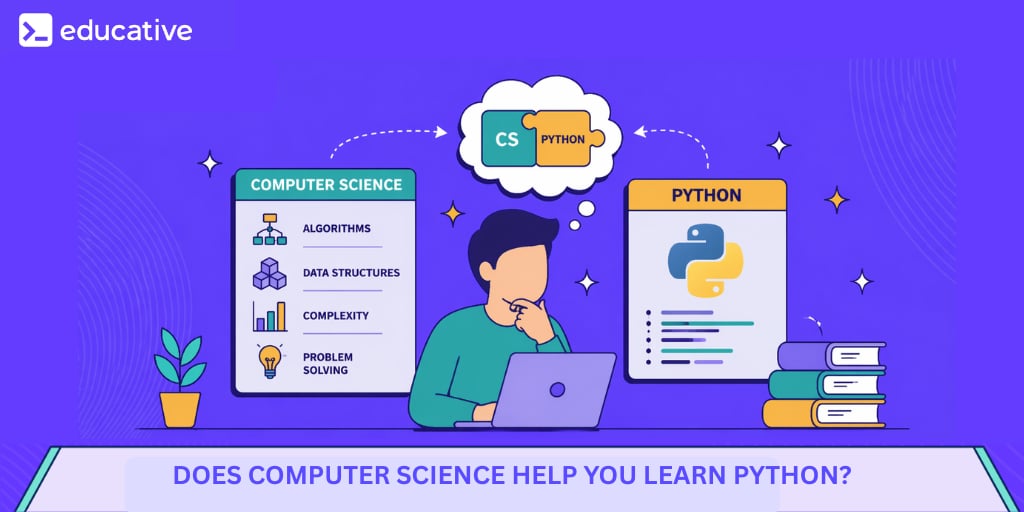
Many beginners exploring programming eventually wonder whether computer science helps you learn Python when deciding how to approach their learning journey. Python is widely known as a beginner-friendly programming language, and many people start writing Python programs without formal training in computer science. However, the relationship between programming and computer science often creates confusion for new learners who are unsure whether academic knowledge is necessary before they begin coding.
Python’s simple syntax allows beginners to start building programs quickly, which makes it an appealing first language. At the same time, computer science concepts provide a deeper understanding of how programs behave, how software systems are structured, and how algorithms solve problems efficiently. Understanding the connection between these two areas helps learners decide whether they should focus primarily on practical programming or also explore theoretical foundations.
Python has become the foundation for everything from data science and automation to modern AI workflows. Yet many beginners struggle to learn Python because they spend too much time watching and not enough time building. This course is designed for a different kind of learner, one who wants to learn Python by doing, not just observing, and to build skills that remain relevant in an AI-driven development landscape. I built this course from my experience teaching and designing interactive learning systems at Educative. Across classrooms and platforms, I saw the same pattern: learners could follow tutorials, but struggled to apply concepts independently. The problem was the approach. This course is built on a simple principle: you learn Python best when you write, test, and refine code continuously. You’ll start with core fundamentals, variables, control flow, functions, and data structures, through hands-on exercises that reinforce real understanding. As you progress, you’ll build practical projects like a chatbot and an expense tracker. The course also introduces how to learn Python alongside AI tools, including prompting, debugging, and validating generated code in real workflows. If your goal is to learn Python in a way that prepares you to build real applications and work effectively with AI, this course gives you that foundation from day one.
Understanding the difference between programming and computer science#
Programming and computer science are closely related but serve different purposes within the broader field of technology. Programming focuses on writing instructions that computers execute, while computer science examines the principles that explain how those instructions are processed.
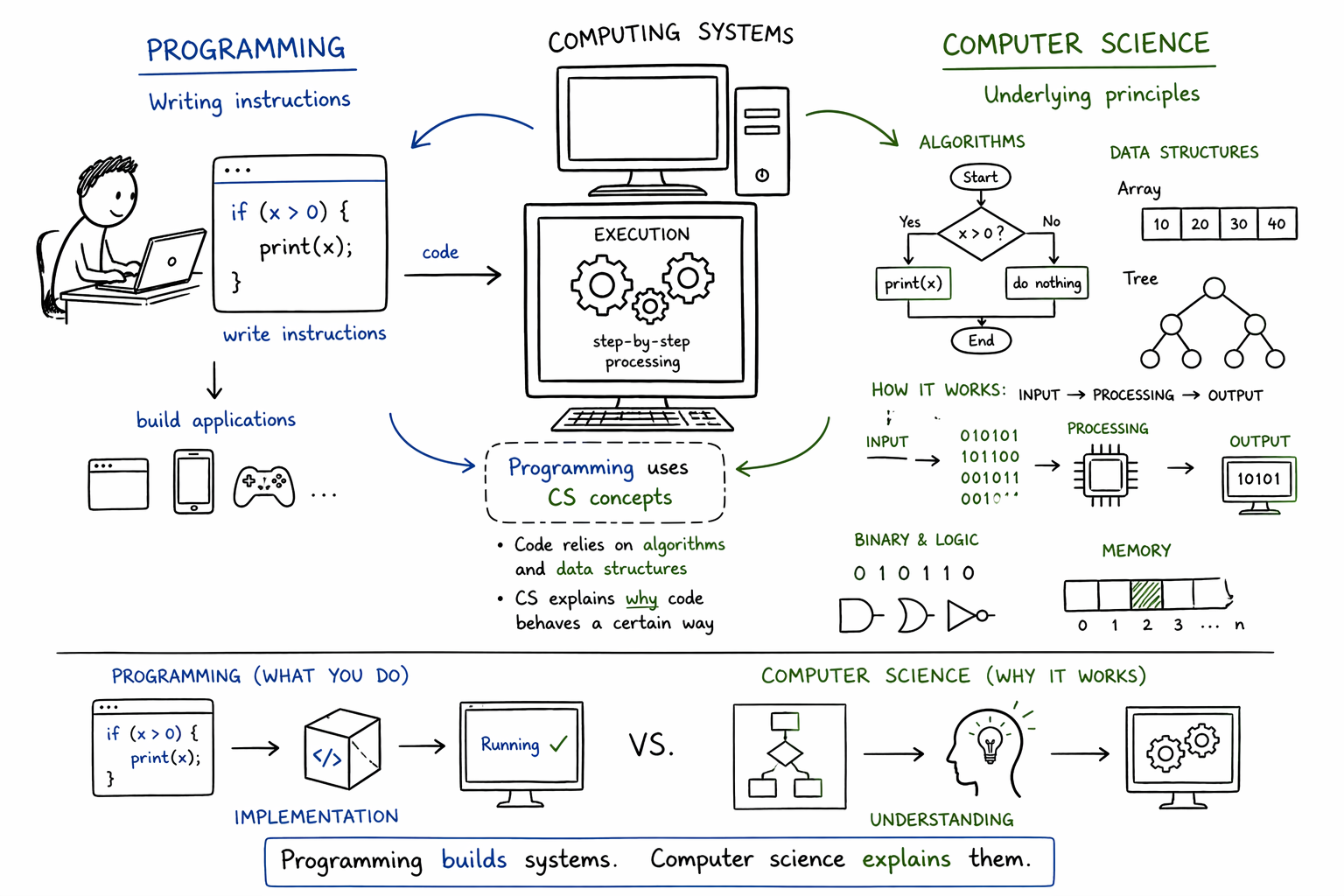
Area | Focus |
Programming | Writing code to build software and solve problems |
Computer Science | Studying algorithms, data structures, and computational theory |
Programming is primarily a practical skill. Developers use programming languages such as Python, JavaScript, or Java to create applications, automate processes, or analyze data. The emphasis is on solving real problems through code.
Computer science, on the other hand, studies the underlying ideas that make computing possible. Topics such as algorithms, data structures, operating systems, and computational complexity explain how computers process information and how software systems scale to handle complex tasks. Although programming and computer science overlap, they represent different layers of understanding within the computing field.
In our rapidly advancing digital era, the need for computer science professionals has reached unprecedented heights. Businesses across diverse sectors increasingly rely on technology to fuel innovation, making expertise in computers, logical reasoning, problem-solving, and programming skills more crucial than ever. Possessing such skills positions you at the forefront of this demand, unlocking many rewarding career opportunities. This Skill Path is meticulously crafted to provide a comprehensive introduction to computer science, catering especially to those without a background in the discipline. Starting with the fundamentals of problem-solving and logical thinking in computing, this Skill Path will guide you through coding using data structures, database design and management, web application development, and professional adaptation to various software development models. Upon completing this Skill Path, you will have established a robust foundation to seamlessly transition into the software industry.
Why Python is approachable for beginners#
Python has gained popularity among beginners because it was designed to emphasize readability and simplicity. Its syntax resembles natural language instructions, which allows new programmers to focus on problem-solving instead of complex programming rules.
Another reason Python is accessible is that it hides many low-level details that other languages require developers to manage. For example, Python automatically handles memory management, which reduces the number of technical details beginners must understand before writing useful programs.
Python also benefits from an extensive ecosystem of libraries and frameworks. Developers can use these tools to perform tasks such as data analysis, web development, or automation without needing to implement complex systems from scratch. These characteristics explain why many learners begin exploring programming by researching does computer science help you learn Python even before studying theoretical topics.
How computer science concepts can support Python learning#
Although Python allows beginners to write programs without deep theoretical knowledge, computer science concepts can significantly improve a developer’s ability to write efficient and scalable code.
One important concept is algorithms and computational thinking. Algorithms describe step-by-step methods for solving problems. Understanding algorithm design helps developers write programs that perform tasks efficiently rather than relying on inefficient trial-and-error approaches.
Another key area involves data structures, which determine how information is stored and accessed within a program. Structures such as lists, dictionaries, stacks, and trees influence how quickly programs can process large amounts of data.
Computer science also introduces time and space complexity, which measures how efficiently programs use computational resources. These ideas help developers evaluate whether a solution will perform well as input sizes grow.
Finally, software design patterns teach developers how to organize programs into modular and maintainable components. These principles become increasingly valuable when projects grow beyond small scripts.
Understanding these concepts explains why many learners explore whether does computer science help you learn Python when trying to improve their programming skills.

Being good at problem-solving is one thing but to take your career to the next level, one must know how complex software projects are architected. Software design patterns provide templates and tricks used to design and solve recurring software problems and tasks. Applying time-tested patterns result in extensible, maintainable and flexible high-quality code, exhibiting superior craftsmanship of a software engineer. Being well-versed in knowledge of design patterns allows one to spot brittle and immature code from miles away. The course goes to great lengths to lay bare the esoteric concepts of various design patterns before the reader and is replete with real-world examples and sample code. The readership for this course is expected to be familiar with some object orientated language. The course examples and snippets are written in the Java language but folks with experience in other OOP languages should easily be able to follow the discussion and code intent.
Learning Python without a computer science background#
Many successful developers learn Python without completing formal computer science education. Modern learning resources allow beginners to develop programming skills through practical experience rather than academic coursework.
Interactive programming courses provide structured exercises that introduce new concepts gradually. Coding platforms allow learners to practice solving problems and receive immediate feedback on their solutions. Building small projects helps reinforce programming concepts by applying them in real scenarios.
Reading technical documentation and studying example code also helps beginners develop programming intuition. As learners gain experience, they often discover that computer science concepts emerge naturally during problem-solving. For example, when working with large datasets, developers may encounter the need to understand efficient algorithms or appropriate data structures.
Because of these learning pathways, the answer to does computer science help you learn Python often depends on how learners prefer to build their skills.
Python learning path for beginners#
Beginners can follow several steps to develop Python skills effectively. First, learners should focus on understanding basic programming concepts such as variables, loops, conditionals, and functions. These concepts form the foundation of most Python programs.
Next, practicing coding exercises helps strengthen logical thinking and problem-solving ability. Regular practice allows beginners to recognize common patterns in programming tasks.
After gaining familiarity with core concepts, building small projects helps reinforce understanding. Projects such as calculators, automation scripts, or simple web applications introduce practical challenges that deepen programming knowledge.
Finally, exploring more advanced topics such as algorithms, data structures, and software design gradually connects Python programming with broader computer science ideas.
Real-world learning scenarios#
Developers often learn Python through different paths depending on their goals and backgrounds.
A computer science student may encounter Python as part of an academic course. In this scenario, programming exercises are often combined with theoretical topics such as algorithms and data structures. This structured approach connects coding practice with formal computer science concepts.
A data analyst might learn Python primarily to analyze data and automate workflows. Their learning process often focuses on libraries such as Pandas and NumPy rather than theoretical computing concepts.
A self-taught developer may learn Python through online tutorials, project-based learning, and community resources. Over time, practical experience often leads them to explore computer science topics when facing more complex programming challenges.
These examples illustrate how different learning paths eventually converge as developers build stronger programming skills.
Start your journey with Python, starting from basic computational problem-solving and eventually progressing to advanced data manipulation and visualization techniques. In this Skill Path, you'll explore object-oriented programming and master data acquisition and handling with the pandas library. You'll refine your skills by creating dynamic visualizations using seaborn, Matplotlib pyplot, and NumPy, applying them to real-world projects like building a bar chart race and forecasting sales through data-driven insights. This Skill Path equips you with the essential tools and techniques for a career in data analysis, data science, or as a data analyst, preparing you to excel in data analytics roles.
When computer science knowledge becomes more important#
As programming tasks become more complex, computer science concepts often become increasingly valuable. Writing simple scripts may require only basic programming knowledge, but larger systems introduce additional challenges.
For example, building scalable applications often requires understanding algorithm efficiency and memory usage. Optimizing software performance requires analyzing how programs process data and how quickly different operations execute.
Designing large software systems also involves architectural thinking. Developers must decide how components interact, how data flows through the system, and how to maintain code quality over time.
In these situations, computer science principles provide frameworks for solving problems that extend beyond basic programming tasks. This is why developers sometimes revisit the idea of whether computer science helps you learn Python as their projects grow more complex.
Do you need a computer science degree to learn Python?#
A computer science degree is not required to learn Python. Many developers become proficient in Python through online courses, self-study, and project-based learning. While academic programs provide structured education, practical experience can also lead to strong programming skills.
Can self-taught programmers become successful Python developers?#
Yes, many successful developers are self-taught programmers. Consistent practice, building projects, and participating in developer communities often provide the experience needed to develop professional-level skills.
What computer science concepts are most helpful when learning Python?#
Concepts such as algorithms, data structures, and computational complexity are particularly helpful when writing efficient programs. These ideas help developers understand how programs process data and how to design scalable solutions.
Should beginners study computer science before programming?#
Beginners usually benefit from learning programming first because practical coding experience provides context for computer science concepts. Once learners become comfortable with programming basics, studying theoretical topics often becomes easier and more meaningful.
Final words#
Programming and computer science represent complementary areas within the broader field of computing. Programming focuses on writing code that solves practical problems, while computer science explains the principles that govern how software systems operate and scale.
Understanding does computer science help you learn Python allows learners to recognize that both approaches have value. Beginners can successfully learn Python through practical coding experience, while computer science knowledge gradually enhances their ability to design efficient algorithms and scalable software systems.
