Full Stack Developer Interview Questions
Full-stack interviews test far more than code. Learn what interviewers really evaluate across frontend, backend, system design, debugging, and deployment, and how to prepare efficiently to stand out as a confident, end-to-end engineer.
Full-stack developer interviews now evaluate your ability to build and ship complete applications across every layer of the stack, from browser rendering to database schema design. Interviewers test frontend and backend competency together, along with System Design reasoning, debugging instincts, and baseline deployment literacy.
Key takeaways
- Breadth over specialization: Full-stack interviews expect working knowledge of both frontend fundamentals (DOM behavior, async JavaScript, React patterns) and backend fundamentals (REST APIs, auth, input validation, and database modeling).
- System Design is included: Even mid-level roles may include lightweight System Design questions focused on API contracts, data flow, component architecture, and sensible trade-offs rather than globally distributed systems.
- Cross-layer debugging matters: Many interview tasks involve tracing bugs that span the frontend and backend, so practicing mismatched API payloads, broken promise chains, and CORS errors is time well spent.
- Deployment literacy is expected: Mid-level and full-stack roles regularly assess practical knowledge of CI/CD pipelines, environment configuration, containerization basics, and runtime monitoring.
- Real examples close the gap: Concrete stories about features you built end-to-end, bugs you traced across layers, or performance improvements you shipped carry more weight than abstract explanations alone.
Full-stack developer interviews have undergone significant evolution over the past few years. What used to be primarily a frontend-or-backend conversation has become a deep evaluation of your ability to build, ship, and maintain an entire application end-to-end. Companies now expect full-stack engineers to understand both client-side and server-side behavior, data flow, performance considerations, deployment basics, and practical system design fundamentals.
If you are on a journey to become a full-stack developer, knowing what interviewers actually test and how to prepare efficiently will make a measurable difference in your performance. This guide breaks down the major expectations for full-stack interviews, including coding, system design, DevOps considerations, and preparation strategy.
Quick Start Full Stack Web Development
If you want to get into full stack web development, then you’re in the right place. This course is for anyone who wants to learn how to build a complete web application from front to back while avoiding the endless debates about product X versus product Y. Through this course you'll work with some of the most fundamental tools that full stack developers use everyday such as: React, Flask, SQL, creating APIs, testing, and more. Beyond that, you'll learn how to design an application from scratch, build the data model, and how to deploy it. By the end of this course, you'll have the skills necessary to create an application from scratch as well as a nice new project to add to your portfolio. Needless to say, this is your one-stop-shop to becoming a modern full stack developer!
What Do Full-Stack Coding Interviews Typically Test?#
Full-stack developer interviews are designed to evaluate whether you can work across multiple layers of a modern web application. Unlike specialized frontend or backend roles, full-stack interviews require breadth, adaptability, and an understanding of how the layers connect.
These interviews typically test the following areas:
Core coding ability#
You will be expected to solve problems using JavaScript, Python, Java, or another language of your choice. Algorithmic fundamentals still apply.
Frontend fundamentals#
Companies expect you to know semantic HTML, CSS, JavaScript, core browser behavior, event handling, asynchronous operations, and frameworks like React or Angular.
Backend fundamentals#
You must show a strong understanding of APIs, server-side logic, authentication, data validation, routing, error handling, and performance optimization.
Database design and data modeling#
Interviewers may test your understanding of relational and non-relational databases, indexing, query efficiency, and schema modeling.
Integration instincts#
Full-stack developers must understand how data moves between the frontend, backend, and storage layers. This includes API design, REST principles, GraphQL basics, and handling failures or latency.
Debugging and maintenance#
Many real-world full-stack bugs stem from inconsistent contracts between frontend and backend components. Your ability to trace problems across layers will likely be evaluated.
Area | What interviewers look for | Common pitfalls |
Coding fundamentals | Correct, readable, well-structured logic | Over-optimized but unreadable code |
Frontend | State handling, async behavior, UI correctness | Ignoring edge cases and loading states |
Backend | API clarity, validation, error handling | Mixing business logic and routing |
Databases | Sensible schemas and queries | Over-normalization or no indexing |
Integration | Clean contracts between layers | Mismatched payloads and assumptions |
Debugging | Calm, systematic diagnosis | Guessing without isolating causes |
Full-stack interviews measure your ability to produce a cohesive, functional application rather than excel in a single specialized area.
Become a Full Stack Developer
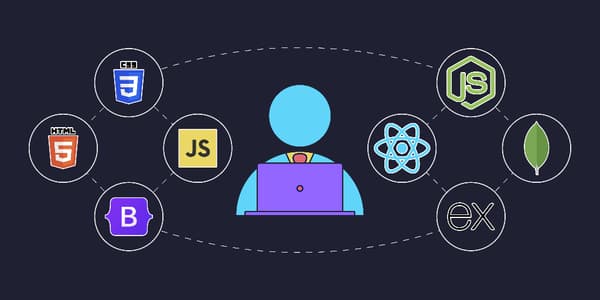
In today’s digital world, web development skills unlock endless opportunities. This Skill Path is your step-by-step guide to becoming a full stack developer, from building responsive websites to creating dynamic web applications. You’ll start with HTML and CSS, mastering structure, layouts, and responsive design, then apply your skills by designing a movie order page. Next, you’ll explore JavaScript fundamentals, functions, arrays, objects, DOM, events, and async patterns, followed by Bootstrap 5 for grids, utilities, forms, and real-world projects like a registration form and health tracker. You’ll then dive into React, learning components, hooks, and routing, before moving on to Node.js and Express for servers and REST APIs, and MongoDB for data modeling and queries. Finally, you’ll bring it all together in full stack development, building scalable apps with authentication, and complete a capstone MERN e-learning platform to showcase your skills.
Should You Be Prepared for Both Frontend and Backend Code?#
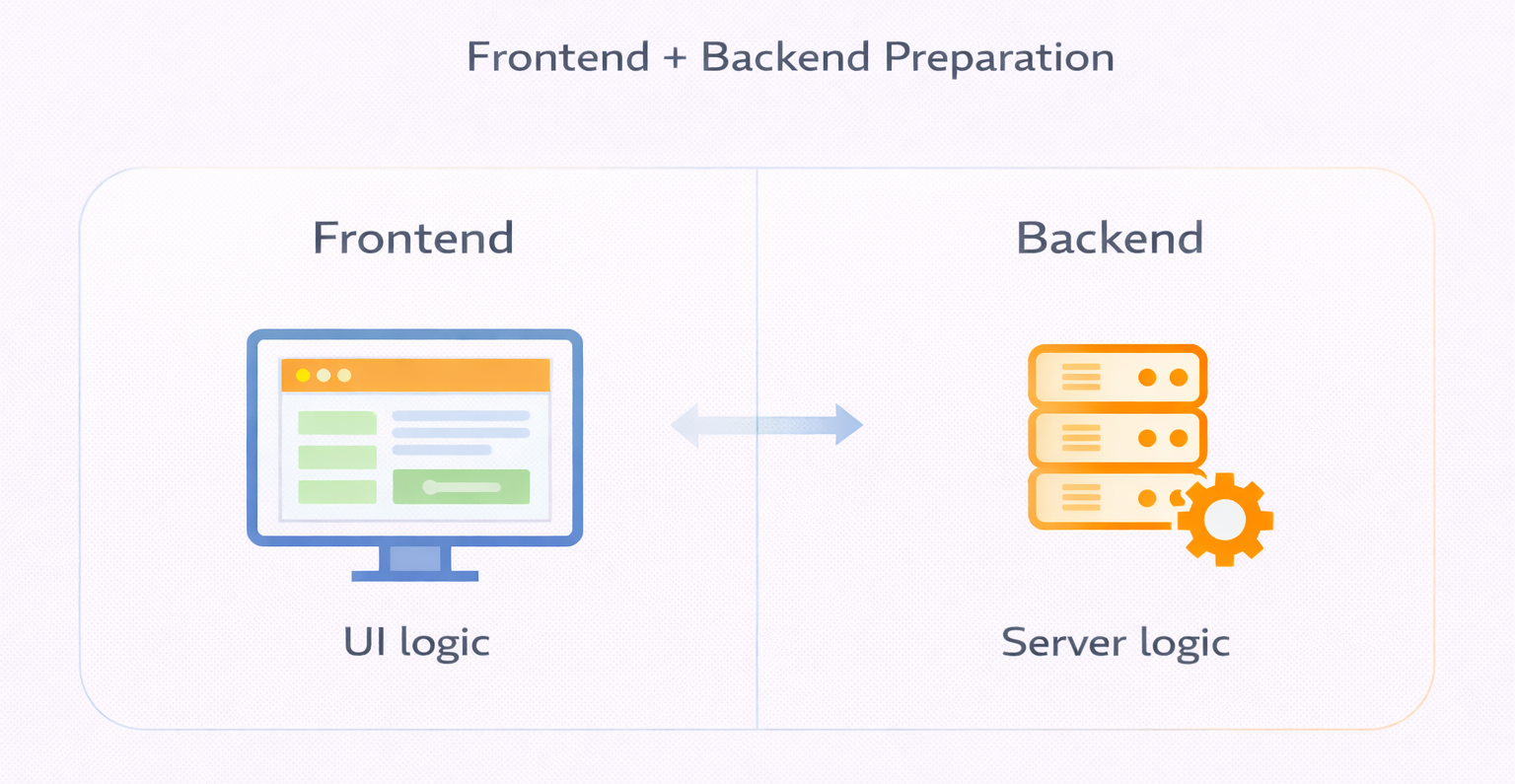
Yes. Full-stack developer coding interviews commonly include tasks from both sides of the stack. Interviewers want to confirm that you can contribute meaningfully in multiple areas, even if you naturally lean toward one domain.
You may encounter tasks such as:
Frontend-oriented examples:
Build a small UI component in React
Implement a responsive layout
Fix a bug in a JavaScript snippet
Handle asynchronous requests correctly
Manage local state or global state
Backend-oriented examples:
Implement a REST endpoint
Connect to a database and perform CRUD operations
Parse and validate request input
Optimize a backend task for performance
Add authentication or session handling
Full-stack integrative challenges:
Build a feature that requires both frontend UI and backend API logic
Connect a frontend form to a backend route
Handle error states across both layers
Even if your role leans slightly toward frontend or backend development, full-stack interviews expect you to demonstrate competence in both.
Zero to Hero in Back-end Web Development
Backend developers are responsible for the server side of web applications. According to a survey of recruiters, backend developers top the list of in-demand tech jobs. This Skill Path is designed for individuals who are interested in becoming backend developers but don't have any programming background. You will learn how to design and build efficient, scalable, and secure backend systems using Python and Django framework. By the end of this Skill Path, you’ll have a strong understanding of backend development concepts and the ability to build and deploy your web applications. Get ready to dive into the exciting world of backend development!
Is System Design Asked in Full-Stack Developer Interviews?#
Yes, but the depth depends on the seniority of the role. Full-stack developers, even at mid-level, often design user-facing features end-to-end, which requires architectural reasoning.
You may be asked to design:
A user authentication system
A notes application with CRUD operations
An e-commerce checkout flow
A content management system
A real-time chat component
A scalable search bar
What interviewers want to see:
High-level architectural structure – Frontend, backend services, APIs, storage, caching layers, and third-party integrations.
API design clarity – Endpoints, payloads, status codes, contracts, and error behavior.
Data modeling decisions – How data is stored, indexed, normalized, or cached.
Feature flows – How the UI interacts with backend services, how data travels through the system, and where errors may occur.
Basic scaling awareness – Load balancing, caching, pagination, and database optimizations.
You are not expected to design globally distributed systems unless you hold a senior role. However, you should demonstrate the ability to assemble components into a clean, maintainable architecture.
Do You Need DevOps or Deployment Knowledge for Full-Stack Coding Rounds?#
Often, yes, but only at a practical level. Companies rarely expect full-stack developers to behave like DevOps or SRE engineers, but they do expect them to possess basic deployment literacy.
Practical DevOps knowledge for full-stack roles#
Area | What you should know | What’s usually not required |
CI/CD | Build → test → deploy flow | Writing custom pipelines |
Environments | Env vars, secrets, configs | Advanced infra automation |
Cloud | Basic deployment concepts | Deep SRE-level tuning |
Monitoring | Logs and error tracking | Complex observability stacks |
Common topics include:#
Understanding CI/CD basics:
What happens during a build
Running tests before deployment
Linting, formatting, and static analysis
Environment configuration:
Environment variables
Secrets
Config differences between staging and production
Basic cloud or hosting concepts:
Containers (Docker basics)
Simple cloud deployment flows (AWS, GCP, Azure)
Serverless functions
Runtime behavior awareness:
Logging
Monitoring
Error tracking
Package management and bundling:
npm, yarn, pip
Webpack, Vite, or build pipelines
Entry-level roles may ask very little about deployment. Mid-level and full-stack roles almost always ask about it because full-stack developers frequently help deploy, maintain, and monitor production code.
How to Prepare Effectively for Full-Stack Developer Coding Interviews#
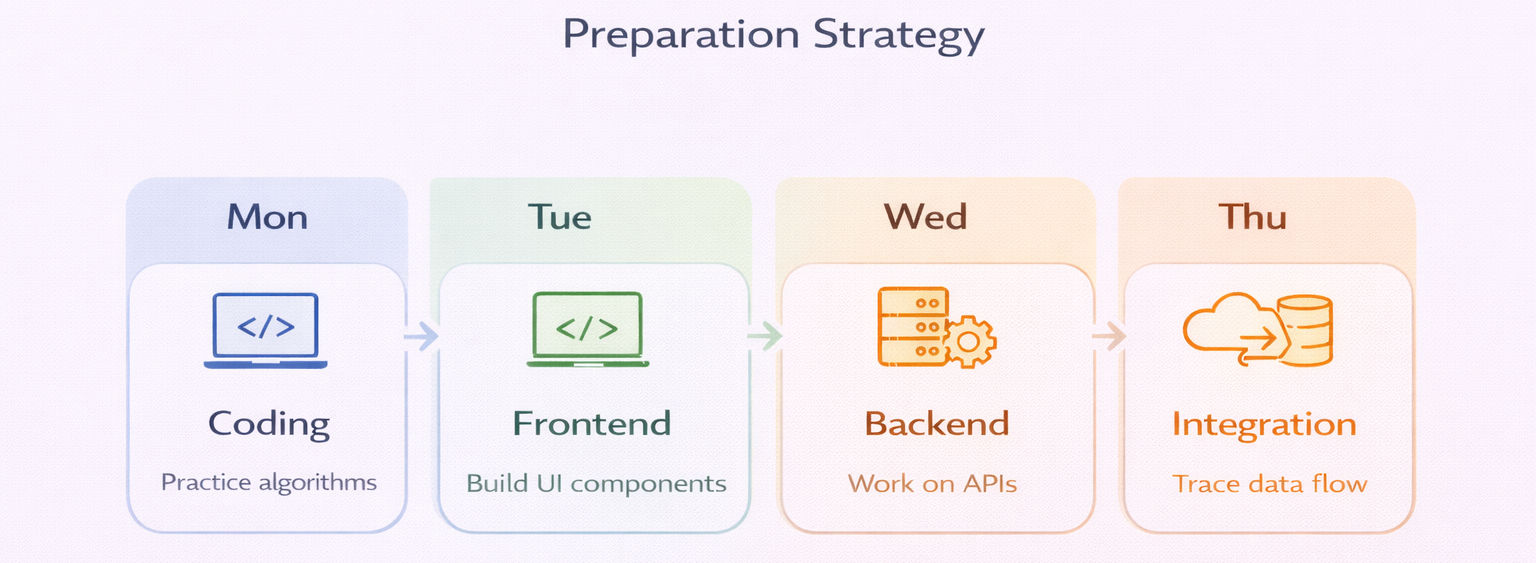
Preparing for full-stack developer interviews can feel overwhelming because the scope is wide. You’re expected to move comfortably between frontend, backend, and integration concerns. The key is not to study everything at once, but to follow a structured plan that builds confidence layer by layer.
A strong preparation strategy focuses on fundamentals first, then expands outward to cover how those pieces work together in real applications.
Strengthen your coding fundamentals#
Regardless of whether your background is frontend-heavy or backend-focused, interviewers expect solid core coding skills. These fundamentals form the backbone of almost every full-stack interview question.
You should be comfortable solving problems that involve:
Arrays and strings, including traversal, transformation, and edge cases
Hash maps for lookups, counting, and grouping
Basic tree and graph traversal patterns
Recursion and iterative alternatives
Sorting and searching techniques
Introductory dynamic programming concepts when appropriate
Your goal here is not to show off clever tricks, but to write clear, structured, and correct code. Interviewers care about readability, logical flow, and whether your solution would be maintainable in a real codebase.
Review frontend foundations#
Full-stack interviews assume that you understand how the browser works, not just how to use a framework. Even if your strongest experience is backend development, you need to demonstrate frontend literacy.
Make sure you understand:
Core DOM behavior and how elements update
Event bubbling, capturing, and delegation
Asynchronous behavior with
fetch, promises, and async/awaitJavaScript fundamentals like closures and prototypes
State management basics and common React patterns
Component reusability, props, and context
Browser rendering and performance considerations
If frontend is your weaker area, it’s worth prioritizing this section. Many full-stack candidates fail interviews not because they can’t write backend logic, but because they struggle to reason about UI behavior and client-side state.
Review backend foundations#
On the backend side, interviewers expect practical, production-oriented knowledge rather than abstract theory. You should be able to reason about how APIs behave under real usage.
Focus on:
REST fundamentals and clean API design
Routes, request/response payloads, and HTTP status codes
Input validation and error handling
Authentication versus authorization
Sessions versus token-based auth
Middleware flow and request lifecycle
Database operations, schema design, and modeling
Basic performance concepts like caching and indexing
Backend interviews often involve real code rather than pseudocode. Being able to explain why you structured an endpoint a certain way or how you’d prevent invalid data is just as important as writing the logic itself.
Understand how data flows across the stack#
One of the most important full-stack skills is understanding how data moves from the UI to the server and back again. Interviewers frequently test this implicitly by giving you bugs or design questions that span multiple layers.
You should be able to explain how you:
Structure a complete request–response cycle
Handle latency, retries, or partial failures
Keep frontend and backend contracts consistent
Avoid duplicating logic across layers
This ability to reason across boundaries is often what separates strong full-stack candidates from those who are only comfortable in one part of the stack.
Practice debugging across layers#
Debugging is a major differentiator in full-stack interviews because many real-world issues don’t live entirely in the frontend or backend. They emerge at the seams between systems.
Practice identifying and fixing issues such as:
Incorrect or mismatched API payloads
Wrong HTTP methods or endpoint usage
Unexpected
nullor undefined valuesBroken promise chains or state updates
Faulty backend validation logic
CORS and configuration-related errors
Interviewers value candidates who debug methodically and calmly. Showing a structured approach to tracing issues across layers signals real-world readiness.
Learn basic system design#
Full-stack interviews often include lightweight system design questions. These are not meant to test distributed systems expertise, but rather your ability to organize components and reason about data flow.
For small to medium-scale designs, focus on:
Clear, high-level diagrams
How data flows through the system
API endpoints and responsibilities
Error handling strategies
Basic rate limiting and caching
Data modeling decisions
You don’t need to design globally distributed systems unless you’re interviewing for senior roles. What matters is clarity and sensible trade-offs.
Have real examples ready#
Finally, interviewers often ask you to ground your answers in real experience. Concrete examples help validate your skills far more than abstract explanations.
Be prepared to talk about:
Features you built end-to-end
Bugs you fixed that crossed the frontend and backend
Incidents or outages you contributed to resolving
Performance improvements you implemented
These examples demonstrate that you’ve applied your knowledge in real situations, which is exactly what full-stack interviewers are looking for.
Final Thoughts#
Full Stack Developer Interview Questions test the breadth and depth of your engineering skills. Interviewers want to see whether you can build functional, maintainable applications across both frontend and backend layers. You will likely encounter coding tasks, system design discussions, debugging exercises, and questions about deployment or runtime behavior.
If you prepare across all layers, frontend, backend, architecture, DevOps basics, and debugging, you will stand out as a well-rounded full-stack engineer ready to contribute confidently from day one.
