Problem Statement#
Least Recently Used (LRU) is a common caching strategy. It defines the policy of evicting elements from the cache to make room for new elements when the cache is full, meaning it discards the least recently used items first.Let’s take an example of a cache that has a capacity of 4 elements. We cache elements 1, 2, 3, and 4.
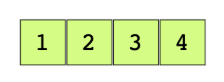
The diagram above represents the cache state after the first access of all four elements. We now need to cache another element “5”.
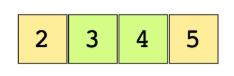
In LRU cache, we evict the least recently used element (in this case, “1”) in case a new element needs to be cached. Now “2” is next in line to be evicted if a new element needs to be cached. Let’s see what happens when “2” is accessed again.
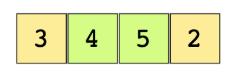
Now “3” becomes the next in line to be evicted from the cache.
Hint#
Doubly linked list
Hashing
Think about evictions
Solution#
Solution Explanation#
Runtime Complexity#
get (hashset): O(1) in the average case, O(n) in the worst case
set (hashset): Constant, O(1)
deletion at head when adding a new element (linked list): Constant, O(1)
search for deleting and adding to tail (linked list): O(n)
Complexity: O(n)
Memory Complexity#
Linear, O(n) where n is the size of cache.
Solution Breakdown#
Caching is a technique to store data in a faster storage (usually RAM) to serve future requests faster. Below are some common examples where cache is used:
A processor cache is used to read data faster from main memory (RAM).
Cache in RAM can be used to store part of disk data in RAM and serve future requests faster.
Network responses can be cached in RAM to avoid too many network calls.
However, cache store is usually not big enough to store the full data set. So we need to evict data from the cache whenever it becomes full. There are a number of caching algorithms to implement a cache eviction policy. LRU is very simple and a commonly used algorithm. The core concept of the LRU algorithm is to evict the oldest data from the cache to accommodate more data.
To implement an LRU cache we use two data structures: a hashmap and a doubly linked list. A doubly linked list helps in maintaining the eviction order and a hashmap helps with O(1) lookup of cached keys. Here goes the algorithm for LRU cache.
If the element exists in hashmapmove the accessed element to the tail of the linked listOtherwise,if eviction is needed i.e. cache is already fullRemove the head element from doubly linked list and delete its hashmap entryAdd the new element at the tail of linked list and in hashmapGet from Cache and Return
Note that the doubly linked list is used to keep track of the most recently accessed elements. The element at the tail of the doubly linked list is the most recently accessed element. All newly inserted elements (in put) go to the tail of the list. Similarly, any element accessed (in a get operation) goes to the tail of the list.
Practice problems like this and many more by checking out our Grokking the Coding Interview: Patterns for Coding Questions course!