Junior front-end web developer career guide for beginners
Curious about becoming a junior front-end web developer? Learn the essential skills, technologies, and career steps needed to build interactive websites and start your journey into modern web development.
The role of a junior front-end web developer has become one of the most popular entry points into the technology industry. As companies increasingly rely on websites and digital products to interact with customers, the demand for developers who can build responsive and engaging user interfaces continues to grow across industries.
A junior front-end web developer focuses on building the visible parts of web applications that users interact with directly. This includes designing layouts, implementing interactive features, and ensuring that websites function smoothly across different devices and browsers.
Understanding the responsibilities and skills required for a junior front-end web developer is essential for anyone preparing to enter the field of web development. This guide explains what the role involves, the technologies you need to learn, and how beginners can prepare themselves for a successful career in front-end development.
Become a Front-end Developer

Front-end web developers are proficient in HTML, CSS, and JavaScript, and their primary role is to create web applications so users can view and interact with websites. Front-end developers are in high demand as tech companies are always looking to improve the visuals and interactivity of their applications. This path gives a comprehensive insight into the fundamental components of web development. You’ll start with the fundamentals of web development and get an overview of the complete process. Moving ahead, you’ll cover the basics of HTML, CSS, and JavaScript from scratch, which are essential for web development. You’ll also get hands-on practice adding interactivity to websites, including creating a drop-down menu, tooltip, auto-validation form, and an infinitely scrolling list. Finally, you’ll get a comprehensive step-by-step description of how to launch a website on the internet. By the end of this path, you'll have gained the skills to create functional websites and web applications.
Understanding The Role Of A Junior Front-End Web Developer#
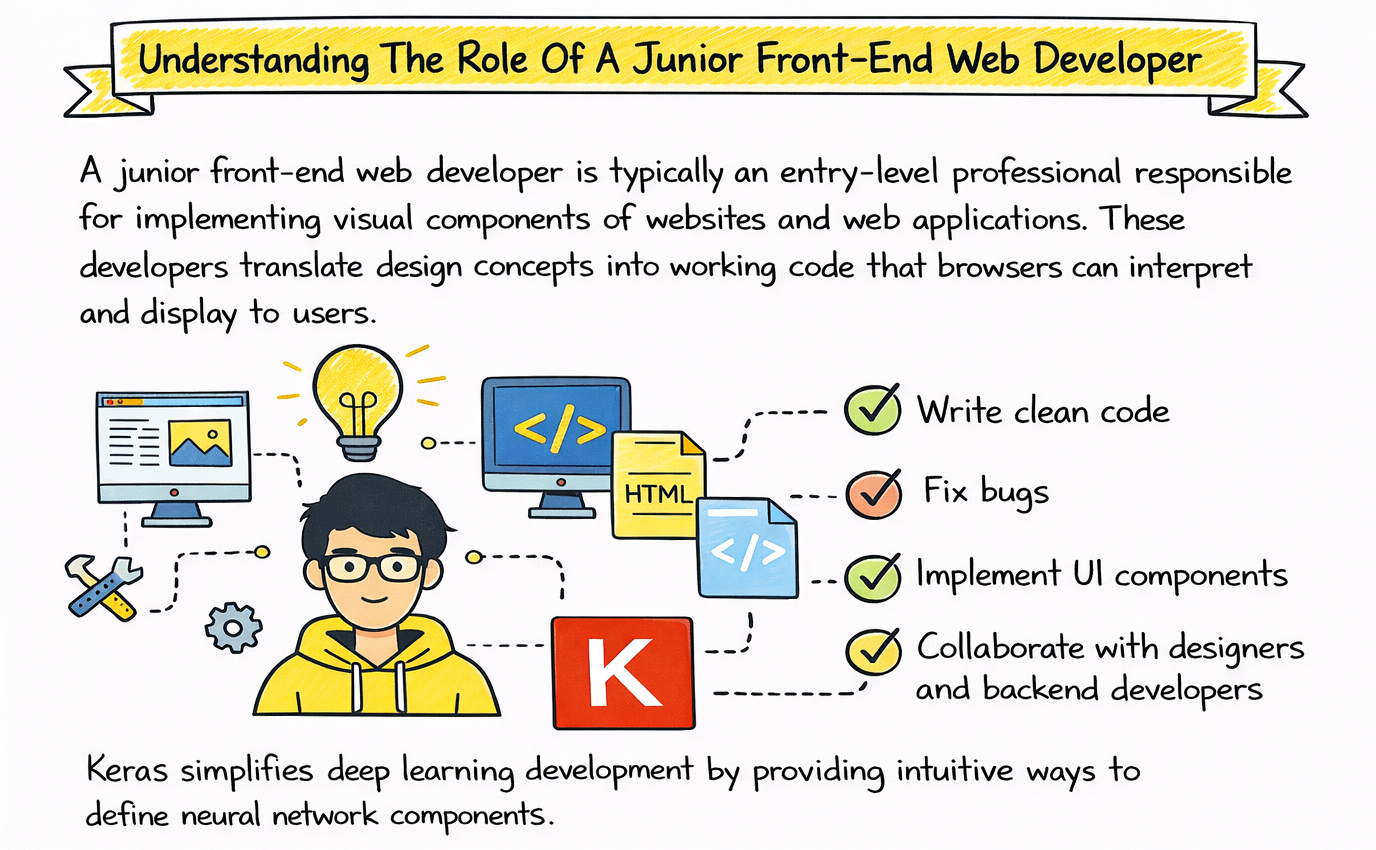
A junior front-end web developer is typically an entry-level professional responsible for implementing visual components of websites and web applications. These developers translate design concepts into working code that browsers can interpret and display to users.
Front-end development focuses on the client-side portion of web applications, meaning the part of the software that runs directly in the user’s browser. Developers write code that determines how web pages look, how elements respond to user interactions, and how information is presented on the screen.
Although junior developers are still building experience, they contribute to real development projects while learning from senior engineers and team leads. Their responsibilities often include writing clean code, fixing bugs, implementing user interface components, and collaborating with designers and backend developers.
Understanding the role of a junior front-end web developer involves recognizing how front-end technologies combine design, programming, and user experience principles. This will also help you ace your front-end development interviews.
Zero to Hero in Front-end Web Development

Front-end developers are in high demand because tech companies are always looking for ways to make their apps look and work better. To learn front-end web development, you must know HTML, CSS, and JavaScript. This Skill Path is the perfect place to start front-end development if you don't have a programming background. It comprehensively introduces you to the most important parts of the web, particularly the front-end part of web development. You will start with an introduction of basic terms in the web development domain. As you move on, you'll learn the basic pillars of front-end development, i.e., HTML, CSS, and JavaScript. Next, you’ll work on smaller projects to get a strong handle on HTML, CSS, and JavaScript. Lastly, you will get a full, step-by-step explanation of how to get a website up and running on the Internet. By the end of this Skill Path, you will know how to make functional websites and web applications.
Why Front-End Development Is An Attractive Career Path#
Front-end development has become an attractive career path because it combines technical skills with creativity and design thinking. Developers in this field work closely with visual interfaces, which allows them to see immediate results when they build features or update user interfaces.
Another reason this role is appealing is the relatively accessible learning curve compared to some other areas of software engineering. Many aspiring developers begin their programming journey through web development because the core technologies are widely documented and beginner-friendly.
The demand for front-end developers also continues to grow as businesses invest in digital platforms and online services. Organizations across industries need professionals who can build fast, responsive, and visually appealing web experiences.
For individuals exploring a technology career, becoming a junior front-end web developer offers a clear pathway into the broader field of software engineering.
Core Technologies Every Junior Front-End Web Developer Must Learn#
Front-end development relies on several foundational technologies that allow developers to structure, style, and control the behavior of web pages. Understanding these technologies is essential for anyone pursuing a career as a junior front-end web developer.
HTML provides the structural framework of a web page by defining elements such as headings, paragraphs, images, and links. CSS controls the visual appearance of those elements by defining colors, spacing, layout, and responsiveness across devices.
JavaScript introduces interactivity by allowing web pages to respond to user actions such as clicks, form submissions, and animations. Together, these technologies form the foundation of front-end development.
The following table summarizes the core technologies used in front-end development.
Technology | Purpose | Example Use |
HTML | Defines structure of web pages | Creating page layouts |
CSS | Controls styling and design | Designing responsive layouts |
JavaScript | Enables interactivity | Handling user events |
Mastering these core technologies allows beginners to start building real web applications and understand how front-end systems operate.
A Front-End Web Developer’s Guide to Testing
Web automation testing frameworks ensure faster and more reliable delivery of high-quality software when integrated into the front-end development workflow. You’ll start with the advanced web technologies and application types to understand common trends and challenges. Next, you’ll learn about the four leading web testing frameworks and how to choose the right framework, whether you’re a developer or a test automation engineer. You’ll also learn the KPIs that measure applications’ quality. Additionally, you’ll learn to build a testing strategy that evolves with the changing objectives and market events. Finally, you’ll learn about the main features of Selenium, Cypress, Puppeteer, and Playwright, with examples of how to use these frameworks and best practices. By the end of the course, you’ll have gained sufficient knowledge of the leading frameworks to help you choose the most suitable framework for your application’s needs and integrate it into your web development workflow.
Front-End Frameworks And Tools#
Modern front-end development often involves frameworks and tools that help developers build complex applications more efficiently. These frameworks provide reusable components, structured development patterns, and improved performance.
JavaScript frameworks such as React, Angular, and Vue are widely used in modern web development because they simplify the process of building dynamic user interfaces. These tools allow developers to manage application state, create reusable components, and handle complex interactions more effectively.
Front-end developers also use tools that assist with project management, version control, and development workflows. These tools help teams collaborate on large applications while maintaining consistent code quality.
The following table highlights several common tools used by front-end developers.
Tool | Purpose | Typical Use |
React | JavaScript framework | Building user interfaces |
Git | Version control system | Managing code changes |
Webpack | Module bundler | Optimizing project assets |
npm | Package manager | Installing libraries |
A junior front-end web developer does not need to master every tool immediately, but understanding how these technologies fit into the development workflow is extremely valuable.
Responsibilities Of A Junior Front-End Web Developer#
A junior front-end web developer participates in several stages of the web development process while learning from experienced team members. Although responsibilities vary across organizations, most junior developers work on implementing interface components and maintaining existing features.
Junior developers often translate design prototypes into functional code that accurately represents the intended user interface. This requires attention to detail because layouts, fonts, colors, and spacing must match the original design specifications.
Another common responsibility involves debugging issues that affect how web pages behave across browsers and devices. Developers test their code and identify errors that cause layout inconsistencies or functional problems.
Collaboration also plays an important role in the daily work of a junior front-end web developer. Developers frequently communicate with designers, backend engineers, and product managers to ensure that features meet both technical and user experience requirements.
Essential Skills For A Junior Front-End Web Developer#
Beyond technical knowledge, a successful junior front-end web developer must develop several professional skills that support effective software development.
Problem-solving plays a critical role in programming because developers constantly encounter challenges that require analytical thinking. Writing code often involves experimenting with different solutions and refining them until the desired outcome is achieved.
Communication skills are also important because developers must collaborate with team members and explain technical decisions clearly. Front-end developers frequently work with designers who focus on visual aesthetics and user experience.
Attention to detail is another essential skill because small mistakes in front-end code can significantly impact the appearance or functionality of a web application. Careful testing and review help ensure that websites perform reliably across various devices and browsers.
Learning Path For Becoming A Junior Front-End Web Developer#
Becoming a junior front-end web developer typically involves progressing through several stages of learning and practice. Beginners often begin by studying basic web technologies such as HTML, CSS, and JavaScript while building simple projects.
Once foundational skills are established, learners often explore frameworks and libraries that allow them to build more advanced applications. These frameworks introduce concepts such as component-based architecture and state management.
Practical experience is an important part of the learning journey because building projects helps developers apply theoretical knowledge. Personal projects such as portfolio websites, small applications, or interactive dashboards demonstrate technical skills to potential employers.
The following table outlines a typical learning progression for aspiring front-end developers.
Learning Stage | Focus Area | Example Outcome |
Beginner | HTML and CSS fundamentals | Simple webpage layouts |
Intermediate | JavaScript programming | Interactive features |
Advanced Beginner | Front-end frameworks | Web applications |
Portfolio Development | Building projects | Personal portfolio site |
Following a structured learning path helps beginners build skills progressively while gaining practical development experience.
Building A Front-End Developer Portfolio#
A portfolio plays a crucial role in helping aspiring developers demonstrate their abilities to potential employers. For a junior front-end web developer, a portfolio serves as evidence of practical skills and creativity.
A strong portfolio typically includes several web projects that showcase different technical capabilities. These projects may demonstrate responsive design, dynamic user interfaces, or integration with external APIs.
Each project should include a description explaining the purpose of the application, the technologies used, and the challenges encountered during development. This information helps hiring managers understand the developer’s problem-solving process.
A well-organized portfolio allows junior developers to present their skills clearly and distinguish themselves during the job search process.
Preparing For Front-End Developer Interviews#
Interviews for front-end development roles often include both technical and behavioral components. Candidates may be asked to explain how web technologies work or demonstrate coding skills through practical exercises.
Technical interviews frequently include questions about JavaScript concepts, browser behavior, and responsive design principles. Interviewers may also evaluate a candidate’s ability to debug code and explain programming decisions.
Some interviews include coding challenges where candidates must implement small features or solve problems related to user interfaces. These exercises test both technical knowledge and problem-solving ability.
Preparing for these interviews requires reviewing programming fundamentals, practicing coding exercises, and studying common web development patterns.
Career Growth After Becoming A Junior Front-End Web Developer#
The role of a junior front-end web developer often serves as the first step in a long-term software engineering career. As developers gain experience, they may progress to mid-level or senior front-end positions where they take on greater responsibility for application architecture.
Experienced developers may specialize in areas such as user experience engineering, performance optimization, or accessibility design. These specializations allow developers to deepen their expertise and contribute to complex development projects.
Some front-end developers eventually transition into full-stack development roles where they work on both client-side and server-side systems. Others pursue leadership roles such as technical lead or engineering manager.
Front-end development provides numerous opportunities for career advancement within the broader field of software engineering.
The Future Of Front-End Development#
Front-end development continues to evolve as new technologies and frameworks reshape how web applications are built. Advances in browser capabilities, design systems, and performance optimization techniques are expanding the possibilities of modern web development.
Developers are increasingly focused on building fast, accessible, and responsive user experiences that perform well across a wide range of devices. This requires continuous learning and adaptation as development tools and frameworks evolve.
Artificial intelligence and automation tools are also influencing development workflows by assisting developers with code generation, debugging, and optimization.
For a junior front-end web developer, staying curious and committed to continuous learning is essential for long-term success in the rapidly changing technology landscape.
Conclusion#
Becoming a junior front-end web developer offers an exciting entry point into the world of software development. By mastering foundational technologies such as HTML, CSS, and JavaScript, aspiring developers can begin building interactive web applications that power modern digital experiences.
The journey to becoming a professional developer involves consistent learning, hands-on practice, and collaboration with experienced engineers. Building projects, developing a portfolio, and preparing for technical interviews help beginners transition from learning programming to working in real development environments.
With dedication and curiosity, aspiring developers can successfully launch their careers in front-end development and continue growing as software engineers in the ever-evolving technology industry.
