What does a front-end developer do?
Curious about what front-end developers actually do? Learn how they build interactive websites, master core technologies like HTML, CSS, and JavaScript, and start a successful career in modern web development.
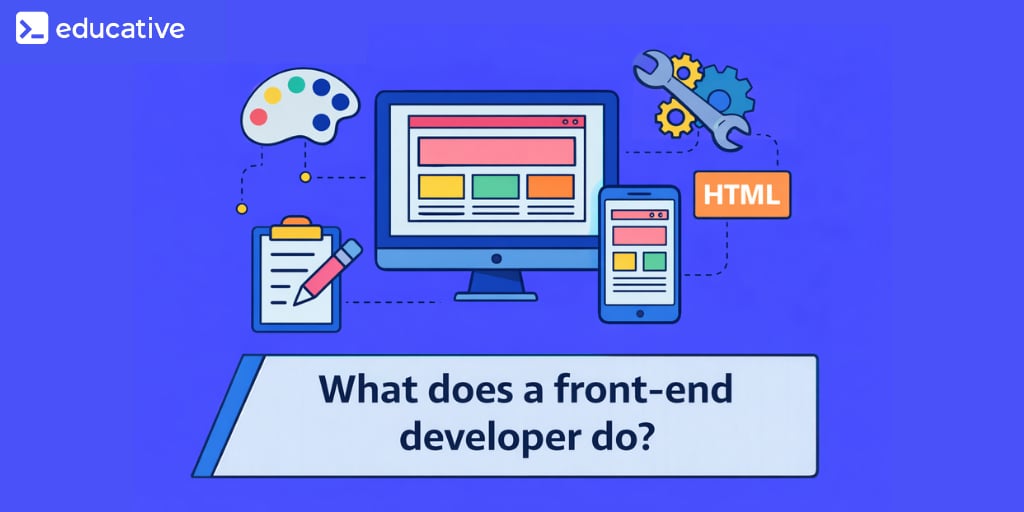
The modern internet is filled with websites and web applications that millions of people use every day to shop, communicate, learn, and manage their work. Behind every responsive website and interactive interface is a professional who focuses on building the user-facing side of digital products. Many aspiring developers often ask the same question when exploring the field of web development: What does a front-end developer do?
Understanding this role is important for anyone preparing to enter the technology industry because front-end development plays a central role in creating the visual experience users interact with. Front-end developers work closely with designers and backend engineers to ensure that web applications look appealing, function correctly, and deliver smooth user experiences across different devices.
Become a Front-end Developer
Front-end web developers are proficient in HTML, CSS, and JavaScript, and their primary role is to create web applications so users can view and interact with websites. Front-end developers are in high demand as tech companies are always looking to improve the visuals and interactivity of their applications. This path gives a comprehensive insight into the fundamental components of web development. You’ll start with the fundamentals of web development and get an overview of the complete process. Moving ahead, you’ll cover the basics of HTML, CSS, and JavaScript from scratch, which are essential for web development. You’ll also get hands-on practice adding interactivity to websites, including creating a drop-down menu, tooltip, auto-validation form, and an infinitely scrolling list. Finally, you’ll get a comprehensive step-by-step description of how to launch a website on the internet. By the end of this path, you'll have gained the skills to create functional websites and web applications.
This blog explores what a front-end developer does in detail by examining the responsibilities, technologies, tools, and skills required for success in this role. By understanding how front-end development fits into the broader software engineering ecosystem, beginners can gain a clearer picture of how to start preparing for careers in this field and ace their front-end development interviews.
Understanding Front-End Development#

To become a front-end developer, you need to understand what it actually is. Front-end Development refers to the practice of building the parts of a website or web application that users see and interact with directly. When someone visits a website, everything they observe on the screen is the result of front-end development work.
The role involves translating visual designs into functional code that browsers can interpret and display. Developers must ensure that elements such as buttons, forms, navigation menus, and page layouts behave correctly when users interact with them.
To fully understand what a front-end developer does, it is helpful to think of front-end development as the bridge between design concepts and technical implementation. Developers transform design mockups into interactive digital experiences that function smoothly across different browsers and devices.
Front-end development also requires collaboration with backend systems that store data and process application logic. This interaction ensures that the user interface connects seamlessly with the underlying infrastructure of a web application.
Zero to Hero in Front-end Development with React
Front-end development is a critical part of web applications. Many of the in-demand tech jobs today are for front-end developers. This Skill Path is designed for individuals who are interested in becoming front-end developers but don't have a background in programming. You’ll learn how to design and build efficient and scalable user interfaces using HTML, CSS, JavaScript, and the React framework. By the end of this Skill Path, you’ll have a strong understanding of front-end development concepts and the ability to build your own web applications.
Core Responsibilities Of A Front-End Developer#
A front-end developer performs several responsibilities related to building and maintaining user interfaces for websites and web applications. These responsibilities involve both technical programming work and collaboration with other members of the development team.
One primary responsibility involves converting design layouts into functional web pages. Designers often create visual mockups using design software, and front-end developers translate those designs into code that can be rendered in web browsers.
Another responsibility involves ensuring that web applications are responsive and accessible. This means that websites should function correctly on smartphones, tablets, and desktop computers while remaining usable for individuals with different accessibility needs.
Front-end developers also focus on optimizing website performance. Fast loading times and smooth interactions contribute to better user experiences and improved search engine rankings.
Understanding these responsibilities provides a clearer answer to the question of what a front-end developer does in modern web development environments.
Grokking the Frontend System Design Interview
Frontend System Design interviews have become standard for senior frontend and full-stack roles at major tech companies. The expectation is that you can take a broad prompt, “design the frontend for a chat application” or “architect a video streaming interface”, and walk through the full system, including component architecture, state management, API design, performance optimization, and tradeoffs. When I was building production systems at Microsoft and Meta, many of the hardest engineering decisions happened at the frontend layer. Questions like how to manage state across complex UIs, how to keep things responsive under load, and how to structure components so a growing team could work on them without stepping on each other. Those are exactly the kinds of decisions this course prepares you to make and articulate. In this course, you’ll start with foundational concepts, such as browser rendering, CSS positioning, DOM manipulation, state management, and non-functional requirements like performance, accessibility, and localization. From there, the course moves into optimization techniques, API architecture styles, design patterns (component-driven design, micro-frontends), and frontend security. The course’s backbone is the REDCAAP framework. This is a structured approach for breaking down any frontend System Design problem into manageable steps. You’ll apply it to three real-world systems: a newsfeed, a video streaming platform, and a chat application. Each design walks through requirements, architecture decisions, component structure, and performance considerations- all the same progression you'd follow in an actual interview.
Technologies Used In Front-End Development#
Front-end developers rely on several core technologies that allow them to structure, style, and control the behavior of web applications. These technologies form the foundation of nearly every website on the internet.
HTML provides the structural framework for web pages by defining elements such as headings, paragraphs, images, and links. CSS controls the visual appearance of these elements by defining layouts, colors, typography, and spacing.
JavaScript introduces interactivity by enabling developers to create dynamic features such as animations, form validation, and real-time updates.
The following table illustrates the primary technologies used in front-end development.
Technology | Purpose | Example Function |
HTML | Defines structure of web pages | Creating page layouts |
CSS | Controls styling and design | Responsive layouts |
JavaScript | Adds interactivity | Dynamic page behavior |
Mastering these technologies allows developers to build functional web applications and deliver interactive digital experiences.
Front-End Frameworks And Libraries#
Modern web development often involves frameworks and libraries that simplify the process of building complex applications. These tools help developers organize code efficiently and manage dynamic user interfaces.
React is one of the most widely used libraries for building interactive web interfaces. Angular provides a full-featured framework often used for large-scale enterprise applications, while Vue offers a flexible and lightweight alternative.
These tools allow developers to create reusable components that simplify development and improve maintainability.
The following table compares several commonly used front-end frameworks.
Framework | Main Purpose | Typical Applications |
React | Component-based interface library | Interactive web applications |
Angular | Full front-end framework | Enterprise applications |
Vue | Lightweight interface framework | Dynamic interfaces |
Learning at least one of these frameworks helps developers build scalable applications and remain competitive in the job market.
Tools And Development Environments#
Front-end developers rely on various development tools that help them write, test, and manage code efficiently. These tools improve productivity and enable developers to collaborate effectively within development teams.
Code editors provide environments where developers write and edit code while benefiting from features such as syntax highlighting and debugging support. Version control systems allow teams to track code changes and manage collaborative development projects.
Package managers help developers install libraries and frameworks used in web applications.
The following table outlines several tools commonly used by front-end developers.
Tool | Purpose | Typical Use |
Visual Studio Code | Code editor | Writing and editing code |
Git | Version control system | Managing project history |
npm | Package manager | Installing development libraries |
Webpack | Module bundler | Optimizing assets |
Understanding how these tools work is an important step toward becoming a professional front-end developer.
User Interface Development#
User interface development is a major part of what a front-end developer does in day-to-day work. Developers build the elements users interact with when navigating websites or web applications.
This includes designing navigation menus, content sections, forms, and interactive components that respond to user actions. Developers must ensure that these elements function consistently across different browsers and devices.
User interface development also requires attention to design details such as spacing, color schemes, and typography. Even small visual inconsistencies can negatively affect the user experience.
Front-end developers often collaborate closely with designers to ensure that visual concepts are accurately implemented in code.
Responsive Design And Mobile Compatibility#
Responsive design is an essential part of front-end development because modern users access websites through a variety of devices. Developers must ensure that web pages adapt to different screen sizes without losing functionality or visual clarity.
Responsive design techniques allow developers to create layouts that automatically adjust based on device dimensions. This ensures that users have consistent experiences whether they are browsing on smartphones, tablets, or desktop computers.
Media queries and flexible layout systems play an important role in responsive design. Developers use these techniques to modify layout structures depending on screen size.
Understanding responsive design is crucial when answering the question of what a front-end developer does because mobile compatibility has become a standard requirement for modern web applications.
Performance Optimization#
Website performance significantly influences user satisfaction and search engine rankings. Front-end developers must ensure that web pages load quickly and respond smoothly to user interactions.
Performance optimization involves minimizing unnecessary code, compressing images, and reducing the number of network requests required to load a page. Developers may also implement caching techniques that allow browsers to store frequently accessed resources.
Optimizing performance helps improve website reliability and ensures that users remain engaged with web applications.
Front-end developers must continuously evaluate application performance and make improvements where necessary.
Collaboration With Backend Developers#
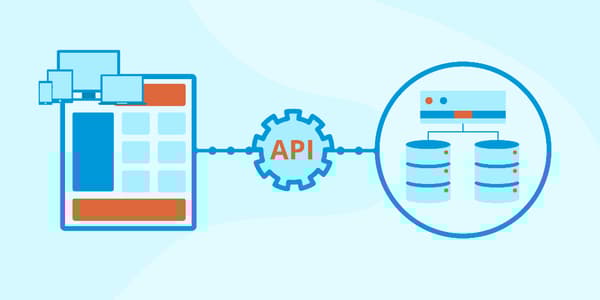
Front-end development does not occur in isolation because web applications often rely on backend systems that store and process data. Developers must integrate user interfaces with APIs and server-side services.
Backend developers build the systems that manage databases, authentication, and application logic. Front-end developers use APIs to retrieve and display this data within user interfaces.
For example, a social media platform retrieves user posts from a server and displays them in a browser interface. Front-end developers ensure that this data appears correctly and updates dynamically when new content becomes available.
Collaboration between front-end and backend developers ensures that web applications function smoothly across both client and server environments.
Skills Required To Become A Front-End Developer#
To succeed in front-end development, individuals must develop both technical knowledge and professional skills. Programming ability is essential, but developers must also cultivate problem-solving and communication skills.
Developers frequently encounter technical challenges that require creative solutions. Debugging code, optimizing performance, and implementing new features all require analytical thinking.
Communication skills are equally important because developers often collaborate with designers, product managers, and other engineers.
Attention to detail is another key skill because minor coding errors can significantly affect website functionality or visual consistency.
Learning Path For Aspiring Front-End Developers#
Individuals interested in front-end development usually follow a structured learning path that gradually builds technical expertise. Beginners often start by learning HTML and CSS fundamentals while creating simple web pages.
Once these basics are understood, learners move on to JavaScript programming and begin building interactive features. Developers may then explore frameworks that help them create larger and more complex web applications.
The following table illustrates a typical learning progression for aspiring developers.
Learning Stage | Focus Area | Example Outcome |
Beginner | HTML and CSS fundamentals | Static webpages |
Intermediate | JavaScript programming | Interactive elements |
Advanced Beginner | Framework development | Web applications |
Portfolio Development | Building projects | Developer portfolio |
Following this learning path helps beginners build practical skills that prepare them for professional development roles.
Career Opportunities In Front-End Development#
Front-end development offers numerous career opportunities across industries that rely on digital products and web applications. Developers may work for technology companies, startups, digital agencies, or large enterprises.
As developers gain experience, they often progress from junior roles to mid-level and senior positions where they take on more complex responsibilities.
Experienced front-end developers may specialize in areas such as performance optimization, accessibility engineering, or advanced interface design.
Some developers transition into full-stack development roles that involve working with both front-end and backend systems.
The Future Of Front-End Development#
Front-end development continues to evolve as new technologies and frameworks emerge. Developers must stay updated with industry trends to remain competitive in the job market.
Modern web applications increasingly focus on performance, accessibility, and user experience. Developers must ensure that applications remain fast and responsive across a wide range of devices.
Artificial intelligence and automation tools are also influencing development workflows by assisting developers with debugging, code generation, and optimization.
For individuals interested in the field, understanding what a front-end developer does today provides a strong foundation for adapting to future technological changes.
Conclusion#
Front-end development plays a critical role in shaping how users interact with digital products. Understanding what a front-end developer does reveals the importance of combining technical programming skills with design awareness and problem-solving ability.
Front-end developers build the interfaces that connect users with the underlying functionality of web applications. They ensure that websites remain responsive, visually appealing, and efficient across different devices.
For aspiring developers, learning core technologies, building projects, and gaining practical experience are essential steps toward entering this field. With dedication and continuous learning, front-end development can lead to a rewarding and dynamic career in the technology industry.
