What is AWS EC2?
Learn what is AWS EC2 and build the skills to deploy, scale, and manage cloud applications effectively. Strengthen your system design knowledge and prepare for interviews with real-world AWS expertise that sets you apart.
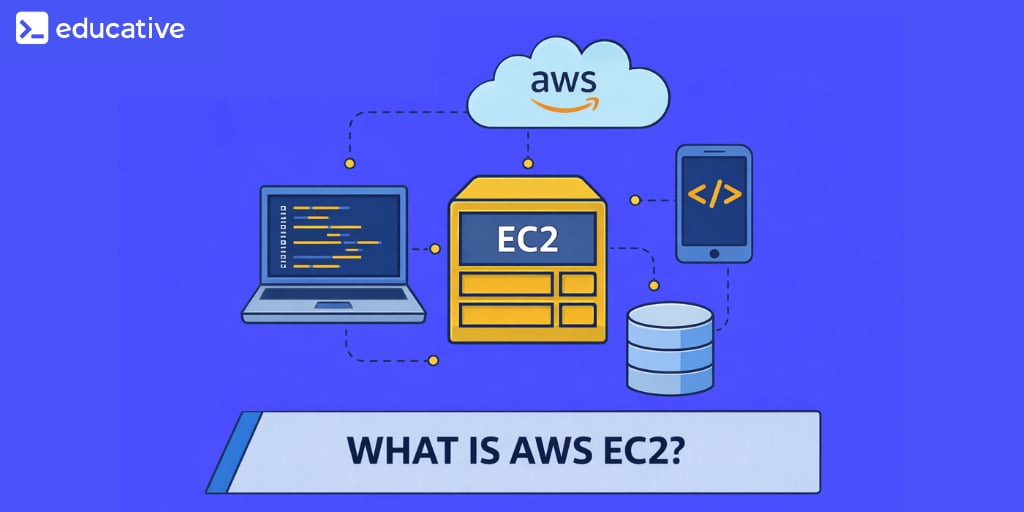
If you are learning cloud computing or preparing for system design interviews, one of the first core services you need to understand is what is AWS EC2. It is one of the foundational building blocks of AWS and plays a central role in how modern applications are deployed, scaled, and managed in the cloud.
For developers transitioning into cloud-based roles, EC2 is often the first service that truly helps them understand how cloud infrastructure works. Once you grasp what AWS EC2 is, you start to connect traditional server-based thinking with cloud-native design, which is critical for both real-world engineering and interview success.
Learn the A to Z of Amazon Web Services (AWS)

Learn about the core AWS's services like compute, storage, networking services and how they work with other services like Identity, Mobile, Routing, and Security. This course provides you with a good grasp an all you need to know of AWS services. This course has been designed by three AWS Solution Certified Architects who have a combined industry experience of 17 years. We aim to provide you with just the right depth of knowledge you need to have.
Understanding AWS EC2#
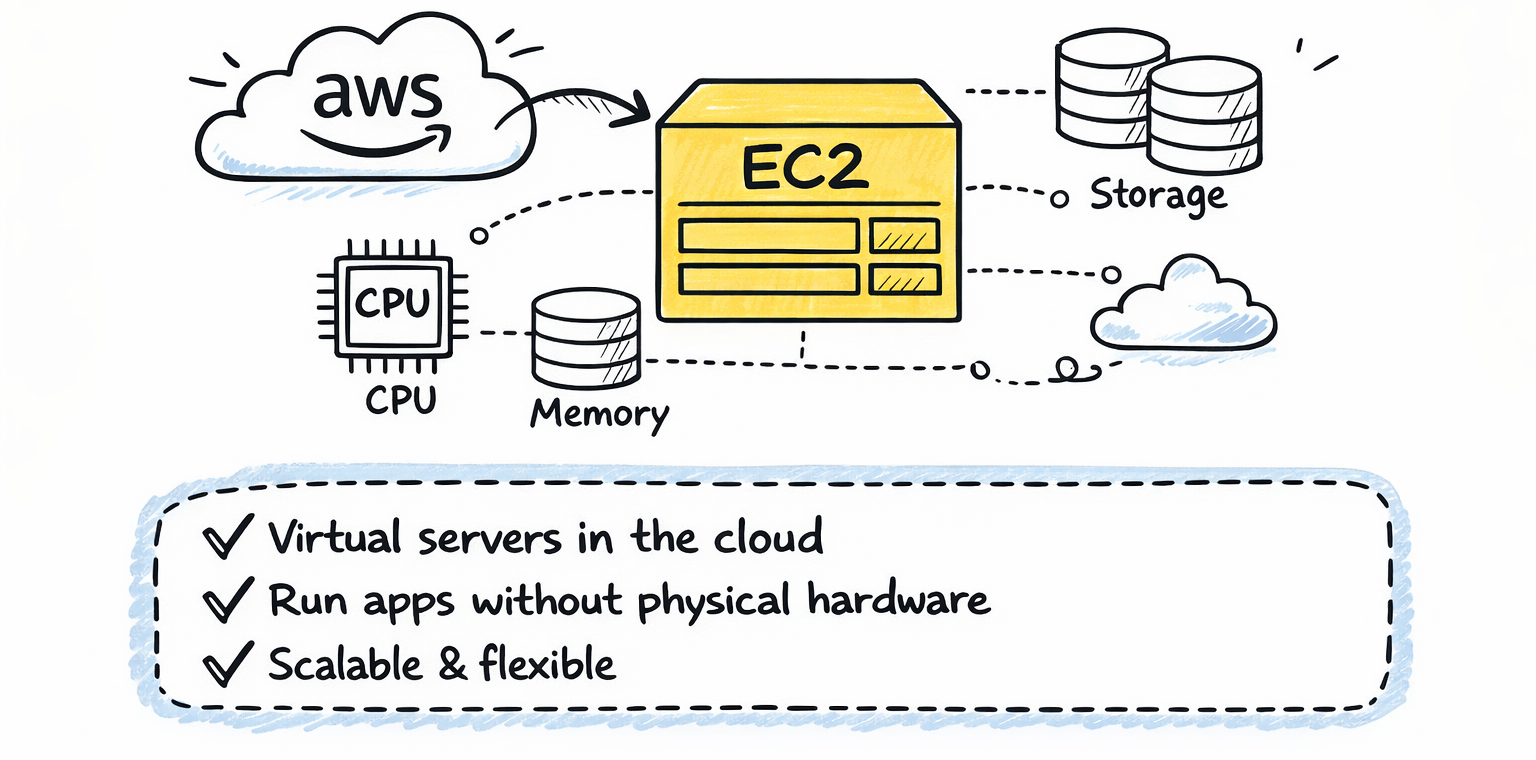
AWS EC2, or Elastic Compute Cloud, is a service that provides virtual servers in the cloud, allowing you to run applications without owning physical hardware. These virtual servers are called instances, and they can be configured with different CPU, memory, storage, and networking options based on your needs.
Understanding what AWS EC2 is means recognizing that it gives you control over your computing environment while still benefiting from the scalability and flexibility of the cloud. It essentially replaces traditional on-premise servers with on-demand virtual machines that you can launch, manage, and terminate as needed.
The Good Parts of AWS: Cutting Through the Clutter
This is not your typical AWS reference course. You won’t find most of the knowledge that's shared here in the AWS docs. The goal here is to help you realize which AWS features you’d be foolish not to use — features that have passed the test of time by being at the backbone of most things on the Internet. In this course, you'll learn a technique used to help make reliable technical choices without getting paralyzed in the face of so many options. You’ll start by going through the most fundamental services AWS offers such as DynamoDB, S3, EC2. Each section breaks down how it’s used, the pros and cons, why you should (or shouldn't) be using it, and more. This course was written by a former Amazon engineer with 15 years of experience working on AWS.
Why AWS EC2 Is Important#
AWS EC2 is important because it forms the backbone of many cloud architectures. Even though newer services like Lambda promote serverless computing, EC2 remains essential for workloads that require full control over the operating system and environment.
From a practical standpoint, understanding what AWS EC2 is allows you to build applications that can scale dynamically, handle high traffic, and maintain performance under varying conditions. This is why EC2 frequently appears in system design interviews and real-world architectures.
How AWS EC2 Works#
At a high level, AWS EC2 works by allowing you to launch virtual machines on AWS infrastructure. You choose an instance type, configure storage, set up networking, and deploy your application on the instance.
Once the instance is running, you can access it remotely, install software, and manage it just like a traditional server. The key difference is that EC2 instances can be scaled up or down quickly, which provides flexibility that traditional infrastructure cannot match.
Key Components Of AWS EC2#
To fully understand what is AWS EC2, you need to be familiar with its core components, which define how instances are created and managed.
AWS EC2 Components Overview#
Component | Description |
Instance | Virtual server that runs applications |
AMI | Pre-configured template used to launch instances |
Instance Type | Defines CPU, memory, and performance characteristics |
EBS | Persistent storage attached to instances |
Security Groups | Controls inbound and outbound traffic |
Each of these components plays a critical role in configuring and managing EC2 instances effectively.
Types Of EC2 Instances#
AWS EC2 offers a wide range of instance types designed for different workloads. Choosing the right instance type is essential for performance and cost optimization.
EC2 Instance Categories#
Instance Category | Use Case Description |
General Purpose | Balanced compute, memory, and networking |
Compute Optimized | High-performance processing tasks |
Memory Optimized | Applications requiring large memory |
Storage Optimized | High I/O workloads and data-intensive applications |
Understanding these categories helps you select the right instance for your application, which is a common topic in interviews.
EC2 Pricing Model#
One of the key aspects of what is AWS EC2 is its pricing model, which is flexible and designed to accommodate different usage patterns.
EC2 Pricing Options#
Pricing Model | Description |
On-Demand | Pay for compute by the hour or second |
Reserved | Commit to usage for lower cost |
Spot Instances | Use unused capacity at reduced prices |
This flexibility allows organizations to optimize costs based on their workload requirements.
AWS EC2 And Scalability#
Scalability is one of the biggest advantages of AWS EC2. You can increase or decrease the number of instances based on demand, which ensures that your application can handle varying levels of traffic.
In real-world systems, EC2 is often combined with auto-scaling groups, which automatically adjust the number of instances based on predefined metrics. Understanding this concept is essential for system design interviews.
Networking In AWS EC2#
Networking is a critical part of EC2, as it determines how instances communicate with each other and with external users. EC2 instances are typically launched within a Virtual Private Cloud, which provides isolation and control over network configurations.
Security groups act as virtual firewalls, controlling traffic to and from instances. Proper configuration of networking and security is essential for building secure and reliable systems.
Storage Options In EC2#
EC2 instances can use different types of storage depending on the application requirements. EBS provides persistent storage that remains available even if the instance is stopped.
Instance store provides temporary storage that is lost when the instance is terminated. Understanding these storage options is important for designing systems that meet durability and performance requirements.
AWS EC2 In System Design#
EC2 plays a central role in system design, as it is often used to host application servers, backend services, and processing systems. In interviews, you may be asked to design systems that use EC2 for compute and integrate it with other AWS services.
For example, a scalable web application might use EC2 instances behind a load balancer, with a database and storage services supporting the backend. Understanding these patterns helps you design effective solutions.
Common Use Cases Of AWS EC2#
AWS EC2 is used in a wide range of applications, from simple websites to complex distributed systems.
Common EC2 Use Cases#
Use Case | Description |
Web Hosting | Hosting scalable web applications |
Application Servers | Running backend services |
Data Processing | Handling batch and real-time processing |
Development Environments | Creating isolated testing environments |
Feature | AWS EC2 | AWS Lambda |
Server Management | User-managed | Fully managed |
Execution Model | Continuous | Event-driven |
Use Case | Long-running applications | Short, event-based tasks |
This comparison is frequently discussed in interviews and is essential for understanding cloud architecture.
Advantages Of AWS EC2#
AWS EC2 offers several advantages, including flexibility, scalability, and control over the computing environment. It allows developers to run applications with specific configurations and requirements.
From a career perspective, understanding what AWS EC2 is is essential because it forms the foundation of many cloud-based systems. It also helps you transition into more advanced topics like system design and DevOps.
Challenges And Limitations#
Despite its benefits, EC2 requires you to manage the underlying infrastructure, including operating systems, updates, and security configurations. This can increase operational complexity compared to serverless services.
In my experience, the key is to understand when EC2 is the right choice and when a managed or serverless service might be more appropriate.
How To Start Learning AWS EC2#
If you are new to AWS EC2, start by launching simple instances and experimenting with configurations. This hands-on approach helps you understand how instances work and how they interact with other services.
Over time, you should explore advanced topics such as auto-scaling, load balancing, and performance optimization. This will give you a deeper understanding of EC2 and its role in cloud architectures.
Real-World Perspective On AWS EC2#
From a practical standpoint, what is AWS EC2 is not just a theoretical concept but a tool used daily by engineers to build and manage applications. It provides the flexibility needed to handle diverse workloads and adapt to changing requirements.
In my own experience, working with EC2 has been essential for understanding cloud infrastructure and developing scalable systems. It is a foundational skill for anyone working in cloud computing.
Final Thoughts#
Understanding what is AWS EC2 is a critical step in mastering cloud computing and system design. It provides the foundation for running applications in the cloud and enables you to build scalable and reliable systems.
As you continue your learning journey, focus on gaining hands-on experience and connecting concepts. This approach will help you develop a deeper understanding and prepare you for real-world challenges.