A single-cloud approach uses one cloud provider, offering simpler management and integration at the risk of vendor lock-in. A multi-cloud approach, however, involves multiple cloud services to ensure flexibility, avoid dependency, and increase reliability — albeit with more complex management needs.
Table of Contents
What is multi-cloud?
Learn what multi-cloud is and how organizations use AWS, Azure, and GCP together for flexibility, resiliency, Kubernetes orchestration, disaster recovery, FinOps cost control, networking optimization, and scalable cloud-native infrastructure.
13 mins read
May 11, 2026
Share
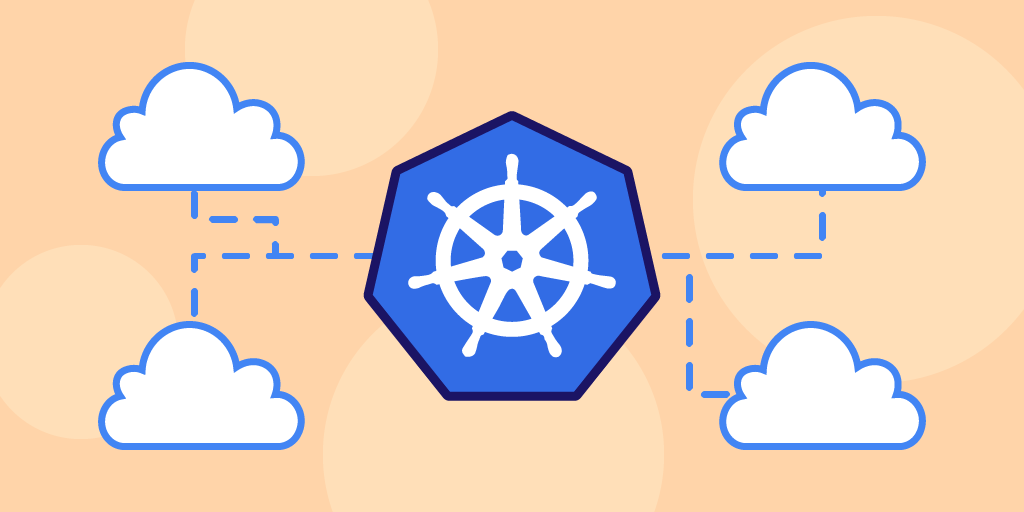
Multi-cloud is a cloud computing model that uses two or more cloud platforms from different providers, allowing organizations to leverage the best services each one offers. It improves flexibility, disaster recovery, and cost optimization while avoiding vendor lock-in, though it requires careful planning around networking, Kubernetes orchestration, and cost governance to manage effectively.
Key takeaways
Flexibility and vendor freedom: Multi-cloud lets you pick the best services from providers like AWS, Azure, and GCP instead of being locked into a single ecosystem.
Networking is critical: Private interconnects, cross-cloud load balancing, service meshes, and unified observability are essential for reliable communication between clouds.
FinOps for cost control: Centralized cost tracking, rightsizing, and workload placement decisions help prevent multi-cloud spending from spiraling out of control.
Kubernetes as an enabler: Container orchestration with Kubernetes standardizes provisioning, monitoring, and security configurations across multiple cloud environments.
It's not always the right choice: Small-scale apps, teams with limited cloud expertise, or workloads heavily dependent on proprietary services may be better served by a single-cloud strategy.
We’re only a couple of months away from the new year, which means it’s time to start looking ahead to the tech trends that will dominate the software industry in 2022. As the new year approaches, we want to help you get familiar with upcoming trends so you can be prepared and start taking your skills to the next level.
Today, we’ll discuss multi-cloud. Multi-cloud is a cloud computing model that leverages two or more cloud platforms, allowing you to take advantage of the resources different cloud providers offer. Multi-cloud can help organizations lower their cloud cost, increase resiliency and flexibility, and much more. Gartner estimates that over 75% of cloud customers will adopt a multi-cloud strategy by the end of 2022. With its increase in popularity, it’s an important concept to know!
Get hands-on with networking fundamentals for free.Learn the fundamentals of networking and DevOps with Educative’s 1-week free trial.DevOps for Developers
What is a multi-cloud environment?#
The multi-cloud cloud computing model leverages two or more cloud platforms. Instead of relying on a single cloud provider, the multi-cloud strategy relies on different cloud providers to take advantage of the various cloud services those providers offer. Multi-cloud can refer to combinations of software as a service (SaaS), infrastructure as a service (IaaS), and platform as a service (PaaS) models. Commonly used cloud providers include Google Cloud Platform (GCP), Amazon Web Services (AWS), Microsoft Azure, IBM Cloud, and VMware.
Different cloud providers offer different cloud resources, such as cloud storage, machine learning, big data analytics, serverless computing, databases, and more. Most businesses that move to the cloud implement some form of a multi-cloud model. A multi-cloud solution is a solution that’s transferable across many different cloud infrastructures. These solutions typically leverage cloud-native technologies and help manage workloads across many different clouds.
What is multi-cloud management?#
Multi-cloud management is a set of procedures and tools we can use to manage and secure various applications across multiple clouds. Multi-cloud management platforms can be difficult to implement. It can be hard to consistently maintain cloud security across different platforms, deploy apps across various environments, and visualize information from various clouds on a single interface. An effective multi-cloud management solution does the following:
Manages multiple clouds from a single interface
Supports multiple cloud providers or platforms
Supports containerization tools like Kubernetes
Provides visibility into cloud resources
Provides artificial intelligence and analytics resources
Multi-cloud networking: Connecting clouds the right way#
Multi-cloud isn’t just about deploying services across providers — it’s also about how those services communicate. Networking is one of the most overlooked yet critical aspects of a successful multi-cloud strategy, and poor network design can lead to latency, downtime, or even security vulnerabilities.
Modern approaches to multi-cloud connectivity include:
Private interconnects: Direct, high-bandwidth links between clouds (e.g., AWS Direct Connect, Azure ExpressRoute, Google Cloud Interconnect) reduce latency, improve throughput, and help ensure compliance with data residency requirements.
Cross-cloud load balancing: Services like Google Cloud Load Balancing or multi-cloud proxies can intelligently route traffic based on region, cost, or performance.
DNS and routing strategies: Global DNS management and intelligent traffic routing ensure applications remain available and responsive, even during provider outages.
Unified observability: Tools like Datadog, Prometheus, and OpenTelemetry provide a single pane of glass for monitoring network traffic, latency, and cross-cloud dependencies.
Service meshes: Technologies like Istio or Linkerd can help manage east-west traffic between services, enforce policies, and provide zero-trust security models across cloud boundaries.
A strong network design not only improves performance but also reduces operational complexity and ensures business continuity across multiple environments.
Cost governance and FinOps: Controlling multi-cloud spend#
Running workloads across multiple clouds is powerful, but it can also get expensive fast. Without clear visibility and management, costs can spiral due to duplicated services, data transfer fees, or idle resources. That’s why FinOps — the discipline of cloud financial management — has become a key part of any multi-cloud approach.
Here’s what modern cost governance looks like:
Unified cost tracking: Use centralized platforms or cloud management platforms (CMPs) that aggregate costs across AWS, Azure, GCP, and other providers.
The FOCUS standard: This open specification normalizes billing data across clouds, making cost analysis easier and more accurate, especially for multi-cloud deployments.
Workload placement decisions: Continuously assess which cloud offers the best price-performance trade-off for specific workloads (e.g., storage-heavy on GCP, compute-heavy on AWS).
Budget alerts and anomaly detection: Automated alerts help teams catch unexpected spikes in usage and address inefficiencies before they become expensive.
Rightsizing and scheduling: Identify underutilized resources and scale them down, or use automation to shut down non-critical environments when not in use.
Integrating FinOps early ensures your multi-cloud environment remains cost-efficient, predictable, and aligned with business objectives.
Multi-cluster Kubernetes: Patterns and pitfalls#
The blog mentions Kubernetes, but running it across multiple clouds is more complex than simply deploying clusters. Successful multi-cloud Kubernetes requires careful planning around security, networking, storage, and governance.
Key considerations include:
Networking: Managing east-west traffic between clusters requires proper mesh networking or VPN solutions. Tools like Cilium or Calico can improve network visibility and control.
Storage: Data consistency is critical. Using cloud-agnostic storage solutions (like Portworx or Ceph) or leveraging CSI (Container Storage Interface) drivers ensures stateful services run reliably.
Identity and policy: Multi-cloud RBAC policies can drift over time. Centralized identity solutions like OIDC or cloud IAM federation reduce friction and improve security.
Failover design: Choose between active-active architectures for high availability or pilot-light setups for cost-effective disaster recovery. Managed services like Anthos (Google) or Azure Arc can help orchestrate multi-cluster strategies.
CI/CD and GitOps: Tools like ArgoCD and FluxCD help synchronize deployments across multiple clusters, ensuring consistency and minimizing human error.
Kubernetes is a powerful enabler of multi-cloud strategies, but it introduces its own challenges. Addressing them proactively is key to delivering reliable, scalable multi-cloud applications.
Regulatory change: The EU Data Act and portability#
Regulations are reshaping how companies approach multi-cloud. The EU Data Act, taking effect soon, requires cloud providers to make data portability easier and reduce switching costs for customers. This legislation aims to increase competition, reduce vendor lock-in, and promote interoperability.
This is already having a major impact:
Lower egress fees: Some providers are reducing or eliminating data transfer costs in Europe to remain compliant and competitive.
Simplified migration paths: New tools and APIs are emerging to streamline data export and workload migration between providers.
Stronger contractual guarantees: Cloud customers now have more leverage to negotiate SLAs that include data portability and exit clauses.
Improved transparency: Providers must disclose more details about pricing, performance, and interoperability to comply with the regulation.
These changes make multi-cloud adoption more attractive and feasible for businesses concerned about vendor lock-in or regulatory risks. They also emphasize the importance of building architectures that are data-portable from the start.
When multi-cloud isn’t the answer#
Multi-cloud has many advantages, but it’s not a silver bullet. In some cases, it can increase complexity, add cost, or stretch operational resources beyond what’s practical.
Situations where multi-cloud may not make sense:
Small-scale applications: If your product is early-stage or traffic is low, using one cloud simplifies development, operations, and billing.
Highly managed workloads: Relying heavily on proprietary services like AWS Lambda, Azure Cosmos DB, or BigQuery can make portability costly and unnecessary.
Strict compliance environments: Highly regulated industries (e.g., healthcare, government) may require certified environments available only on specific providers.
Limited team expertise: Operating across multiple platforms requires skills in IAM, networking, security, and orchestration — without them, complexity can outweigh benefits.
Cost inefficiency: If data transfer costs or duplication of services exceed the performance or reliability benefits, sticking to a single cloud may be the smarter choice.
A clear cost-benefit analysis, aligned with your organization’s goals and technical capacity, should guide whether multi-cloud is the right strategy. In many cases, starting with a single provider and evolving into multi-cloud later is a more practical path.
Advantages of a multi-cloud environment#
There are many advantages to adopting a multi-cloud strategy. Let’s take a look at some of the top benefits:
- Freedom and flexibility: A single provider might not have all the cloud services that you want. Multi-cloud allows you to take advantage of a wide range of resources, and it also prevents vendor lock-in.
- Disaster recovery: When leveraging resources from multiple cloud vendors, there’s a small chance that you’ll experience concurrent downtime or outages. Many top cloud providers offer service-level agreements that protect you against downtime.
- ROI optimization: With a multi-cloud infrastructure, you can be selective with the solutions you want to use within your organization. You can allocate your resources effectively and pay only for what you use.
- Reliability: Multi-cloud lowers the chances of an unexpected failure shutting down your entire enterprise. You can create redundancies to reduce the risk of failure.
- Shadow IT: Shadow IT is the use of IT services, technologies, infrastructures, and projects without receiving formal authorization. Multi-cloud allows you to gain visibility into all cloud services in use, identify breaches, and enforce security policies.
- Portability: Containerization technologies and microservices enable easy portability between different cloud providers, which helps decrease integration issues.
- Resiliency: Multi-cloud allows you to allocate your resources appropriately and build an infrastructure that ensures everything runs smoothly and that the business can quickly bounce back in the event of a disturbance.
Real-world use cases for multi-cloud#
Many organizations adopt a multi-cloud strategy not because it is trendy, but because different cloud providers excel at different tasks. Instead of depending entirely on one ecosystem, companies can choose the services that best fit their performance, compliance, scalability, or cost requirements.
For example, a company might use AWS for its mature compute infrastructure and global availability zones while relying on Google Cloud Platform for advanced data analytics and machine learning services. At the same time, Microsoft Azure may be used for enterprise integrations because many organizations already depend heavily on Microsoft products like Active Directory and Office 365.
Multi-cloud is also common in disaster recovery planning. Businesses that cannot tolerate downtime often replicate workloads across multiple providers so that applications remain available even if one cloud platform experiences outages or regional failures.
Global organizations may also adopt multi-cloud to meet regulatory and data residency requirements. Certain regions require customer data to remain within specific geographic boundaries, and using multiple providers gives organizations more flexibility when designing compliant infrastructure.
For large-scale engineering teams, multi-cloud strategies also create negotiating leverage. Organizations are less dependent on a single provider’s pricing model, roadmap decisions, or infrastructure limitations, which helps reduce long-term vendor lock-in risks.
Give yourself an edge at your next interview.#
With Educative Unlimited, you can access hundreds of courses tailor-made for software developers for less than $17 a month. Stay on the cutting edge by taking interview prep courses designed by industry experts at top tech companies.Get started with Educative Unlimited
Multi-cloud vs hybrid cloud#
The hybrid cloud approach is often confused with the multi-cloud approach, but the two have key differences. A hybrid cloud environment uses both public cloud and private cloud. This allows you to maintain the security of private data within an on-premises cloud solution or within a private cloud. Hybrid cloud solutions leverage private data centers while taking advantage of the resources available from public cloud providers.
Multi-cloud doesn’t require the use of a private cloud or coordinated operations to work between the different cloud environments. That being said, a multi-cloud infrastructure can implement hybridization, which is sometimes called hybrid multi-cloud. This means that they use both public and private cloud, and these different cloud environments have some level of coordination between the two, allowing you to work within a single cloud IT infrastructure. A hybrid multi-cloud environment allows you to easily integrate Agile and DevOps best practices, securely and consistently deploy and scale data across various environments, and fully control your workloads.
Public cloud and private cloud#
Public cloud is a cloud deployment model where resources are hosted by a cloud service provider and shared across multiple organizations. Public clouds allow organizations to scale their resources without adding more physical resources, and only use cloud resources when necessary. This also means that the organization saves money, because the organization is only paying for resources when they need them, and they aren’t spending money on as much physical hardware or software packages.
Private cloud is a cloud deployment model where resources are hosted by an organization’s own infrastructure. The private cloud is typically hosted at either the organization’s own data center or at a third-party facility. This environment is usually physically secured and protected. The organization using the cloud service usually manages the private cloud, including performing maintenance, upgrades, software and cloud data management, and more. Private clouds allow organizations to have the same level of control and safety as a normal on-premises environment at a lower cost.
Multi-cloud Kubernetes#
Container orchestration technologies, such as Kubernetes, play a major role in an effective multi-cloud architecture. Multi-cloud can be difficult to implement because the more clouds you have, the more difficult it is to consistently manage them. Kubernetes can help reduce some of the complications of implementing a multi-cloud architecture.
A major complication in multi-cloud is provisioning. With Kubernetes, you can host all of your workloads on it and use the same configurations for all of your clouds in your multi-cloud architecture. If you organize your workloads to run in Kubernetes, you only need to configure your monitoring tools to monitor Kubernetes, which takes a lot of the stress out of monitoring your entire infrastructure. Kubernetes also helps strengthen security because you can standardize configurations to reduce the chance of oversights. Kubernetes also has its own security features that you can leverage to secure your infrastructure.
Wrapping up and next steps#
Congrats on taking your first steps with multi-cloud! The multi-cloud model will continue to increase in popularity, as the cloud continues to take over the business landscape. Adopting a multi-cloud architecture has many benefits and use cases, allowing better business continuity, disaster recovery, flexibility, and resiliency. Combining containerization technology, like Kubernetes, with multi-cloud allows you to move your contained apps between different clouds and still have full functionality. It’s a key piece of multi-cloud deployment.
There’s still so much more to learn about the cloud. Some recommended topics to cover next include:
Increasing network latency with Kubernetes
Deployment automation
AWS and Azure connectivity
To get started learning these concepts and more, check out Educative’s learning path DevOps for Developers. In this hands-on learning path, you’ll master DevOps fundamentals, such as Kubernetes and Docker, app deployment, and AWS Terraform. By the end, you’ll have the cutting-edge skills you need to help implement effective cloud infrastructure.
Happy learning!
Continue learning about the cloud#
Frequently Asked Questions
What is the difference between single-cloud and multi-cloud?
What is the difference between single-cloud and multi-cloud?
How many companies use multi-cloud?
How many companies use multi-cloud?
Written By:
Erin Schaffer
Related Courses
Navigating Cloud Engineering as a Career PathMaster AWS Certified Solutions Architect Associate SAA-C03 ExamCloud Architecture: A Guide to Design and Architect Your CloudAutomate Workflows with AWS Step FunctionsCloud Computing FundamentalsGitOps—Modern Operations for Cloud Native ApplicationsA Complete Guide for Virtual Private Cloud Using AWSBuilding Scalable Web Applications Using AWS CLI & WordPressMastering Artificial Intelligence with Azure Cognitive ServicesMastering Big Data with PySparkBeginner’s Guide to TerraformMaster Azure: Build Microsoft Azure Solution with C#Cracking the Google Associate Cloud Engineer CertificationMaster AWS Certified Cloud Practitioner CLF-C02 ExamAzure Cloud Solutions Architect Program
