Designing a Machine Learning System for a new project
Designing a machine learning system is more than choosing an algorithm. Learn how to structure ML projects from problem definition to deployment, data pipelines, and monitoring so your models actually succeed in real-world production systems.
Designing a machine learning system for a new project can feel intimidating, even if you already understand machine learning algorithms. Many engineers are comfortable training models on datasets, but building a complete system that works reliably in production is an entirely different challenge. A real-world machine learning system must connect data pipelines, model training, deployment infrastructure, monitoring, and feedback loops into one cohesive architecture.
If you have ever wondered how to approach designing a machine learning system for a new project, the answer lies in thinking beyond the model itself. Successful machine learning systems are not just about accuracy metrics or algorithm selection. They require careful problem framing, thoughtful data management, scalable architecture, and continuous evaluation after deployment.
Grokking the Machine Learning System Design Interview
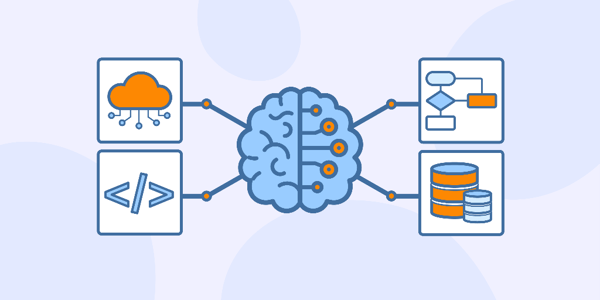
Machine learning is changing what companies expect from senior engineers. Building a model is only one part of the job. Senior engineers are expected to design ML systems that scale in production while accounting for data quality, infrastructure, latency, reliability, cost, and business requirements. ML system design is a core skill for senior AI and machine learning roles. I created this course based on my experience designing large-scale systems at Microsoft and Meta, where I worked on infrastructure and real-time analytics, and interviewed hundreds of candidates. The biggest pattern I saw was that even strong engineers struggled to structure ambiguous ML system design problems and communicate trade-offs clearly. This course introduces the 6-step framework I developed to solve that gap. In this course, you'll master a 6-step ML system design framework that covers everything from problem formulation and requirements gathering to data strategy, model architecture, evaluation, and production deployment. You'll work through real-world case studies spanning recommendation systems, fraud detection, semantic search, content moderation, and LLM-powered applications, tackling the exact challenges faced in interviews. If you're serious about mastering ML system design interviews, this is the best place to start.
In this blog, you will learn how to approach designing a machine learning system step by step. The focus is not just on theoretical concepts but on the practical engineering decisions that turn an experiment into a reliable product.
Start With the Problem, Not the Model#

One of the most common mistakes engineers make when designing machine learning systems is starting with the algorithm instead of the problem. Machine learning should never be the goal itself. Instead, it should serve a clearly defined business or product objective.
Before thinking about models, you should spend time defining what success actually means for your project. In many cases, teams rush into training models without clearly defining evaluation criteria or understanding how predictions will be used in the product.
A useful way to frame the problem is to translate the business objective into a measurable prediction task. For example, a recommendation engine might aim to predict which products a user is likely to interact with, while a fraud detection system might aim to estimate the probability that a transaction is fraudulent.
The table below shows how product goals often translate into machine learning tasks:
Product Objective | Machine Learning Task | Typical Output |
Recommend content to users | Ranking or recommendation model | Ordered list of items |
Detect fraudulent transactions | Binary classification | Fraud probability |
Predict product demand | Time series forecasting | Future demand values |
Identify spam emails | Classification | Spam likelihood |
When you begin with the problem definition, you create alignment between engineering efforts and product outcomes. This alignment prevents wasted effort and ensures that the machine learning system delivers measurable value.
Grokking the Machine Learning Interview

Machine learning interviews at top tech companies now focus more on open-ended system design problems. “Design a recommendation system.” “Design a search ranking system.” “Design an ad prediction pipeline.” These questions evaluate your ability to reason about machine learning systems end-to-end. However, most candidates prepare for isolated concepts instead of system-level design. This course focuses specifically on building that System Design muscle. You’ll work through 9 real-world ML System Design problems (the same questions asked at Meta, Google, Amazon, and Microsoft) and learn a repeatable methodology for breaking each one down: defining the problem, choosing metrics, selecting model architectures, designing data pipelines, and evaluating trade-offs. Each system you design builds on practical ML techniques covered earlier in the course: embeddings, transfer learning, online experimentation, model debugging, and performance considerations. By the time you’re designing your third or fourth system, you'll have the technical vocabulary and judgment to explain why your design choices work. This is exactly what interviewers are looking for. The course also includes 6 mock interviews so you can practice articulating your designs under realistic conditions. If you have an ML or System Design interview coming up at any major tech company, this course will help you walk in with a clear framework for tackling whatever they throw at you.
Understand the Data Landscape#
Once the problem is clearly defined, the next step is understanding the data that will power the system. Machine learning models depend heavily on data quality, availability, and structure, which means data exploration should happen before model design.
At this stage, you should analyze where the data comes from, how frequently it updates, and whether it reflects the real-world environment where the model will operate. Many machine learning projects fail not because of algorithm limitations but because the training data does not represent production conditions.
You should also evaluate whether the dataset contains enough examples to support reliable learning. Sparse datasets often lead to unstable models that perform well during experimentation but fail once deployed.
The following table summarizes common data considerations in machine learning System Design:
Data Factor | Questions to Ask | Impact on System Design |
Data Volume | How much historical data is available? | Determines model complexity |
Data Freshness | How often is the data updated? | Affects retraining frequency |
Label Quality | Are labels accurate and consistent? | Influences model reliability |
Data Distribution | Does training data match production data? | Prevents performance drift |
Understanding these factors early allows you to design a system that is robust rather than fragile.
Design the Data Pipeline#
After evaluating your data sources, you need to design the pipeline that transforms raw data into model-ready features. In real-world systems, data pipelines often represent the most complex part of the architecture.
Your pipeline must collect data from multiple sources, clean it, transform it into structured features, and store it in a format that the model training process can access. The pipeline must also remain reliable over time, since any disruption in the data flow can impact predictions.
A typical machine learning pipeline contains several stages that convert raw data into usable inputs.
Pipeline Stage | Description | Purpose |
Data Ingestion | Collecting data from logs, APIs, or databases | Ensures consistent input streams |
Data Cleaning | Handling missing values and inconsistencies | Improves model accuracy |
Feature Engineering | Transforming raw variables into meaningful features | Enhances predictive power |
Feature Storage | Storing features in a centralized repository | Enables consistent training and inference |
Feature stores have become increasingly important in modern machine learning systems because they ensure that the features used during training are identical to those used during inference. Without this consistency, models may behave unpredictably in production.
Choose the Right Modeling Approach#
Once your data pipeline is established, you can begin thinking about model selection. However, selecting a model should be guided by the characteristics of the data and the requirements of the machine learning system.
For many real-world applications, simpler models often outperform complex ones because they are easier to train, interpret, and maintain. Linear models, decision trees, and gradient boosting models remain widely used in production systems because they strike a strong balance between performance and operational simplicity.
Deep learning models are valuable when working with high-dimensional data such as images, text, or speech, but they introduce additional complexity in terms of infrastructure and training requirements.
The following table compares common modeling approaches:
Model Type | Best Use Cases | Key Advantages |
Linear Models | Structured tabular data | Fast training and interpretability |
Tree-Based Models | Ranking and tabular datasets | Strong performance with minimal tuning |
Neural Networks | Image, text, and speech tasks | High representational power |
Ensemble Models | Complex prediction tasks | Improved accuracy through combined models |
The best approach often involves starting with a simple baseline model and gradually improving it through feature engineering and model tuning.
Define Evaluation Metrics Carefully#
Evaluation metrics determine whether your machine learning system is successful, so choosing the right metrics is essential. Accuracy alone rarely tells the full story, especially when dealing with imbalanced datasets or real-world constraints.
For example, in a fraud detection system, missing fraudulent transactions might be far more costly than incorrectly flagging legitimate ones. In such cases, metrics like precision, recall, or F1 score provide more meaningful insights.
Your evaluation strategy should also include offline evaluation during model training and online evaluation once the system is deployed.
Metric | Best Used For | Insight Provided |
Accuracy | Balanced datasets | Overall correctness |
Precision | Fraud or anomaly detection | False positive control |
Recall | Safety-critical applications | False negative reduction |
AUC-ROC | Ranking or classification | Overall ranking performance |
By aligning metrics with business objectives, you ensure that improvements in model performance translate into real-world impact.
Design the Training Infrastructure#
Training infrastructure determines how efficiently your system can build and update models. While small experiments may run on local machines, production systems often require scalable training environments.
Your training pipeline should automate dataset preparation, model training, evaluation, and artifact storage. Automation reduces human error and allows teams to reproduce experiments reliably.
Many teams adopt machine learning workflow tools that orchestrate training pipelines across distributed compute resources. These systems manage dependencies between tasks and ensure that experiments remain reproducible.
The table below highlights key training infrastructure components:
Component | Role | Benefit |
Training Pipeline | Automates model training steps | Ensures consistency |
Experiment Tracking | Logs parameters and results | Enables reproducibility |
Model Registry | Stores trained models | Supports deployment management |
Distributed Training | Uses parallel compute resources | Accelerates model training |
A well-designed training infrastructure saves time and enables teams to iterate quickly.
Plan for Model Deployment#
Model deployment is where machine learning systems transition from experimentation to real-world usage. This stage requires integrating the trained model into an application or service that can generate predictions for users or downstream systems.
Deployment strategies vary depending on the use case. Some systems generate predictions in real time, while others perform batch predictions periodically.
Deployment Type | Use Case | Example |
Real-Time Inference | Immediate predictions | Recommendation systems |
Batch Inference | Periodic prediction generation | Demand forecasting |
Streaming Inference | Continuous prediction flow | Fraud detection |
Real-time systems require low-latency infrastructure, while batch systems prioritize throughput and cost efficiency.
Implement Monitoring and Feedback Loops#
Once your machine learning system is deployed, the work is not finished. Production models can degrade over time as data distributions change, user behavior evolves, or external conditions shift.
Monitoring systems track metrics such as prediction accuracy, data drift, and model latency. These metrics help engineers detect when models require retraining or adjustments.
Feedback loops are particularly valuable because they allow systems to learn continuously from new data. When predictions generate new labeled data, that data can feed back into the training pipeline.
A monitoring framework might track metrics like the following:
Monitoring Signal | Purpose |
Data Drift | Detects changes in input distributions |
Model Performance | Measures prediction accuracy over time |
Prediction Latency | Ensures response times remain acceptable |
Error Rates | Identifies system failures |
Continuous monitoring transforms machine learning from a static model into an adaptive system.
Consider Scalability and Long-Term Maintenance#
Machine learning systems often start as small experiments but eventually grow into large production services. Designing with scalability in mind prevents costly redesigns later.
Scalability involves both infrastructure and organizational considerations. As systems grow, multiple teams may depend on shared data pipelines, feature stores, and model services.
A scalable architecture typically separates components into independent services that communicate through APIs or message queues. This modular design allows teams to update individual components without disrupting the entire system.
Document the System Architecture#
Documentation is often overlooked in machine learning projects, yet it plays a critical role in long-term success. Clear documentation helps new team members understand the system and ensures that decisions remain transparent.
Your documentation should describe the system architecture, data sources, training pipeline, deployment process, and monitoring strategy. Including diagrams and architecture summaries makes the system easier to maintain.
A documented system becomes easier to debug, extend, and scale as the project evolves.
Final Thoughts#
Designing a machine learning system for a new project requires more than selecting a powerful algorithm. It requires a thoughtful engineering approach that connects problem definition, data pipelines, model training, deployment infrastructure, and monitoring systems into a cohesive workflow.
When you approach machine learning System Design with this broader perspective, you move beyond experimentation and toward building reliable, production-ready solutions. Each stage of the system contributes to the overall success of the project, from data quality to deployment strategy.
As you gain experience designing these systems, the process becomes more intuitive. Instead of seeing machine learning as a single component, you begin to view it as part of a larger engineering ecosystem that continuously evolves and improves.
