How to prepare for a technical interview
Ready to ace your next technical interview? Follow this complete step-by-step preparation roadmap covering coding, System Design, behavioral rounds, and mock interviews. Build confidence, sharpen your skills, and walk into interviews prepared to succeed.
Preparing for a technical interview can feel overwhelming, even if you have years of experience. You might know your stack well. You might ship production code regularly. Yet the moment you receive that interview invite, a different kind of pressure begins to build.
Technical interviews are not just about knowledge. They are about performance under constraint. They test how you think, how you communicate, how you structure solutions, and how you handle ambiguity in real time.
If you are asking how to prepare for a technical interview, you are already on the right track. Preparation is not about cramming algorithms or memorizing System Design templates. It is about building structured competence and confidence over time.
In this guide, you will walk through a complete roadmap that covers coding rounds, System Design interviews, behavioral discussions, project deep dives, and interview-day execution. By the end, you will have a practical strategy that you can apply regardless of whether you are targeting startups or large tech companies.
Grokking Modern System Design Interview
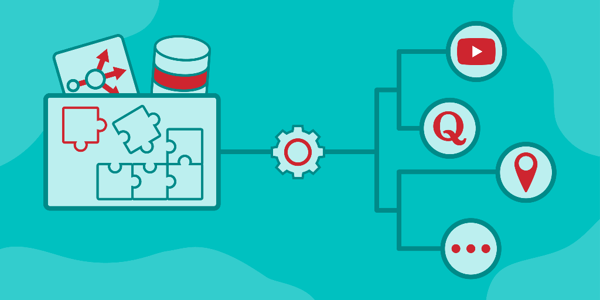
For a decade, when developers talked about how to prepare for System Design Interviews, the answer was always Grokking System Design. This is that course — updated for the current tech landscape. As AI handles more of the routine work, engineers at every level are expected to operate with the architectural fluency that used to belong to Staff engineers. That's why System Design Interviews still determine starting level and compensation, and the bar keeps rising. I built this course from my experience building global-scale distributed systems at Microsoft and Meta — and from interviewing hundreds of candidates at both companies. The failure pattern I kept seeing wasn't a lack of technical knowledge. Even strong coders would hit a wall, because System Design Interviews don't test what you can build; they test whether you can reason through an ambiguous problem, communicate ideas clearly, and defend trade-offs in real time (all skills that matter ore than never now in the AI era). RESHADED is the framework I developed to fix that: a repeatable 45-minute roadmap through any open-ended System Design problem. The course covers the distributed systems fundamentals that appear in every interview – databases, caches, load balancers, CDNs, messaging queues, and more – then applies them across 13+ real-world case studies: YouTube, WhatsApp, Uber, Twitter, Google Maps, and modern systems like ChatGPT and AI/ML infrastructure. Then put your knowledge to the test with AI Mock Interviews designed to simulate the real interview experience. Hundreds of thousands of candidates have already used this course to land SWE, TPM, and EM roles at top companies. If you're serious about acing your next System Design Interview, this is the best place to start.
Understand the Structure of Technical Interviews#

Before you start practicing, you need clarity about what you are preparing for. Technical interviews vary by company, but most follow predictable formats.
At a high level, interviews often include coding rounds, System Design rounds, behavioral discussions, and sometimes a project deep dive. Each of these evaluates different dimensions of your engineering maturity.
The table below outlines common components of technical interviews and what they assess.
Interview Type | What It Tests | Typical Format |
Coding Round | Problem-solving and algorithms | Live coding on a shared editor |
System Design | Architectural thinking | Whiteboard or collaborative discussion |
Behavioral Round | Communication and teamwork | Structured Q&A |
Project Deep Dive | Practical experience | Detailed walkthrough of past work |
When you understand the structure, your preparation becomes targeted instead of scattered.
Grokking the Coding Interview Patterns
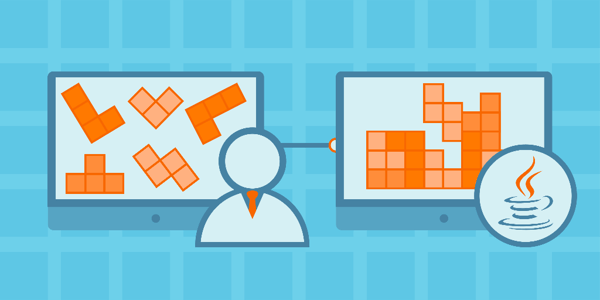
I created Grokking the Coding Interview because I watched too many talented engineers fail interviews they should have passed. At Microsoft and Meta, I saw firsthand what separated the candidates who succeeded from the ones who didn't. It wasn't how many LeetCode problems they'd solved. It was whether they could look at an unfamiliar problem and know how to approach it the right way. That's what this course teaches. Rather than throwing hundreds of disconnected problems at you, we organize the entire coding interview around 28 fundamental patterns. Each pattern is a reusable strategy. Once you understand two pointers, for example, you can apply them to dozens of problems you've never seen before. The course walks you through each pattern step by step, starting with the intuition behind it, then building through increasingly complex applications. As with every course on Educative, you will practice in a hands-on way with 500+ challenges, 17 mock interviews, and detailed explanations for every solution. The course is available in Python, Java, JavaScript, Go, C++, and C#, so you can prep in the language you'll actually use in your interview. Whether you're preparing for your first FAANG loop or brushing up after a few years away from interviewing, this course will give you a repeatable framework for cracking the coding interview.
Strengthening Your Coding Skills the Right Way#
For many roles, the coding round is the first technical filter. If you do not clear this stage, you rarely progress further.
Focus on Problem-Solving Patterns#
Instead of solving random problems, focus on core patterns. Arrays, strings, linked lists, trees, graphs, dynamic programming, and sliding window techniques frequently appear in interviews.
However, solving hundreds of problems without reflection is not effective. You should understand why a solution works, what its time and space complexity are, and how you can improve it.
Practice Thinking Out Loud#
Interviewers evaluate your communication as much as your solution. When you practice coding problems, narrate your thinking process.
Explain assumptions. Discuss tradeoffs. Verbalize edge cases. This habit helps you during live interviews, where silence can be interpreted as confusion.
Simulate Real Interview Conditions#
Practicing without time pressure can create a false sense of comfort. Occasionally, solve problems within a strict time limit.
Also, practice using the same environment you expect during interviews, whether that is a shared editor or whiteboard.
Consistent and structured coding practice builds fluency, not just familiarity.
Preparing for System Design Interviews#
If you are targeting mid-level or senior roles, System Design preparation is essential.
Understand Core Architectural Concepts#
System Design interview questions evaluate your understanding of scalability, availability, consistency, caching, database selection, and tradeoffs.
You should understand concepts such as load balancing, replication, partitioning, message queues, and rate limiting.
However, memorizing architecture diagrams is not enough. You must understand why certain design choices are made.
Practice Structured Design Thinking#
A strong System Design answer follows a clear structure. You begin by clarifying requirements. You define constraints. You outline high-level architecture. Then you dive into components and tradeoffs.
When you practice, simulate this flow intentionally. Structure creates clarity and confidence.
Review Common System Design Questions#
Interviewers often use familiar prompts such as designing a URL shortener, chat system, or social media feed.
Practicing these scenarios helps you recognize recurring architectural patterns.
System Design preparation is about structured reasoning rather than perfection.
Preparing for Behavioral Interviews#
Many candidates underestimate behavioral rounds. Yet companies frequently weigh communication and cultural alignment heavily.
Reflect on Past Experiences#
Behavioral questions often begin with phrases such as “Tell me about a time when…” These questions evaluate how you handle conflict, failure, leadership, and ambiguity.
Reflect on your past projects. Identify specific examples that demonstrate problem-solving, collaboration, and adaptability.
Use Structured Storytelling#
A clear narrative structure strengthens your answers. Describe the situation, explain your task, outline the actions you took, and share the results.
Structured storytelling prevents rambling and keeps your answers focused.
Strong behavioral preparation enhances your overall performance.
Reviewing Your Past Projects Deeply#
Technical interviews often include a project deep dive. Interviewers may ask you to explain architecture decisions, tradeoffs, and implementation details.
Know Your Codebase Thoroughly#
Be prepared to discuss why certain technologies were chosen. Explain constraints and lessons learned.
If you mention scaling challenges or performance optimizations on your resume, expect detailed follow-up questions.
Anticipate Edge Cases#
Interviewers may challenge your design decisions. They may ask what you would change if given more time.
Thinking critically about your own work demonstrates maturity and honesty.
A well-prepared project discussion can differentiate you significantly.
Creating a Structured Preparation Plan#
Preparation becomes effective when it is scheduled intentionally.
Allocate Time Based on Role#
The time you allocate to coding versus System Design depends on your target role.
Role Level | Coding Focus | System Design Focus |
Entry-Level | High | Low |
Mid-Level | High | Moderate |
Senior | Moderate | High |
Align your preparation time with the expectations of your target role.
Build Weekly Practice Blocks#
Consistency matters more than intensity. Instead of cramming for ten hours once a week, practice daily in smaller, focused sessions.
Structured repetition improves retention and reduces anxiety.
Mock Interviews: Turning Preparation into Performance#
Practicing alone is not enough. Mock interviews simulate real pressure.
Why Mock Interviews Matter#
Mock interviews expose communication gaps and timing issues. They reveal weaknesses that silent practice cannot uncover.
When someone interrupts you or challenges your assumptions, you learn to stay composed.
Use Realistic Feedback#
Seek honest feedback. Focus not only on correctness but also on clarity and structure.
Mock interviews bridge the gap between preparation and execution.
Managing Interview Anxiety#
Even well-prepared candidates experience anxiety.
Reframe the Interview#
Instead of viewing the interview as a test, view it as a conversation. The interviewer is evaluating fit, not trying to defeat you.
This mental shift reduces performance pressure.
Prepare Logistics in Advance#
Ensure your environment is ready. Check your internet connection. Familiarize yourself with interview tools.
Reducing logistical uncertainty improves focus.
Confidence grows when preparation meets mindset.
Final Week Preparation Strategy#
As the interview approaches, your focus should shift from learning new topics to reinforcing existing knowledge.
Review Patterns, Not New Problems#
Revisit common coding and System Design patterns. Avoid diving into unfamiliar areas at the last minute.
Consolidation is more effective than expansion in the final days.
Sleep and Recovery#
Cognitive performance depends on rest. Prioritize sleep and balanced routines before your interview.
Mental clarity often matters more than one extra practice problem.
Interview Day Execution#
On the day of the interview, your goal is clarity and communication.
Clarify requirements before coding. Think aloud consistently. Ask questions when uncertain. Discuss tradeoffs openly.
If you encounter a difficult moment, pause briefly and regroup. Structured thinking under pressure leaves a strong impression.
Remember that interviews evaluate reasoning, not perfection.
Final Thoughts#
Preparing for a technical interview is not about cramming information. It is about building structured competence across coding, System Design, behavioral communication, and real-world experience.
When you approach preparation systematically, align practice with your target role, simulate real interview conditions, and manage your mindset intentionally, you transform anxiety into confidence.
Technical interviews are challenging, but they are predictable. With the right preparation strategy, you can walk into your next interview prepared, composed, and ready to perform at your best.