What skills are in demand for Python developer roles right now?
This blog shows what skills are most in demand for Python developer roles right now by focusing on system design, backend, data/AI, cloud skills, and strong engineering fundamentals.
Python has moved far beyond its early perception as a scripting language. It is now deeply embedded in backend services, data platforms, machine learning systems, automation pipelines, and AI-driven products. That expansion means the market no longer rewards “Python knowledge” in isolation. Instead, it rewards engineers who can apply Python within larger systems. Framing what skills are most in demand for Python developer roles right now, as a systems question rather than a checklist helps clarify where sustainable career growth lies.
This blog explores how Python roles have evolved, why certain capabilities are valued more than others, and how you can build a durable skill foundation that remains relevant even as trends shift.
Python has become the foundation for everything from data science and automation to modern AI workflows. Yet many beginners struggle to learn Python because they spend too much time watching and not enough time building. This course is designed for a different kind of learner, one who wants to learn Python by doing, not just observing, and to build skills that remain relevant in an AI-driven development landscape. I built this course from my experience teaching and designing interactive learning systems at Educative. Across classrooms and platforms, I saw the same pattern: learners could follow tutorials, but struggled to apply concepts independently. The problem was the approach. This course is built on a simple principle: you learn Python best when you write, test, and refine code continuously. You’ll start with core fundamentals, variables, control flow, functions, and data structures, through hands-on exercises that reinforce real understanding. As you progress, you’ll build practical projects like a chatbot and an expense tracker. The course also introduces how to learn Python alongside AI tools, including prompting, debugging, and validating generated code in real workflows. If your goal is to learn Python in a way that prepares you to build real applications and work effectively with AI, this course gives you that foundation from day one.
The shift from language fluency to system fluency#
At an early stage in a developer’s journey, mastering syntax and basic libraries feels like the primary goal. However, in the current market, language fluency is assumed. Employers expect competence in Python fundamentals. What differentiates candidates is their ability to build, reason about, and maintain systems.
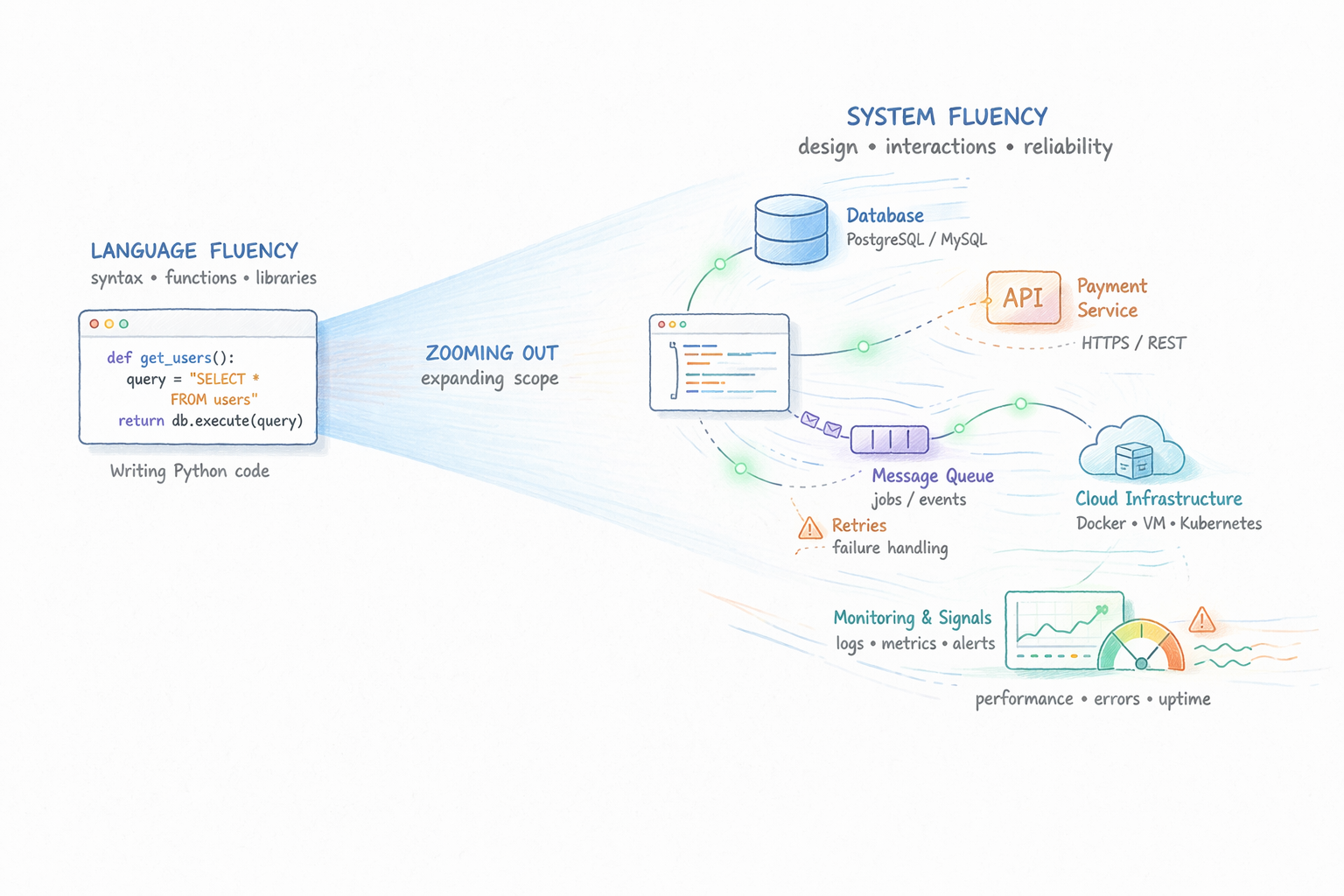
System fluency includes understanding how Python applications interact with databases, APIs, queues, cloud infrastructure, and monitoring tools. It also includes awareness of performance tradeoffs, security considerations, and deployment environments. A Python developer who understands system boundaries and failure modes provides far more value than one who simply knows a framework.
This shift is structural. As software systems grow in scale and complexity, companies need engineers who can design and maintain reliable architectures. Python remains a core language in many of these systems, but demand is anchored in engineering depth rather than tool familiarity.
Core Python engineering fundamentals#
Before exploring specialization areas, it is important to reaffirm that foundational software engineering skills remain central to career growth. Python’s readability can sometimes mask deeper engineering complexity. In reality, writing maintainable Python code requires thoughtful design and discipline.
Core competencies include clean modular design, test-driven development, dependency management, debugging proficiency, and understanding concurrency models. Knowledge of how Python handles memory, asynchronous operations, and performance optimization becomes increasingly important as systems scale.
Foundational skills also include understanding algorithms and data structures, even if Python abstracts some of their complexity. These skills transfer across backend, data, and machine learning roles. They are the anchor that stabilizes your career trajectory.
Backend and API development trends#
Backend development remains one of the most consistent sources of Python demand. Modern backend roles involve building APIs, integrating services, and ensuring reliability in distributed systems. Python frameworks such as Django and FastAPI are widely used, but framework familiarity alone is insufficient.
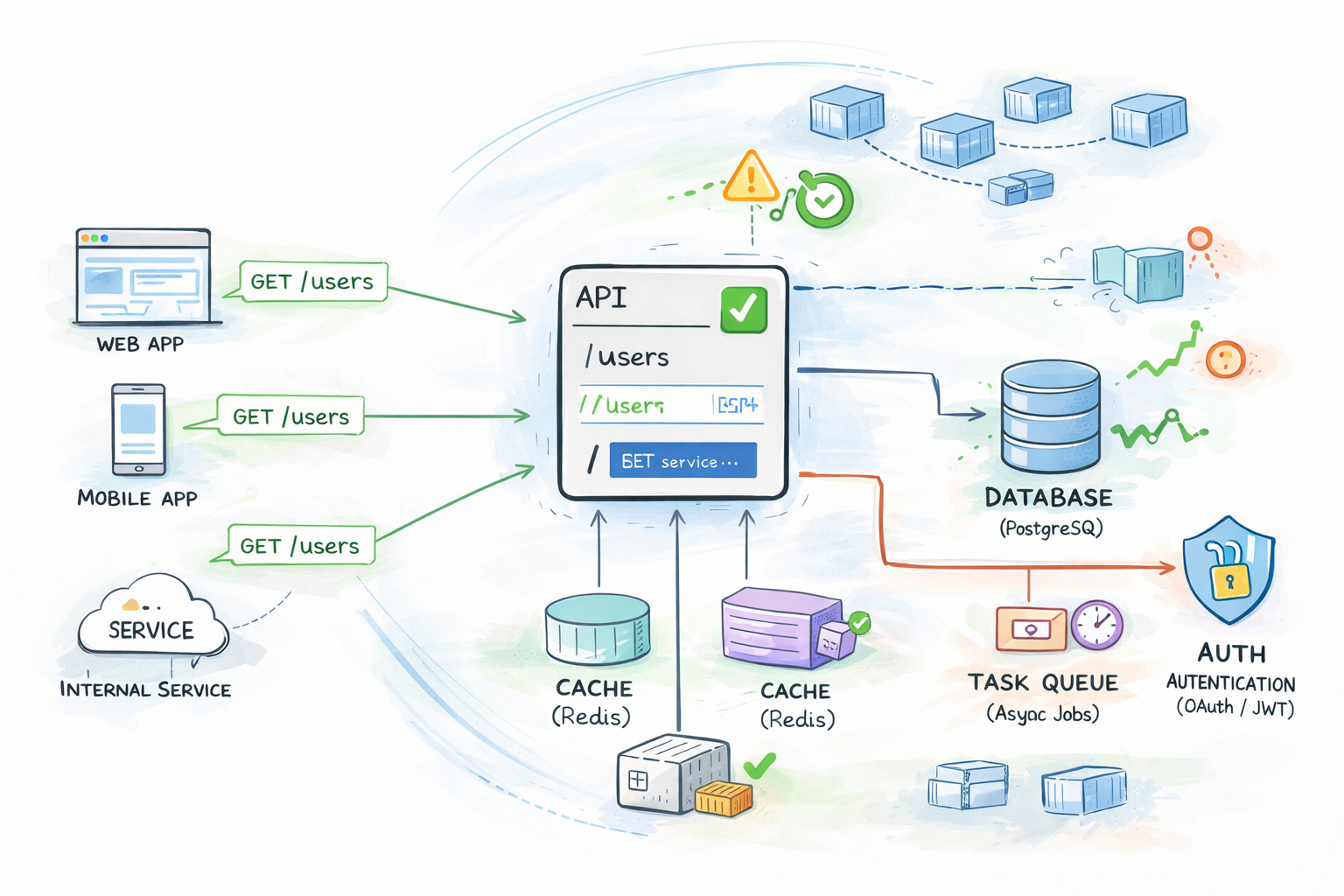
Backend engineers are expected to understand RESTful design principles, authentication mechanisms, caching strategies, database indexing, and asynchronous request handling. Increasingly, they must also understand containerization and deployment workflows. The role blends application logic with infrastructure awareness.
Backend demand is driven by the proliferation of API-driven architectures. Microservices, SaaS products, and internal platforms all rely on stable, well-designed services. Python continues to be a preferred language in many of these contexts because of its developer productivity and ecosystem maturity.
Backend developers are responsible for the server side of web applications. According to a survey of recruiters, backend developers top the list of in-demand tech jobs. This Skill Path is designed for individuals who are interested in becoming backend developers but don't have any programming background. You will learn how to design and build efficient, scalable, and secure backend systems using Python and Django framework. By the end of this Skill Path, you’ll have a strong understanding of backend development concepts and the ability to build and deploy your web applications. Get ready to dive into the exciting world of backend development!
Data engineering and machine learning demand#
Python’s dominance in data science and machine learning has shaped an entire segment of the job market. However, this segment is evolving. Early-stage demand focused on exploratory data analysis and modeling. Today, organizations seek engineers who can operationalize models within production systems.
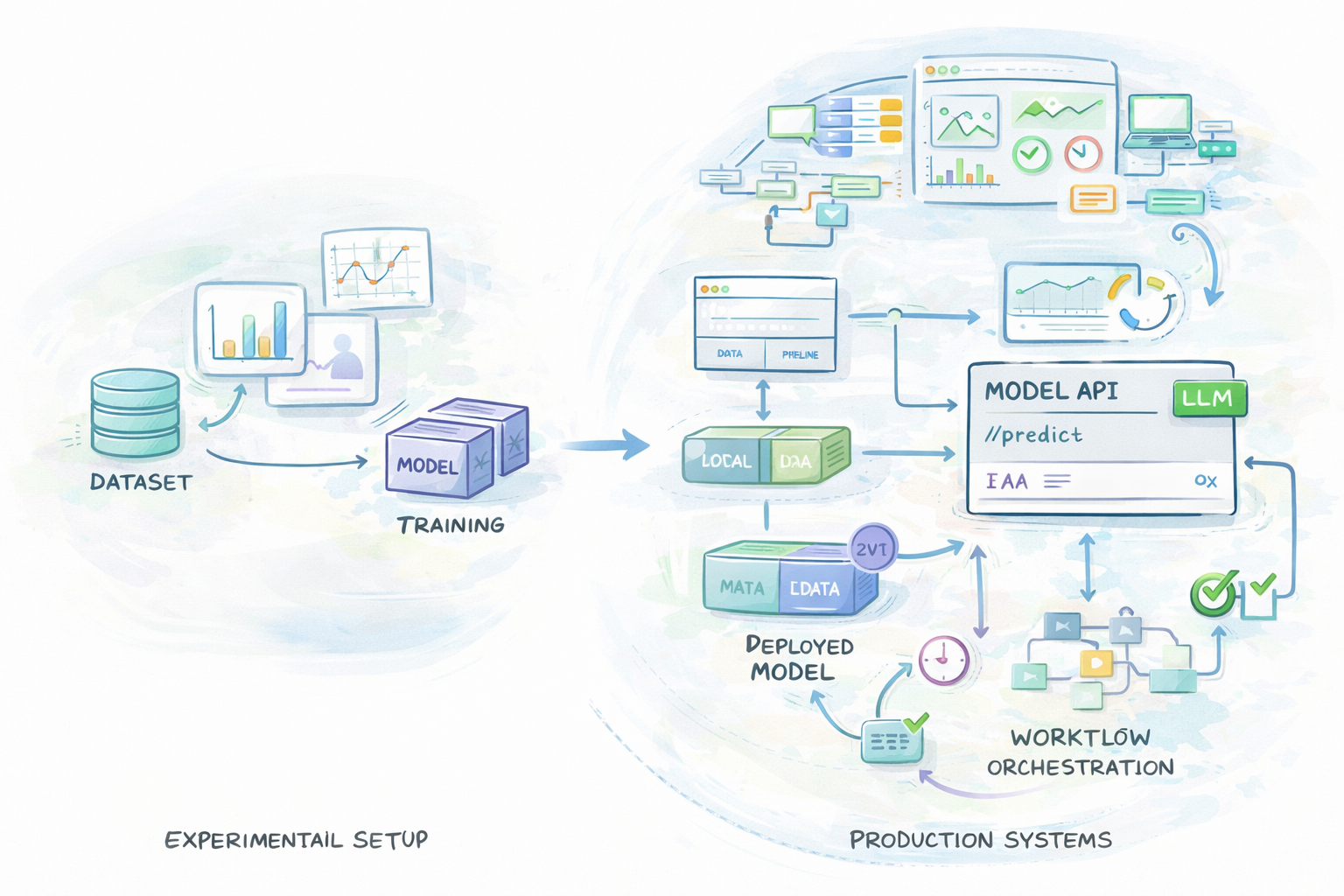
Data engineering roles emphasize building reliable pipelines, orchestrating workflows, and ensuring reproducibility. Machine learning roles increasingly emphasize deployment, monitoring, and lifecycle management rather than model experimentation alone.
The rise of AI-driven applications has intensified this demand. Python engineers working in AI contexts are often expected to integrate large language models into APIs, manage inference latency, and design evaluation pipelines. The value lies in combining ML literacy with engineering discipline.
This course teaches you how to code basic machine learning models. The content is designed for beginners with general knowledge of machine learning, including common algorithms such as linear regression, logistic regression, SVM, KNN, decision trees, and more. If you need a refresher, we have summarized key concepts from machine learning, and there are overviews of specific algorithms dispersed throughout the course.
Infrastructure and cloud literacy#
Cloud adoption has reshaped expectations for developers across all domains. Python engineers are no longer isolated from deployment environments. Understanding containerization, CI/CD pipelines, and cloud service models is becoming baseline rather than optional.
Infrastructure literacy does not mean becoming a DevOps specialist. It means understanding how your Python code runs in production. Can you containerize your application? Do you know how environment variables are managed securely? Are you comfortable deploying to managed cloud services?
Cloud literacy also intersects with cost awareness. As systems scale, inefficient architecture translates directly into financial impact. Engineers who understand resource utilization and scaling tradeoffs contribute more strategically to their teams.
Collaboration and communication#
Technical depth alone is insufficient in today’s collaborative environments. Python developers are expected to participate in code reviews, contribute to architectural discussions, and communicate tradeoffs clearly.
Soft skills include writing clear documentation, explaining design decisions, and collaborating across teams. In data and AI contexts, this often means translating model performance metrics into business implications. In backend contexts, it may involve discussing scalability concerns with product managers.
Demand shifts over time, but collaboration skills consistently increase career leverage. Developers who communicate effectively often transition into leadership or architectural roles more smoothly.
How demand shifts over time#
Technology markets evolve in cycles. Certain domains experience rapid growth, such as AI integration or data platform modernization. Other areas, such as enterprise automation, remain steady but less visible.
Instead of reacting to short-term hype, it is useful to observe structural signals. Widespread cloud adoption and API-first design are long-term shifts. Data-driven decision making is unlikely to reverse. AI integration is expanding but will eventually normalize into standard workflows.
Understanding these patterns helps avoid chasing every emerging tool. Sustainable growth involves aligning your skill development with structural industry changes rather than transient trends.
A structured comparison of skill categories#
To clarify how different competencies align with roles and long-term impact, consider the following perspective:
Skill Category | Role Type | Required Depth | Long-Term Career Value |
Core Software Engineering | All Python roles | Deep and transferable | High stability across domains |
Backend & API Architecture | Backend Engineer, Platform Engineer | Moderate to deep | Enables system design progression |
Data Engineering & ML | Data Engineer, ML Engineer | Domain-specific depth | Strong growth in AI-driven markets |
Cloud & Infrastructure Literacy | Full-stack, Platform, ML Engineer | Working knowledge plus practical experience | Expands deployment and leadership opportunities |
Collaboration & Communication | Cross-functional teams | Continuous development | Critical for senior and leadership roles |
This comparison underscores that market demand spans both technical specialization and foundational breadth.
Addressing a common misconception#
“Learning more frameworks automatically increases employability.”
Framework familiarity can open doors, but it does not guarantee long-term value. Frameworks change. Architectural principles endure. Employers prioritize engineers who can adapt, reason about systems, and learn new tools efficiently. Depth often outweighs superficial breadth.
A conceptual roadmap for sustainable growth#
Building a sustainable Python career requires deliberate progression rather than reactive learning. Consider this structured approach:
Strengthen foundational engineering skills.Focus on clean code, testing practices, version control, and debugging. Ensure your Python fundamentals are solid before layering specialization.
Choose a domain of application.Decide whether backend systems, data engineering, or ML engineering aligns with your interests. Build depth in one area rather than sampling many superficially.
Expand into infrastructure awareness.Learn how your code is deployed and monitored. Understand containerization and basic cloud workflows.
Develop cross-functional communication skills.Practice explaining technical decisions clearly. Participate actively in code reviews and architectural discussions.
This roadmap emphasizes compounding capability rather than chasing novelty.
The evolving landscape of Python roles#
Python’s adaptability ensures its continued relevance, but its usage contexts continue to expand. Developers who integrate Python with cloud-native architectures, data platforms, and AI workflows position themselves at the center of modern engineering ecosystems.
At the same time, organizations still need reliable backend services, automation scripts, and integration layers. Not every company is building AI systems, but almost every company relies on software reliability and data processing.
The key insight is balance. Specialization should rest on a strong engineering foundation. Trends should be interpreted through the lens of system design rather than hype cycles.
Final words#
What skills are most in demand for Python developer roles right now? The answer lies in the convergence of strong engineering fundamentals, system-oriented backend development, data and AI literacy, infrastructure awareness, and collaborative capability. Demand favors depth, adaptability, and architectural thinking.
Rather than chasing every emerging tool, focus on building durable competencies that transfer across domains. Python remains a powerful vehicle for system development, but long-term career growth depends on how effectively you integrate it into evolving industry needs.
Happy learning!
