Graph Valid Tree
Understand how to identify whether a graph is a valid tree by checking connectivity and absence of cycles. Explore graph concepts like nodes, edges, and graph validation to implement a solution that ensures all nodes are connected without any cycles.
We'll cover the following...
Statement
Given n as the number of nodes and an array of the edges of a graph, find out if the graph is a valid tree. The nodes of the graph are labeled from to , and represents an undirected edge connecting the nodes and of the graph.
A graph is a valid tree when all the nodes are connected and there is no cycle between them.
Constraints:
-
n -
edges.length edges[i].length- ,
n - There are no repeated edges.
Examples
Understand the problem
Let’s take a moment to make sure you’ve correctly understood the problem. The quiz below helps you check if you’re solving the correct problem:
Graph Valid Tree
Consider the following graph with four nodes:
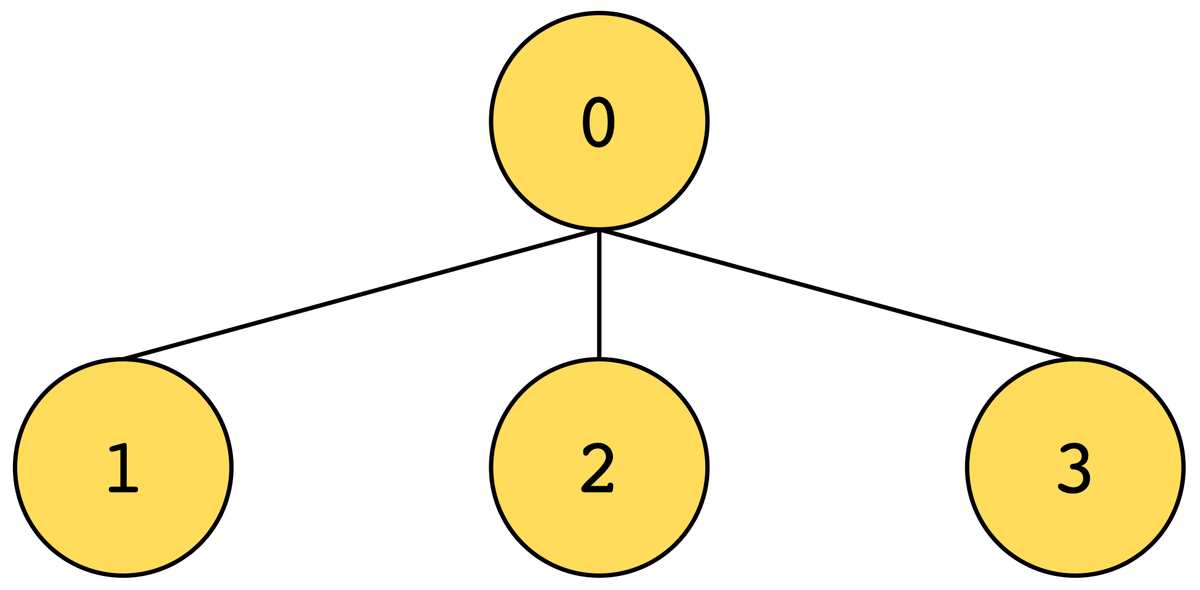
What is the correct array of connected edges that would make the graph above?
edges = [[0, 1], [0, 2], [0, 3]]
edges = [[0, 1], [0, 2], [1, 2]]
edges = [[0, 1], [0, 2], [2, 3]]
Figure it out!
We have a game for you to play. Rearrange the logical building blocks to develop a clearer understanding of how to solve this problem.
Try it yourself
Implement your solution in the following coding playground.
package mainfunc validTree(n int, edges [][]int) bool {// Replace this placeholder return statement with your codereturn false;}