What is context engineering? Designing effective AI system inputs
Move beyond prompt tweaks. Learn what context engineering is and how to structure AI inputs with instructions, examples, and data to build more accurate, reliable, and production-ready AI systems.
Modern artificial intelligence systems, particularly large language models, rely heavily on the information provided in their input context. When a model generates a response, it does not access a persistent knowledge base in the same way a traditional database system would. Instead, it relies on the information present in the input it receives at that moment. The instructions, examples, conversation history, and additional data included in this input strongly influence how the model interprets a task and generates its response.
As developers begin building applications powered by language models, many eventually encounter the question what is context engineering and why it has become an important concept in modern AI development. While early experimentation with language models focused primarily on prompt wording, more advanced systems require careful design of the entire context provided to the model.
Context engineering refers to the practice of structuring the information provided to an AI system so that the model receives the most relevant knowledge and instructions needed to produce accurate and useful outputs. By carefully designing the context, developers can guide the model’s reasoning process, improve accuracy, and reduce incorrect or irrelevant responses.
Understanding how context works and how it can be engineered effectively is essential for building reliable AI-powered applications.
Mastering MCP: Building Advanced Agentic Applications
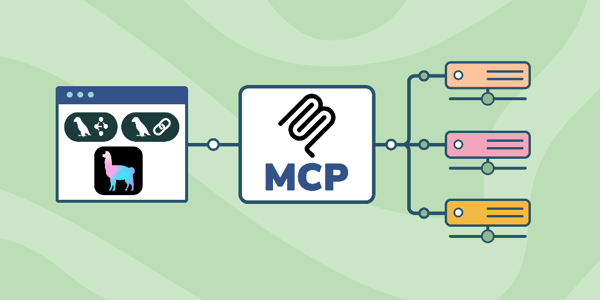
The Model Context Protocol (MCP) is emerging as a foundational layer for building reliable, context-aware AI systems. As LLM-powered applications grow more complex, the limitation is how effectively you manage context, orchestrate tools, and ensure consistent behavior across systems. Mastering MCP is quickly becoming essential for anyone serious about production-grade AI. I built this course from my work in adaptive AI systems and intelligent orchestration, where managing context across distributed components is often the defining challenge. A consistent pattern I observed was that developers could build isolated AI features, but struggled to design systems that maintain coherence, memory, and control at scale. MCP provides that missing structure, and this course is designed to make it practical. You’ll learn the Model Context Protocol (MCP) through its architecture, lifecycle, and communication patterns, then apply it in hands-on projects including single- and multi-server systems. You’ll integrate MCP with frameworks like LlamaIndex, implement retrieval-augmented generation (RAG), and build observability through authentication, logging, and debugging, culminating in a multimodal Image Research Assistant. Developers are already using MCP to build scalable AI systems. If you want to move from demos to production-ready architectures, this is where you start.
AI context overview section#
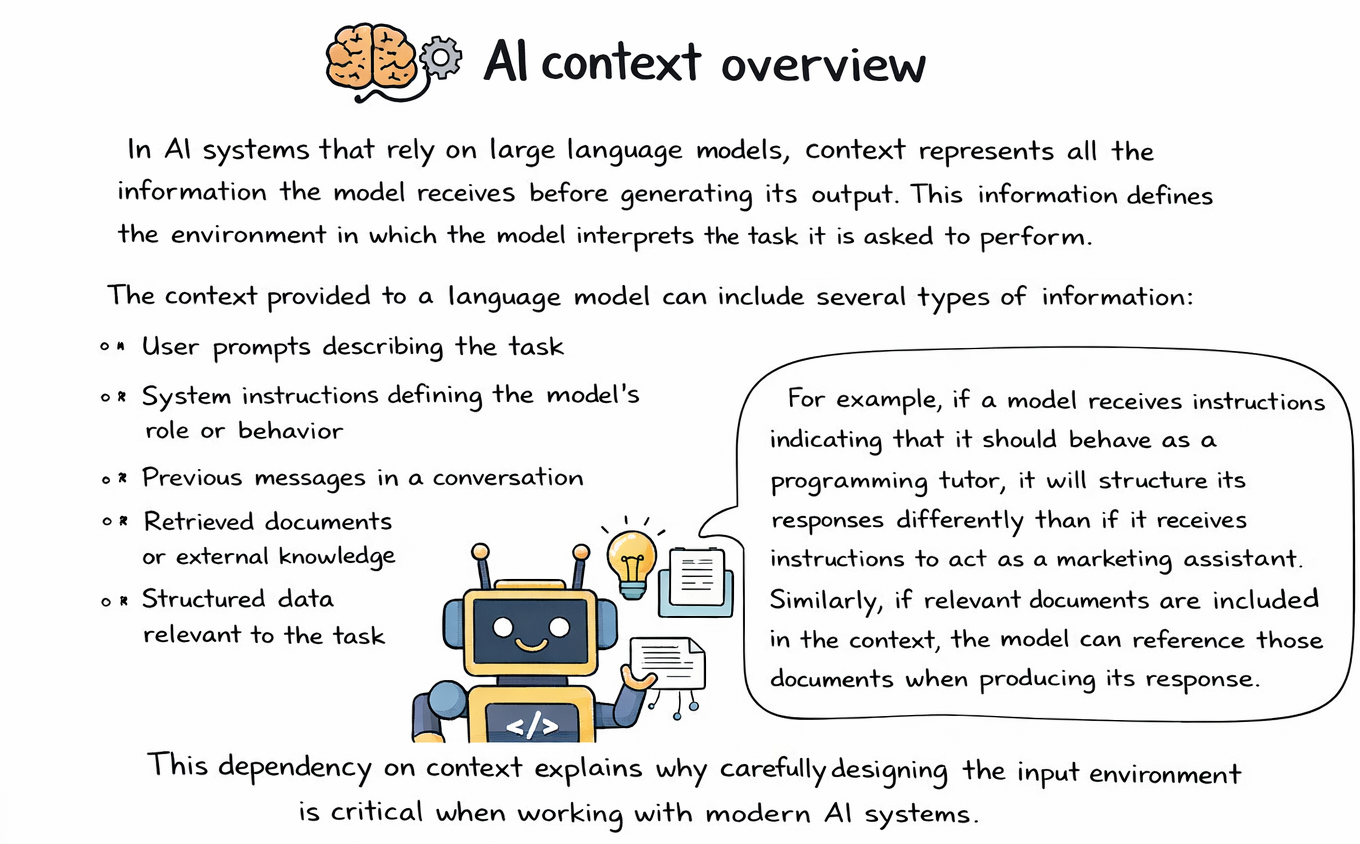
In AI systems that rely on large language models, context represents all the information the model receives before generating its output. This information defines the environment in which the model interprets the task it is asked to perform.
The context provided to a language model can include several types of information:
User prompts describing the task
System instructions defining the model’s role or behavior
Previous messages in a conversation
Retrieved documents or external knowledge
Structured data relevant to the task
Because language models generate responses based on patterns found within the input context, the content and structure of that context strongly influence the final output.
For example, if a model receives instructions indicating that it should behave as a programming tutor, it will structure its responses differently than if it receives instructions to act as a marketing assistant. Similarly, if relevant documents are included in the context, the model can reference those documents when producing its response.
This dependency on context explains why carefully designing the input environment is critical when working with modern AI systems.
Agentic System Design

Agentic system design is rapidly redefining how modern AI systems are built, moving from single-model interactions to autonomous, multi-step systems that can reason, plan, and act. As large language models evolve, the real challenge is no longer just using them, but orchestrating them into reliable, goal-driven agents that operate safely and effectively in real-world environments. I built this course from my work in adaptive AI and intelligent systems, where designing autonomous behavior requires more than model accuracy. It demands structured reasoning, control, and safety. A recurring pattern I observed was that teams could experiment with LLMs, but struggled to design cohesive agentic systems that could handle ambiguity, coordinate tasks, and remain aligned with user intent. This course is designed to bring that structure. You will study real-world examples, including the Multi-Agent Conversational Recommender System (MACRS), NVIDIA’s Eureka for reward generation, and advanced agents navigating live websites and creating complex images. Drawing on insights from industry deployments and cutting-edge research, you will gain the foundational knowledge to confidently start designing your agent-based systems. Engineers and researchers are already using these patterns to build next-generation AI systems. If you want to design agents that go beyond prompts and into action, this is where to begin.
Context engineering explanation#
To understand what is context engineering, it is helpful to view the concept as an extension of prompt engineering. While prompt engineering focuses on crafting a single prompt or instruction, context engineering involves designing the entire set of information the model receives during inference.
Context engineering involves intentionally organizing multiple components that collectively guide the model’s behavior. These components may include system instructions, task descriptions, examples, retrieved documents, and structured data sources.
Several elements commonly appear in well-designed AI context environments.
System instructions define the role and behavior expected from the model. These instructions establish the perspective the model should adopt when responding.
Examples and demonstrations illustrate how tasks should be solved. These examples help the model infer the desired format or reasoning pattern.
External knowledge retrieval provides the model with relevant information that may not be contained in its training data. This technique is commonly used in retrieval-augmented generation systems.
Structured task instructions clearly define the objective the model must achieve.
By combining these elements, developers can create a context that guides the model toward producing more reliable and useful outputs.
Prompt engineering vs context engineering#
Although prompt engineering and context engineering are related concepts, they differ in scope and design philosophy.
Concept | Focus | Approach |
Prompt engineering | Crafting individual prompts | Improving phrasing and instructions |
Context engineering | Structuring the entire input context | Combining prompts, examples, and data |
Prompt engineering typically focuses on improving the wording of a single prompt. Developers may experiment with different instructions or phrasing to obtain better results.
Context engineering expands this concept by designing the entire environment in which the model operates. Instead of focusing solely on the prompt, developers organize all the information that the model will receive.
This broader perspective explains why discussions about what is context engineering have become increasingly common among developers building sophisticated AI systems.
Why context engineering matters#
Large language models generate responses by analyzing patterns in the input context. Because the model has no direct access to external databases during inference, it relies entirely on the information provided within that context.
Well-designed context can significantly improve model performance in several ways.
First, it improves reasoning accuracy. When relevant data and instructions are included in the context, the model can use this information when generating its reasoning steps.
Second, it reduces hallucinated responses. Providing authoritative information within the context decreases the likelihood that the model will generate unsupported claims.
Third, context engineering helps guide the model toward specific tasks or behaviors. Clear instructions and examples help the model interpret the intended objective.
Fourth, it enables the model to incorporate external knowledge. Retrieval systems can provide documents or datasets that enrich the model’s responses.
These advantages make context engineering an essential technique when building production-level AI applications.
Step-by-step context design example#
A simple example illustrates how context engineering can improve the quality of model responses.
Step 1: Define system instructions#
The context often begins with instructions defining the role the model should play.
Example:“You are a software engineering tutor explaining programming concepts in clear and structured language.”
These instructions establish the expected style and behavior of the model.
Step 2: Provide relevant examples#
The context may include example questions and answers that demonstrate how responses should be structured.
These examples help the model infer the format and reasoning pattern expected in the final output.
Step 3: Include external knowledge#
If the task involves specialized information, the system may retrieve relevant documents or reference material and include them in the context.
This information provides the model with authoritative knowledge to reference.
Step 4: Provide the user query#
The final component of the context contains the user’s request. Because the previous elements define the environment, the model can interpret the query with greater clarity.
This structured design demonstrates how understanding what is context engineering can help developers create AI systems that generate more reliable outputs.
Real-world applications section#
Context engineering plays an important role in many modern AI applications. As organizations deploy language models in real-world environments, they increasingly rely on structured context design to control system behavior.
Retrieval-augmented generation systems represent one of the most prominent examples. These systems retrieve relevant documents from external databases and include them in the model’s context before generating a response.
AI coding assistants also rely heavily on context engineering. These tools include code snippets, documentation, and previous conversation history in the context so that the model can provide accurate programming assistance.
AI-powered research tools use context engineering to analyze large volumes of documents. By providing the model with relevant research papers or datasets, these systems enable more accurate summaries and analysis.
Customer support systems also depend on context engineering. These systems include product documentation, previous customer interactions, and troubleshooting guides in the model’s context so that the AI can provide useful responses.
These examples illustrate why understanding what is context engineering is increasingly important for developers building advanced AI applications.
Challenges in designing context#
Designing effective context environments presents several technical challenges.
One challenge involves context length limitations. Language models have finite context windows that limit how much information can be provided at once. Developers must carefully select which information is most relevant.
Another challenge involves identifying the most useful information for a given task. Including too much irrelevant data may confuse the model and degrade performance.
Conflicting instructions within the context can also create problems. If multiple instructions contradict each other, the model may produce inconsistent responses.
Maintaining consistent responses across long conversations is another difficulty. As conversation history grows, the system must determine which parts of the context remain relevant.
Addressing these challenges requires thoughtful design and experimentation when building AI-powered systems.
FAQ section#
How is context engineering different from prompt engineering?#
Prompt engineering focuses primarily on crafting a single prompt or instruction to guide model behavior. Context engineering takes a broader perspective by designing the entire set of information the model receives. This includes instructions, examples, retrieved documents, and conversation history.
Why do AI systems depend so heavily on context?#
Language models do not actively query external knowledge sources during inference. Instead, they generate responses based entirely on the information contained in the input context. Providing relevant information in the context allows the model to produce more accurate and reliable responses.
Can context engineering improve reasoning in language models?#
Yes, well-designed context can significantly improve reasoning performance. When relevant information, examples, and structured instructions are included in the input context, the model has a clearer understanding of the problem it must solve.
What tools help developers design better AI context?#
Several tools support context engineering workflows. Retrieval systems, vector databases, document embedding pipelines, and prompt management frameworks help developers organize and deliver relevant information to language models.
Conclusion#
Large language models rely heavily on the information provided in their input context when generating responses. The design of this context strongly influences the accuracy, relevance, and reasoning quality of the model’s outputs.
Understanding what is context engineering allows developers to move beyond simple prompt design and instead build structured information environments that guide model behavior. By carefully organizing instructions, examples, and relevant knowledge, developers can create AI systems that produce more accurate, reliable, and useful responses.
As AI systems continue to evolve, context engineering will remain a critical skill for anyone building applications powered by large language models.
Happy learning!