Yes, Java is excellent for coding interviews. It’s a popular and widely used programming language in the industry and effectively supports core data structures and algorithms. Java’s strong typing and object-oriented features help write clear, maintainable code, making it a solid choice for technical interviews.
Updated today
Save this course
Grokking the Coding Interview Patterns
Grokking the Coding Interview saves you countless hours of grinding LeetCode. Master 40+ coding patterns behind most coding interview problems. Developed by and for MAANG engineers.
Select your Language
Select your Language
Created by Fahim ul Haq

What's included
- 1125 lessons across 41 modules
- 579 quizzes with instant feedback
- with scoring rubrics
- on every lesson
- Ace MAANG Coding InterviewsSolve unseen problems under pressure in timed technical loops.
- Crack Unfamiliar Problems FastMap any new question to a proven strategy within minutes.
- Optimize Code in ProductionSpot slow paths and choose leaner algorithms in code reviews.
- Defend Your Solution ChoicesExplain complexity and trade-offs clearly to interviewers and peers.
Fahim ul Haq
Software Engineer, Distributed Storage at Meta and Microsoft, Educative (Co-founder & CEO)
Fahim ul Haq is the co-founder and CEO of Educative, a hands-on learning platform for software engineers. He spent nearly a decade as a software engineer at Microsoft and Meta, where he gained deep experience building large-scale distributed systems. His work spanned Project Red Dog at Microsoft, which evolved into Microsoft Azure, and Scuba, Meta's real-time data analytics engine. In 2015, Fahim co-founded Educative to help developers get hands-on with new skills. Fahim's courses have helped hundreds of thousands of engineers learn System Design and prepare for technical interviews. Fahim earned his M.S. in Computer Science from the University of Washington in 2015.
Join 3.1 million developers at
Join 3.1 million developers at
What you'll learn
- Identify and apply coding interview patterns to solve algorithmic problems effectively
- Utilize data structures such as arrays, linked lists, stacks, and queues in coding challenges
- Implement sorting and searching algorithms to optimize problem-solving efficiency
- Analyze and apply dynamic programming techniques to tackle complex problems
- Employ graph algorithms to solve connectivity and traversal challenges
- Develop proficiency in string manipulation and pattern recognition for coding interviews
Learning Roadmap
1.
Master the Two Pointers pattern: move two pointers through arrays, strings, or linked lists to find pairs, reverse, or partition data in linear time without nested loops.
2.
Learn the Fast and Slow Pointers pattern: move two pointers at different speeds to detect cycles, find middle nodes, and solve linked list problems in O(1) space.
3.
Use the Sliding Window pattern to process subarrays and substrings with a fixed or dynamic window, replacing nested loops with linear-time solutions.
4.
Solve interval problems with confidence: merge overlapping ranges, insert new intervals, and find intersections or gaps for scheduling and timeline challenges.
5.
Reverse, reorder, and modify linked lists in place by rewiring node pointers, solving classic linked list problems in O(1) extra space without building new lists.
6.
Use the Two Heaps pattern to split data between a min-heap and a max-heap, giving fast access to middle values for problems like finding the median of a data stream.
7.
Learn K-way Merge to combine k sorted arrays, lists, or streams into one sorted output using a min-heap, solving merge and kth-smallest problems efficiently.
8.
Find the k largest, smallest, or most frequent elements with the Top K Elements pattern, using heaps to handle large or streaming data without sorting everything.
9.
Adapt binary search to find targets, first and last occurrences, peaks, and elements in rotated sorted arrays, cutting the search space in half at every step.
10.
Generate all subsets, combinations, and permutations with the Subsets pattern, using backtracking, iteration, or bit manipulation to explore every choice.
11.
Learn greedy algorithms that make the locally optimal choice at each step to reach a global optimum, solving scheduling, interval, and allocation problems efficiently.
12.
Master backtracking to explore every possible choice, undo dead ends, and solve constraint problems like N-Queens, Sudoku, permutations, and combination sums.
13.
Solve complex problems with dynamic programming by breaking them into overlapping subproblems and reusing stored results through memoization or tabulation.
14.
Use Cyclic Sort to place numbers from a 1 to n range at their correct index in place, quickly finding missing, duplicate, or misplaced numbers in O(n) time.
15.
Learn Topological Sort to order nodes in a directed acyclic graph by their dependencies, solving course scheduling, build order, and task sequencing problems.
16.
Combine sorting with binary search to organize data first and then query it fast, solving pairing, closest-value, and range problems more efficiently.
17.
Solve matrix problems by traversing and transforming 2D grids: rotate, spiral, search, and update cells by row and column to master common grid challenges.
18.
Use stacks and their last-in, first-out order to solve problems like balanced parentheses, expression evaluation, and undo operations with clean, efficient logic.
19.
Learn graph fundamentals: represent nodes and edges, then traverse and analyze their connections to solve problems on networks, relationships, and paths.
20.
Use Tree Depth-First Search to explore each branch fully before backtracking, solving path sum, tree height, and traversal problems with recursion or a stack.
21.
Use Tree Breadth-First Search to visit nodes level by level with a queue, solving level order traversal, minimum depth, and tree view problems efficiently.
22.
Learn the Trie (prefix tree) data structure to store words character by character, enabling fast prefix search, autocomplete, and word lookup.
23.
Use hash maps to store key-value pairs with near constant-time lookup, insertion, and deletion, solving counting, frequency, and two-sum style problems fast.
24.
Learn to track only the state a problem needs, such as counts, indices, or frequencies, to simplify logic and turn brute-force solutions into efficient ones.
25.
Master Union Find (Disjoint Set Union) to merge sets and check connectivity fast, solving connected components, cycle detection, and network problems.
26.
Design custom data structures, like LRU caches, by combining or extending standard ones to meet specific operation and performance requirements.
27.
Use bitwise operations like AND, OR, XOR, and shifts to work directly on binary bits, solving problems like finding unique numbers and counting set bits.
28.
Apply math and geometry concepts, from number properties to coordinate geometry, to solve calculation, counting, and spatial problems with efficient logic.
29.
Put your skills to the test with coding challenges across patterns, practicing how to spot the right approach and write efficient algorithms.
30.
Use a Monotonic Stack that keeps elements in increasing or decreasing order to find the next or previous greater or smaller element in linear time.
31.
Use Prefix Sums to precompute running totals and answer any subarray sum query in constant time, solving range sum and subarray counting problems efficiently.
32.
Use an Ordered Set to keep elements sorted as you insert, remove, and search, finding floor, ceiling, and kth elements efficiently in dynamic data.
33.
Use a Segment Tree to answer range queries like sums, minimums, or maximums and update array values in O(log n) time, ideal for dynamic range query problems.
34.
Learn the Binary Indexed Tree (Fenwick Tree) to compute prefix sums and update array elements in O(log n) time, solving range sum problems efficiently.
35.
Use Graph Depth-First Search (DFS) to explore each path fully before backtracking, solving connectivity, pathfinding, and cycle detection problems.
36.
Use Graph Breadth-First Search (BFS) to explore a graph level by level with a queue, finding shortest paths in unweighted graphs and solving connectivity problems.
37.
Use State-Space BFS to explore possible states level by level, finding the fewest moves or transformations needed to reach a target, as in puzzles and word ladders.
38.
Treat grid cells as graph nodes and neighboring moves as edges, then apply BFS and DFS to solve pathfinding, island counting, and region-based grid problems.
39.
Find minimum-cost paths in weighted graphs using Dijkstra's algorithm and related techniques, solving network delay, routing, and cheapest-path problems.
40.
Learn Minimum Spanning Trees with Kruskal's and Prim's algorithms to connect all nodes of a weighted graph at the lowest total cost, without any cycles.
41.
Go beyond basic traversal with advanced graph algorithms for strongly connected components, cycle detection, connectivity, and network flow problems.
Course Author:
About this course
WHY I WROTE THIS COURSE
I created Grokking the Coding Interview because I watched too many talented engineers fail interviews they should have passed. At Microsoft and Meta, I saw firsthand what separated the candidates who succeeded from the ones who didn't. It wasn't how many LeetCode problems they'd solved. It was whether they could look at an unfamiliar problem and know how to approach it the right way.
That's what this course teaches. Rather than throwing hundreds of disconnected problems at you, we organize the entire coding interview around 28 fundamental patterns. Each pattern is a reusable strategy. Once you understand two pointers, for example, you can apply them to dozens of problems you've never seen before.
The course walks you through each pattern step by step, starting with the intuition behind it, then building through increasingly complex applications. As with every course on Educative, you will practice in a hands-on way with 500+ challenges, 17 mock interviews, and detailed explanations for every solution.
The course is available in Python, Java, JavaScript, Go, C++, and C#, so you can prep in the language you'll actually use in your interview. Whether you're preparing for your first FAANG loop or brushing up after a few years away from interviewing, this course will give you a repeatable framework for cracking the coding interview.
ABOUT THE AUTHOR
Fahim ul Haq
Software Engineer, Distributed Storage at Meta and Microsoft, Educative (Co-founder & CEO)
Trusted by 3.1 million developers working at companies
V
Vlad
Software Developer
H
Hari Govind S
Software Developer
A
Abayomi O
Software Developer
V
VJ
Software Developer
J
John Tang
Software Developer
A
Anant Rao
Software Developer
M
Md. A. Barik
Software Developer
Frequently Asked Questions
Is Java good for coding interviews?
How to crack Java coding interviews?
How can I prepare for a Java interview fast?
What are the coding patterns?
Which coding platform is best for interviews?
Is Grokking the Coding Interview still relevant in 2026?
Is it worth practicing coding interview questions in 2026?
Built for 10x Developers
No Passive Learning
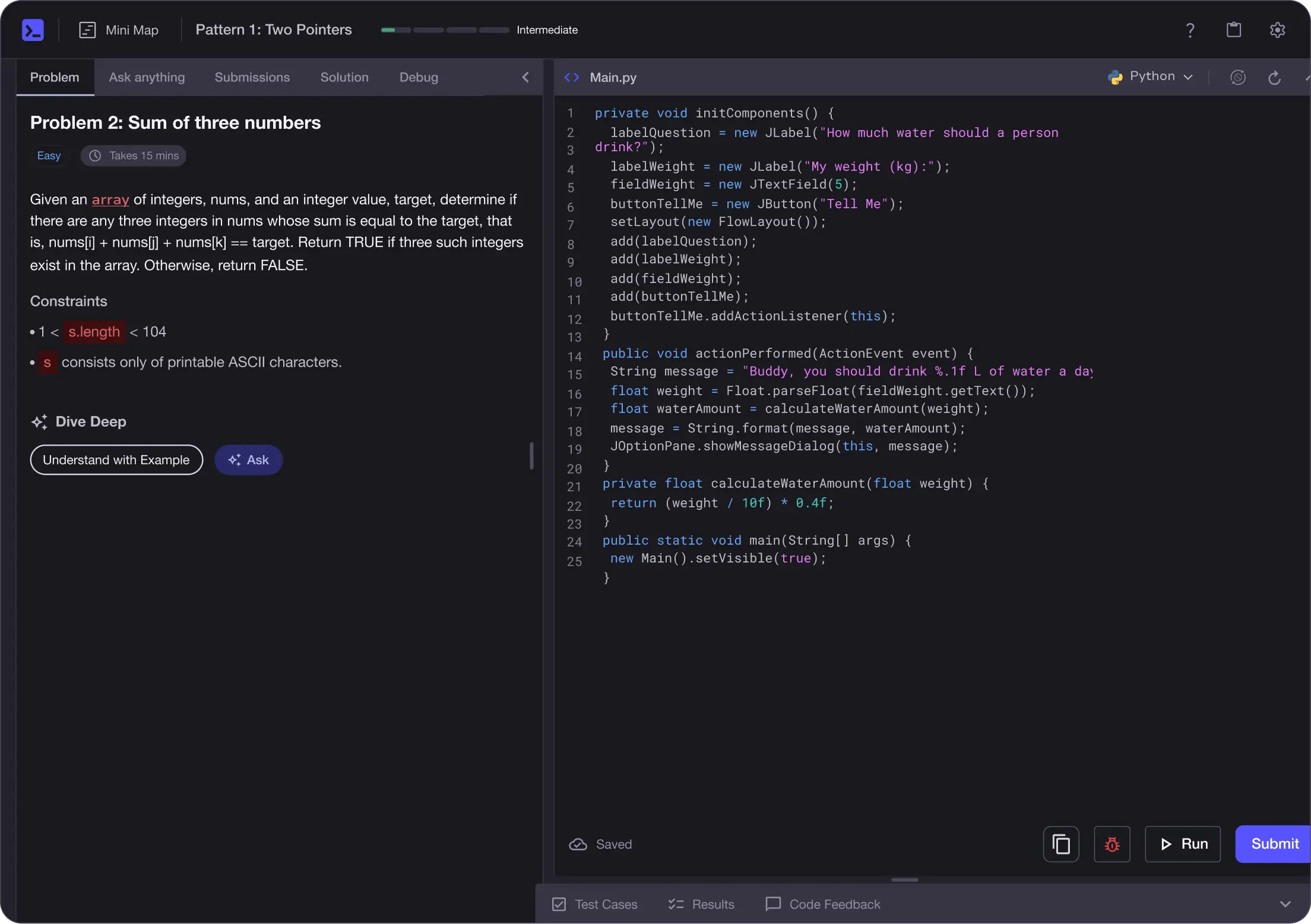
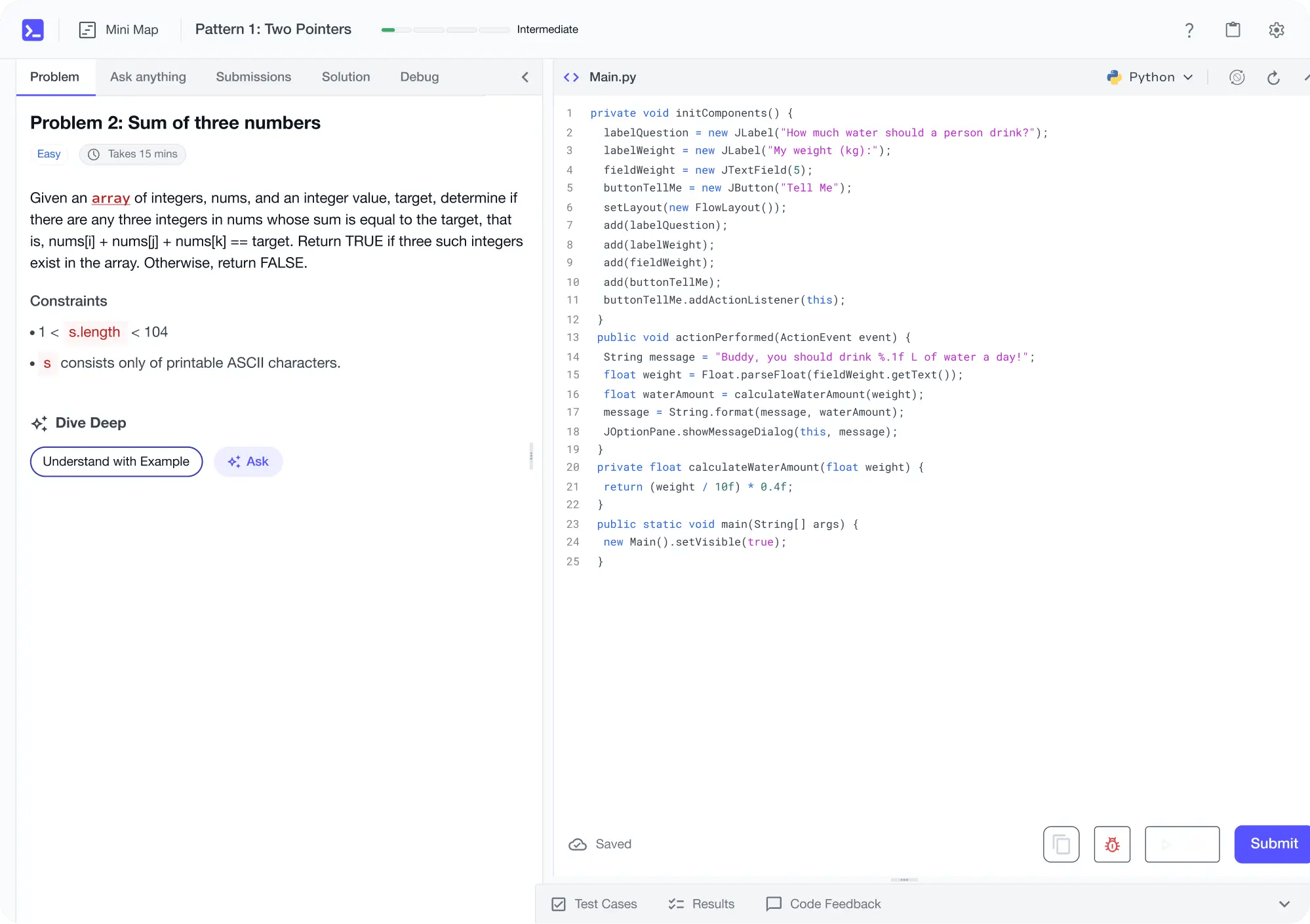
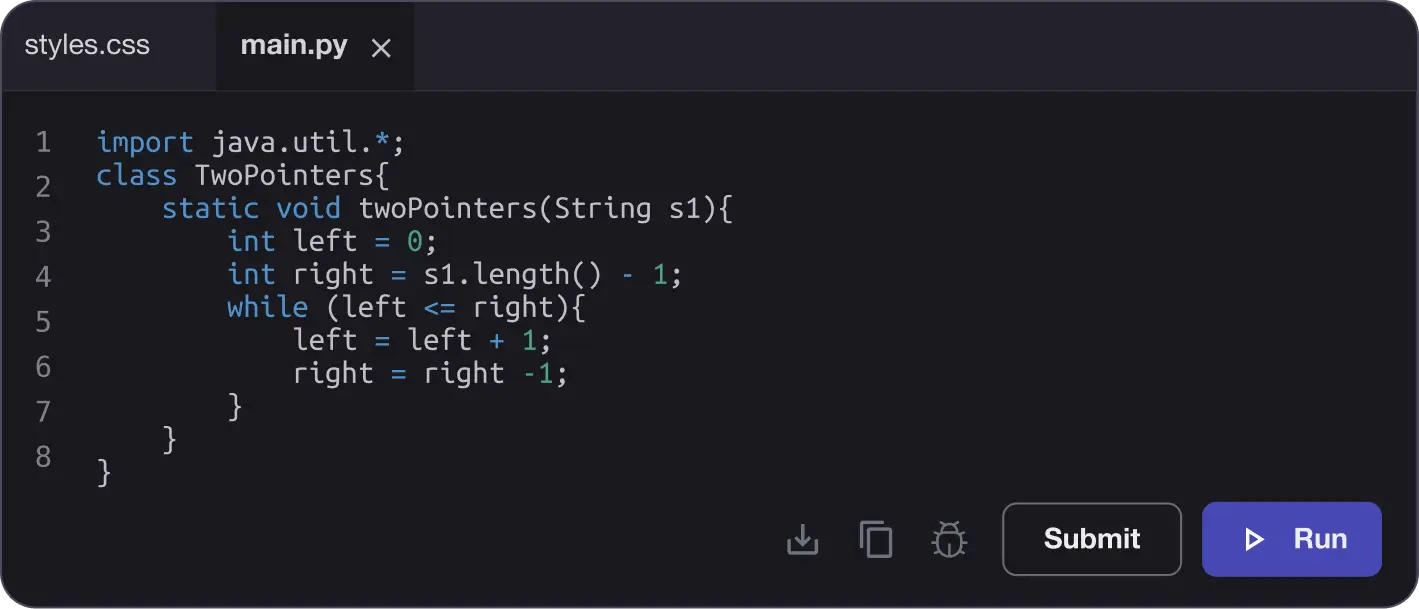
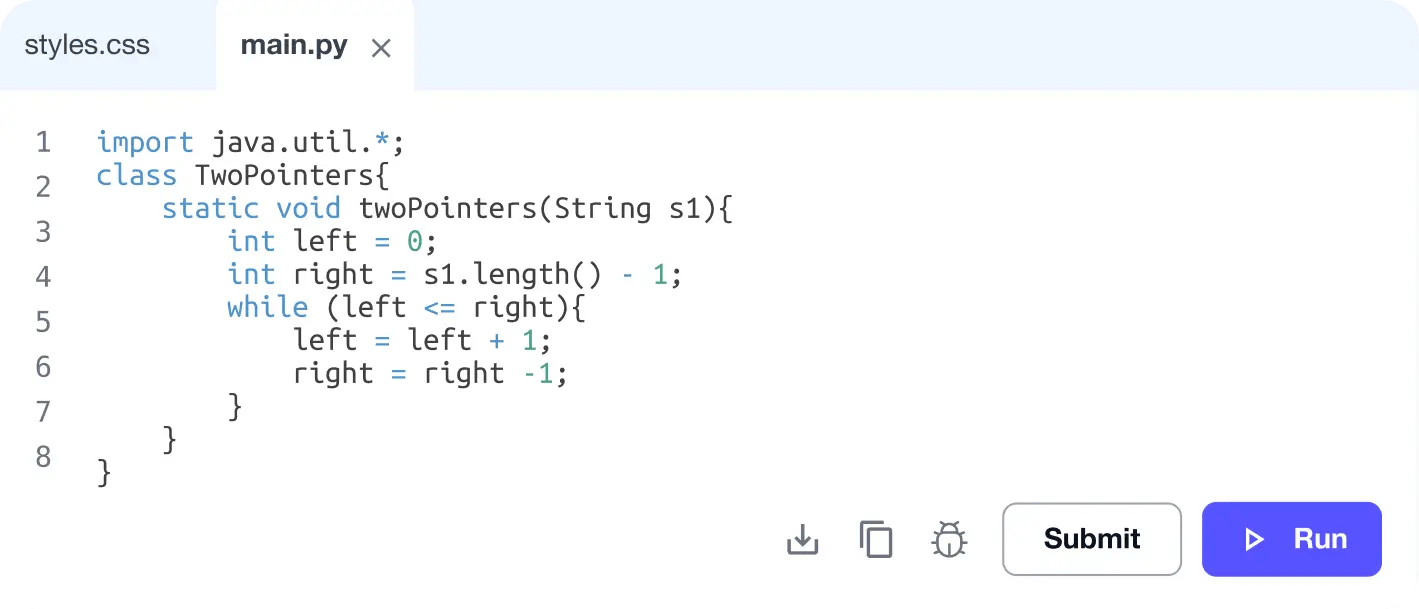
Learn by building with project-based lessons and in-browser code editor
Personalized Roadmaps
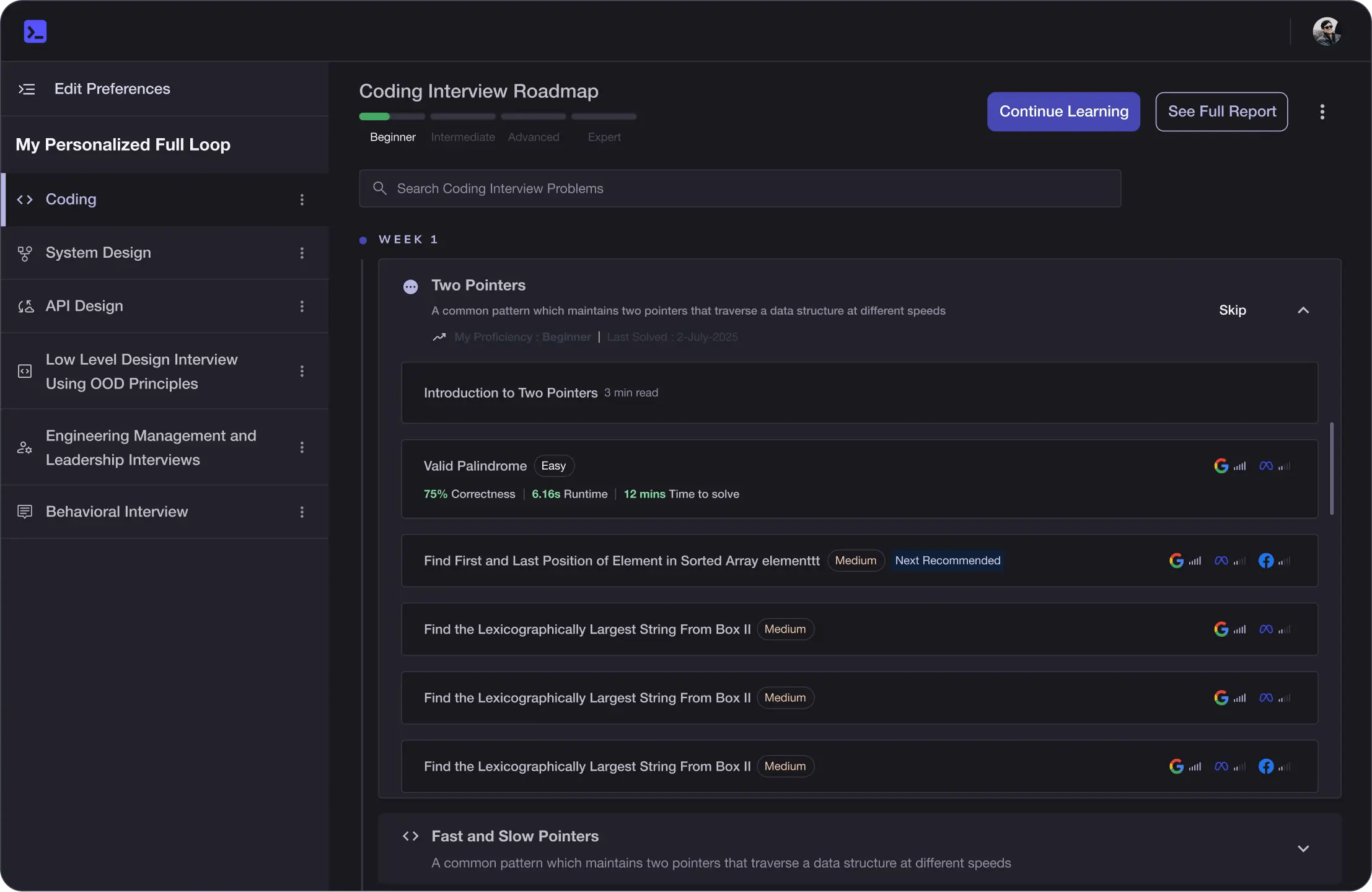
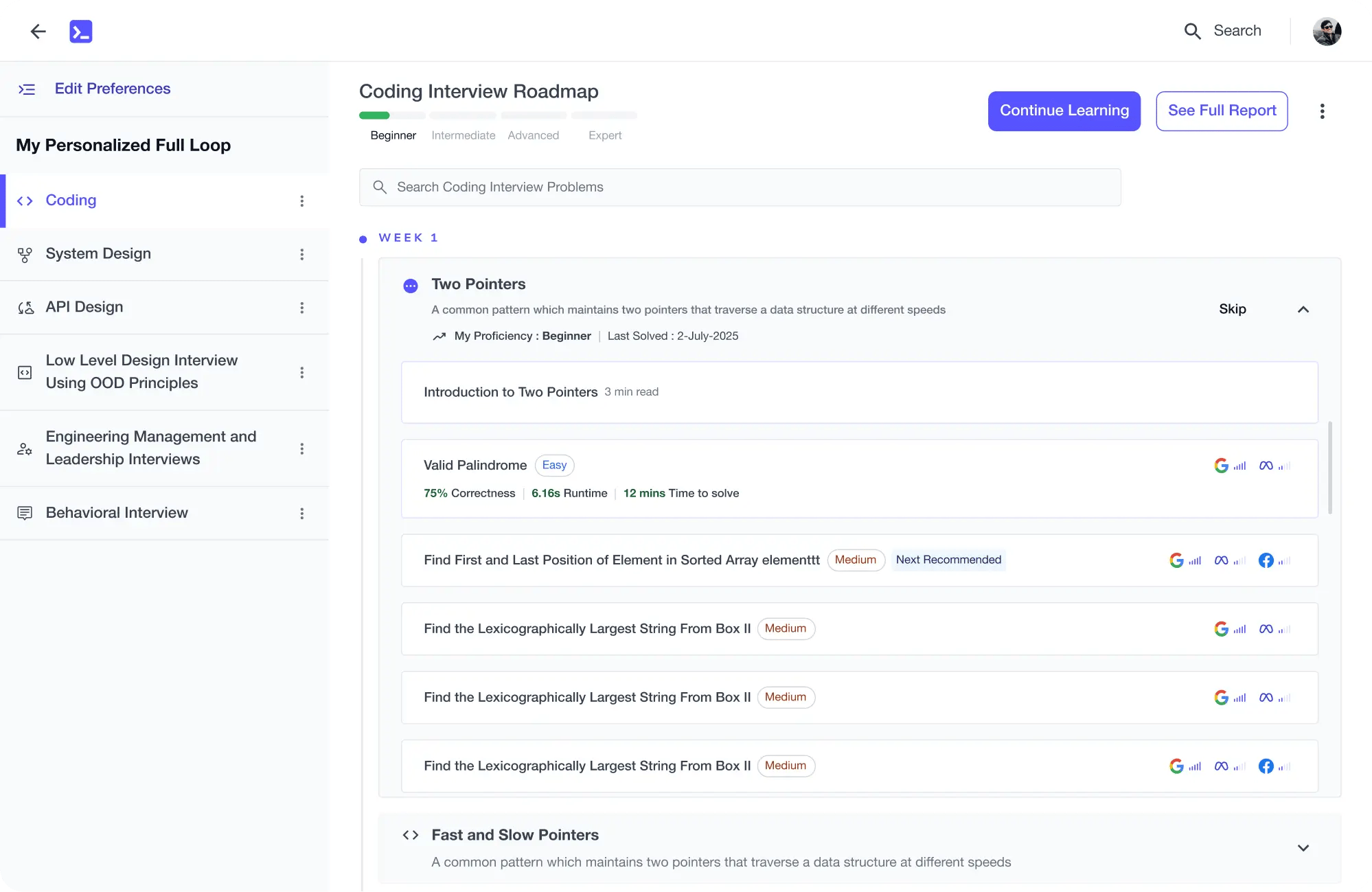
The platform adapts to your strengths & skills gaps as you go
Future-proof Your Career
Get hands-on with in-demand skills
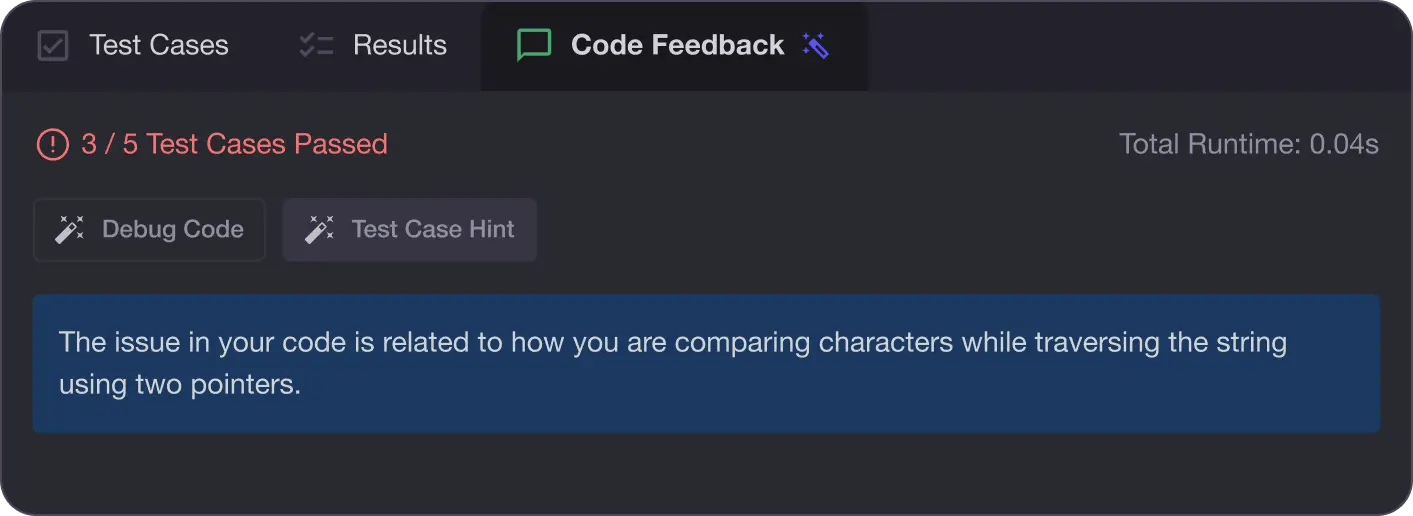
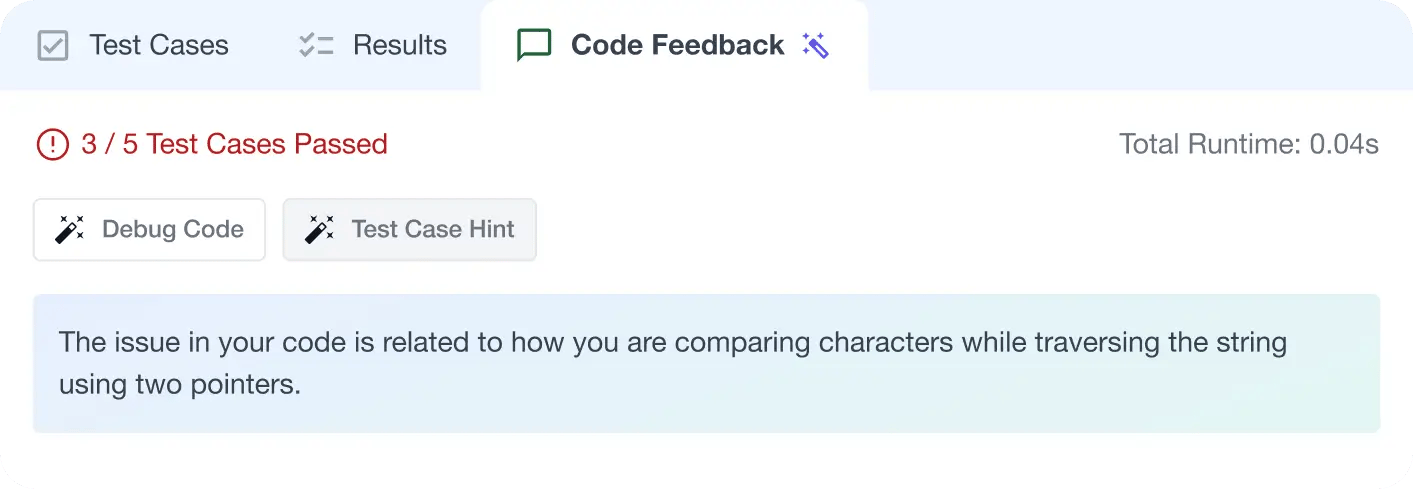
AI Code Mentor
Write better code with AI feedback, smart debugging, and "Ask AI"
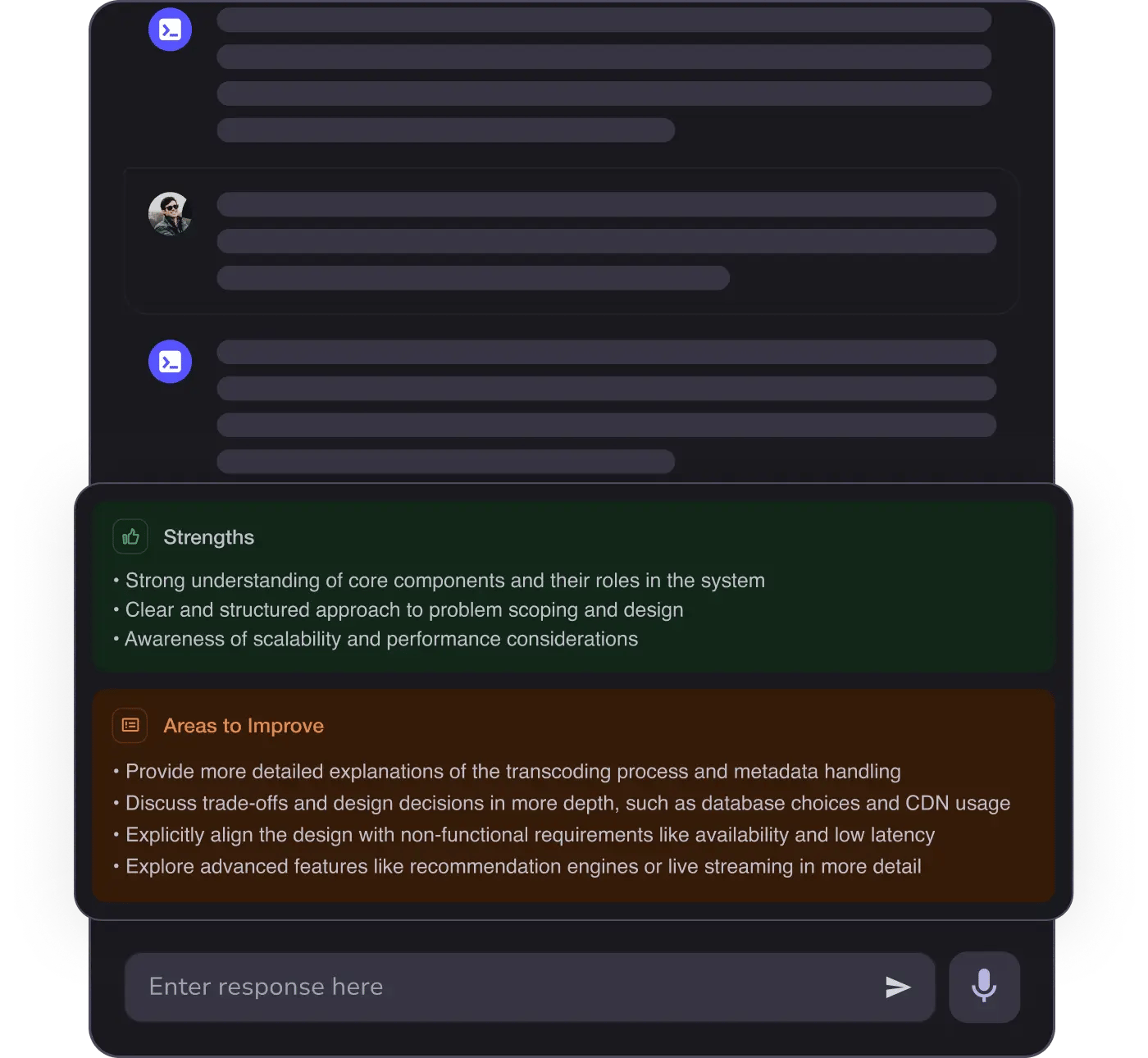
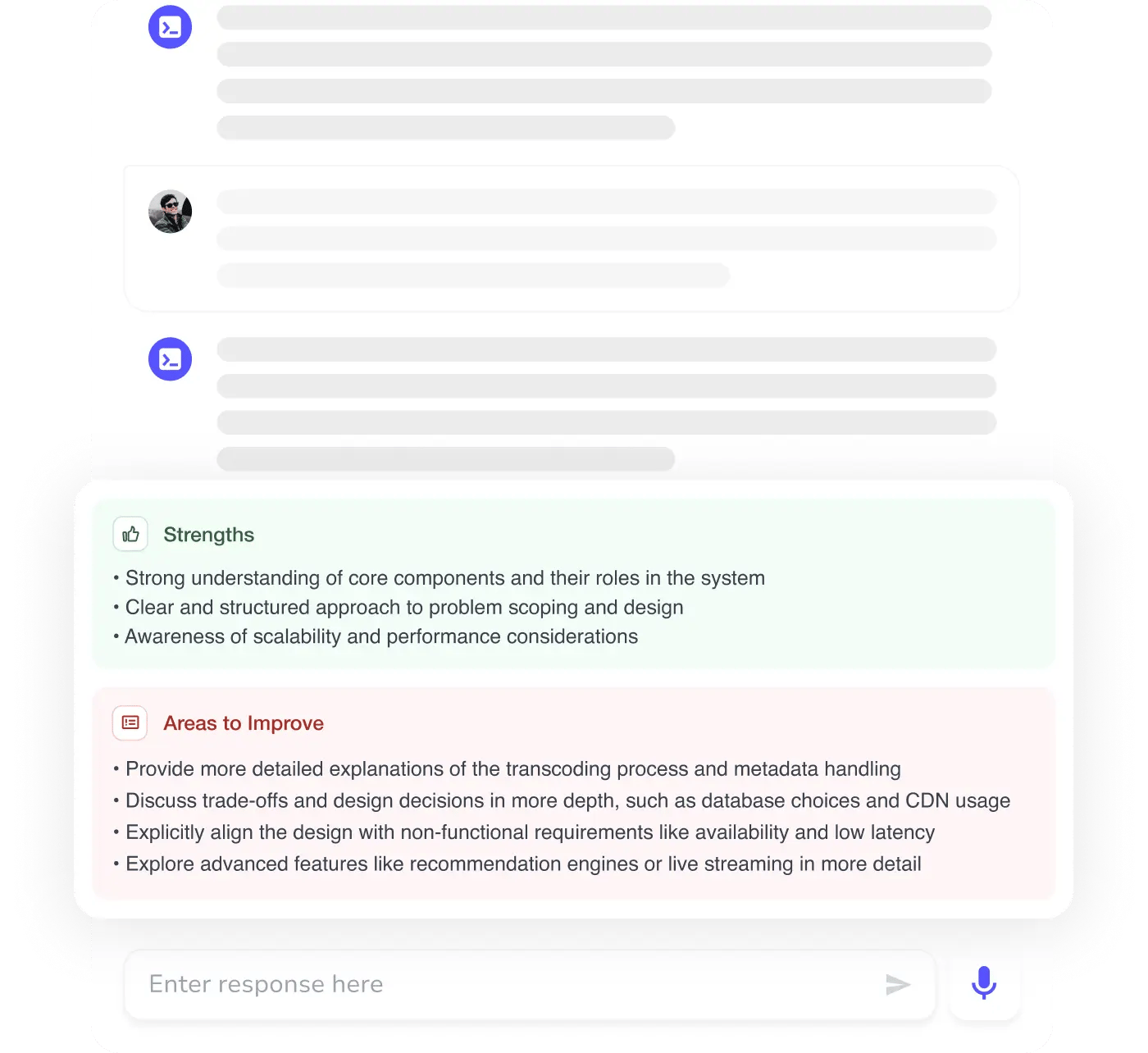
MAANG+ Interview Prep
AI Mock Interviews simulate every technical loop at top companies
Free Resources