Career opportunities after becoming an AWS AI Practitioner
This blog explains that the AWS AI Practitioner certification builds foundational AI literacy, not job-ready AI expertise. Its career value comes from combining it with existing skills and gaining hands-on experience.
Artificial intelligence has become one of the most visible shifts in modern technology. Organizations across industries are experimenting with AI-driven tools, integrating machine learning into existing systems, and exploring how generative AI can reshape products and workflows. In that environment, certifications related to AI and cloud platforms naturally attract attention.
Many professionals encounter the AWS AI Practitioner certification while trying to answer a deeper career question: How do I move closer to AI-related work?
For developers, analysts, and cloud engineers, the certification often represents a first structured step into the AI ecosystem. It promises familiarity with AI concepts, exposure to AWS AI services, and an introduction to the vocabulary of machine learning systems. But the real curiosity behind the certification goes beyond the exam itself.
Candidates usually want to understand how it affects their career trajectory. They wonder whether the certification will change how employers evaluate their resume, whether it signals readiness for AI-focused roles, and whether it opens doors to new technical responsibilities.
Certifications rarely create careers by themselves. They change how your existing skills are interpreted.
This distinction matters. A certification is not a replacement for experience, but it can reshape how your current background fits into emerging technical trends. When someone earns an AWS AI Practitioner credential, the most meaningful career impact usually comes from how it complements the skills they already have.
Understanding those dynamics requires looking beyond the certification syllabus and examining how employers interpret it, where it sits within the broader AI skills ecosystem, and how it influences hiring conversations.
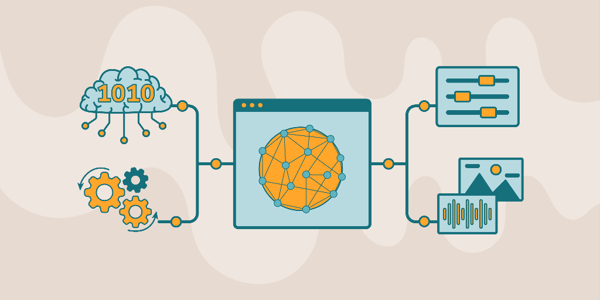
Generative AI is rapidly reshaping how software is built, how decisions are made, and how humans interact with machines. From large language models to multimodal systems, understanding generative AI is becoming a foundational skill. This course focuses on generative AI essentials, giving you the conceptual clarity and practical perspective needed to navigate this fast-moving space with confidence. I built this course from my work in adaptive AI systems, intelligent tutoring platforms, and teaching complex machine learning concepts at scale. A recurring challenge I observed was that learners could use generative AI tools, but lacked a clear mental model of how these systems actually work. This course addresses that gap by breaking generative AI down into its core principles and connecting them to real-world applications. You’ll begin with the fundamentals of generative AI, including its evolution, key architectures, and language representations. From there, you’ll explore foundation models, pretraining, fine-tuning, and optimization strategies that power modern systems. The course also covers large language models, multimodal AI (vision and audio), and how context is constructed within neural systems. Throughout, you’ll develop the ability to interpret, guide, and effectively interact with AI systems. If you want to master generative AI essentials and build a strong foundation for working with modern AI systems, this course provides a clear, structured path to get there.
Why the AWS AI Practitioner certification attracts attention#
The AWS ecosystem already plays a central role in modern cloud infrastructure. Organizations building software products, analytics platforms, and distributed systems often rely on AWS services for storage, compute, and deployment. As AWS continues to expand its AI capabilities, certifications that reference those services gain visibility.
The AWS AI Practitioner certification sits at an entry-level intersection between cloud computing and artificial intelligence. It introduces candidates to concepts such as machine learning workflows, generative AI models, and AWS-managed AI services. Rather than requiring deep mathematical understanding or model training expertise, the certification focuses on conceptual knowledge and practical awareness.
This accessibility is precisely why the certification attracts a wide audience. Developers exploring AI integration, analysts curious about machine learning applications, and cloud engineers supporting data infrastructure may all see the certification as a manageable first step into the field.
However, the accessibility of the certification also shapes how employers interpret it. Understanding that interpretation is essential for anyone trying to translate the credential into career opportunities.
AI is quickly becoming part of every developer’s workflow, from building intelligent features to integrating foundation models into production systems. As AWS expands its AI and ML ecosystem, the AWS Certified AI Practitioner certification has emerged as a practical entry point for engineers who want to understand how these systems are built and used in real environments. The challenge is knowing how to use the tools correctly and responsibly. I built this course from my experience working on large-scale cloud systems. A pattern I’ve seen is that learners are often introduced to AI concepts in isolation, without understanding how they connect to real cloud services. When preparing for the AWS Certified AI Practitioner exam, many struggle to bridge that gap between theory and practical application. This course is designed to make that connection clear. We focus on the fundamentals of AI and ML, then map them directly to AWS services like Amazon SageMaker, Bedrock, Comprehend, and Rekognition. You’ll learn how to think about real use cases, apply responsible AI practices, and understand how foundation models fit into modern applications. The course also includes hands-on Cloud Labs and exam-style practice questions that reflect the format and difficulty of the actual certification. This approach has helped learners build confidence not just for the AWS Certified AI Practitioner exam, but for applying AI in real projects. If you’re starting your journey as an AI practitioner and want a clear, practical path, this course is designed to get you there.
How employers interpret the certification#
Job seekers often view certifications as proof of expertise. Employers, however, tend to read them differently. In most hiring contexts, certifications function less as confirmation of mastery and more as signals of interest, direction, and foundational knowledge.
The difference between these perspectives becomes clearer when comparing expectations.
What candidates think the cert signals | What employers usually interpret |
AI expertise | Foundational literacy |
Production ML capability | Conceptual understanding |
Career readiness | Learning initiative |
From the employer's perspective, the AWS AI Practitioner certification rarely suggests that someone can build production-grade machine learning models or design complex AI architectures. Instead, it signals that the candidate understands key terminology, recognizes common AI workflows, and has explored AWS tools designed for AI development.
Recruiters and hiring managers typically see the certification as evidence that a candidate is intentionally moving toward AI-related skills. It demonstrates curiosity and effort, especially when paired with a relevant technical background.
Employers rarely hire based on certifications alone. They hire based on demonstrated ability, and certifications simply help interpret potential.
In practical terms, the certification may strengthen a resume when combined with software development experience, data analysis skills, or cloud infrastructure knowledge. Without that surrounding context, the credential alone rarely determines hiring decisions.
Understanding where the certification fits within the larger AI skill landscape helps clarify why employers view it this way.
Where this certification fits in the AI ecosystem#
Artificial intelligence careers often appear more unified than they actually are. In reality, the AI ecosystem spans several layers of expertise, each representing different kinds of skills and responsibilities.
AI literacy | Concepts, terminology, workflows |
Applied ML | Training models, evaluating performance |
Production AI systems | Scaling and operating ML systems |
The AWS AI Practitioner certification sits primarily within the AI literacy layer. It focuses on understanding the language of machine learning, recognizing how AI systems operate, and learning how cloud services support AI workloads.
This literacy layer is valuable because it allows professionals across disciplines to participate in AI discussions. Product managers, analysts, developers, and infrastructure engineers often collaborate on AI-enabled systems. Shared conceptual understanding makes those collaborations possible.
However, literacy is different from implementation. Applied machine learning involves training models, evaluating performance metrics, and selecting algorithms. Production AI systems require expertise in distributed infrastructure, monitoring pipelines, and operational reliability.
The certification does not attempt to cover these deeper layers. Instead, it acts as a gateway that helps professionals decide whether they want to explore them further.
Career pathways enabled by the certification#
The career value of the AWS AI Practitioner certification depends heavily on a person's starting point. Someone already working in software engineering will use it differently than someone coming from analytics or cloud infrastructure.
The following table outlines several realistic pathways where the certification can support career growth.
Software developer | AI feature developer, backend engineer integrating AI services | Demonstrates ability to integrate AI capabilities into products | Prompt engineering, API integration, ML fundamentals |
Data or business analyst | Data analyst with ML awareness, analytics engineer | Shows understanding of AI-driven data workflows | Python, model evaluation, data pipelines |
Cloud / DevOps engineer | ML infrastructure engineer, MLOps contributor | Connects cloud infrastructure knowledge to AI workloads | Model deployment, monitoring, pipeline orchestration |
Early-career technologist | Junior developer or technical associate exploring AI | Provides conceptual foundation for future specialization | Programming, statistics, system design |
These pathways illustrate a common pattern: the certification amplifies an existing skill set rather than replacing it.
A software developer, for example, may already understand APIs, microservices, and backend architectures. With the certification, that developer can more confidently integrate AI-powered features such as recommendation engines, document analysis, or chatbot interfaces into applications.
An analyst might approach the certification differently. For them, the credential provides context for how machine learning models interact with datasets and how cloud services support AI-driven analytics. That perspective can gradually expand their role from reporting toward predictive insights.
Cloud engineers may find the certification particularly relevant because many AI systems run on cloud infrastructure. Understanding AI workflows allows them to participate in deploying and managing machine learning services, even if they are not designing the models themselves.
For early-career professionals, the certification can simply serve as orientation. It introduces the terminology and ecosystem of AI work, helping them decide whether they want to pursue deeper technical specialization.
Role scenario walkthroughs#
To better understand how these career pathways evolve in practice, it helps to imagine how the certification might affect everyday responsibilities.
Consider a backend developer working on a customer-facing product. Before exploring AI, their work may involve building APIs, managing databases, and ensuring application reliability. After learning about AI services through the certification, they may begin experimenting with integrating generative AI models into customer support tools or recommendation systems. Their core responsibilities remain the same, but their toolkit expands.
A business analyst might experience a different shift. Instead of simply producing dashboards and reports, they might begin exploring machine learning models that predict customer behavior or forecast demand. The certification helps them communicate more effectively with data scientists and understand the operational implications of AI-driven insights.
Cloud engineers often encounter AI workloads when teams start deploying models at scale. The certification can help them understand how training pipelines interact with cloud infrastructure, how model inference affects resource consumption, and how monitoring systems detect drift or performance degradation.
The fastest way into AI work is rarely a direct jump. It is usually a sideways expansion of the skills you already have.
These sideways expansions gradually build the kind of experience employers value most: real-world interaction with AI-enabled systems.
How certifications influence hiring conversations#
Certifications rarely determine whether someone gets hired, but they often shape the conversations that happen during hiring.
Recruiters frequently rely on resume keyword filters when searching for candidates. Certifications can help a resume surface in searches related to AI or cloud technologies. This increased visibility may lead to initial screening calls that might not have occurred otherwise.
During interviews, certifications often act as conversation starters. Hiring managers may ask candidates how they explored AI services, what projects they experimented with, or how they might integrate machine learning features into existing systems.
For example, imagine a backend engineer applying for a product-focused role. Without the certification, their resume might highlight traditional API development. With the certification, the hiring conversation may shift toward how they could implement AI-powered product features such as summarization tools, intelligent search, or automated content generation.
The certification does not guarantee deeper expertise, but it provides a framework for discussing AI-related possibilities.
A realistic career transition roadmap#
Professionals who want to move toward AI-related roles after earning the certification often benefit from a deliberate transition strategy. The certification itself provides conceptual understanding, but career momentum comes from how that knowledge connects to real work.
The first step usually involves anchoring the certification to current responsibilities. If someone works as a developer, that might mean experimenting with AI-powered APIs inside existing applications. For analysts, it may involve exploring predictive models within their current datasets.
The next step is building small, practical projects that demonstrate applied understanding. These projects do not need to be complex research systems. Even simple applications that integrate AI services—such as document summarization tools or classification pipelines—can demonstrate meaningful skills.
Another important step involves choosing one adjacent skill to develop more deeply. Someone interested in machine learning might study model evaluation techniques, while someone focused on infrastructure might explore MLOps practices.
Analyst | Python + model evaluation |
Developer | APIs + AI integration |
Cloud engineer | MLOps basics |
Over time, these skill combinations gradually reshape a professional's profile. Instead of appearing as someone who simply completed an AI certification, they become someone who applies AI concepts within their existing domain.
Common misconceptions about AI careers#
Artificial intelligence careers are often surrounded by exaggerated expectations. Certifications sometimes amplify these misconceptions by suggesting that a single credential can unlock entirely new career paths.
One common misunderstanding is the idea that AI certifications directly lead to AI engineer roles. In reality, those positions typically require deeper knowledge of machine learning algorithms, statistics, and software engineering.
Another misconception is that AI careers allow professionals to bypass foundational programming skills. Most AI systems still rely heavily on software engineering practices, data pipelines, and system architecture.
Some people also assume that AI work is primarily research-focused. While research roles do exist, much of the industry involves applying existing models to practical problems such as automation, recommendation systems, and data analysis.
Finally, there is a persistent belief that adding AI-related keywords to a resume automatically creates new opportunities. Employers generally prioritize demonstrable experience over terminology.
Recognizing these misconceptions helps professionals approach AI certifications with realistic expectations and long-term planning.
How to build momentum after the certification#
Passing the AWS AI Practitioner exam can feel like a milestone, but its long-term value depends on what happens afterward. Professionals who build momentum quickly often treat the certification as the starting point for practical experimentation.
Build small projects | Demonstrates applied understanding |
Document reasoning | Shows architectural thinking |
Experiment with services | Builds confidence using AI tools |
Building small projects allows professionals to move beyond theoretical knowledge. Even simple experiments—such as creating a chatbot using an AI API or building a classification pipeline—can reveal how AI systems behave in practice.
Documenting project decisions can also be surprisingly valuable. Explaining why a particular model or service was chosen demonstrates analytical thinking and system design awareness, both of which employers often look for during technical interviews.
Finally, experimenting with different AI services helps develop practical familiarity with the ecosystem. Understanding how models interact with storage, compute resources, and monitoring tools provides the kind of operational perspective that theoretical study alone cannot provide.
Final thoughts#
The AWS AI Practitioner certification occupies an interesting place in the technology career landscape. It introduces professionals to the language and concepts of artificial intelligence without requiring deep technical specialization.
For many people, the certification serves as a signal that they are exploring AI-related skills. For employers, it often represents foundational literacy rather than advanced expertise. Its real career value emerges when it complements existing technical experience and motivates further skill development.
Certifications function best as career accelerators rather than career creators. They help professionals reposition themselves within evolving technological trends, but they rarely replace the importance of hands-on experience.
Ultimately, the most effective path into AI-related work involves skill stacking: combining existing expertise in software, data, or infrastructure with growing familiarity with AI systems.
Understanding the difference between AI-adjacent work and specialized AI roles can help professionals set realistic expectations and build meaningful momentum over time.
Happy learning!
