How to create a machine learning model
Machine learning models power many technologies that people interact with every day. This blog explains the complete process and helps beginners understand how to create a machine learning model using a structured, step-by-step approach.

Machine learning models power many technologies that people interact with every day. Recommendation systems suggest movies and products based on past behavior, fraud detection systems identify suspicious financial transactions, predictive analytics tools help organizations forecast demand, and computer vision models allow machines to recognize objects in images and videos. These systems all rely on models that learn patterns from data rather than relying solely on manually written rules.
For beginners, the challenge is not only understanding the algorithms involved but also learning the full development lifecycle required to build reliable models. A successful machine learning project requires defining the problem correctly, preparing high-quality data, selecting appropriate algorithms, evaluating model performance carefully, and eventually deploying the trained model into a real application.
This blog explains the complete process and helps beginners understand how to create a machine learning model using a structured, step-by-step approach.

Machine learning interviews at top tech companies now focus more on open-ended system design problems. “Design a recommendation system.” “Design a search ranking system.” “Design an ad prediction pipeline.” These questions evaluate your ability to reason about machine learning systems end-to-end. However, most candidates prepare for isolated concepts instead of system-level design. This course focuses specifically on building that System Design muscle. You’ll work through 9 real-world ML System Design problems (the same questions asked at Meta, Google, Amazon, and Microsoft) and learn a repeatable methodology for breaking each one down: defining the problem, choosing metrics, selecting model architectures, designing data pipelines, and evaluating trade-offs. Each system you design builds on practical ML techniques covered earlier in the course: embeddings, transfer learning, online experimentation, model debugging, and performance considerations. By the time you’re designing your third or fourth system, you'll have the technical vocabulary and judgment to explain why your design choices work. This is exactly what interviewers are looking for. The course also includes 6 mock interviews so you can practice articulating your designs under realistic conditions. If you have an ML or System Design interview coming up at any major tech company, this course will help you walk in with a clear framework for tackling whatever they throw at you.
What is a machine learning model?#
A machine learning model is a computational system that learns patterns from data in order to make predictions, classifications, or decisions. Instead of relying entirely on explicitly written rules, the model analyzes training data and discovers relationships that allow it to generate outputs when new data is presented.
In traditional rule-based programming, developers write detailed instructions describing exactly how a system should behave in every situation. For example, a program designed to classify emails might include manually defined rules that check for certain keywords or patterns.

Machine learning systems operate differently. Rather than manually specifying every rule, developers provide the model with datasets that contain examples of inputs and expected outputs. The model then learns statistical relationships within the data during the training process. Once trained, the model can apply those learned patterns to new data and generate predictions.
For example, a machine learning model designed to detect fraudulent transactions may analyze thousands of historical transactions. During training, the model learns patterns associated with legitimate and fraudulent behavior. When new transactions occur, the model evaluates them based on the patterns it previously learned.
Understanding this learning process is an important first step for anyone exploring how to create a machine learning model because it highlights the central role that data plays in modern AI systems.
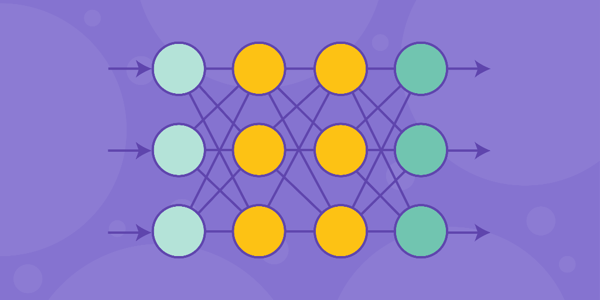
Machine learning is the future for the next generation of software professionals. This course serves as a guide to machine learning for software engineers. You’ll be introduced to three of the most relevant components of the AI/ML discipline; supervised learning, neural networks, and deep learning. You’ll grasp the differences between traditional programming and machine learning by hands-on development in supervised learning before building out complex distributed applications with neural networks. You’ll go even further by layering networks to create deep learning systems. You’ll work with complex real-world datasets to explore machine behavior from scratch at each phase. By the end of this course, you’ll have a working knowledge of modern machine learning techniques. Using software engineering, you’ll be prepared to build complex neural networks and wrangle real-world data challenges.
The machine learning workflow#
Machine learning projects follow a structured workflow that guides the development process from initial problem definition to deployment.
Stage | Description |
Problem definition | Identify the prediction or classification task the model should perform and determine success criteria. |
Data collection | Gather relevant datasets that represent the real-world scenarios the model will encounter. |
Data preprocessing | Clean, transform, and prepare data so it can be used effectively for model training. |
Model training | Use algorithms to learn patterns from the prepared dataset. |
Model evaluation | Assess how accurately the model performs using appropriate evaluation metrics. |
Deployment | Integrate the trained model into applications, services, or production systems. |
These stages form the lifecycle of a machine learning project. Each stage builds upon the previous one, and skipping steps or performing them incorrectly can significantly reduce model performance.
For example, even the most advanced algorithm cannot perform well if the dataset contains errors, inconsistencies, or missing values. Similarly, deploying a model without proper evaluation may result in inaccurate predictions when the model encounters real-world data.
By understanding this workflow, beginners can approach machine learning development systematically rather than treating it as a collection of disconnected tasks.
Step-by-step: how to create a machine learning model#
Developing a machine learning model becomes much easier when the process is divided into clear, manageable steps. Each step plays an essential role in building a reliable system.
1. Define the problem#
The first step is clearly identifying the problem the model should solve. Machine learning projects typically fall into categories such as classification, regression, clustering, or recommendation.
For example, a company might want to predict whether a customer will cancel a subscription. In this case, the task is a classification problem because the model must predict one of two possible outcomes.
Defining the problem also involves selecting appropriate evaluation metrics. A fraud detection system may prioritize recall to detect as many fraudulent transactions as possible, while a recommendation system may prioritize accuracy or ranking metrics.
Clearly defining the problem ensures that the rest of the project remains aligned with the intended outcome.
2. Collect and prepare data#
Data is the foundation of any machine learning model. The dataset used for training must accurately represent the conditions under which the model will operate.
Data collection may involve gathering information from databases, APIs, sensors, or public datasets. Once collected, the data typically requires preprocessing before it can be used for training.
Common preprocessing tasks include:
Removing duplicate or irrelevant records
Handling missing values
Converting categorical data into numerical form
Normalizing or scaling numerical features
Creating new features through feature engineering
Preparing data carefully improves model performance and reduces the risk of misleading results during training.
3. Choose an algorithm#
Once the dataset is prepared, the next step is selecting a machine learning algorithm that suits the problem.
Different algorithms are designed for different types of tasks. For example:
Linear regression models are commonly used for predicting continuous numerical values.
Decision trees and random forests work well for classification problems involving structured data.
Neural networks are widely used for complex tasks such as image recognition and natural language processing.
Selecting the right algorithm often involves experimentation. Developers may train several models and compare their performance before choosing the most effective approach.
Understanding these options is an important part of learning how to create a machine learning model because the algorithm determines how the model interprets data patterns.
4. Train the model#
Training is the stage where the model learns patterns from the dataset. During training, the algorithm analyzes input features and adjusts internal parameters in order to minimize prediction errors.
Training typically involves dividing the dataset into multiple subsets:
A training set used to teach the model
A validation set used to tune parameters
A test set used to evaluate final performance
The model repeatedly analyzes the training data and adjusts its parameters until it reaches an acceptable level of accuracy.
5. Evaluate the model#
Once training is complete, the model must be evaluated to determine how well it performs on unseen data.
Evaluation metrics vary depending on the problem type. Some commonly used metrics include:
Accuracy for classification tasks
Precision and recall for imbalanced datasets
Mean squared error for regression problems
F1 score for balancing precision and recall
Proper evaluation ensures that the model generalizes well rather than simply memorizing the training data.
6. Deploy the model#
After evaluation confirms that the model performs reliably, it can be deployed into a production environment.
Deployment may involve integrating the model into an application, exposing it through an API, or embedding it within a larger cloud-based system.
In production systems, models often run continuously and generate predictions in real time. Developers may also implement monitoring systems to track model performance and detect when retraining is required.
Understanding deployment workflows is another important part of learning how to create a machine learning model because real-world systems must operate reliably outside the development environment.
Tools and technologies used to build machine learning models#
Modern machine learning development relies on a range of tools and frameworks that simplify data processing, experimentation, and model deployment.
Python programming language#
Python has become the most widely used language for machine learning because of its extensive ecosystem of libraries and its relatively accessible syntax.

Python has become the foundation for everything from data science and automation to modern AI workflows. Yet many beginners struggle to learn Python because they spend too much time watching and not enough time building. This course is designed for a different kind of learner, one who wants to learn Python by doing, not just observing, and to build skills that remain relevant in an AI-driven development landscape. I built this course from my experience teaching and designing interactive learning systems at Educative. Across classrooms and platforms, I saw the same pattern: learners could follow tutorials, but struggled to apply concepts independently. The problem was the approach. This course is built on a simple principle: you learn Python best when you write, test, and refine code continuously. You’ll start with core fundamentals, variables, control flow, functions, and data structures, through hands-on exercises that reinforce real understanding. As you progress, you’ll build practical projects like a chatbot and an expense tracker. The course also introduces how to learn Python alongside AI tools, including prompting, debugging, and validating generated code in real workflows. If your goal is to learn Python in a way that prepares you to build real applications and work effectively with AI, this course gives you that foundation from day one.
Pandas and NumPy for data processing#
Pandas provides powerful data manipulation tools that allow developers to clean, filter, and transform datasets efficiently. NumPy supports numerical operations and array-based computations required for machine learning algorithms.
Scikit-learn for machine learning algorithms#
Scikit-learn is one of the most popular libraries for implementing classical machine learning algorithms such as regression models, clustering algorithms, and classification models.

This comprehensive course is designed to develop the knowledge and skills to effectively utilize the scikit-learn library in Python for machine learning tasks. It is an excellent resource to help you develop practical machine learning applications using Python and scikit-learn. In this course, you’ll learn fundamental concepts such as supervised and unsupervised learning, data preprocessing, and model evaluation. You’ll also learn how to implement popular machine learning algorithms, including regression, classification, and clustering, using scikit-learn’s user-friendly API. The course also introduces advanced topics such as ensemble methods, model interpretation, and hyperparameter optimization. After taking this course, you’ll gain hands-on experience in applying machine learning techniques to solve diverse data-driven problems. You’ll also be equipped with the expertise to confidently leverage scikit-learn for a wide range of machine learning applications in industry as well as academia.

This course is designed to provide you with an easy-to-follow, structured, incremental, and from-first-principles approach to learning PyTorch. In this course, you’ll be introduced to the fundamentals of PyTorch: autograd, model classes, datasets, data loaders, and more. You will develop, step-by-step, not only the models themselves but also your understanding of them. You'll be shown both the reasoning behind the code and how to avoid some common pitfalls and errors along the way. By the time you finish this course, you’ll have a thorough understanding of the concepts and tools necessary to start developing and training your own models using PyTorch.
Jupyter notebooks for experimentation#
Jupyter notebooks provide an interactive environment where developers can write code, visualize results, and document experiments. This environment is widely used during early stages of machine learning research and development.
Together, these tools create a powerful ecosystem that allows developers to build, experiment with, and deploy machine learning models efficiently.
If you're a software engineer looking to add machine learning to your skillset, this is the place to start. This course will teach you to write useful code and create impactful machine learning applications immediately. From the start, you'll be given all the tools that you need to create industry-level machine learning projects. Rather than reading through dense theory, you’ll learn practical skills and gain actionable insights. Topics covered include data analysis/visualization, feature engineering, supervised learning, unsupervised learning, and deep learning. All of these topics are taught using industry-standard frameworks: NumPy, pandas, scikit-learn, XGBoost, TensorFlow, and Keras. Basic knowledge of Python is a prerequisite to this course. This course was created by AdaptiLab, a company specializing in evaluating, sourcing, and upskilling enterprise machine learning talent. It is built in collaboration with industry machine learning experts from Google, Microsoft, Amazon, and Apple.
Common mistakes beginners make#
When learning how to create a machine learning model, beginners often encounter challenges that can negatively affect model performance if not addressed early.
One common mistake is ignoring data quality issues. Models trained on incomplete, inconsistent, or biased data may produce unreliable predictions regardless of the algorithm used.
Another frequent mistake is overfitting. Overfitting occurs when a model learns the training data too closely and performs poorly when encountering new data. Techniques such as cross-validation and regularization help reduce this problem.

Beginners also sometimes choose overly complex algorithms before understanding simpler approaches. In many cases, straightforward models such as linear regression or decision trees perform surprisingly well when the data is properly prepared.
Finally, failing to validate model performance correctly can lead to misleading conclusions. Without proper evaluation using test datasets and appropriate metrics, developers may believe their models are performing well when they are not.
Avoiding these mistakes helps developers build models that are more accurate, reliable, and useful in real-world applications.
Do you need strong mathematics to create machine learning models?#
A strong mathematical background can help deepen understanding of machine learning algorithms, particularly in areas such as linear algebra, probability, and optimization. However, beginners can still build practical models by using existing libraries and focusing on conceptual understanding before diving into advanced mathematics.
Which programming language should beginners learn first?#
Python is widely recommended for beginners because of its large ecosystem of machine learning libraries and its relatively straightforward syntax. Many tutorials, courses, and open-source projects also use Python, making it easier for beginners to find learning resources.
How long does it take to learn machine learning fundamentals?#
The time required varies depending on prior experience with programming and data analysis. Many learners can develop a basic understanding of machine learning concepts within a few months of consistent study, although mastering advanced techniques requires ongoing practice.
What datasets should beginners practice with?#
Beginners often start with publicly available datasets such as the Iris dataset, the Titanic dataset, or datasets from platforms like Kaggle. These datasets provide manageable examples that help learners practice preprocessing, training, and evaluating models without overwhelming complexity.
Final words#
Machine learning may initially appear complex, but the development process becomes much clearer when approached systematically. By defining the problem carefully, preparing high-quality data, selecting appropriate algorithms, evaluating performance rigorously, and deploying models thoughtfully, developers can build reliable systems that learn from data.
Understanding how to create a machine learning model allows beginners to move beyond theoretical concepts and begin building practical AI applications that solve real-world problems. With the right tools, structured learning, and consistent experimentation, developers can steadily develop the skills needed to work with machine learning systems in modern software environments.